
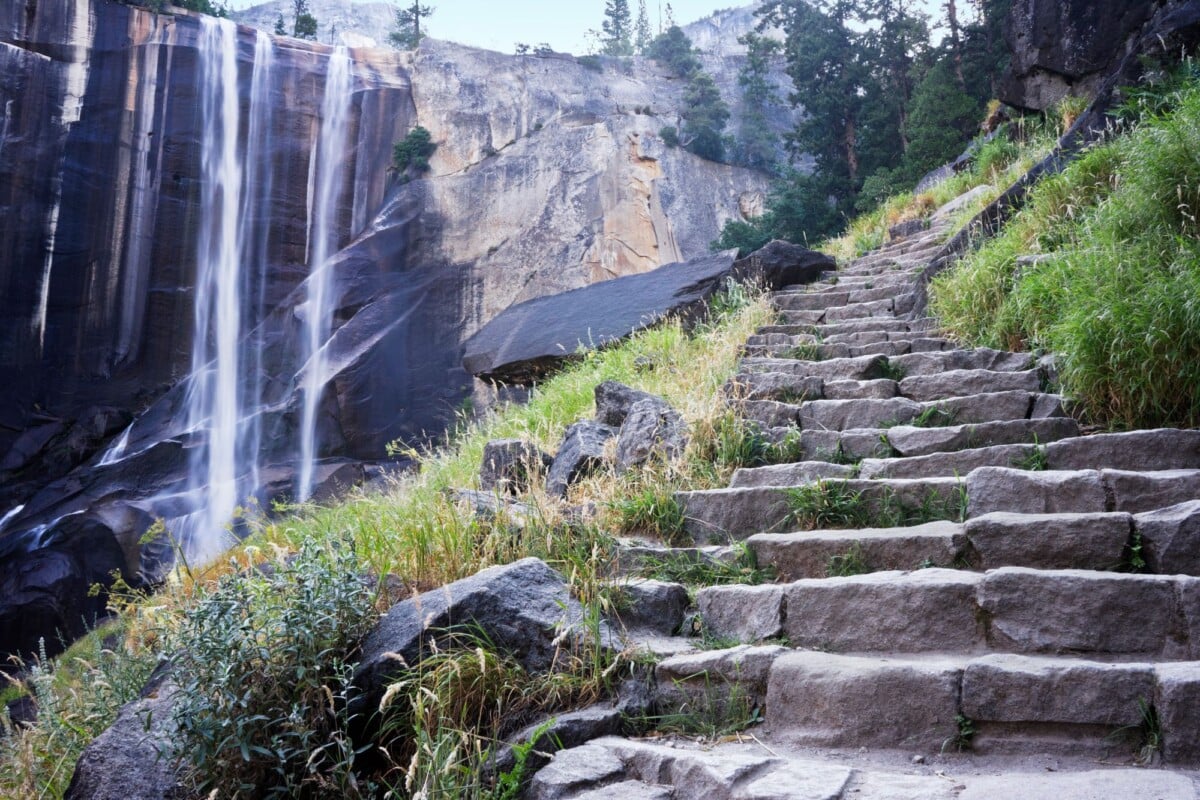
For hikers heading to Vernal Fall or Nevada Fall, the Mist Trail is shorter and much steeper, while the John Muir Trail adds distance in exchange for a steadier climb, a wider path and different views. If both are open, the most practical option for fit day-hikers is usually to climb the Mist Trail and return on the John Muir Trail.
The Mist Trail is the direct route to the waterfalls, with wet granite steps and sustained uphill work. The John Muir Trail is generally drier and less abrupt, although it gains the same height and has plenty of switchbacks. Neither trail reaches Yosemite Falls itself. Both begin near Happy Isles in Yosemite Valley and lead to Vernal Fall and Nevada Fall. If you are visiting later in the year, our guide to the best national parks to visit in October includes seasonal advice for Yosemite and more ideas for exploring the park.
Mist Trail Versus John Muir Trail at a Glance
| Route | To Vernal Fall | To Nevada Fall | Terrain | Best For |
|---|---|---|---|---|
| Mist Trail | About 3 miles round trip; 1,000 feet of gain | About 7 miles round trip; 2,000 feet of gain | Steep paved and granite steps, often wet near Vernal Fall | Hikers who want the direct waterfall route and can manage steep steps |
| John Muir Trail | About 4 miles round trip; 1,000 feet of gain | About 8.5 miles round trip; 2,000 feet of gain | Longer graded trail and switchbacks, with a mix of paved and rocky surfaces | Hikers who prefer a steadier ascent or want to avoid the mistiest section |
| Loop: Mist Trail Up, John Muir Trail Down | About 4 miles round trip | About 8.5 miles round trip | Steep climb up, longer descent with valley views | Most hikers in dry, open conditions |
These distances and elevation figures follow the National Park Service’s published Vernal and Nevada Fall hike information. Your time will vary with heat, crowds, photo stops and how comfortably you manage stairs. Allow three to four hours for Vernal Fall and roughly five to six hours for Nevada Fall, plus extra time for the loop and a proper break.
Mist Trail: Shorter, Steeper and Wetter
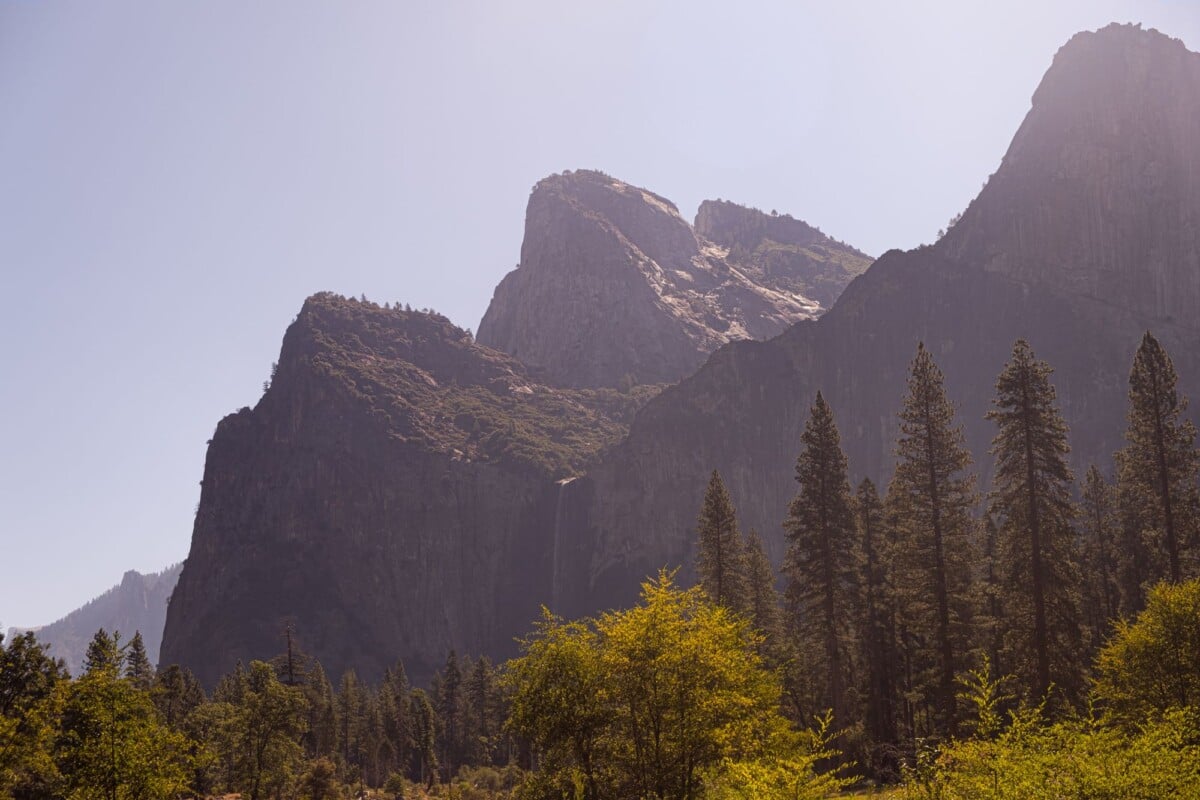
The Mist Trail starts at Happy Isles, crosses the Merced River at Vernal Fall Footbridge, then climbs hard towards Vernal Fall. Above the footbridge is where it earns its name. Spring and early-summer spray from Vernal Fall can soak the granite stairs, and water, crowds and tired legs can make the descent more technical than the map suggests. Even in September, cool, damp conditions can linger around the trail: conditions were 51°F with broken cloud and 87% humidity as of September 2026.
Expect hundreds of uneven granite steps on the climb to Vernal Fall. There are handrails in places, but they do not make wet stone a stroll. Shoes with solid grip, a waterproof layer during high flow and a bag that leaves your hands free are sensible. Our hiking gear packing list covers suitable footwear, waterproof clothing and the essentials worth carrying in your day bag.
Beyond Vernal Fall, the Mist Trail continues uphill towards Nevada Fall. It remains demanding but is usually less drenched. It suits hikers who want close-up views of both falls and do not mind a short, sharp workout.
Choose the Mist Trail If You Want the Direct Waterfall Experience
- You have limited time and want the shortest standard route to Vernal Fall.
- You are comfortable climbing steep stair sections and walking on wet rock.
- You are hiking in warm, dry conditions and have footwear with reliable traction.
- You want the closest views of Vernal Fall and do not mind sharing the route with plenty of other day-hikers.
Do not treat the Mist Trail as a casual shortcut. Yosemite National Park warns hikers to stay on marked trails, keep away from fast-moving water and never cross barriers around the falls. The river and slick granite have caused fatal accidents.
John Muir Trail: Longer, Drier and More Gradual
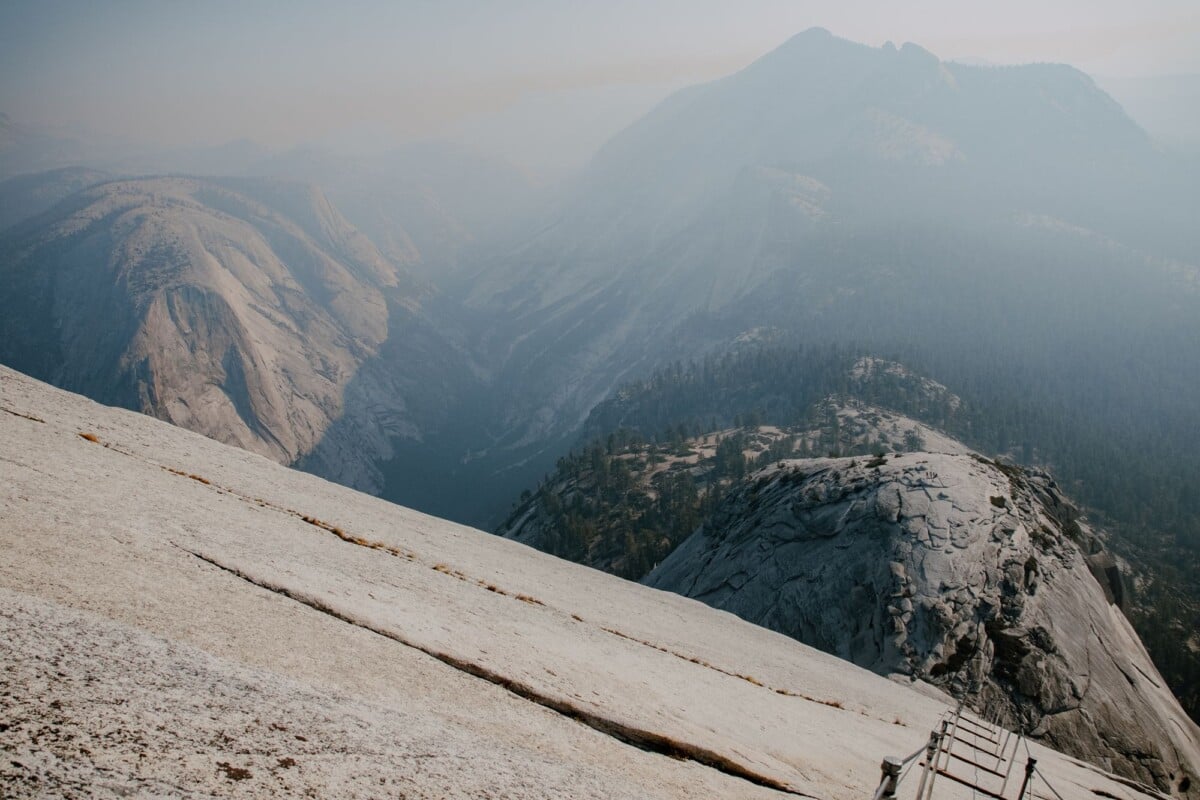
The John Muir Trail also leaves from the Happy Isles area but follows a longer line up the north side of the canyon. It reaches Clark Point, with broad views across to Vernal Fall, then continues through a series of switchbacks towards Nevada Fall.
It still climbs about 1,000 feet to Vernal Fall and 2,000 feet to Nevada Fall, so this is not the easy option. The advantage is its gradient: the ascent is spread over more distance, with fewer steep, wet stairs. Hikers with sore knees often prefer it for the descent, although a long downhill can be hard on knees too.
The John Muir Trail is usually a better fit if you dislike spray, are carrying a larger day pack or want a route that feels less crowded. It also gives you a more open canyon perspective, which is a welcome change after the close confines of the Mist Trail. If this hike is part of a longer Yosemite adventure, our guide to backpacking in America’s national parks includes additional Yosemite trail, camping and trip-planning advice.
Choose the John Muir Trail If You Prefer a Steadier Climb
- You would rather walk switchbacks than tackle long sets of slick steps.
- You are hiking early or late in the season, when water, ice and cold can make the Mist Trail less appealing.
- You are heading to Nevada Fall and have time for the extra mileage.
- You want to make a loop hike and use the trail for your descent.
The longer distance is the trade-off. For a Vernal Fall outing, the John Muir Trail adds about a mile round trip. For Nevada Fall, it adds roughly 1.5 miles. Modest on paper, perhaps, but it can feel fairly substantial after a hot afternoon in Yosemite Valley.
Which Trail Is Better for Vernal Fall?
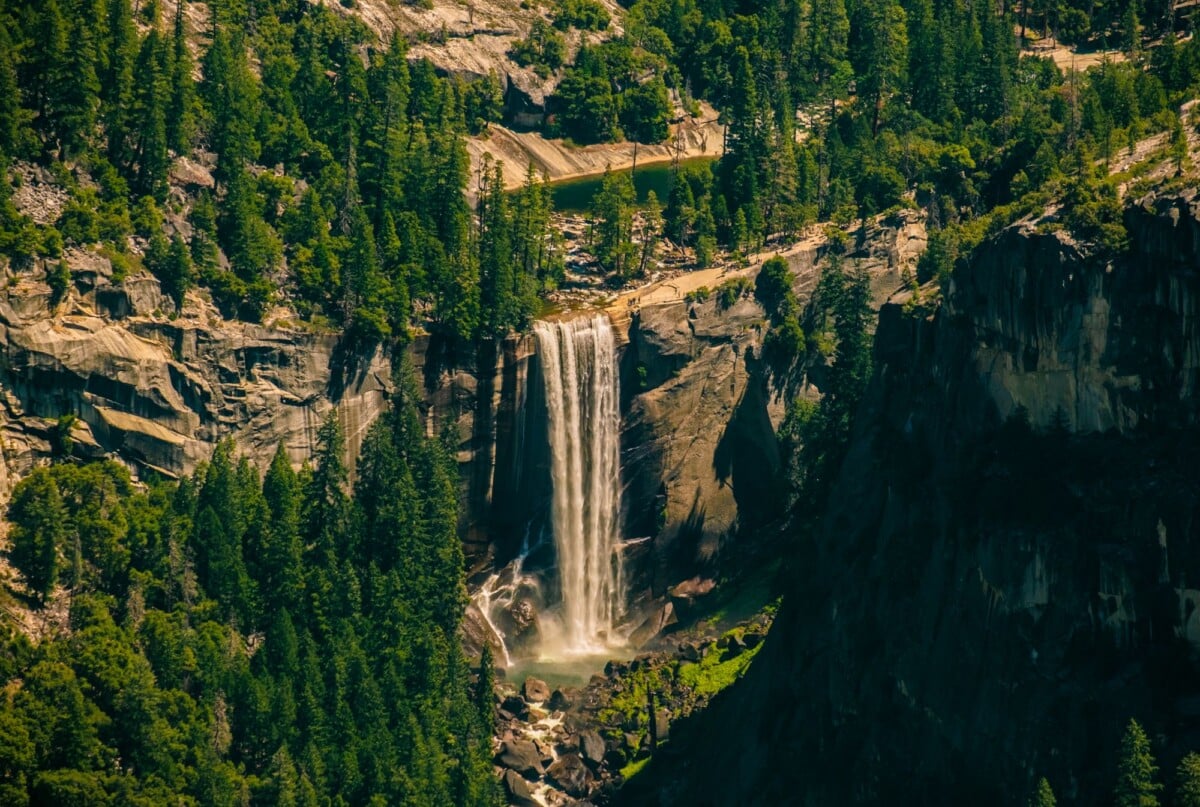
For Vernal Fall alone, the Mist Trail is usually the better route up if you are steady on stairs and prepared to get wet. It is shorter, more direct and gives you the classic close-range experience of the fall.
The John Muir Trail works well if wet steps are a concern, you are pacing a family group or you prefer a more gradual grade. A practical compromise is to hike up the Mist Trail to Vernal Fall, then follow the signed John Muir Trail back down. This creates a loop of around 4 miles and avoids descending the steepest, wettest stair sections.
Which Trail Is Better for Nevada Fall?
For Nevada Fall, the most balanced choice is usually Mist Trail up and John Muir Trail down. You get the direct waterfall approach on the ascent, then a longer but generally gentler return through Clark Point.
If you want to avoid steep steps altogether, use the John Muir Trail in both directions, provided it is open. Plan for the longer 8.5-mile round trip and carry enough water, food and time. Nevada Fall is a proper half-day hike, not a quick diversion between lunch and a drive to Glacier Point.
Trail Closures and Seasonal Conditions
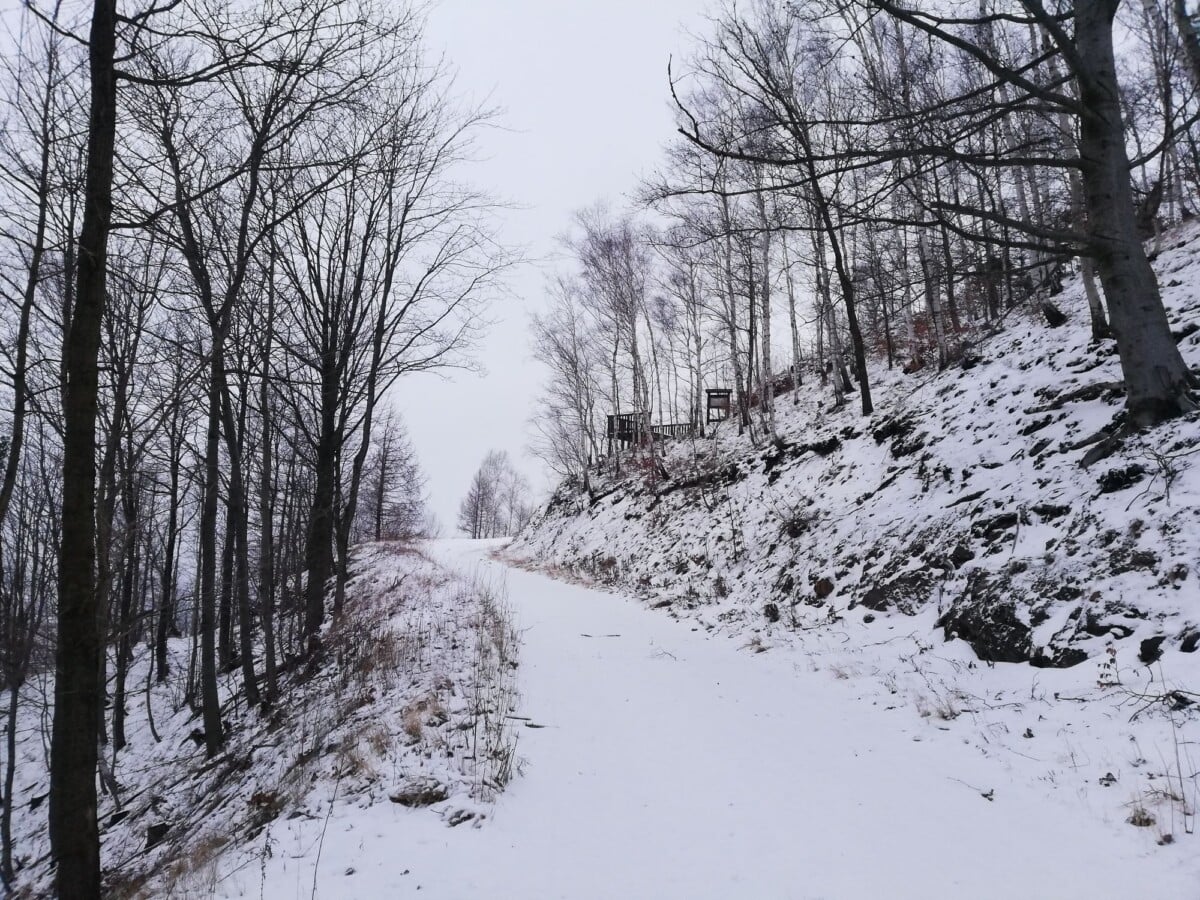
Trail access changes with weather, rockfall risk, maintenance work and high water. Sections of the John Muir Trail near Clark Point and Nevada Fall commonly face seasonal closures because of ice and rockfall hazards. The Mist Trail can also be icy, wet or temporarily closed when conditions are hazardous.
Check Yosemite National Park’s current conditions and trail closure updates on the morning of your hike, even if the forecast looks settled. A clear day in Yosemite Valley does not guarantee dry, safe steps higher up the canyon.
Water volume makes the biggest difference to the Mist Trail. Spring snowmelt usually means stronger flow and heavier spray at Vernal Fall. Later summer can be warmer and drier, although heat becomes the main issue. Autumn can be pleasant, while winter hiking requires extra judgement, appropriate equipment and flexibility around closures.
How To Plan the Hike From Yosemite Valley
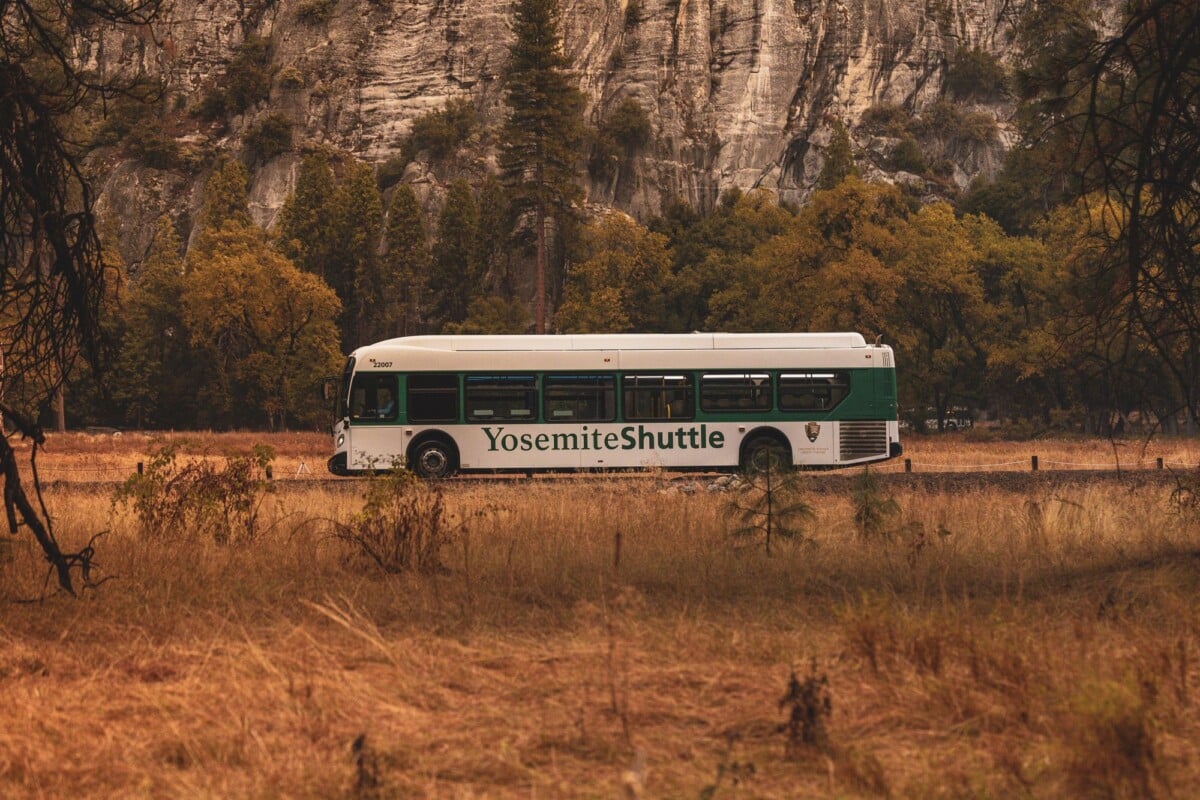
Both trails begin near the Happy Isles trailhead in eastern Yosemite Valley. Parking near the trailhead is limited, so use the free Yosemite Valley shuttle when it is operating and allow extra time during busy periods. An early start helps with parking, heat and crowds on the narrowest sections.
- Check trail status, weather and any park-entry requirements before setting out.
- Start with enough water for a strenuous hike. Refill only with a suitable filter or treatment method.
- Carry food with salt and carbohydrates, especially for the Nevada Fall route.
- Use shoes with grippy soles and keep your hands available for railings on the Mist Trail.
- Stay behind barriers and well back from the river, even for a photo.
- Turn around if lightning, heavy rain, ice, fatigue or unsafe footing changes the plan.
Yosemite’s entry rules can change by season and date. Check the National Park Service’s Yosemite reservation information before you drive in, particularly for popular weekends and holiday periods. If you are flying to California, this guide to the closest airport to Yosemite can help with the wider trip plan.
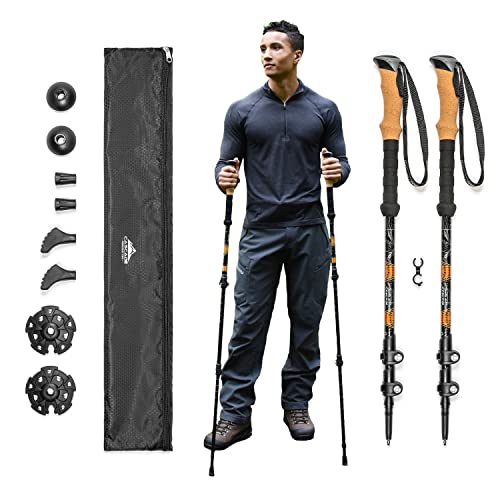
Cascade Mountain Tech
WALKING_STICK
We earn a commission if you buy through this link, at no extra cost to you.
Trekking poles can help on the John Muir Trail’s long descent and on dry sections of the Mist Trail. Stow them securely where both hands are needed on wet stairs. Poles are useful, but they do not make unsuitable footwear or unsafe conditions a good idea.
Where To Stay Near the Trailhead
Staying in Yosemite Valley makes an early Happy Isles start much easier, but beds and campsites can be limited during peak periods. Book as early as you can, allow time for the shuttle or parking, and keep a backup plan outside the valley if availability is tight. Campers should also consider the practical trade-offs covered in this look at Yosemite campgrounds and crowd concerns.
What To Pack for the Mist Trail or John Muir Trail
For a broader kit checklist, see our guide to essential hiking accessories for beginners. For these trails, keep the basics practical rather than overcomplicating it.
- Grippy hiking shoes: Smooth-soled trainers are a poor match for wet granite and steep steps.
- Water: Carry more than you expect to need in warm weather, especially for Nevada Fall.
- Waterproof shell: Useful near Vernal Fall during higher flow and for fast-changing mountain weather.
- Food: Bring a proper snack or packed lunch for Nevada Fall.
- Sun protection: The John Muir Trail has exposed sections, and Yosemite Valley heat can build quickly.
- Offline map: Download the route before leaving the valley, as signal can be unreliable.
Frequently Asked Questions
Can You Hike the Mist Trail and John Muir Trail in One Day?
Yes. The usual loop to Vernal Fall is about 4 miles, while the loop to Nevada Fall is about 8.5 miles. Most hikers go up the Mist Trail and return on the John Muir Trail when both are open.
Is the John Muir Trail Easier Than the Mist Trail?
The John Muir Trail has a more gradual grade and fewer wet stairs, but it is longer and gains the same elevation. It is easier for hikers who dislike steep steps, although it remains a strenuous uphill walk.
How Long Does the Mist Trail Take to Vernal Fall?
Allow around three to four hours for the Mist Trail route to Vernal Fall and back, including breaks and time around the waterfall. Crowds, heat and wet conditions can add time.
Can You Reach Nevada Fall on the John Muir Trail?
Yes, the John Muir Trail reaches Nevada Fall when the relevant sections are open. The National Park Service lists the out-and-back route at about 8.5 miles with 2,000 feet of elevation gain.
Do You Need a Permit for the Mist Trail?
A wilderness permit is not required for a standard day hike on the Mist Trail or John Muir Trail. Yosemite may require a vehicle reservation or another entry arrangement on certain dates, so check official park information before travel.