
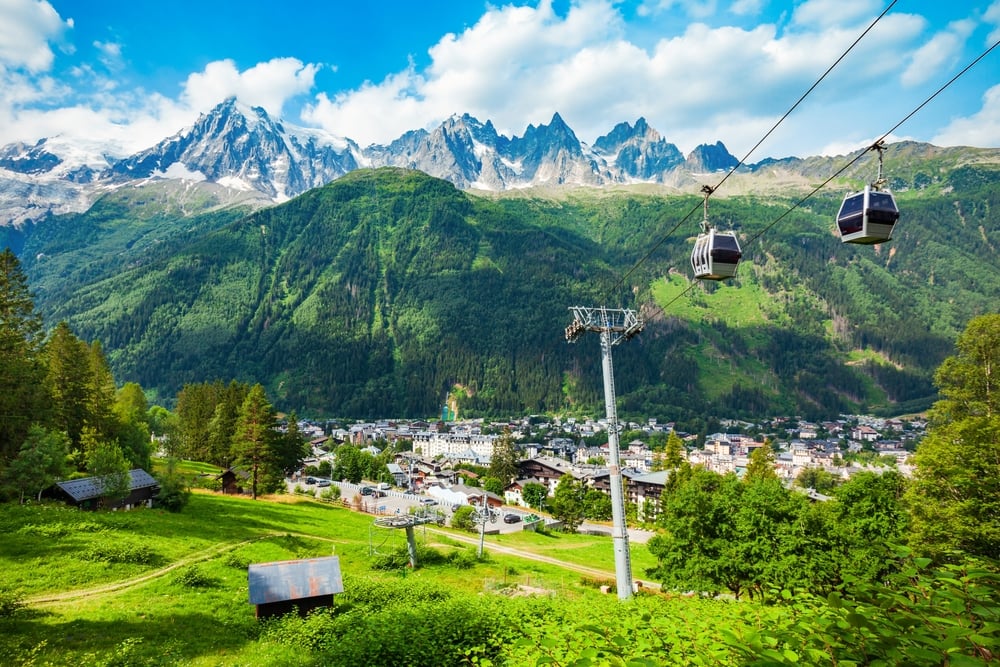
Booked a self-catered chalet and now staring at an empty suitcase? A Chamonix ski trip asks more of your packing than most resorts, because this is a working mountain town that hosted the first Olympic Winter Games in 1924 and spreads its skiing across a long valley.
Below you will find a Chamonix packing list that copes with valley streets and high lifts, how the separate ski areas affect what you carry each day, and a simple plan for feeding everyone in the chalet without losing your evenings to the kitchen.
Why Is a Chamonix Ski Trip Different to Pack For?
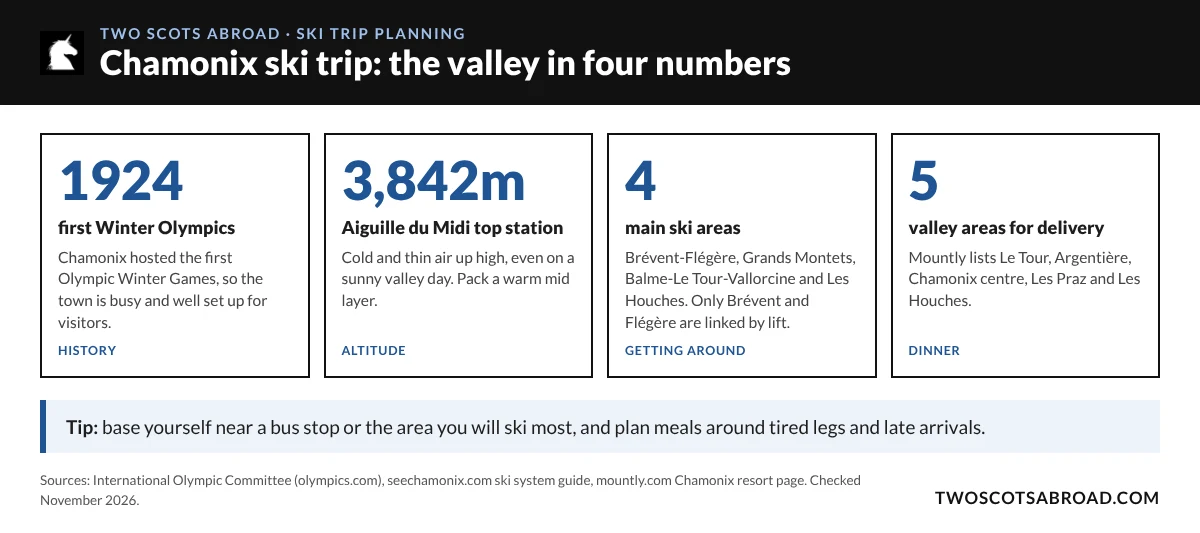
Chamonix is a proper town with shops, bars and restaurants, so you will spend time walking icy pavements as well as skiing. The bigger difference is the layout. The valley has several separate ski areas: Brévent-Flégère, Grands Montets, Balme-Le Tour-Vallorcine and Les Houches. According to the Chamonix ski system guide, only Brévent and Flégère are linked by lift, and buses run between the rest.
That shapes your day. You usually leave the chalet in the morning, ride a bus or drive to one area, and come back in the afternoon. Anything you forget stays forgotten until the evening, so a well-packed daypack matters more here than in a ski-in, ski-out resort.
Altitude is the other factor. The Aiguille du Midi cable car tops out at 3,842m, which is cold and windy even when the valley feels mild. Pack for the top of the mountain and dress down in town.
Here is the valley at a glance, with the four numbers that shape a week of skiing and eating there.

Chamonix Packing List: What to Bring for a Week
Layering does most of the work. A base layer that wicks sweat, a warm mid layer and a waterproof shell cover almost every day, and you can add or remove the middle layer as the forecast changes. If you like a packable insulated layer for the cable car queues, our pick of the best lightweight travel vests folds small into a daypack.
| Item | How many (one week) | Why it matters in Chamonix |
|---|---|---|
| Base layer sets | 3 to 4 | Merino or synthetic dries overnight in a chalet drying room |
| Mid layer (fleece or light down) | 1 to 2 | The high lifts are much colder than the valley floor |
| Waterproof ski jacket and trousers | 1 each | Valley snow can turn to wet sleet; you need a full shell |
| Ski socks | 5 to 7 pairs | Dry socks every morning help prevent cold feet and blisters |
| Gloves or mittens | 2 pairs | One pair is often still damp at breakfast |
| Goggles and sunglasses | 1 each | Goggles for flat light, sunglasses for sunny bus rides and lunch |
| Helmet | 1 | Hire is available, but your own fits better |
| Sunscreen and SPF lip balm | 1 each | Snow reflects sunlight, so apply even on cloudy days |
| Town boots with good grip | 1 pair | Pavements and chalet steps are often icy |
| Daypack | 1 | You leave the chalet for the whole day on most days |
| UK to EU plug adaptor and power bank | 1 each | Phones drain fast in the cold and you will use them for lift passes and buses |
What Goes in Your Daypack Each Morning
- A spare mid layer or gilet for lifts and lunch stops
- Sunscreen, lip balm and sunglasses
- Water and a snack, because mountain restaurants can be busy at lunch
- Your lift pass, bank card and phone in an inside pocket
- A small first aid kit with blister plasters
If you are travelling by train or with a lot of kit, a rucksack with wheels copes with snowy pavements better than a hard suitcase, and you can carry it up chalet steps.
How Do You Eat Well in a Self-Catered Chalet?
Self-catering saves money, but cooking a full dinner after six hours on the slopes gets old by Wednesday. The easiest week mixes three approaches: cook simple meals from a grocery shop, order in on your most tired nights, and book a restaurant for the big night out.
Arrival Night and Groceries
Many visitors reach the valley in the late afternoon or evening after a transfer from Geneva, which is the worst time to find a supermarket, unpack and cook. Plan arrival night as a delivery night and have breakfast basics in the kitchen before you go to bed, so the first ski morning starts on time.
- Breakfast: bread, butter, jam, eggs, yoghurt, fruit and coffee
- Packed lunch: cheese, ham, wraps, crisps and chocolate
- Easy dinners: pasta, a jar of sauce, rice, tinned tomatoes and a big bag of salad
- Après: crisps, local cheese and whatever the group drinks
Ordering In on Tired Nights
Delivery covers more of the valley than many visitors expect. Mountly, the platform behind food delivery in Chamonix, lists delivery to chalets, apartments and hotels from Le Tour and Argentière through Chamonix centre and Les Praz to Les Houches. Its listings include Japanese, Indian, Italian and American food, alongside pizza, burgers, crêpes and healthy bowls, and you can pre-order groceries and a first-night meal for your arrival.
The site does not publish fixed opening hours, fees or minimum orders for the whole valley, and restaurants change hours or close between seasons, so check the app for your dates before you rely on it. Save the full chalet address and any door code in your phone for the driver.
An Illustrative Week of Chalet Dinners
Here is one way a group of four could split seven nights. It is an example to adapt to your group.
| Night | Plan | Why it works |
|---|---|---|
| 1 (arrival) | Delivery to the chalet | No shopping or cooking after travelling |
| 2 | Cook pasta from the grocery shop | Quick, filling and cheap after the first ski day |
| 3 | Delivery: curry or sushi | Legs are usually at their most tired by day three |
| 4 | Cook a one-pot dish such as chilli | Leftovers become the next day’s lunch |
| 5 | Eat out in town | A change of scene midweek |
| 6 | Delivery: pizza or burgers | Easy night before the last ski day |
| 7 (last night) | Booked restaurant meal | Book ahead, as popular places fill up in peak weeks |
Prefer a ready-made plan? The widget below builds a packing count and a dinner rota for your trip length and group.
 Chamonix Ski Trip Packer and Dinner Planner
Set your trip length and group, and get a packing count per person plus a night-by-night dinner plan for a self-catered chalet or apartment.
Nights
Adults
Children
What fits your group?
Pack per person
Dinner plan
Before you leave
How to Plan the Rest of Your Chamonix Chalet Week
Decide which ski area suits your group before you book, because that is where you will spend most mornings. A chalet near a bus stop or within walking distance of your main lift saves time every day. Our guide to planning a trip itinerary can help you map flights, transfers, lift passes and rest days together.
- Check bus timetables for the areas you plan to ski, as the last buses back can be earlier than you expect
- Book ski hire and lessons before peak weeks such as February half term
- Plan one easier day mid-week; a tired group skis worse and eats later
Chamonix Ski Trip FAQ
Do I need a car in Chamonix?
Not usually. Buses link the town with the main ski areas, so many visitors manage without a car. A car helps if your chalet is far from a stop or you want to ski in nearby resorts.
How many layers should I pack for a Chamonix ski holiday?
Plan on three: a base layer, a warm mid layer and a waterproof shell. Bring three or four base layers for a week so one can dry while you wear another.
Can I get food delivered to a chalet in Chamonix?
Yes. Delivery platforms such as Mountly list chalets, apartments and hotels across the valley, from Le Tour to Les Houches. Check opening hours for your dates, as they change between seasons.
Should I shop for groceries before I arrive?
If you arrive in the evening, pre-ordering groceries saves the first-night scramble. Otherwise, a supermarket shop on day one for breakfasts, packed lunches and simple dinners covers most of the week.
Is Chamonix good for beginner skiers?
Chamonix is best known for steep, high skiing, but there are gentler areas too, including nursery slopes and beginner zones in the valley. Ask your ski school which area they use and base yourself nearby.
