
A Catholic pilgrimage to the Holy Land can involve early starts, busy churches and more walking than the brochure photographs suggest. Choosing the right trip means looking beyond the list of famous sites to see how much time is set aside for prayer, rest and understanding the places you visit.
The seven pilgrimage styles below offer different ways to organise that journey. Some focus on travelling with your parish; others place greater emphasis on Marian devotion, history or the liturgical calendar. Holy Land itineraries may include both Israel and Palestinian destinations such as Bethlehem in the West Bank, so check the full route carefully.
Check Travel Advice Before Booking
As of 27 September 2026, US travel advice for Israel and the West Bank is Level 3: Reconsider Travel, with higher-risk areas subject to Do Not Travel advice. The UK also advises against all travel or all but essential travel to specified areas in its guidance for Israel and Palestine.
A tour being advertised does not mean every stop is accessible or that travelling is advisable. Read your government’s latest advice before paying a deposit and again before departure. Ask the operator about route changes and cancellations, and check insurance cover for the proposed itinerary directly with your insurer.

Compare the Pilgrimage Styles
| Pilgrimage style | Main appeal | Key question |
|---|---|---|
| Franciscan-led or connected | Spiritual guidance linked to the Franciscan tradition. | Who leads the trip, and what does the Franciscan connection involve? |
| Parish or diocesan group | Sharing the journey with a faith community. | Which priest accompanies the group, and for how much of the trip? |
| Marian-focused pilgrimage | Prayer and visits centred on sites associated with Mary. | Is time for devotion built into each day? |
| Biblical archaeology focus | More attention to historical evidence and excavation sites. | What subject expertise does the guide have? |
| Small-group or private trip | More scope to tailor the pace and interests. | What is the maximum group size, and what can be changed? |
| Egypt extension | A wider journey including additional biblical traditions. | Are the exact route, entry arrangements and security conditions suitable? |
| Holy Week pilgrimage | A journey shaped around the Easter liturgies. | Which services can the group actually attend? |
1. Franciscan-Led or Franciscan-Connected Pilgrimages
The Franciscans have a long association with the Holy Land. Their province dates to 1217, while papal recognition of their role caring for the holy places followed in 1342, as explained by the Holy Land Franciscan Pilgrimages office.
For travellers drawn to this tradition, establish whether a friar will accompany the group, lead particular visits or meet you at a shrine. Those are different arrangements. Visiting a Franciscan-managed site does not automatically make a tour Franciscan-led.
Mass arrangements also need planning. The Franciscan Pilgrims’ Office coordinates celebrations at shrines in the Custody of the Holy Land and accepts reservations for individual priests or groups with their own priest. Confirm the arrangements rather than assuming a religious affiliation guarantees private access.
2. Parish and Diocesan Pilgrimages
Travelling with your parish can give the pilgrimage a sense of continuity. You prepare together, share reflections during the trip and return to a community that understands what the journey meant.
Check who is travelling as spiritual leader, whether they accompany the whole itinerary and who handles the practical arrangements. Ask about the maximum group size and whether participants from outside the parish can join.
Read the daily schedule as carefully as the list of churches. Our guide to planning a trip itinerary can help you map out transfers and overnight stops. Several hotel changes and long coach journeys may leave less time for reflection than you expected.
3. Marian-Focused Pilgrimages
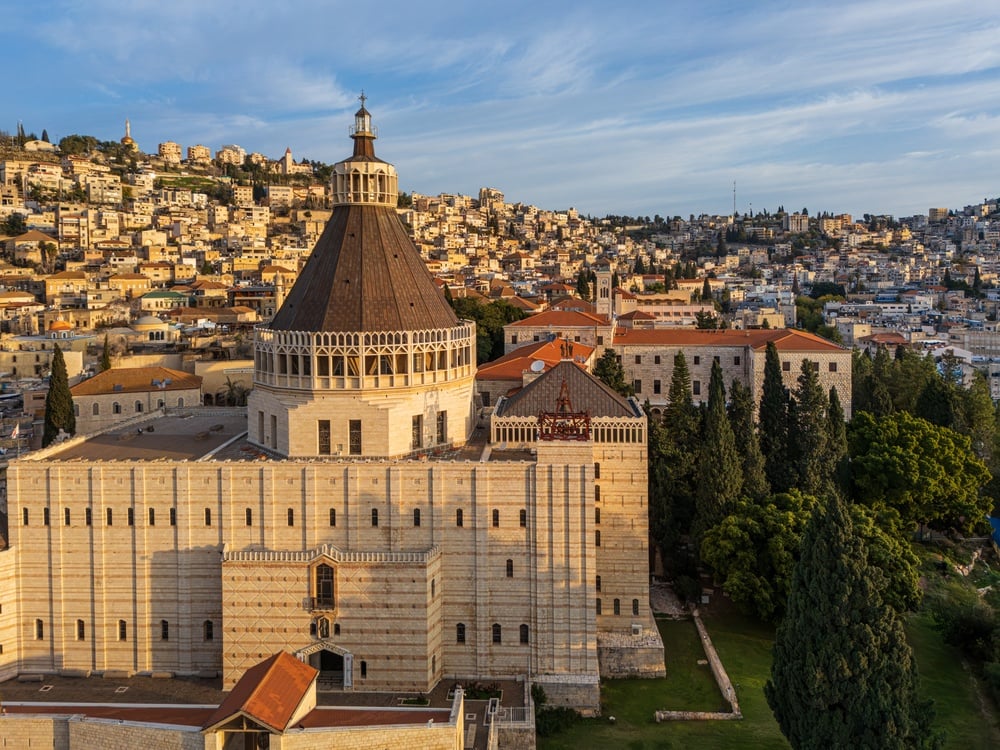
A Marian focus may suit travellers who want more time for the Rosary and reflection on Mary’s place in the Gospel accounts. Relevant sites include the Basilica of the Annunciation in Nazareth and the Church of the Visitation in Ein Karem, which commemorates Mary’s visit to Elizabeth.
Look for a programme that explains how those themes shape the day. A brief photo stop outside a church offers a different experience from a scheduled visit with prayer and space to sit quietly. Check the walking involved, too, especially where the route includes hills or steps.
4. Pilgrimages with a Biblical Archaeology Focus
If you enjoy understanding how a place developed over centuries, look for an itinerary with a stronger historical component. Ask which archaeological sites are included, how long you spend there and what relevant training or experience the guide brings.
A thoughtful explanation distinguishes excavated evidence, scholarly interpretation and religious tradition. If daily Mass or Catholic spiritual direction matters to you, check that separately. An archaeology tour with biblical sites on the route is not necessarily a Catholic pilgrimage.
5. Small-Group and Private Pilgrimages
A smaller party can make it easier to discuss interests and plan a manageable pace. However, “small group” has no single meaning across operators. Ask for the maximum number of travellers, the transport arrangements and whether the itinerary is fixed or tailored to your party.
For a tailored group itinerary, Immanuel Tours advertises Catholic Tours to Israel with arrangements for Mass and optional Catholic guesthouses. Ask for the proposed group size, spiritual leadership and written inclusions for your departure.
Smaller numbers do not remove queues, checkpoints or a church’s fixed visiting hours. If mobility is a concern, request details of steps, walking distances, coach drop-off points and opportunities to rest. “Comfortable pace” is considerably more useful when someone explains what it means.
6. Pilgrimages with an Egypt Extension
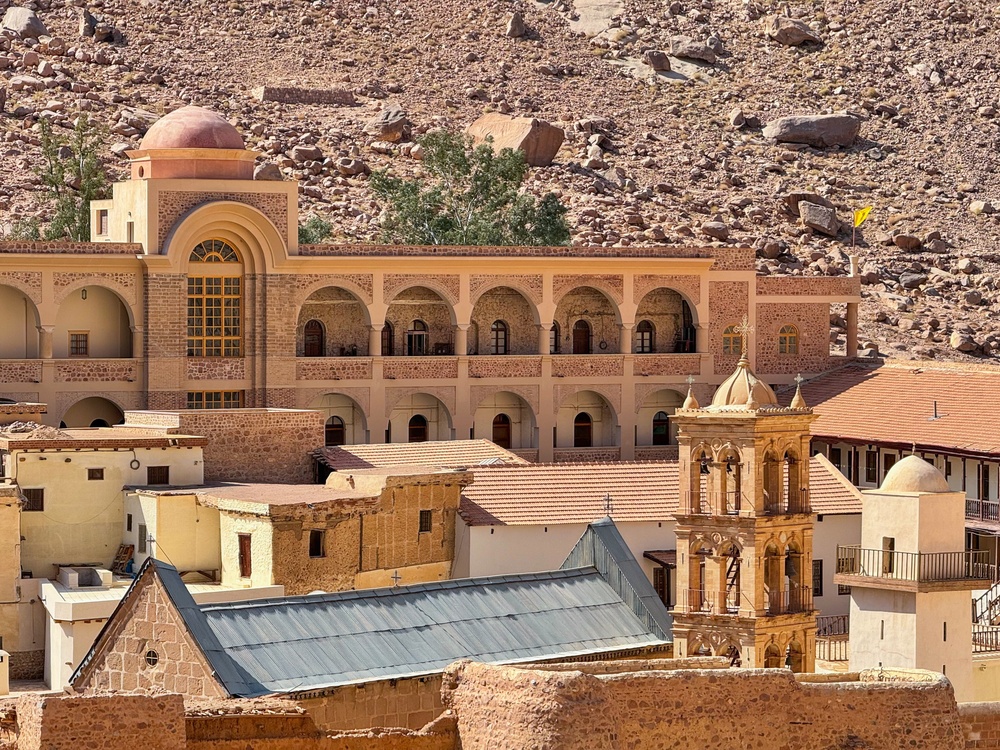
An Egypt extension might include Saint Catherine’s Monastery in Sinai, adding another dimension to a journey through places associated with biblical tradition. It also introduces a separate set of travel requirements and security considerations.
Check the exact route against current advice, including the UK’s regional guidance for Egypt, which distinguishes between different parts of Sinai. Advice for a coastal resort does not establish that an inland journey is suitable.
Ask about border crossings or flights, entry documents for your nationality, transfer times and what happens if access changes. Compare the extra time spent travelling with the time available at the places you want to visit before committing to the extension.
7. Holy Week Pilgrimages
A pilgrimage centred on Holy Week offers a different rhythm from a general sightseeing itinerary. The liturgical programme becomes the priority, with other visits arranged around it.
Ask which Catholic services are included and how attendance is arranged. A stay in Jerusalem over Easter does not guarantee admission to a particular liturgy at the Church of the Holy Sepulchre. Check current schedules and updates through the Christian Information Center, alongside the operator’s arrangements.
Request details of early starts, standing time and crowd management. If a specific procession or service is the reason you are travelling, find out what alternative the operator offers if it becomes inaccessible.
Compare the Full Pilgrimage Cost
Compare written quotes for the same dates and room arrangements. A headline price tells you little until you know whether flights, meals and transfers are included.
| Cost or booking detail | What to confirm |
|---|---|
| Flights and baggage | Departure airport, connections, baggage allowance and whether flights form part of the package. |
| Rooms | Named accommodation or proposed standard, room-sharing arrangements and any single supplement. |
| Meals and drinks | Which meals are included and what you should budget separately. |
| Transfers and visits | Airport collection, transport between stops, entrance fees and optional excursions. |
| Additional charges | Expected gratuities, donations and any administrative or border fees. |
| Changes and cancellation | Deposit terms, minimum group requirements and what happens if you or the operator cancels. |
| Insurance | Cover for your route, activities and circumstances, including relevant exclusions. |
Once you have a realistic total, our guide to saving money for travel can help you work towards it. Leave room for personal spending and unexpected costs without treating that reserve as a substitute for appropriate insurance.
Prepare for the Journey You Have Chosen
Ask for a packing list matched to your departure month, planned walks and the dress requirements of the places you will visit. Comfortable, already-worn shoes deserve their place in the suitcase. So do layers and a small day bag you can carry without regretting it by lunchtime.
Keep essential medicines, travel documents and your operator’s contact details accessible. Our carry-on packing guide explains how to organise important belongings and prepare for delays.
Choose an itinerary that gives you time to engage with the places and people you meet. Clear spiritual leadership, a realistic pace and honest booking information will tell you more about its suitability than a long list of stops.
