
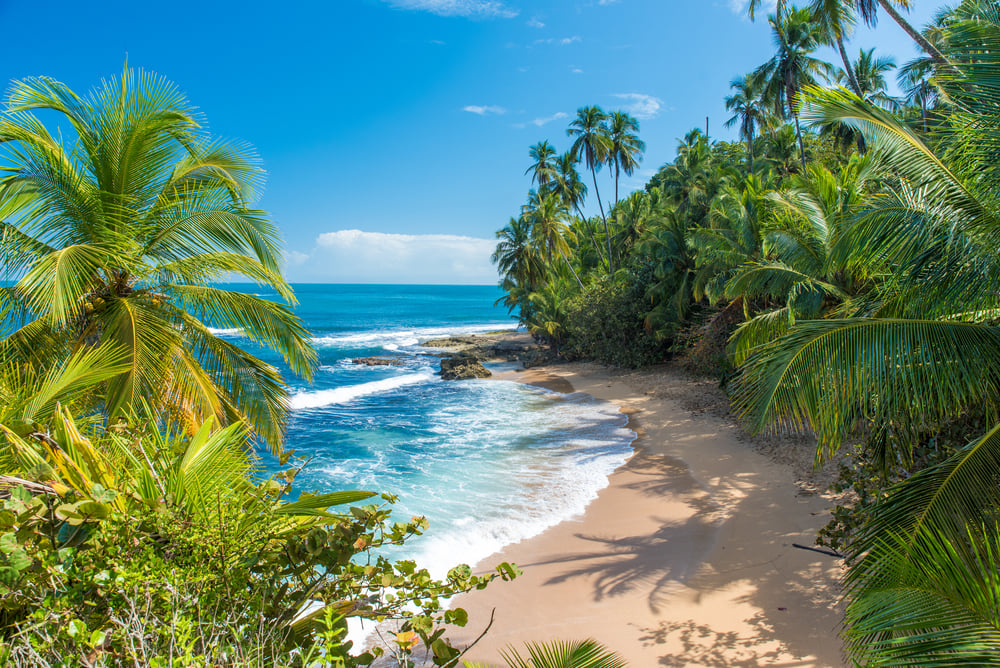
A Costa Rica trip can take you from Pacific surf beaches to Caribbean coastal forests, with volcano views and hot springs between them. Visiting both coasts adds variety, but the route needs more thought than drawing a line across a small country on a map.
For a first visit combining both sides, allow around two weeks and keep your main stops to three bases. The itinerary below pairs Guanacaste on the Pacific with La Fortuna inland and Puerto Viejo de Talamanca on the Caribbean, leaving proper time for transfers and a final night near the departure airport.
Should You Visit Both Coasts in One Trip?
Both coasts can work well if you enjoy changing scenery and are comfortable giving several days partly or entirely to travel. With a week, choosing one coast and one inland stop is usually a more relaxed plan. Ten days can work for a selective route, but you will have less room for delays or unplanned afternoons.
Start by choosing the experiences that matter most: surfing, wildlife walks, Caribbean food, hot springs or simply time by the sea. Our guide to planning a trip itinerary can help you turn that list into a manageable route.
Choose Your Pacific and Caribbean Bases
The Pacific coast changes considerably as you travel south. Guanacaste includes tropical dry forest and established beach towns, while Manuel Antonio combines beaches with wet tropical forest. On the Caribbean, the road-accessible southern coast and the waterways around Tortuguero call for different itineraries.
| Area | Possible Base | What to Plan Around |
|---|---|---|
| Northern Pacific | Tamarindo or another Guanacaste beach town | Beach time, surfing and access through Liberia airport. |
| Central Pacific | Quepos or Manuel Antonio | National park trails and beaches, with park entry booked ahead. |
| Southern Caribbean | Puerto Viejo de Talamanca or Cahuita | Coastal forest, beaches and Afro-Costa Rican food and culture. |
| Northern Caribbean | Tortuguero | Canal trips and wildlife watching, with boat or flight connections arranged separately. |
These are alternatives to choose between. You do not need to sleep in every town to have a good trip, and repacking your bag every morning has limited holiday appeal.
Tamarindo is a practical option if you want restaurants and surfing around one base. In the southern Caribbean, Puerto Viejo and Cahuita offer a chance to explore Afro-Costa Rican traditions through food and music, alongside visits to nearby beaches and forest trails. Try local dishes such as coconut rice and beans, and leave time to explore beyond your hotel.
A 14-Day Costa Rica Itinerary Across Both Coasts
This suggested route uses 13 nights, arriving through Liberia’s Daniel Oduber Quirós International Airport (LIR) and departing from Juan Santamaría International Airport (SJO), near San José. Compare the total cost of these flights with a return ticket before committing.

| Days | Base and Nights | Suggested Pace |
|---|---|---|
| 1–4 | Guanacaste: 4 nights | Arrive through Liberia, settle into one beach town and spend the following days on beach time, a surf lesson or a local excursion. |
| 5–8 | La Fortuna: 4 nights | Transfer inland on day 5. Use the next three days for rainforest walks, hot springs and views of Arenal when the weather allows. |
| 9–12 | Puerto Viejo or Cahuita: 4 nights | Keep day 9 for the transfer. Spend the next three days exploring the southern Caribbean, including beaches, local food and coastal trails. |
| 13–14 | Near SJO airport: 1 night | Return to the Central Valley on day 13, then fly home on day 14 with time for the airport journey and check-in. |
If you fly into and out of SJO, rework the first section around your arrival time. Manuel Antonio could replace Guanacaste, but you will need to recalculate the transfers. Avoid adding it as another stop on top of the route.
An organised trip is another option if you would prefer help arranging transport and activities. When comparing G Adventures’ Costa Rica adventure trips, check the individual itinerary for the coasts included, transfer days, activity levels and free time. The route above is an independent planning example, rather than a description of a particular tour.
Allow Realistic Time Between Stops
Popular coastal bases are not necessarily a quick drive apart. For a sense of scale, Interbus lists approximately five and a half hours for its Tamarindo-to-La Fortuna shuttle and six hours from La Fortuna to Puerto Viejo. These are operator estimates for shuttle journeys, not guaranteed driving times.
The same operator allows around four and a half hours between San José and Manuel Antonio, so treating that journey as a dependable two-hour hop would leave a tight schedule. Check the published shuttle routes and journey times for your chosen stops, then confirm your actual pick-up and drop-off points.
Treat a long transfer as a travel day. Lunch stops, hotel collections, traffic and heavy rain can all affect arrival time. Leave the zip-line booking or guided hike for the following morning.
La Fortuna and Monteverde are separate destinations. Choose La Fortuna for an Arenal-based stay or Monteverde if cloud forest is your priority, then check the onward route. Monteverde needs its own nights and transport arrangements.
When to Visit Costa Rica’s Two Coasts
The Pacific and Caribbean do not follow the same rainfall pattern. The Pacific has a clearer dry season, broadly December to March, with April a transition month. Rain is more prominent from May to October, although conditions vary between regions.
The Caribbean has no reliably rain-free season. Its relatively drier periods generally fall around February to March and September to October. Those autumn months can coincide with some of the wettest Pacific weather.
That makes February and March a reasonable starting point when comparing dates for both coasts, rather than a promise of sunshine throughout. Use the tourism board’s regional climate guide, check forecasts closer to departure and keep some flexibility for outdoor activities.
Where Santa Teresa, Osa and Tortuguero Fit
If Santa Teresa is your main draw, give it the Pacific portion of the trip and plan the onward connection carefully. Routes may involve a ferry or longer overland journey, depending on where you start. Confirm access with your accommodation instead of assuming the final road is always paved or always rough.
The Osa Peninsula suits a trip centred on rainforest and wildlife. Allow dedicated time for access and guided visits rather than adding it as a quick detour. Entry to Corcovado National Park requires an authorised guide; arrange the relevant reservation and transport before travelling. Wildlife sightings are never guaranteed.
Tortuguero is another substantial addition, with access by boat or plane. Its canals and seasonal turtle-watching opportunities offer a different experience from Puerto Viejo’s beach-based stay. If Tortuguero is a priority, replace another stop or extend the trip, and confirm the current turtle-viewing arrangements with an authorised local operator.
Transport, Packing and Booking Checks
- Choose transport around the actual route. A rental car offers flexibility, while shuttles can remove the driving. Our guide to the pros and cons of hiring a car abroad can help you weigh the trade-offs.
- Ask about access before choosing a vehicle. Check the roads to your accommodation and planned activities with the rental company and hosts. Heavy rain can damage roads or cause closures; four-wheel drive does not make every route passable.
- Compare complete transport costs. Request current quotes and check luggage allowances, insurance, taxes, one-way rental charges and airport transfers. Domestic flight and shuttle prices vary by route and date.
- Check park arrangements early. For Manuel Antonio, use the official SINAC reservation system. Check each park’s opening days, entry arrangements and guide requirements separately.
- Pack for wet walks as well as beaches. Bring suitable footwear, quick-drying clothes, rain protection, insect repellent and protection for electronics. Adapt our hiking packing list to the trails and activities you have booked.
- Check sea conditions locally. Rip currents can affect beaches on either coast, and lifeguards are not always present. Follow local warnings and use experienced operators for water activities.
A rewarding two-coast trip leaves you time to enjoy each stop. Choose the places that interest you most, give transfers enough space and keep a few afternoons unbooked. Costa Rica offers plenty to fill them once you arrive.