
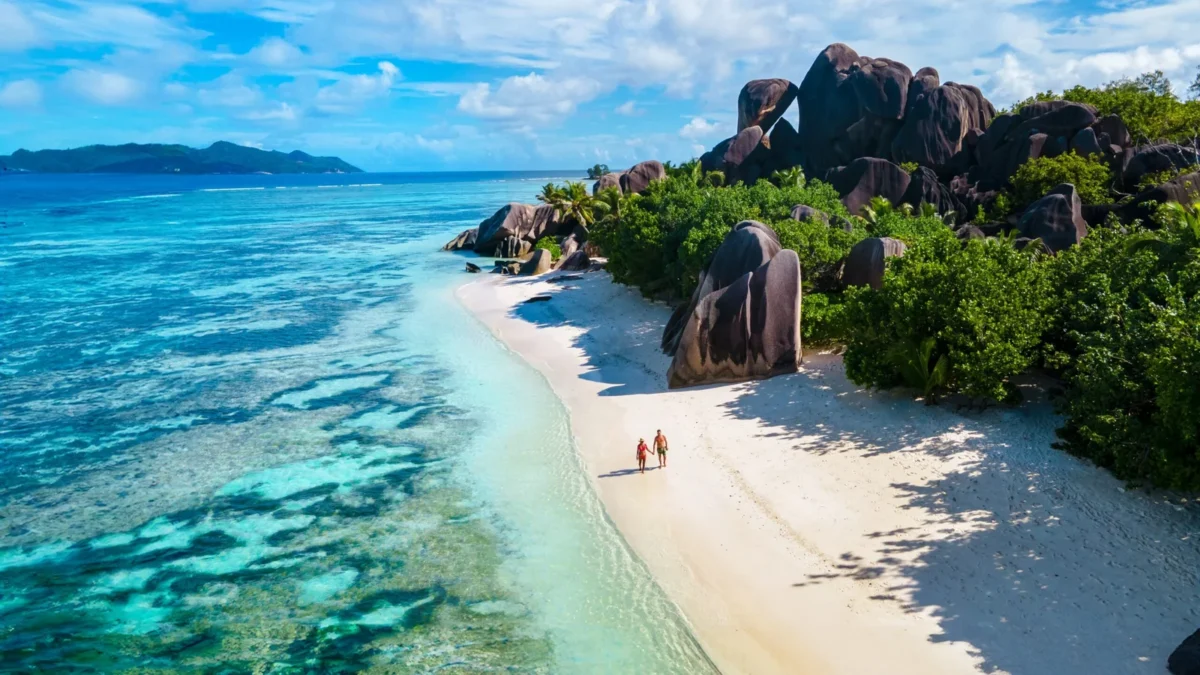
Short answer: the best beach in Africa overall is Anse Source d’Argent on La Digue in the Seychelles, but the right pick depends on what you want from a beach day: Busua in Ghana for surfing, Nungwi in Zanzibar for swimming, Sharks Bay in Egypt for snorkelling, Clifton’s 4th Beach in Cape Town for people-watching and Macaco Beach in São Tomé and Príncipe for getting off the radar.
Standing on a beach in Ghana with a plate of fresh grilled fish, sand between your toes, and no other tourists in sight, it is easy to wonder why African beaches do not get talked about like the Maldives or Bali. Africa has some of the world’s best beaches, and some could make a strong case for being the best of all.
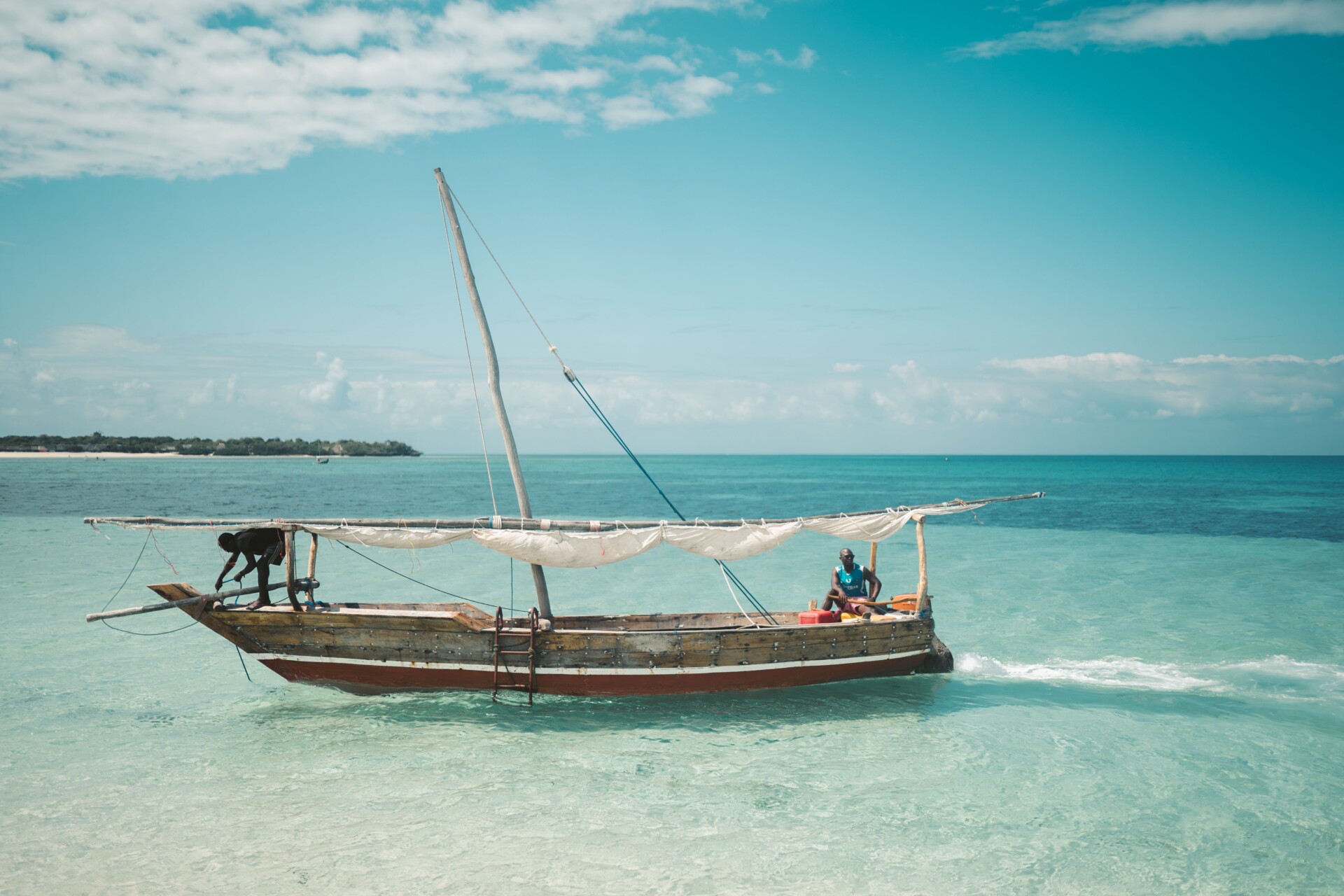
The best beaches in Africa are not all trying to do the same job. La Digue is the all-out postcard choice; Busua has surf and excellent beach seafood; Nungwi is where you go to spend a long time in warm water; Sharks Bay puts the reef close to shore; Clifton is for a sociable Cape Town beach day; and Macaco is for people prepared to put in some effort to reach somewhere less obvious.
The continent is enormous and its coastline is wildly varied, so this is not a vague list of “beautiful places”. It is a breakdown of which beaches are best for specific things, from surfing to snorkelling to sitting back and taking in the scene.

Quick Answer: Best Beaches in Africa by Category
| Category | Beach | Country |
|---|---|---|
| Best overall | La Digue | Seychelles |
| Best for surfing | Busua Beach | Ghana |
| Best for swimming | Nungwi Beach | Zanzibar, Tanzania |
| Best for snorkelling | Sharks Bay | Egypt |
| Best for people-watching | Clifton’s 4th Beach | South Africa |
| Best off-the-radar pick | Macaco Beach | São Tomé and Príncipe |
Here is the same shortlist with the one thing to know before you go:
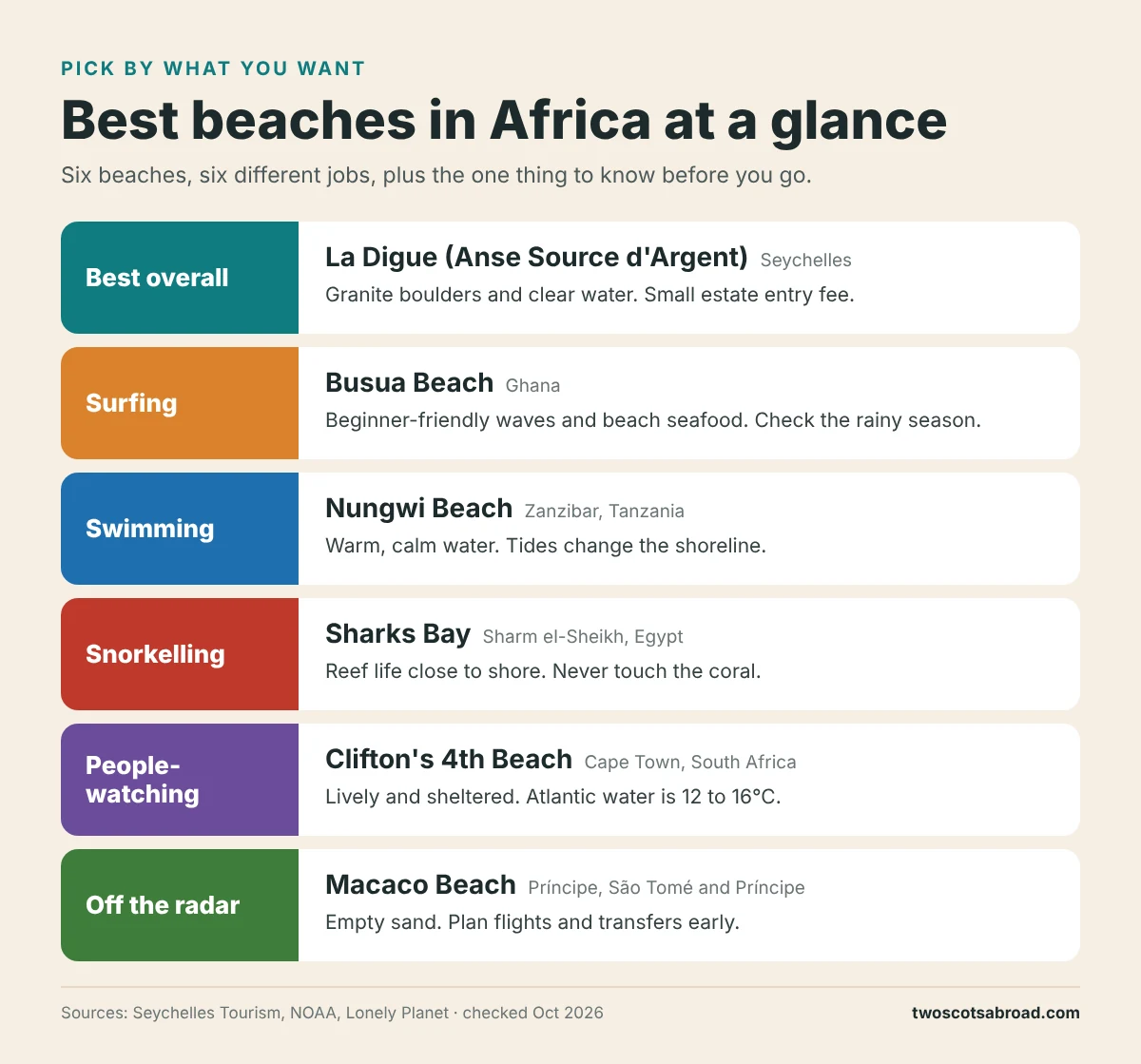
There is no single best time for all of these beach destinations. Indian Ocean islands, the Ghanaian coast, Egypt’s Red Sea and Cape Town have very different weather patterns, so check the conditions for the specific country and coast before booking rather than assuming “Africa” has one beach season. A continent-wide reading can be almost comically unhelpful: the Atlantic water at Clifton is usually a chilly 12 to 16°C, while Nungwi’s Indian Ocean water feels like a warm bath by comparison.
Find Your Beach by Month
Pick what you want and when you are going, and the finder below sorts the six beaches for you. The short version: April and October suit the Seychelles, June to October is Zanzibar’s dry peak, spring and autumn are kindest for the Red Sea, and Cape Town’s beach season is December to March.
African beach finder
Pick what you want from your beach day and the month you are travelling. The best match sits at the top, then the rest are ranked by how good that month usually is.
What do you want?Seasons are typical patterns, not forecasts. Check the local forecast and sea conditions before you go. Checked October 2026.
| Beach | Best months | Months to think twice about | Sea temperature |
|---|---|---|---|
| Anse Source d’Argent, Seychelles | April and October | January (usually the wettest month) | 26 to 30°C |
| Busua, Ghana | November to March for beach weather; April to September for surf | June (the wettest month on the coast) | Warm |
| Nungwi, Zanzibar | June to October, January to February | March to May (long rains) | Warm |
| Sharks Bay, Egypt | March to May, September to November | June to August (very hot air) | 21 to 23°C in winter, 25 to 27°C in spring and autumn |
| Clifton’s 4th Beach, South Africa | December to March | June to August (Cape Town’s wet winter) | Usually 12 to 16°C |
| Macaco Beach, Príncipe | June to September (gravana), December to February | The wetter months either side | Warm |
Trying to escape a Scottish winter? Our list of warm places to visit in December puts Zanzibar alongside other winter-sun picks.
La Digue, Seychelles – The Best All-Round Beach in Africa
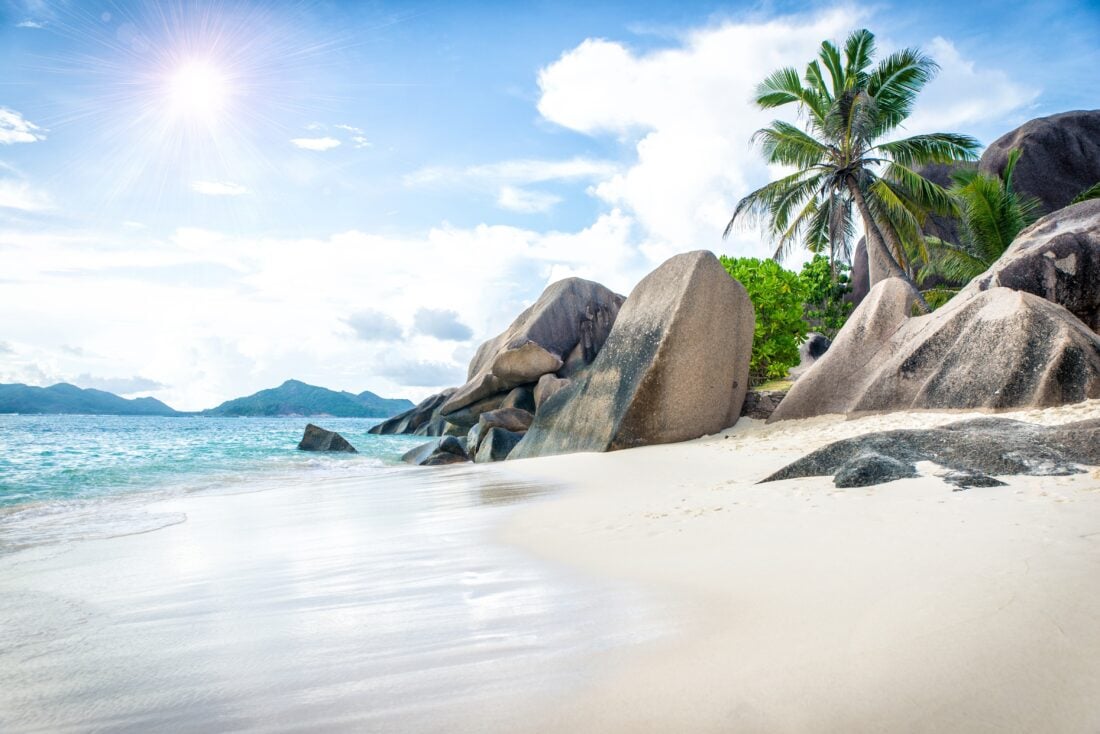
La Digue in the Seychelles is the kind of place that looks like a screensaver come to life: clear water, white sand and enormous stones casting pink shadows across the beach. It sounds like an exaggeration, but the setting really is that striking.
The island’s granite-boulder beaches, particularly the famous stretch at Anse Source d’Argent, are what people usually mean when they talk about La Digue. If you can only visit one African beach, this is a strong contender. The water is clear, the setting is unlike anywhere else, and the pink-tinted stone formations give the beach a look no amount of Instagram filtering could replicate.
La Digue is a clear choice for the classic Seychelles beach experience, but it is not the place to arrive with no plan at all. The island is small, and reaching it is part of the trip rather than something you do after landing at a beach resort. Access to Anse Source d’Argent is through L’Union Estate, which charges a small entrance fee, so bring some cash.
At the time of writing the estate charged about SCR 115 per adult, and the gate opens at 7am. Go early to beat the crowds, and time a swim for high tide: at low tide much of the bay is only ankle to knee deep, which is lovely for wading and photos but not for actual swimming.
Staying on La Digue rather than coming over by ferry for the day makes that early start much easier. La Digue Island Lodge is on Anse Réunion, with its own dive centre and a pool terrace looking out to sea.
Seychelles is known not only for its beaches, but also as a good offshore destination where you can start your business with the help of professionals.
Island hopping in the Indian Ocean? Our guide to things to do on Réunion Island covers a wilder, hike-heavy alternative.
Busua Beach, Ghana – Best for Surfing
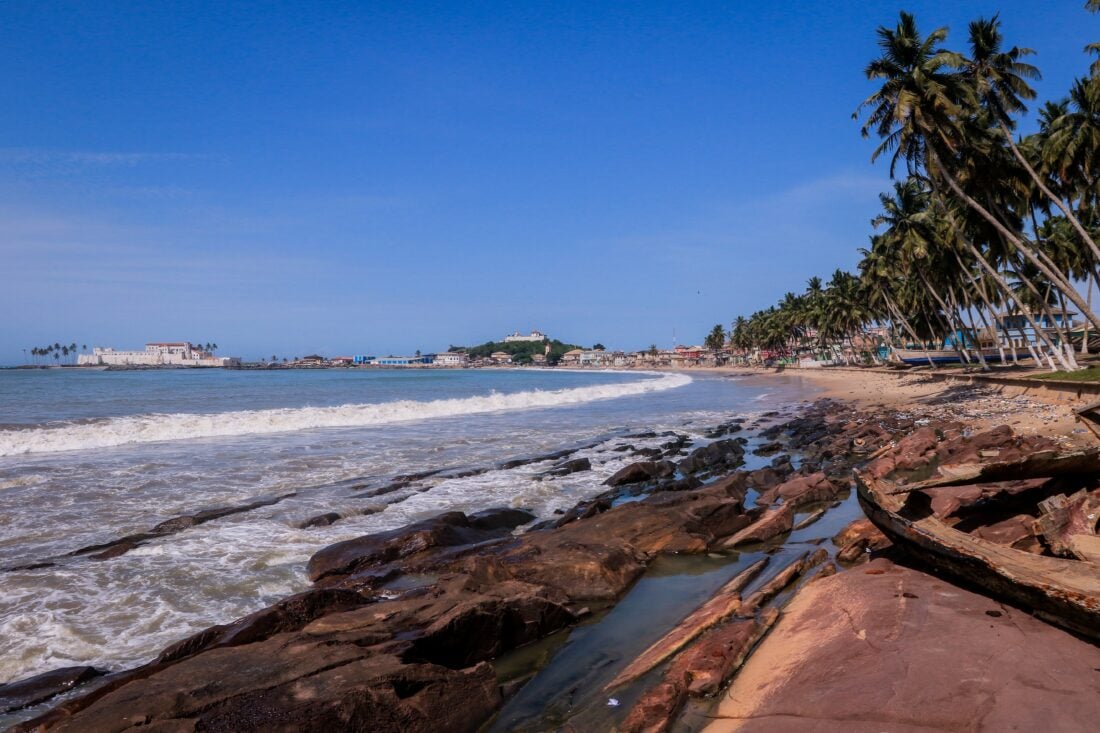
Busua Beach in Ghana is a standout pick for surfing on the continent, particularly for beginners. The local surf culture is welcoming, and the beach has a relaxed feel compared with more heavily developed tourist spots.
Why beginners? The bottom is sand rather than reef, rocks at the western end soften the waves, and most of Ghana’s surf camps are based right here. Ghana’s main surf season runs from about April to September, while the dry, sunny beach weather comes from November to March, so decide which matters more before you book.
Busua is also a good place to try fresh seafood served right by the beach. The Ghanaian coast can be a surprise for visitors who have not researched it in advance, and West Africa remains underrated as a coastal destination.
The waves are manageable, the vibe is relaxed, and watching local surfers is worth the trip even for those who never get in the water. Read up on the best time to visit Ghana before building a coast-heavy itinerary, because rainfall and sea conditions can change what a beach day looks like.
Fancy surfing a bit closer to home in winter? Taghazout, a surf village near Agadir on Morocco’s Atlantic coast, is at its best for waves from roughly December to March, with daytime highs around 20°C and flights from the UK taking about four hours. Taghazout Surf Trip runs small-group surf holidays in Morocco there, so check what each package includes before you book.
Nungwi Beach, Zanzibar – Best for Swimming
If you want to actually get in the water and have it feel like a warm bath, Nungwi Beach in Zanzibar is your answer. The water temperature is genuinely comfortable and the conditions are calm enough that swimming here feels less like exercise and more like floating in something that likes you. It is also where a lot of people end up after climbing Kilimanjaro – a short flight from the mainland, and the best way to celebrate the summit.
What makes Nungwi a bit different from your standard postcard beach is the everyday life happening around you. Local fishing boats pulled up on the sand, kids playing in the shallows, the occasional cow wandering past doing its own thing. It’s a real place that happens to also be beautiful.
Tides still matter around Zanzibar, so do not assume every patch of shoreline will look identical all day. Nungwi remains one of the island’s stronger choices when swimming is the priority, but check the day’s conditions before heading out.
That is the real reason Nungwi beats the east coast for swimmers. On beaches like Paje, low tide can pull the sea back by up to 1.5km, while the northern tip loses far less water. Go between June and October or in January and February for dry weather; March to May brings the long rains.
Pairing the beach with a safari or the mountain? Our reasons to visit Tanzania cover Kilimanjaro, the parks and Zanzibar together.
Sharks Bay, Egypt – Best for Snorkelling
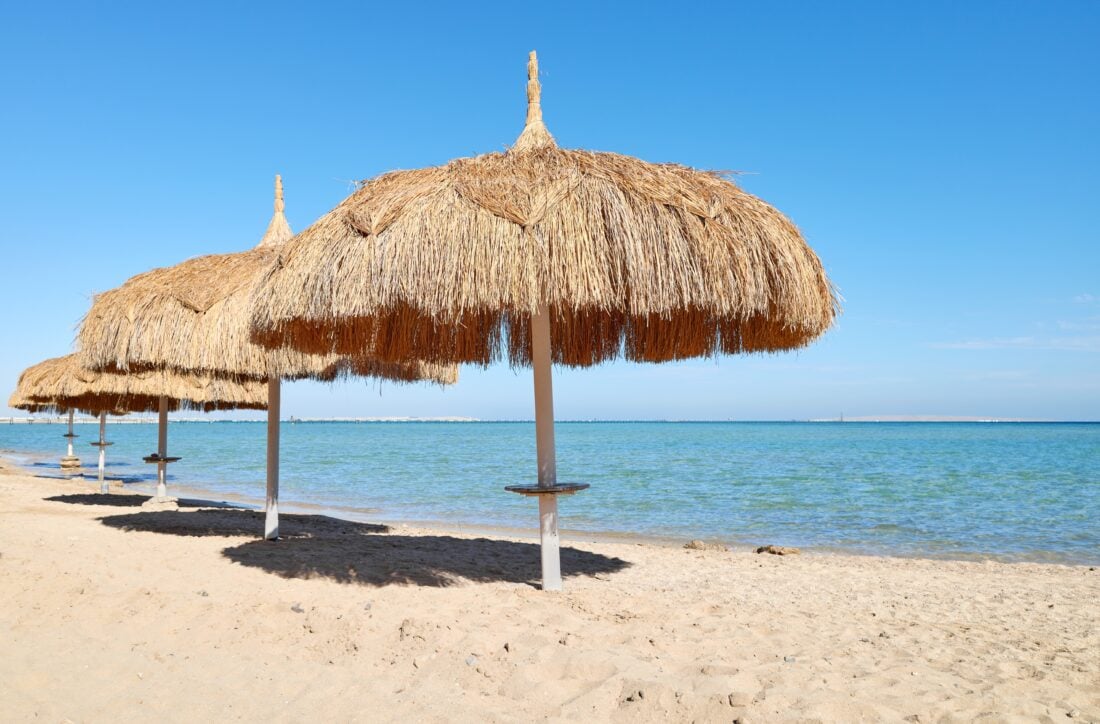
Sharks Bay in Egypt, in the Red Sea resort area of Sharm el-Sheikh, earns its spot as a top African beach for snorkelling because underwater life can be visible close to shore. You do not need to be a strong swimmer or dive deep to see what is down there; much of the appeal is right beneath the surface.
The reef starts right off the beach, with a shallow coral top before it drops away into deep water, so snorkellers get the colour while divers head for the wall. Timing matters too: in winter the sea is around 21 to 23°C, which feels chilly after a while, while spring and autumn bring 25 to 27°C water without the fierce summer heat.
An underwater camera can be useful here, so consider sorting one out before you go if you want to capture what you see.

We earn a commission if you buy through this link, at no extra cost to you.
A well-fitting mask and snorkel is all you need to enjoy the reef that starts right off the beach.

We earn a commission if you buy through this link, at no extra cost to you.
Reef conditions and access can change with wind and water conditions, so take local advice on the day and avoid touching or standing on coral. The close-to-shore view is the whole point here; there is no need to turn it into an underwater obstacle course.
Adding Cairo or Luxor to a Red Sea trip? Read how the Egypt Pass deal works before you buy site tickets one by one.
Clifton’s 4th Beach, Cape Town – Best for People-Watching
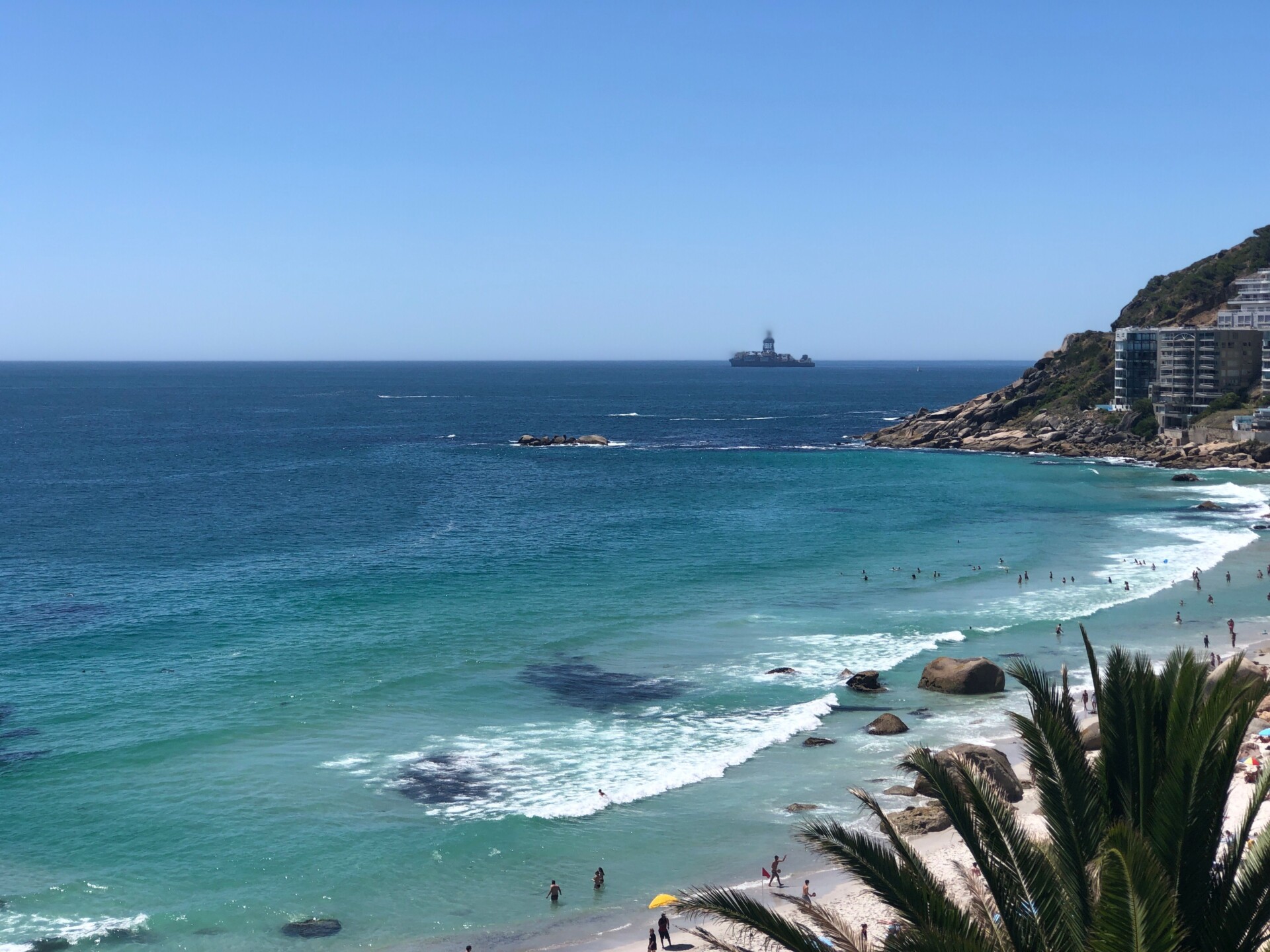
Clifton’s 4th Beach in South Africa offers a different kind of beach experience. Much of Africa’s coastline is quiet, sometimes deserted, which has its own kind of magic. Clifton is the opposite: on a sunny day it’s lively, social and full of people who are clearly very committed to being seen.
Part of the draw is shelter. Clifton is one of the few stretches of Cape Town’s coast protected from the notorious south-easterly wind, and 4th Beach holds Blue Flag status for its water quality, safety and facilities. Summer, roughly December to March, is when the scene is at its busiest.
Nearby restaurants serve good food and cocktails, and the whole scene has an energy that can be fun even for visitors who usually prefer a quieter stretch of sand. Cape Town is one of those cities where the beach is genuinely part of daily life, and Clifton is a good place to feel that. If you’re planning a broader South Africa trip, there are plenty of reasons to visit South Africa beyond the beaches alone. In early September, visitors could also pair a beach day with MAMMA MIA! at the Artscape Opera House, which ran from 5 to 12 September 2026.
One practical caveat: this is Cape Town’s Atlantic side, so do not expect Zanzibar-style warm water. The water at Clifton is usually a chilly 12 to 16°C and can dip below 10°C in summer, so bring a layer for when the sun drops and enjoy the fact that a beach day here can also be a city day.
Macaco Beach, Sao Tome and Principe – The West Africa Wildcard
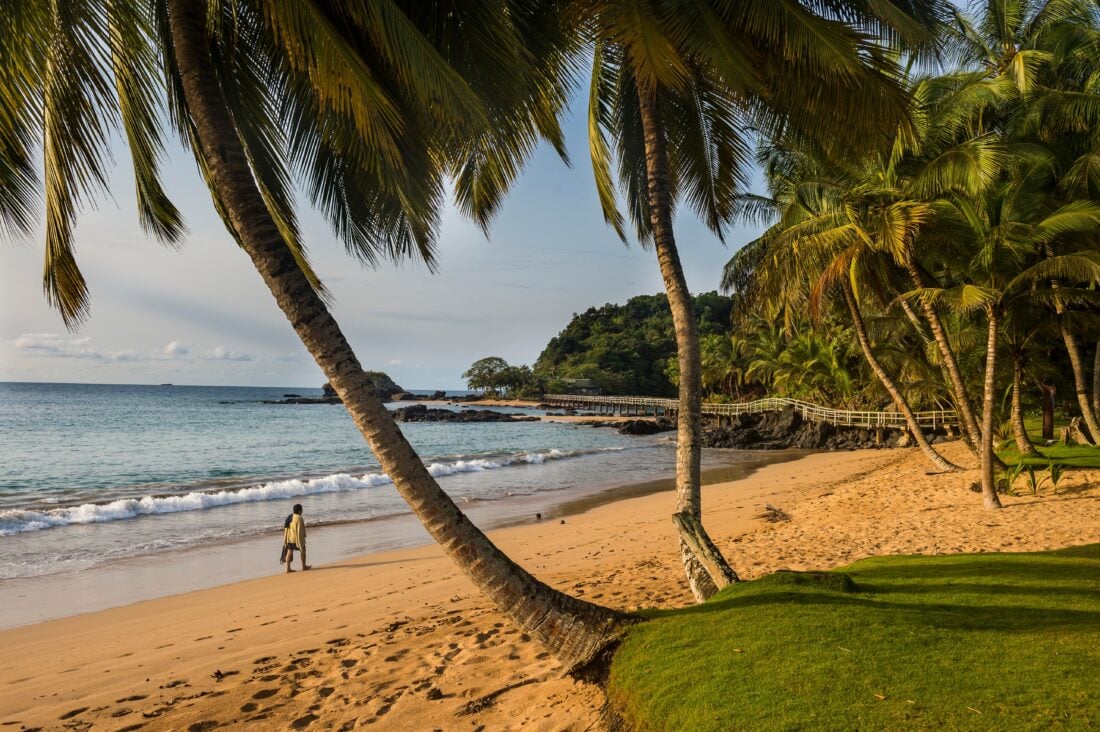
São Tomé and Príncipe is a small island nation that many people may struggle to place on a map, which is part of what makes a visit feel like an adventure.
East Africa gets most of the beach attention, and that reputation is earned. But West Africa is genuinely underrated, and Macaco Beach in São Tomé and Príncipe is one reason to look beyond the better-known destinations.
Powdery sand, turquoise water and few other visitors make Macaco an appealing escape. It sits on Príncipe, the smaller of the two islands, and the path down starts at the gate of Roça Belo Monte. It’s not the easiest place to get to, which is one reason the beaches have avoided the crowds found in more established resort areas.
The beach is isolated, so bring water, food and shade with you, and ask the guard at the Belo Monte gate to point out the path if it is your first visit. The long dry season, known locally as gravana, runs from about June to September and is the most reliable time to go, because Príncipe is the wetter of the two islands.
Reef-safe sunscreen is worth packing for any of these beaches, especially where shade is scarce.

ONSART
Reef Safe Mineral Sunscreen Spray SPF 50+ with Zinc Oxide, Broad Spectrum UVA/UVB Protection,…
We earn a commission if you buy through this link, at no extra cost to you.
If you want somewhere that has not been smoothed flat by mass tourism, this is worth looking into. Do the logistical homework before you commit: flights, onward transport and accommodation are not as plug-and-play as they are in the Seychelles or Zanzibar.
A Few Things Worth Knowing Before You Go
- Africa’s beaches span an enormous range of climates and seasons. Check conditions for your specific destination and coast, not a continent-wide weather forecast.
- Several of these beaches, particularly Busua, Nungwi, La Digue and Macaco, involve more logistical planning than a standard European beach break. Build in extra time for onward journeys.
- For a snorkelling trip, sort out an underwater camera in advance, especially for Sharks Bay.
- Hoping to see turtles while you are in the water? Our guide to where you can swim with turtles covers the best spots worldwide.
- Clifton’s 4th Beach is in Cape Town, which means you have an entire world-class city to explore around it. Don’t just do the beach and leave. If you are heading up the east coast afterwards, this guide to the best things to do in Durban is worth a look.
- Sea conditions can change quickly. Swim and snorkel within your confidence level, pay attention to local advice, and do not treat a beautiful photo as a safety assessment.
Best Beaches in Africa: FAQs
What is the best beach in Africa?
For an all-round pick, Anse Source d’Argent on La Digue in the Seychelles is hard to beat: clear water, white sand and huge granite boulders. For a specific activity, Busua (surfing), Nungwi (swimming) and Sharks Bay (snorkelling) are stronger choices.
Which African beach is best for swimming?
Nungwi in Zanzibar, Tanzania. The water is warm and calm enough for long swims, although tides still change the shoreline through the day.
Which African beach has the warmest water?
Of these six, the Seychelles: the sea around La Digue stays between about 26 and 30°C all year, peaking in March and April. Zanzibar is also warm year-round, while Cape Town’s Atlantic beaches are the coldest by a long way.
When is the best time to visit Africa’s beaches?
It depends on the coast. April and October suit the Seychelles, June to October suits Zanzibar, spring and autumn suit Egypt’s Red Sea, December to March suits Cape Town and June to September suits Príncipe.
Is the sea warm at Cape Town’s beaches?
No. Clifton is on the Atlantic side, where the water is usually 12 to 16°C and can drop below 10°C in summer. Go for the scene and the sunshine rather than a long swim.
Do you have to pay to visit Anse Source d’Argent?
Yes. The beach is reached through L’Union Estate on La Digue, which charged about SCR 115 per adult at the time of writing. Bring rupees in cash, as cards are not always accepted at the gate.
The Honest Summary
Africa’s beaches do not get the global hype they deserve, probably because the continent is filtered through a narrow lens in much travel media. The range is real: from the pink-boulder drama of La Digue to the surf culture of Ghana’s coast and a near-empty island beach that many travellers have never heard of.
The best beach in Africa depends on what you’re after. For an all-round pick, La Digue is hard to beat: clear water, a remarkable setting and a beach experience that is difficult to find anywhere else.
