
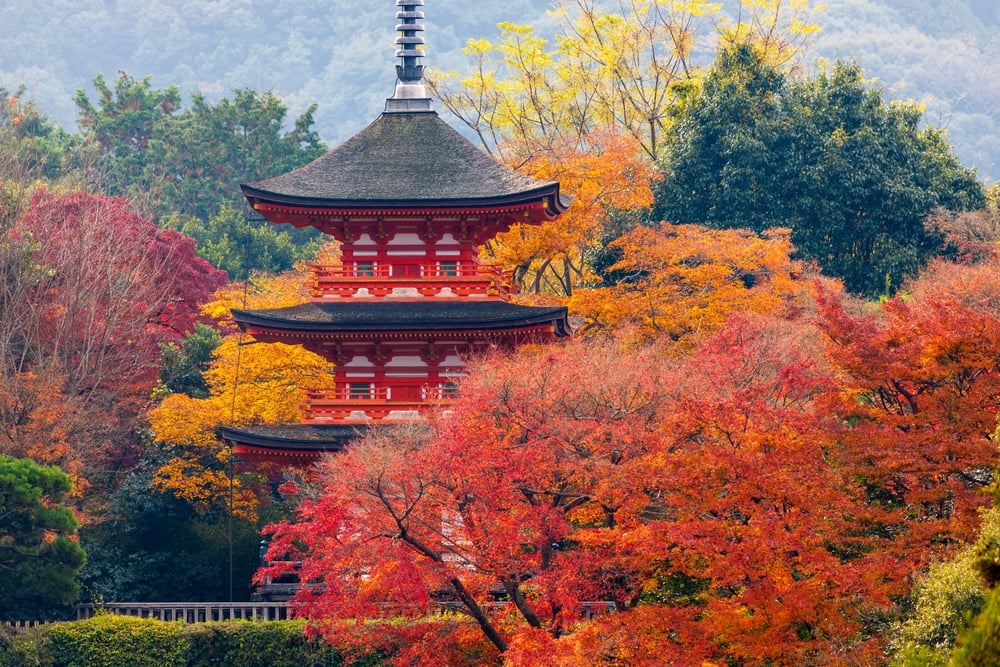
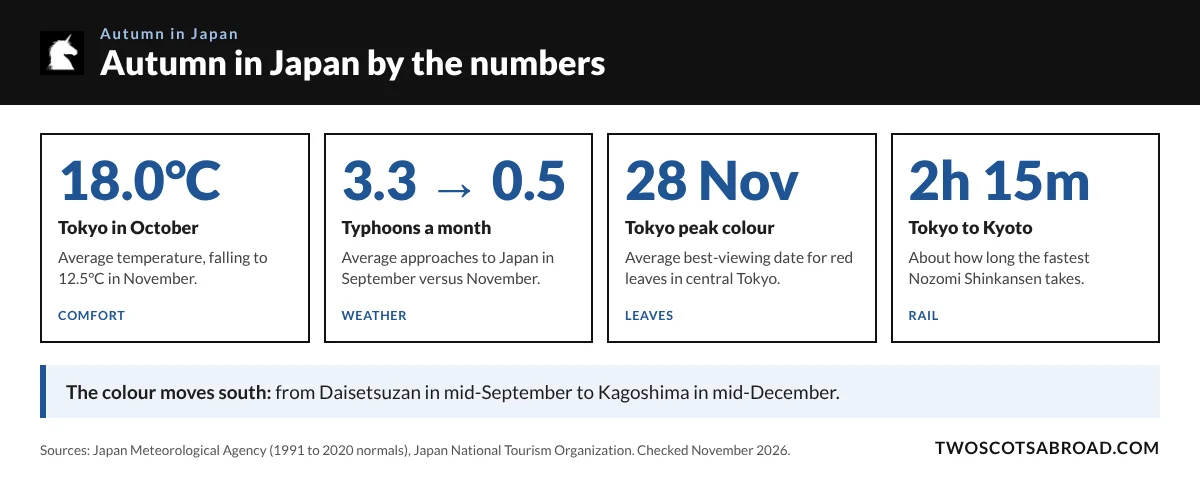
If you’re weighing up the best season to visit Japan, autumn makes a very strong case. The heat breaks, the leaves turn and the typhoon risk drops off: in Tokyo, average temperatures fall from 23.3°C in September to 18.0°C in October and 12.5°C in November, according to the Japan Meteorological Agency’s climate normals.
Below you’ll find what autumn weather is really like, when the leaves turn in each part of the country (with a planner to match your dates), where to see them, how to get around by train, and whether October or November suits your trip.
Why Is Autumn Such a Good Time to Visit Japan?
Comfort is the big one. July and August in central Japan are hot and sticky, which makes long days of temple-hopping and station changes hard work. By October, much of Honshu is pleasant for walking all day, and by November mornings are crisp enough for a jacket.
The weather risk also eases as the season goes on. September is still typhoon season: the Japan Meteorological Agency’s typhoon averages show 3.3 typhoons a month approaching Japan in September, the joint highest of the year with August. That drops to 1.7 in October and 0.5 in November. Storms can still disrupt trains in October, so leave some slack in your plans.
On top of that, you get the autumn leaves, harvest food and festivals, which we cover below.
Here’s how the season shapes up in numbers.
When Do the Autumn Leaves Turn in Japan?
The changing leaves, known as koyo, move slowly from north to south and from the mountains down to the coast. Japan’s earliest colour appears in Hokkaido: a Japanese government feature on Mt. Asahidake notes that the slopes of Daisetsuzan National Park start turning red in mid-September, while most of the country is still warm.
The cities follow much later. The Japan National Tourism Organization’s average autumn leaf dates by city put Sapporo at 28 October, central Tokyo at 28 November and Osaka and Fukuoka at 1 December. These are averages, and each year can run a week or more early or late.
| City | Region | Average best viewing date |
|---|---|---|
| Kushiro | Hokkaido | 16 October |
| Sapporo | Hokkaido | 28 October |
| Nagano | Chubu | 12 November |
| Sendai | Tohoku | 21 November |
| Hiroshima | Chugoku | 22 November |
| Tokyo (Chiyoda) | Kanto | 28 November |
| Osaka | Kansai | 1 December |
| Fukuoka | Kyushu | 1 December |
| Kagoshima | Kyushu | 15 December |
Slide the planner below to your first day in Japan. It shows where each city sits in the leaf cycle during your trip and suggests a rail route that follows the colour south.
 Japan Autumn Leaves Wave Planner
Japan’s autumn colour moves like a slow wave, from the Hokkaido mountains in mid-September to Kyushu in December. Slide to your first day in Japan, pick your trip length and see which places should be at their best while you are there.
At their best during your trip
Ride the wave by rail
Weather check for your arrival month

Where Are the Best Places to See Autumn Colour?
Hokkaido and the Mountains
For an early trip, head north. Daisetsuzan National Park’s ropeways take you up into the alpine colour in September, while much of central Japan is still green. Nikko, north of Tokyo, is another strong choice, with forested hills, lakes and historic shrines. If you’d like to get further off the usual route, our guide to Japan off the beaten path covers more quiet corners, including Daisetsuzan’s Asahidake.
Tokyo
Tokyo’s best-known spots include Rikugien Garden, Koishikawa Korakuen and the ginkgo-lined avenue at Meiji Jingu Gaien, which turns bright yellow. Many gardens open for evening illuminations at peak time, so it’s worth heading out after dark too. Got a few spare days in the city? Our plan for spending 1 to 3 extra days in Tokyo has more ideas.
Kyoto
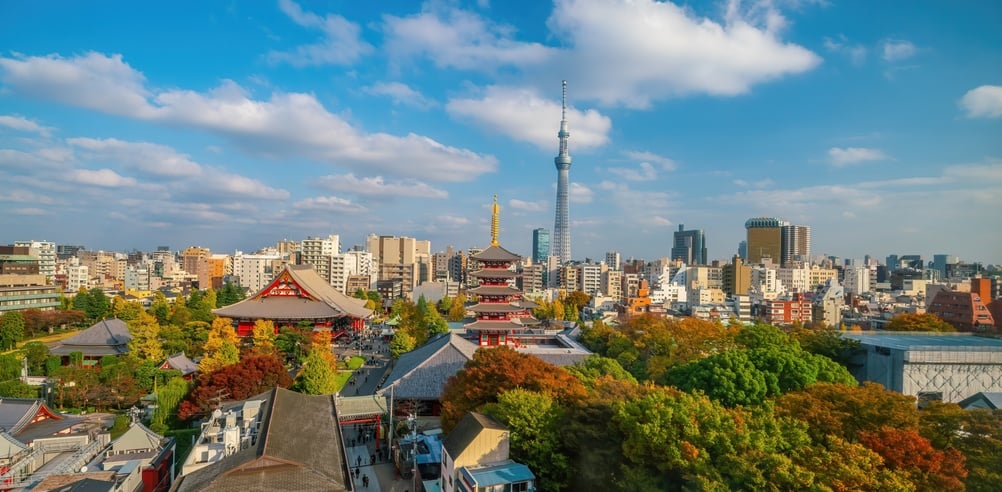
Kyoto’s temples are at their most atmospheric from mid-November into early December. Tofuku-ji, Eikando and Kiyomizu-dera are among the classic spots for maples framing old wooden halls, and they get very busy. Go early in the morning or on a weekday if you can.
One of the nicest ways to see the colour is on foot. This route links Ginkaku-ji, the Philosopher’s Path, Honen-in and Eikando in about three miles.
Staying in the Higashiyama area puts you within walking distance of many of these temples, which helps if you want to beat the crowds. The map below shows places to stay there.
How Do You Get Around Japan in Autumn?
Autumn is a good time to combine several places in one trip, and the rail network makes that easy. Travellers arriving at Tokyo’s main international gateway can take the Narita train connection into the city, choosing an option that suits their destination and luggage. The Keisei Skyliner reaches Nippori in about 36 minutes, and JR’s Narita Express takes around 60 minutes to Tokyo Station, according to LIVE JAPAN’s Narita Airport transport guide.
For longer journeys, the Shinkansen is the practical choice. Nozomi trains are the fastest service on the Tokaido and Sanyo Shinkansen, linking Tokyo with Kyoto, Osaka, Hiroshima and Fukuoka. The fastest Nozomi takes about 2 hours 15 minutes from Tokyo to Kyoto, according to Ekitan’s Tokyo to Kyoto Shinkansen guide, so you can leave the capital after breakfast and still have most of the day in Kyoto. If you’re travelling on a rail pass, check whether it covers Nozomi before you book.
| Journey | Typical option | Rough journey time |
|---|---|---|
| Narita Airport to Nippori | Keisei Skyliner | About 36 minutes |
| Narita Airport to Tokyo Station | Narita Express | About 60 minutes |
| Tokyo to Kyoto | Nozomi Shinkansen | About 2 hours 15 minutes |
| Kyoto to Osaka | Shinkansen or local train | Under 30 minutes by Shinkansen |
| Tokyo to Sapporo | Domestic flight | Usually quicker than the train |
Planning to spend time in Osaka too? Our guide on when to visit Osaka covers its weather month by month.
What Should You Eat in Japan in Autumn?
Menus follow the harvest. Look out for sweet potatoes, chestnuts, mushrooms, persimmons and pears, plus the year’s new-crop rice. Matsutake mushrooms are a prized autumn treat, often cooked with rice or served in clear soup, and roasted sweet potatoes from street vendors make a warming snack on a chilly afternoon.
Department-store food halls, usually in the basement, are a great place to see the seasonal range in one go, from beautifully boxed chestnut sweets to regional specialities. In Kyoto, Nishiki Market is the place for pickles, tofu and local produce.
Which Autumn Festivals and Events Are Worth Planning Around?
The big one is the Takayama Autumn Festival in the mountains of Gifu Prefecture. The Japan National Tourism Organization’s Takayama festival page says it’s held every year on 9 and 10 October, with 11 ornate floats paraded through the old town. Book accommodation early, as Takayama fills up for the festival.
From November, many gardens and temples hold evening illuminations, lighting up the leaves after dark. The cooler weather is also good for hiking in the Japanese Alps and soaking in a hot spring afterwards, but some high-altitude routes close as winter approaches, so check access before you go.
Should You Visit Japan in October or November?
It depends on where you’re going. October suits Hokkaido, Tohoku and the mountains, where the leaves turn first, and it’s comfortable for long days outdoors. It’s also festival month in Takayama.
November is the better pick for Tokyo, Kyoto and Osaka if red maples are the priority, as the colour usually reaches these cities in the second half of the month. Kyoto’s most popular temples get very busy then, so plan early starts and weekday visits. For a long trip, starting in the north in late October and working south through November lets you follow the leaves.
Frequently Asked Questions
Is autumn better than spring for visiting Japan?
Both are popular. Autumn has comfortable temperatures, fewer typhoons than late summer and the autumn leaves, while spring has the cherry blossom. Both get busy, so book accommodation early.
When is peak autumn colour in Tokyo and Kyoto?
Usually the second half of November into early December. The Japan National Tourism Organization’s average date for central Tokyo is 28 November.
Is September a good month to visit Japan?
It can still feel like summer in central and southern Japan, and it’s the joint peak month (with August) for typhoons approaching the country. September is best for the Hokkaido mountains, where the leaves start turning first.
How long does the train take from Tokyo to Kyoto?
The fastest Nozomi Shinkansen takes about 2 hours 15 minutes.