

The hottest countries in the world are usually found in the Sahel, the Persian Gulf, and low-lying tropical islands. If you are looking at average annual temperature, the names that come up most often at the top are Burkina Faso, Mali, Senegal, Djibouti, Gambia, the United Arab Emirates, and Oman.
The exact order changes because rankings use different climate datasets. Some lists lean on the 1991 to 2020 climate normal, while others use modeled or land-surface temperature data. That is why one table may put Burkina Faso first and another may put Senegal or Mali at the top.
What does stay consistent is the geography. West Africa dominates the hottest-country rankings, with Gulf states and warm island nations not far behind. If you have also looked at the most humid countries in the world, this list fills in the other half of the heat story.
How Hottest-Country Rankings Are Measured
Most serious rankings are based on mean annual temperature, not on the highest temperature ever recorded. That distinction matters. A country can have savage summer peaks without finishing first overall if winters are mild enough to pull the yearly average down.
Climate normal datasets compiled from long periods, such as 1991 to 2020, tend to give the most useful comparison. They capture sustained heat across the whole year. The leaders in widely cited CRU and World Bank country climate tables cluster around 29 to 30.4°C.
That also explains why some small islands rank surprisingly high. Places like Tuvalu, the Maldives, Kiribati, Palau, and the Marshall Islands may not produce the same headline-grabbing desert extremes as Qatar or the UAE, but they stay warm all year with very little seasonal cooldown.
Which Countries Appear Most Often at the Top?
If you compare the major rankings side by side, a short group shows up again and again. Burkina Faso, Mali, and Senegal are the most consistent front-runners. Djibouti and Gambia are close behind in several lists, and Gulf countries such as the United Arab Emirates, Oman, Qatar, and Bahrain also place high.
Here is a practical way to read the rankings: if a country appears near the top across multiple datasets, it is a safe bet that it experiences persistent year-round heat, not just a brutal summer season.
| Country | Why It Ranks So High | Typical Position in Major Lists |
|---|---|---|
| Burkina Faso | Sahel location, low elevation, long dry season | Usually top 3 |
| Mali | Sahara and Sahel influence, intense solar exposure | Usually top 3 |
| Senegal | Hot Sahel belt, very warm annual averages in some datasets | Usually top 3 |
| Djibouti | Arid climate near the Horn of Africa, consistently high heat | Often top 5 |
| Gambia | Low latitude, warm tropical climate with little seasonal drop | Often top 10 |
| United Arab Emirates | Desert climate, hot Gulf waters, urban heat buildup | Often top 10 |
| Oman | Arabian Peninsula desert heat and very warm summers | Often top 10 |
Why West Africa Dominates the Hottest Countries in the World
The Sahel is the core of the world’s hottest-country rankings. This semi-arid belt sits just south of the Sahara and includes countries such as Burkina Faso, Mali, Senegal, Mauritania, Niger, and Chad. Long dry seasons, powerful sunshine, limited cloud cover, and generally low relief all push annual temperatures upward.
Burkina Faso is a good example. On one widely used 1991 to 2020 country climatology, it reaches about 30.4°C as a mean annual temperature. Mali sits just behind on several tables, while Senegal tops some modeled rankings at roughly 29.83°C.
The differences between first and third place are tiny, often a few tenths of a degree. So if you are looking for one simple answer, Burkina Faso, Mali, and Senegal form the hottest trio more reliably than any single undisputed number one.
Desert Countries Versus Tropical Islands
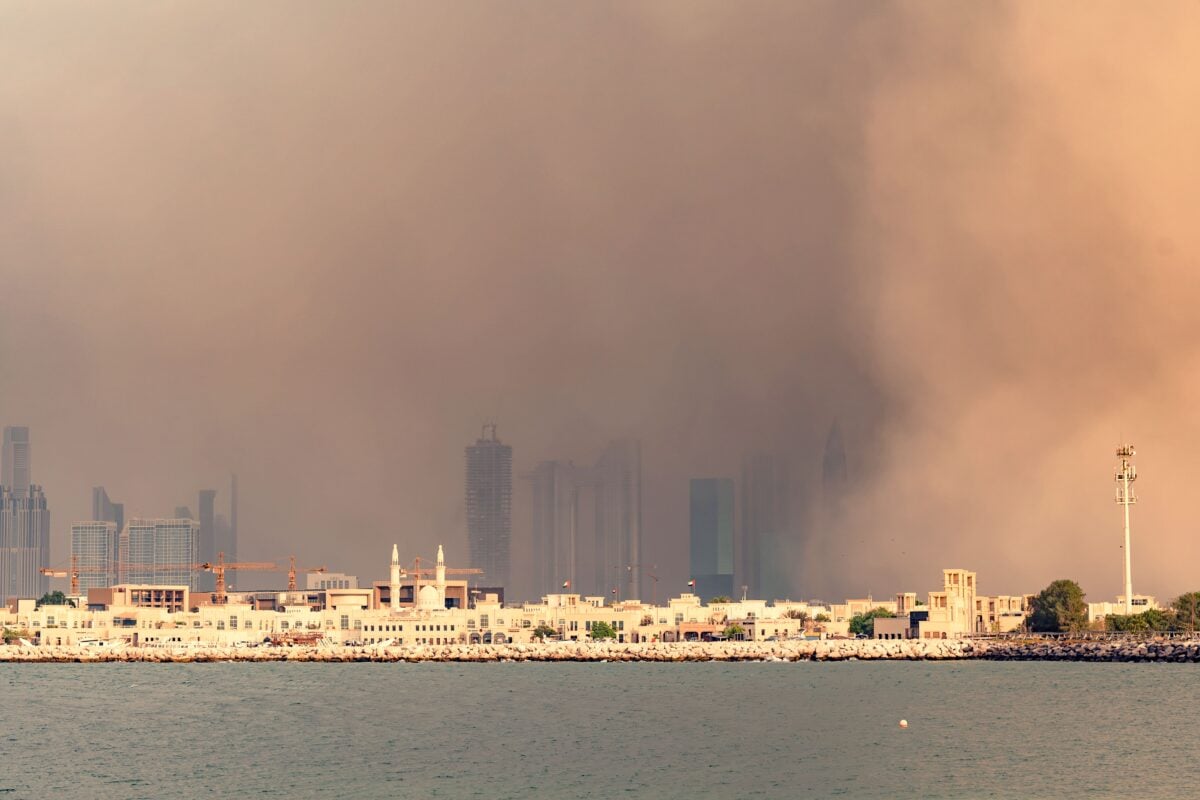
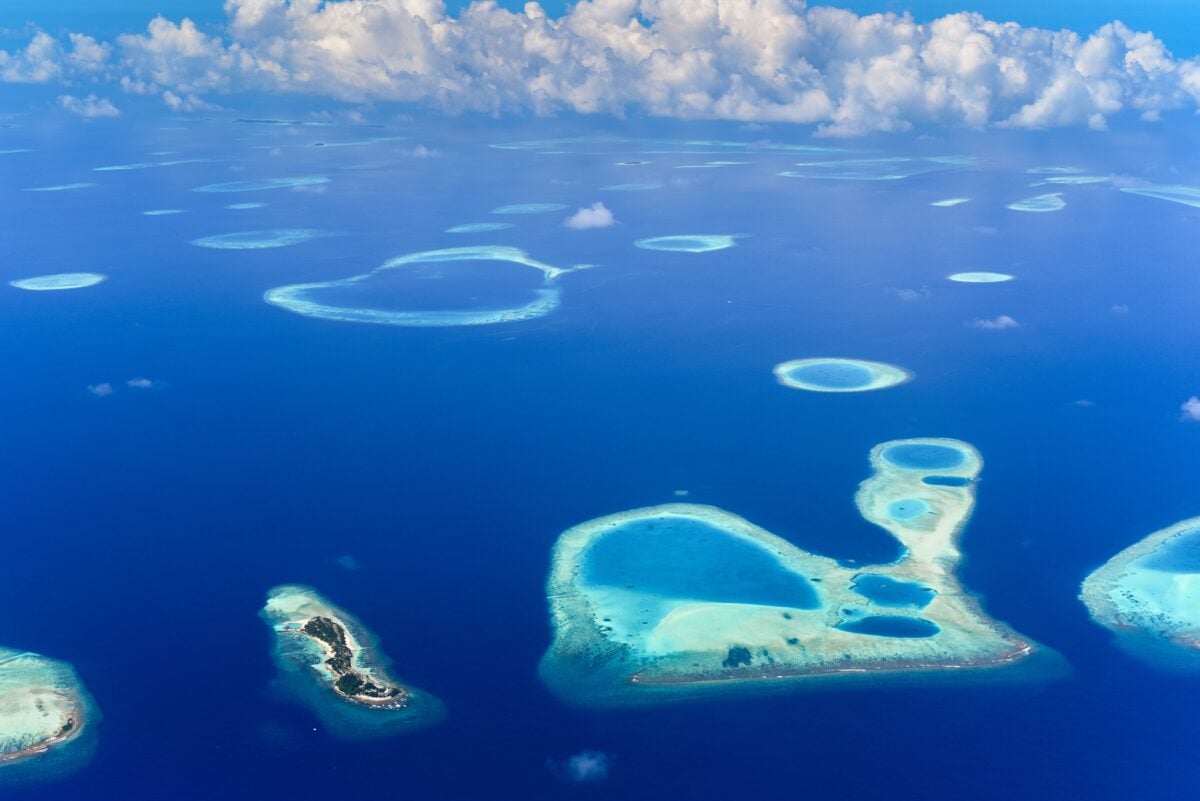
People often assume the hottest countries must all be pure desert. Not quite. Desert countries and tropical islands get hot in different ways.
In the Gulf, places like Qatar, the United Arab Emirates, Bahrain, and Oman combine desert heat with warm coastal waters and, in major cities, a strong urban heat-island effect. Summer temperatures above 45 to 50°C are part of the story there, especially in exposed inland or low-lying urban areas.
On islands such as Tuvalu, the Maldives, Kiribati, and the Marshall Islands, the averages stay high because there are no cool mountain interiors and very little winter relief. The heat can feel less apocalyptic on paper than a Gulf heatwave, but it is more constant across the calendar. Kiribati and the Maldives both sit on the Equator, and our guide to what makes an equatorial country explains why that does not always mean the same climate.
That is why average annual temperature rankings can place an atoll near a desert state. They are measuring steady heat over twelve months, not whichever place had the nastiest afternoon in July. If you are comparing heat with coastal geography, which countries have the shortest coastlines shows how different sea access can be from one nation to the next.
Countries Often Included in the Top 20
Beyond the top tier, the same names keep appearing: Mauritania, Benin, Ghana, Niger, Sudan, Nigeria, Chad, Togo, Eritrea, Somalia, Cambodia, Singapore, Guinea-Bissau, and Kuwait. Several Caribbean and Pacific nations also enter the broader top 20 or top 30 depending on the dataset.
If you are scanning a list and wondering why Aruba or the Cayman Islands appear in some rankings, the answer is usually methodology. Some sources include dependencies and territories in the wider comparison, while others stick to sovereign countries only.

CADONO
CADONO 4 Pack Cooling Towel (40"x12"), Soft Breathable Chilly Towel, Ice Towel, Microfiber Towel…
We earn a commission if you buy through this link, at no extra cost to you.
What These Rankings Do Not Tell You
A hot-country ranking is not a comfort ranking. Average annual temperature does not capture humidity, elevation changes inside a country, sea breezes, or how brutal the heat feels when you step outside. Rainfall is a separate story too: our ranking of the rainiest countries in the world is led by Colombia, not a desert or Sahel state.
Djibouti at around 29.4°C on some modeled tables and Qatar at around 28 to 29°C in several lists may look close numerically, but the lived experience can be very different. Gulf humidity can make a coastal evening feel heavier than a dry inland Sahel day, even when the raw number is similar.
It also does not tell you where the hottest spot in a country is. Northern Mali around Timbuktu, northern Niger around Agadez, and parts of the Rub’ al Khali in Saudi Arabia are all famous for extreme desert heat, but a country’s ranking is based on the national average, not on one punishing region.
If You Plan To Visit a Very Hot Country
You do not need a dramatic expedition plan, but you do need to take the climate seriously. In countries such as Mali, Burkina Faso, Senegal, Djibouti, Oman, and the UAE, heat exposure shapes daily routines.
- Start early. Morning hours are easier for city walks, road travel, and long outdoor visits.
- Expect midday slowdowns. In very hot regions, the practical sightseeing window often shrinks after late morning.
- Dress for sun, not style points. Loose clothing, shade, and hydration matter more than heroic outfit choices.
- Check local conditions by region. A capital city, a coastal strip, and a desert interior can feel completely different.
If heat and moisture together are your main concern, pair this guide with our humidity comparisons. Average temperature only tells part of the story, and the most humid countries in the world adds that missing piece.
If you are using this ranking to plan a trip in the Gulf, Dubai, Abu Dhabi, Doha, and Muscat are the most obvious staging points with the widest hotel choice. If hotel design matters as much as air-conditioning, the most unique hotel stays around the world is a fun detour.
So Which Is the Hottest Country in the World?
Burkina Faso, Mali, and Senegal are the safest answers. Which one comes first depends on the dataset.
On some 1991 to 2020 climate normal tables, Burkina Faso edges into first place at roughly 30.4°C. On some modeled rankings, Senegal appears first at about 29.83°C, with Mali and Burkina Faso just behind. Older lists often gave the crown to Mali.
If you need one sentence for trivia night, go with this: the hottest countries in the world are concentrated in the Sahel, and Burkina Faso, Mali, and Senegal are the names most often found at the top.
FAQ About the Hottest Countries in the World
What is the hottest country in the world by average annual temperature?
Burkina Faso often leads when rankings use the 1991 to 2020 climate normal, while Senegal or Mali can rank first in other datasets. The top three are very close, usually separated by only a few tenths of a degree.
Are the hottest countries all in Africa?
No. Africa dominates the top of the list, especially the Sahel, but Gulf countries such as the United Arab Emirates, Oman, Qatar, and Bahrain also rank high, along with tropical island nations like Tuvalu and the Maldives.
Why do some lists disagree on the hottest country?
They use different datasets and methods. Some rankings rely on 1991 to 2020 climate normals, others use modeled temperatures, and some use land-surface temperature estimates rather than the same country-average air temperature baseline.
Is the hottest country also the place with the highest recorded temperature?
Not necessarily. A hottest-country ranking is based on the national yearly average, while a record temperature is a single extreme reading at a specific place and time.
Do island countries rank high because of heatwaves?
No. Islands tend to rank high because they stay warm all year and often lack cooler highland areas. Their averages are lifted by consistency, not only by extremes.
Related Reading
If you are building out a climate-themed trip or comparing global weather patterns, you might also want to read our guides to the most humid countries in the world and countries with unusual geography like the countries with multiple capitals most travelers never realize exist. A useful next step would also be a companion piece on the coldest countries, since temperature averages make more sense when you see both ends of the scale. For the other end of the humidity scale, see our guide to the countries with the driest air.
Meta Title: Hottest Countries in the World: What the Rankings Really Show
Meta Description: Discover the hottest countries in the world by average annual temperature, why Burkina Faso, Mali, and Senegal lead most rankings, and how desert and island heat differ.
Suggested Internal-Linking Gap: Add related site articles on the coldest countries in the world and countries with the most extreme summer temperatures for stronger topic clustering.
- Coldest Countries in the World
- Most Humid Countries in the World
- Least Humid Countries in the World
- Hottest Cities in the World