
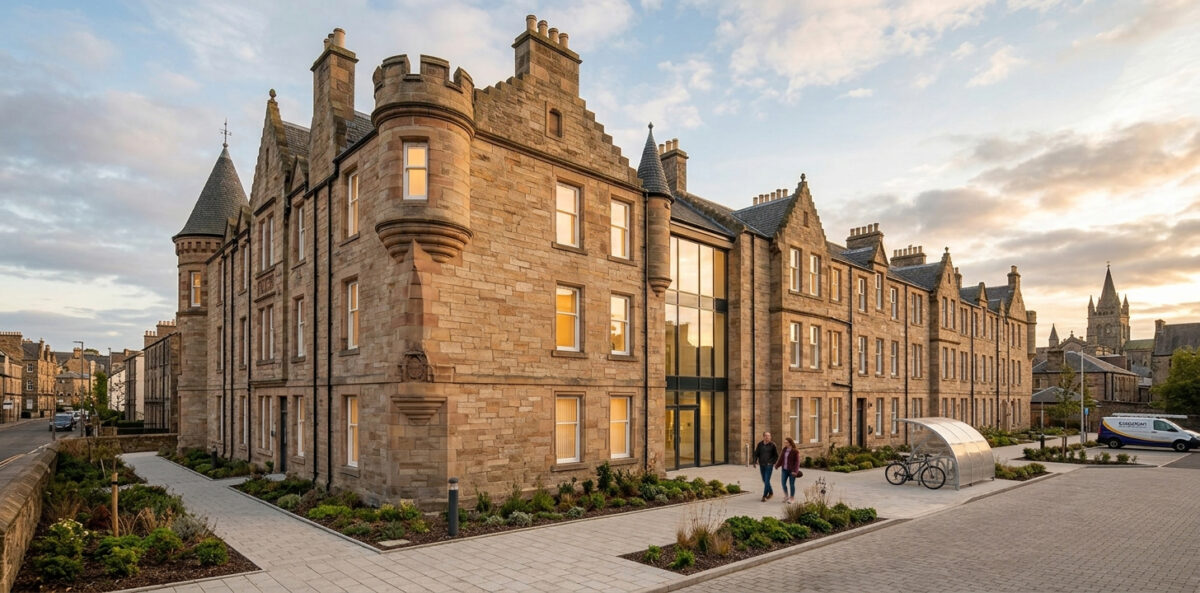
Empty historic buildings in city centres are usually either a headache or a photo backdrop. In Dunfermline, one of them has become 32 affordable homes instead, which is a far better use of a landmark than letting it gather dust behind old office windows.
New City House has now reopened as a mix of two and three-bedroom mid-market rent flats after a £7.4 million redevelopment. The project brings housing into the heart of the city while keeping a building that has been part of Dunfermline’s story for well over a century.
For a town break, a longer stay, or anyone tracking how Scottish cities are changing, this is the kind of local shift worth noticing. Dunfermline became Scotland’s newest city in 2022, so every city-centre reuse project now carries a bit more weight than it did a few years ago. Central buildings getting new life can reshape how a place feels, and not in the usual luxury-flats-for-brochures way.
What Has Changed At New City House In Dunfermline
The former headquarters building has been transformed into 32 affordable homes through a partnership between Campion Homes and Kingdom Housing Association.
The completed homes are described as a mix of two and three-bedroom mid-market rent flats. That matters because mid-market rent is aimed at people who need a more affordable option than standard private renting, but who may not qualify for traditional social housing.
In plain English, that usually means a little breathing room in places where housing costs can push people out fast. In Scotland, mid-market rent is generally priced below open-market private rents while staying above traditional social rent levels, so it fills an awkward gap that a lot of working households know far too well.
The Building’s History Still Shapes The Finished Project
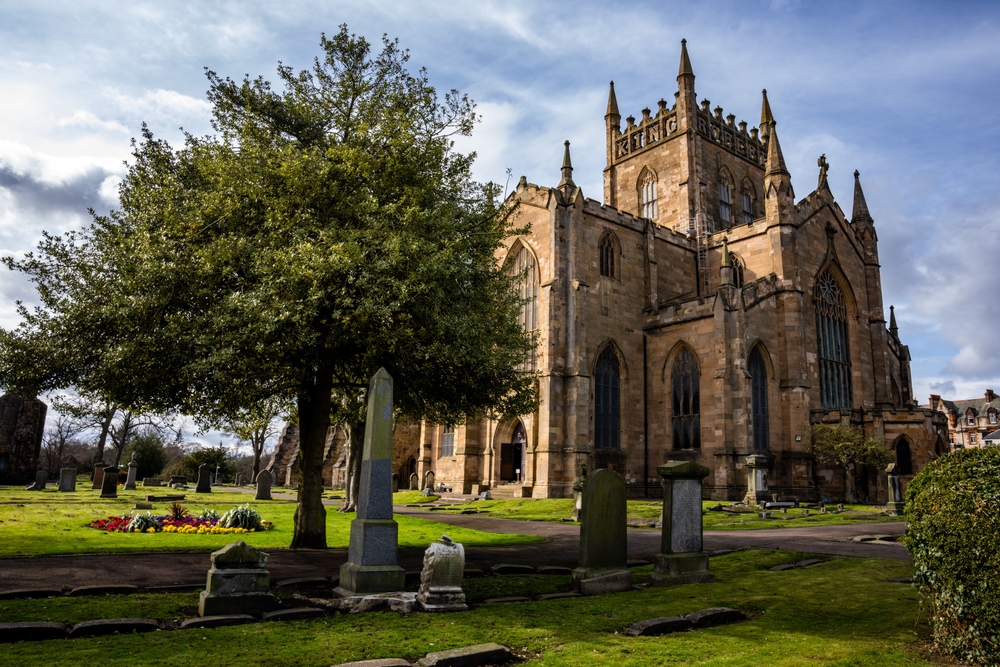
New City House was originally built as a hospital in 1895. It was later partly converted for use by Fife Council, giving the property a second public-service life before it eventually sat vacant.
That long history is a big reason the redevelopment mattered locally. The building is seen as an important Dunfermline landmark and as part of the city’s architectural and social history.
Rather than flattening the site and starting over, the project team worked to retain the character and integrity of the original structure while creating modern homes inside it. That is usually the more fiddly route, and yes, fiddly is putting it politely. For visitors who like cities with some texture, this is the same instinct behind why people care about preserved streetscapes in places with strong built heritage, from New Orleans architecture to Scotland’s older civic cores.
Why This Retrofit Was More Complicated Than A Standard New Build
Converting older buildings into housing often sounds neat in a headline and chaotic on site. New City House came with exactly that kind of complexity.
The redevelopment involved working with Oliver and Robb Architects, BSA Engineers, and Fife Council’s planning department to make the plans work within the limits of the historic building.
One of the bigger technical tasks was upgrading the roof structure. The project required structural alterations to the existing roof trusses so they would meet modern construction standards.
Another challenge was access. There was no crane access to the building, so materials and components had to be carried by hand through the site. That demanded careful planning and coordination throughout the build.
- Historic structure: Parts of the building date back to the 1800s.
- Modern standards: The roof structure needed upgrading.
- Access limits: No crane access meant hand-carrying materials.
- Design balance: The team had to preserve the building’s original character while creating modern living spaces.
Low-Carbon Heating And Energy Performance At New City House
One of the more practical parts of the redevelopment is the building’s new heating system. The scheme includes a district air source heat pump, designed to provide efficient and reliable heating across the property.
That low-carbon system is intended to improve the building’s long-term energy performance and reduce operational emissions. The homes also have a B energy rating, which is a useful benchmark for efficiency in day-to-day living costs.
For residents, energy performance is not just a policy buzzword. Better-rated homes can mean lower heating demand and more predictable bills, which matters a lot more than glossy sales talk when winter hits Fife properly. In older Scottish buildings, getting to a B rating after a conversion is not nothing. It suggests the finished homes should perform far better than the draughty-period-building stereotype people usually brace for.
How Public Funding Helped Deliver The Homes
The project was backed by £3.1 million in Scottish Government funding. That support formed part of wider efforts to respond to Scotland’s housing emergency.
The full redevelopment value was £7.4 million, showing the scale of investment needed to bring a vacant historic building back into use rather than leaving it stalled in limbo.
That funding mix also says something bigger about housing delivery in older urban centres. These projects rarely happen on good intentions alone. Retrofitting heritage buildings, improving energy performance, and keeping rents affordable is expensive work. Scotland has been leaning harder into that balancing act in recent years, including broader transport and city-centre upgrades such as planned ScotRail intercity changes that could make moving between Scottish cities cheaper and less of a faff over time.
Why Central Affordable Housing Matters In A City Like Dunfermline
For locals, the main story is straightforward: 32 homes have been created in a central Dunfermline building that would otherwise stay empty. But there is a wider urban angle too.
Housing in central locations can support a livelier city centre, reduce the number of neglected vacant properties, and keep more people close to shops, services, and transport links. Dunfermline sits just north of Edinburgh and is connected by rail from stations including Dunfermline City and Dunfermline Queen Margaret, with journeys into Edinburgh typically taking well under an hour. For visitors, that often means a place feels more lived-in and less hollowed out after business hours.
Budget travelers know the difference instantly. A city with active streets, reused buildings, and real local life is usually a better place to spend time than one that shuts down the second the office crowd disappears.
Dunfermline has been seeing continued change in recent years, and projects like this can help shape the city centre beyond tourism alone. That may not be flashy, but it is often how places become more useful, more stable, and frankly more interesting. It also helps Dunfermline feel less like an Edinburgh spillover and more like a destination with its own rhythm, which is handy if you prefer your Scottish city breaks a little cheaper and a lot less crowded than the capital, especially with extra cost pressures like the new Edinburgh tourist tax debate hanging over future stays there.
What New City House Adds To Dunfermline’s Regeneration Picture
Campion Homes said the project faced clear challenges because parts of the building date from the 1800s, but that innovative engineering and skilled trades made it possible to create 32 spacious homes at affordable rents and return the empty building to use.
Kingdom Housing Association said the finished development shows how empty buildings can be brought back to life through a collaborative approach, while delivering energy-efficient homes that benefit the wider community.
The result is not just a fresh coat of paint on an old landmark. This is a full reuse project with housing, heritage, and lower-carbon infrastructure built into the same site. In regeneration terms, that is a fairly solid triple hit.
What It Means For Travelers Watching Scottish Cities Change
This is not a hotel opening, and no, it is not one for your weekend booking list. But it still matters for people who follow urban travel, budget destinations, and the character of places beyond the standard castle-and-pub checklist.
Adaptive reuse projects like this tend to make city centres feel more rooted. They preserve historic architecture, keep prominent buildings active, and add residential life where vacancy can drag an area down.
For backpackers and budget-minded visitors, that usually translates into a city that feels more authentic and less curated. You may not travel to Dunfermline because one housing conversion happened, but you often enjoy a city more when these projects quietly succeed. The same basic logic applies when comparing city breaks across the region: places with functioning centres, decent public transport, and a bit of civic pride usually win on atmosphere and value, which is part of why debates over the UK’s friendliest city are never really just about manners.
Where New City House Sits In Dunfermline
New City House is described as being right in the heart of the city, which underlines why the site matters. Central housing conversions carry extra weight because they shape the daily rhythm of a place, not just its skyline.
For visitors planning a stay in Dunfermline, being near the city centre usually means easier access to local amenities and public transport. Bus links connect the centre with wider Fife, and rail stations make day trips realistic without a car. The usual budget-travel rule applies: stay central if you can, because spending less on transport often beats saving a tiny amount on a room far out of town.
The Short Version
If you want the fast takeaway, here it is:
- New City House in Dunfermline has been converted into 32 affordable homes.
- The redevelopment cost £7.4 million.
- The project includes two and three-bedroom mid-market rent flats.
- The building was first built as a hospital in 1895 and later used by Fife Council.
- A district air source heat pump now provides low-carbon heating.
- The homes have a B energy rating.
- £3.1 million in Scottish Government funding helped support the scheme.
- Dunfermline has held city status since 2022, giving central regeneration projects extra visibility.
That all adds up to a practical kind of regeneration. An empty landmark has become housing again, and in a city-centre location where that change can ripple outward. Not glamorous, not overhyped, just useful. Sometimes that is the better story.