
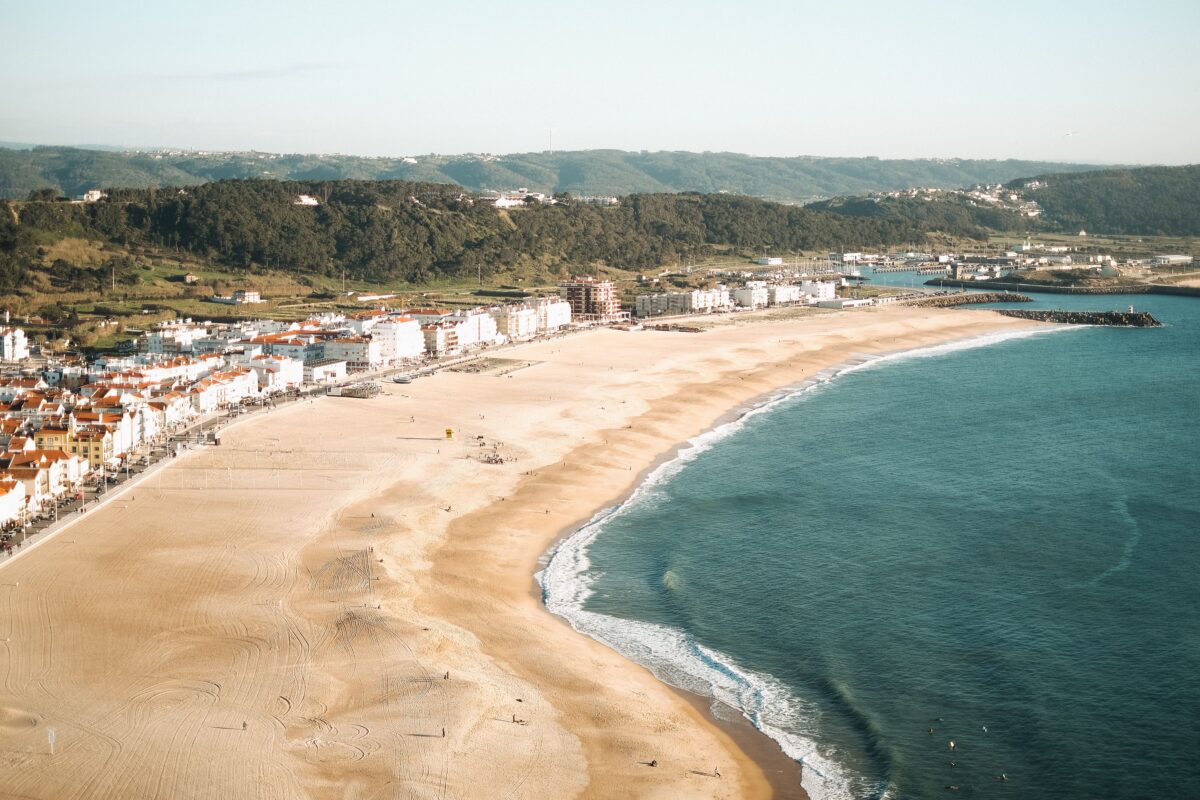
If your summer plan needs more sand and less queueing, the continent makes a very convincing case right now, especially as beach destinations across southern Europe brace for another busy high season. Pick well, and a beach day is still one of the cheapest things you can do on a Europe trip.
From the Algarve’s cliff-backed shoreline to a shockingly tropical-looking beach in Scotland, these eight golden beaches stand out for their scenery, scale, and atmosphere. Some work as easy add-ons to a city break, like pairing the coast with a longer Spain stop or a wider Mediterranean route. Others take a bit more effort, which usually means fewer people and a better shot at hearing the sea instead of someone else’s Bluetooth speaker.
For budget travelers, that mix matters. A great beach can be the cheapest day of the trip, especially if you know which spots offer long stretches of sand, nearby towns, and enough space to escape the towel-to-towel circus. Water quality also helps these places keep their shine: in the European Environment Agency’s most recent bathing water assessment, more than 85% of bathing waters in the EU were rated excellent, which is a handy baseline when you are deciding where to spend an entire lazy day.
Doñana Beach In Andalusia Offers Space, Wildlife, And Very Few Distractions
Doñana Beach sits in Huelva province in Andalusia, within Doñana National Park, a UNESCO World Heritage Site. The setting is unusually wild for a European beach break. Instead of beach clubs and rows of loungers, this stretch is backed by protected wetlands and one of Europe’s most important biodiversity zones.
The beach runs for 18 miles of golden sand, and the relative isolation is part of the appeal. Access involves either walking from Matalascañas or crossing the Guadalquivir River by boat, depending on which section you are aiming for. That extra step filters out casual crowds, which is excellent news if your ideal beach day involves actual silence and not a queue for overpriced chips.
Wildlife is part of the draw here too. Flamingos, spoonbills, wild boar, and the possibility of spotting the critically endangered Iberian lynx give the place a distinctly untidy, nature-first feel. This is a beach for long walks and empty horizons, not a polished resort day.
The trade-off is convenience. Services are limited, shade is scarce, and summer heat in inland Andalusia regularly pushes into the mid-30s Celsius. Bring water, snacks, and more sunscreen than you think you need. This is one of the list’s best picks for people who like wild beaches in the same spirit as remote beach escapes elsewhere, just with easier European flight options.
Praia Da Falésia Is One Of The Algarve’s Best Bets If You Hate Feeling Packed In
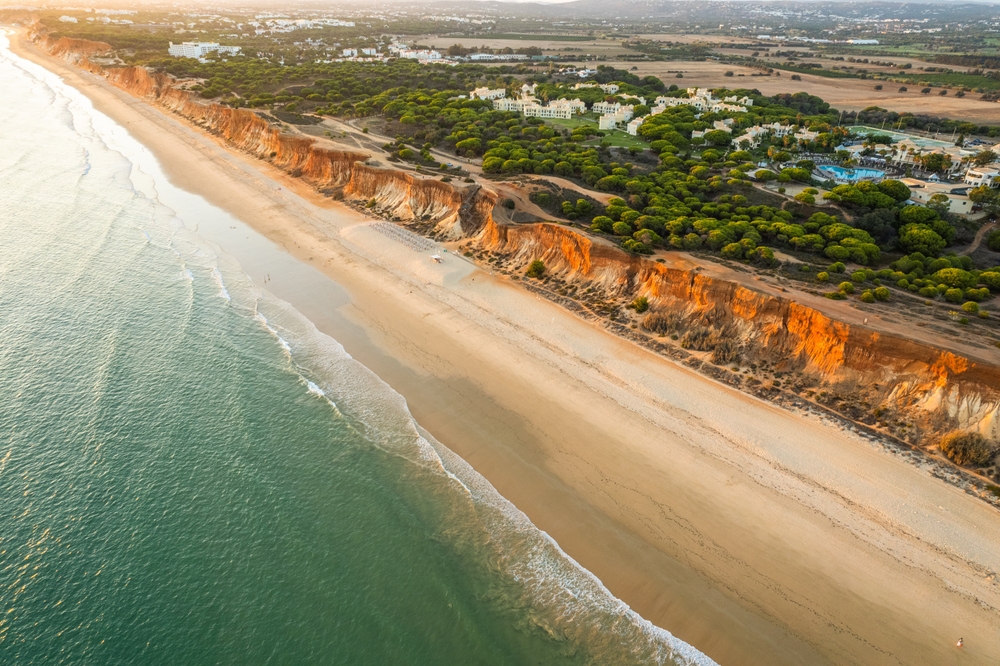
The Algarve is no secret, and in summer that can mean crowded sand, expensive parking near the obvious access points, and a fair bit of strategic towel placement. Praia da Falésia solves part of that problem with scale.
This beach stretches for about five miles, giving visitors more room than many of the region’s headline spots. It is especially appealing if you are willing to walk a little farther from the busiest access points near Albufeira and Olhos de Água, where the densest crowds tend to cluster.
The backdrop does a lot of heavy lifting too. Praia da Falésia is edged by orange-and-white clay cliffs, with pine-covered clifftops above. That means you get both an easy swim-and-sun base and a scenic walking route with broad coastal views.
For travelers trying to keep costs down, this kind of beach is useful because you can turn it into a full day without paying for much beyond food and transport. Big scenery, low spend, decent payoff. Hard to argue with that. Just note that Algarve prices have crept up in peak season, especially in August, so staying outside the busiest resort core can make a noticeable difference.
Plaka Beach In Naxos Mixes Classic Cyclades Water With A More Laid-Back Feel
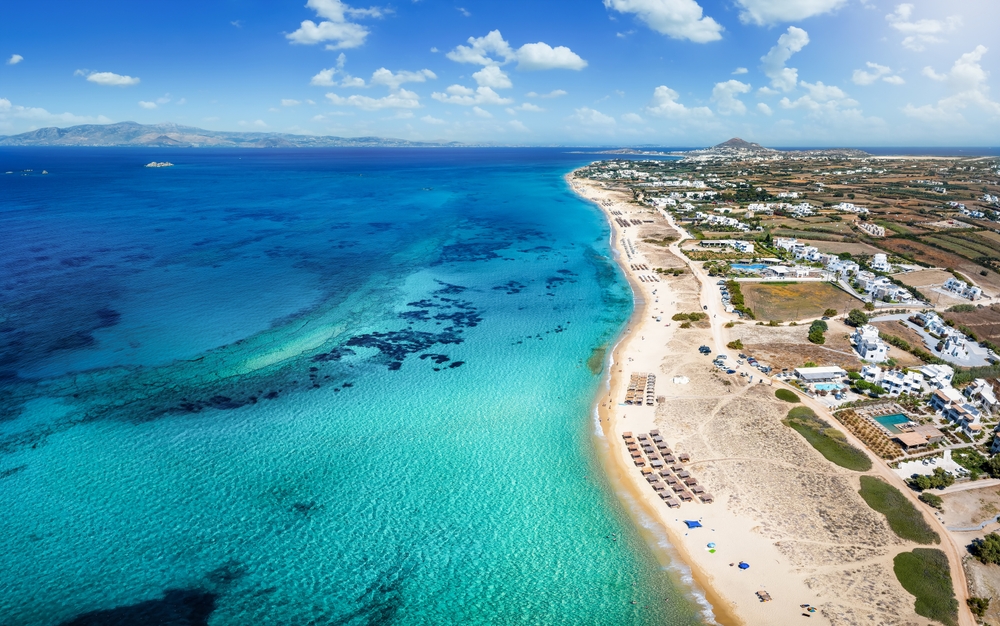
Greece is stacked with beaches, so standing out is not exactly a minor achievement. Plaka Beach on Naxos manages it anyway.
The beach has around 2.5 miles of golden sand, paired with turquoise water that looks edited even when it is not. Cedar and juniper trees add pockets of shade, and nearby tavernas make it easy to settle in for hours without turning the day into a full logistical exercise.
Plaka works well for travelers who want a flexible beach day. You can swim, sunbathe, or windsurf, then break for a meal without needing to leave the area entirely. That matters on islands where getting around can chew into both time and budget, especially in summer when bus routes fill up and scooter rentals are not exactly the bargain they used to be.
Naxos also tends to feel less relentlessly polished than Santorini or Mykonos, which is part of the charm. If you are planning a Greek island trip and want one beach that covers the postcard brief without feeling overly staged, Plaka is a strong candidate.
Cefalù Beach Gives You A Proper Beach Day Without Leaving Town
Remote beaches are great until you need a bus, a taxi, a transfer, another bus, and a motivational speech. Cefalù Beach in Sicily is the opposite.
Located in the coastal town of Cefalù, roughly 40 miles east of Palermo, this beach is one of the more convenient options on the list. The sand curves in a half-moon shape and sits right against a town known for medieval streets and a striking Norman-Byzantine cathedral, which is part of a UNESCO-listed Arab-Norman heritage route in Sicily.
That combination makes Cefalù especially attractive for budget-minded travelers. You can pair a beach day with sightseeing, meals, and accommodation in one compact area rather than burning money bouncing between places. Less transit, more actual holiday.
The water is generally calm in summer, and the beach is framed by whitewashed buildings and dramatic cliffs, with La Rocca towering above town. Cefalù station also keeps it practical, since regional trains from Palermo make this an easy car-free detour if you are already threading Sicily into a broader Italy trip that might include Rome on a tighter schedule or other rail-friendly stops.
Luskentyre Proves Scotland Can Do A Dream Beach, Even If The Water Has Other Ideas
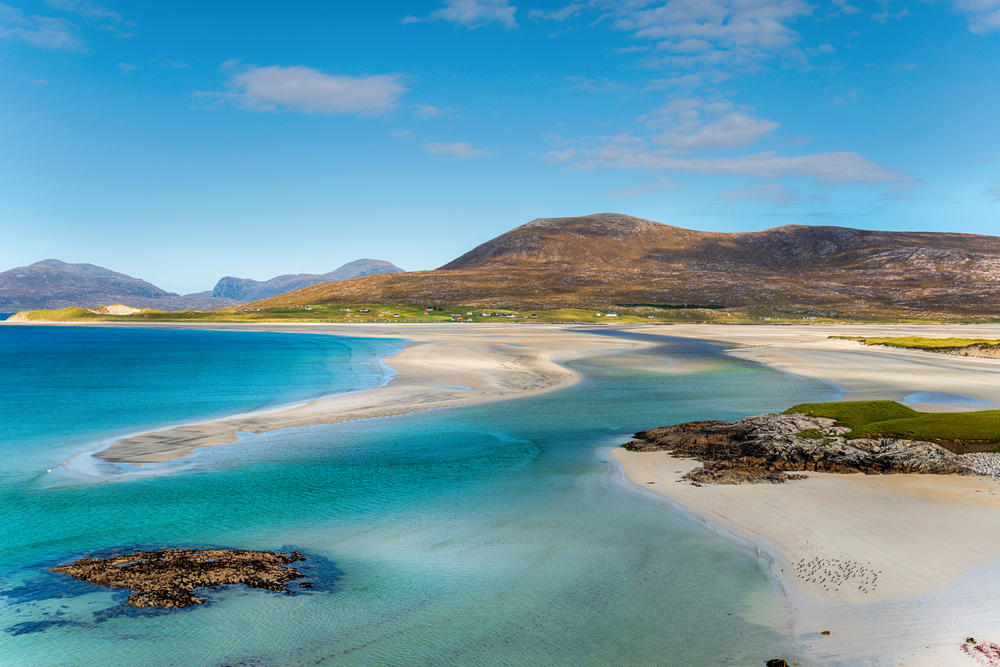
The Isle of Harris is not the first place most people picture when they think of a classic beach break. That is exactly why Luskentyre feels so absurdly rewarding.
Set in the Outer Hebrides, this beach has wide-open golden sand and bright aquamarine water that looks more tropical than northern Atlantic. Then the hills behind it remind you where you actually are, just in case you were getting ideas about a warm swim.
The catch is obvious. The water is cold. Properly cold. Sea temperatures around the Outer Hebrides in summer are often only in the low teens Celsius, so this is less “spend all day floating around” and more “admire it heroically from the shore.”
That said, the scenery is ridiculous, and it is free to enjoy apart from the effort of getting there. It is a particularly good fit for travelers building a road trip or island-hopping route where the beach itself is the destination, not just a place to kill a few hours. If you are already plotting a Scotland route, it pairs well in spirit with other scenic Scottish coastal stops. Pack layers, manage expectations, and enjoy one of Europe’s strangest beach flexes.
Kynance Cove Is Cornwall At Its Most Photogenic And Least Secret
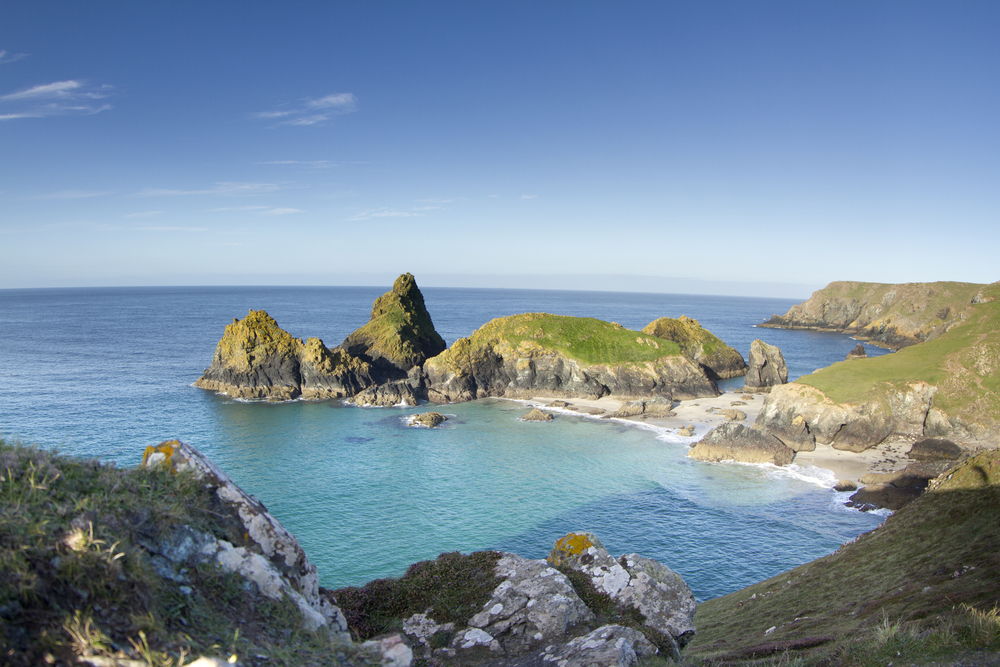
Cornwall has long since graduated from local favorite to full summer magnet. Kynance Cove is one reason why.
This beach combines golden sand with turquoise water, rugged rocks, and sea caves, creating one of the most visually dramatic coastal spots in England. The cove sits on the Lizard Peninsula, an area known for serpentine rock formations and cliff paths that are every bit as photogenic as the beach itself.
The popularity means you should not expect solitude, especially in peak summer. Parking fills early, the steps down are steep in places, and at high tide the amount of usable sand shrinks fast. Still, the appeal is obvious. The scenery is the whole point, and Kynance Cove delivers that in a big way.
For backpackers or budget travelers moving through southern England, Cornwall can be pricier than expected in high season, so planning ahead matters. Book beds early, use buses where possible, and do not assume “British beach town” automatically means cheap. Sadly, that ship has sailed quite some time ago.
Playa De Maspalomas Combines A Popular Beach With A Desert-Like Dune Reserve
Gran Canaria does not do understatement, and Playa de Maspalomas is a good example. This is a busy, high-profile beach, but it comes with a landscape twist that makes it more than a standard resort strip.
The beach itself runs for about two miles. Behind it sits the Maspalomas Dunes Nature Reserve, which covers nearly 1,000 acres of rolling sand dunes. That creates a setting that feels part beach, part desert, and fully memorable.
The area’s 19th-century lighthouse adds another visual marker, making this one of the best-known coastal scenes in the Canary Islands. For travelers who want a beach with easy recognition value, this is it.
Because Maspalomas is so established, it can also be easier to slot into a practical holiday plan with nearby services, transport, and accommodation choices. Convenience is not glamorous, but it saves hassle. Gran Canaria’s year-round warm climate also gives it an edge outside peak European summer, with daytime highs often sitting around the low-to-mid 20s Celsius in winter.
That said, this is not an undiscovered secret. Expect package-holiday infrastructure, busy stretches near the main access points, and prices that climb in the most in-demand weeks. Walk farther along the sand and things calm down a bit.
Omaha Beach Pairs Big Atlantic Scenery With Heavy History
Omaha Beach in Saint-Laurent-sur-Mer is known first for its place in the D-Day landings of World War II. That historical weight shapes the experience, and it is impossible to separate the landscape from what happened here on 6 June 1944.
Even so, the beach itself is striking on its own terms. It is wide, sandy, and set beneath open skies, with Atlantic waves, dunes, and a sense of scale that gives the coastline a quiet power.
Monuments, memorials, and museums around the area add context, making this a destination that combines coastal beauty with serious historical reflection. It is not a flip-flops-and-forget-everything sort of beach. It is more thoughtful than that.
For travelers already exploring Normandy, Omaha Beach can anchor a day that goes beyond standard sightseeing. You get a memorable coastline, but also a place that asks for a slower pace and a bit more attention. It also works well as part of a broader northern France route if your trip mixes coast, history, and a city stop like Paris.
Which European Golden Beach Fits Your Travel Style Best
Not every great beach serves the same kind of trip. Some are ideal for swimming and town access. Others are better for scenery, hiking, or simply escaping crowds.
- For solitude: Doñana Beach
- For dramatic cliffs: Praia da Falésia
- For Greek island food-and-swim days: Plaka Beach
- For easiest town access: Cefalù Beach
- For unreal scenery: Luskentyre
- For classic Cornwall drama: Kynance Cove
- For dunes and resort convenience: Playa de Maspalomas
- For history and atmosphere: Omaha Beach
How To Plan A Cheaper Beach Trip In Europe This Summer
If this list has triggered an immediate urge to open twelve tabs and price ferries you cannot yet afford, fair enough. A few practical moves can help keep costs under control.
- Stay a little outside the obvious hotspot and use local transport for day trips to famous beaches.
- Prioritize beaches near towns like Cefalù if you want to cut transfer costs.
- Bring your own basics for longer beach days.

We earn a commission if you buy through this link, at no extra cost to you.
- Walk farther down large beaches such as Praia da Falésia if you want more space without paying for a premium location.
- Mix big-name beaches with lesser-known ones in the same region to balance cost and crowds.
- Check local weather and sea conditions, especially on Atlantic-facing coasts where water temperature and surf can vary a lot.
- Arrive early at small-access beaches like Kynance Cove, where parking and path congestion become their own annoying attraction.
- Travel in June or September if you can, when sea temperatures are still workable in southern Europe but accommodation rates are usually less painful than peak August.
The best part of a beach-heavy Europe itinerary is that it does not need to be complicated. Pick a coast, add a cheap bed, and leave room for lazy afternoons. Museums will still be there tomorrow.