
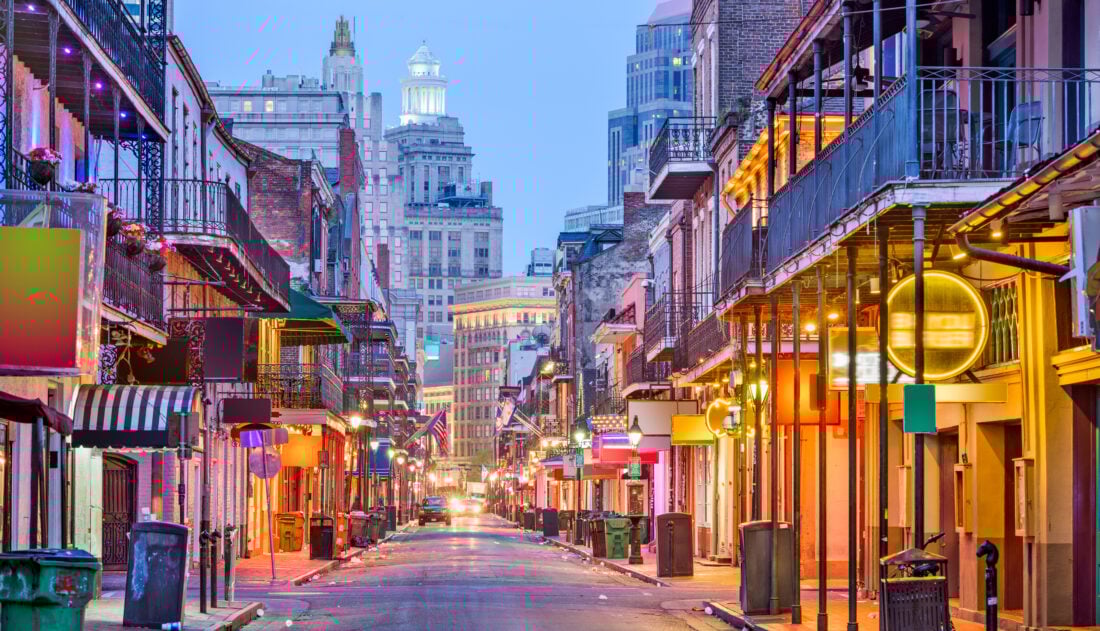
New Orleans architecture is unique because of its layered multicultural heritage. The city’s buildings reflect French, Spanish, Creole, African, Caribbean, and American influences, shaped by colonial rule changes, devastating fires, environmental challenges, and waves of immigration. You’ll see this fusion in everything from wrought-iron balconies and Creole cottages to shotgun houses and Greek Revival mansions.
Each neighborhood tells a different chapter of the city’s architectural story, and preservation efforts keep these historic styles intact even as modern technology introduces new design solutions.
Quick Answer: What Makes New Orleans Architecture Unique?
- Multicultural influences: French, Spanish, Creole, African, and American styles blend into one cityscape
- Historic preservation: Many buildings date from the early 1800s and remain functional today
- Climate adaptation: High ceilings, large windows, elevated living spaces, and courtyards respond to heat and flooding
- Iconic styles: Creole cottages, shotgun houses, Creole townhouses, and cast-iron balconies define the look
- Post-fire Spanish rebuild: After fires in 1788 and 1795, the city was reconstructed in Spanish style with brick and wrought iron
- Above-ground cemeteries: The high water table requires stone tombs above soil, adding to the city’s architectural character
The French Quarter: Where It All Started
Jean Baptiste Le Moyne, Sieur de Bienville, founded New Orleans in 1718 along the Mississippi River. He chose the site for its elevated land and access to the Mexican Gulf. The French Quarter became the heart of the city, with St. Louis Catholic Cathedral at its center, flanked by the Cabildo and Presbytere buildings to form what is now Jackson Square.
Very few early French buildings survive. Two major fires in 1788 and 1795 during Spanish rule destroyed much of the original French Quarter. The city was rebuilt in a Spanish style, incorporating brick construction and wrought-iron balconies that became iconic to New Orleans.
Today, the French Quarter’s architecture combines French, Spanish, Creole, and American elements. Buildings like the Ursuline Convent at 1100 Chartres Street and Lafitte’s Blacksmith Shop at 941 Bourbon Street showcase French Colonial features: steeply pitched roofs, hipped roofs, dormer windows, and thick masonry walls.
What Is Creole Architecture?
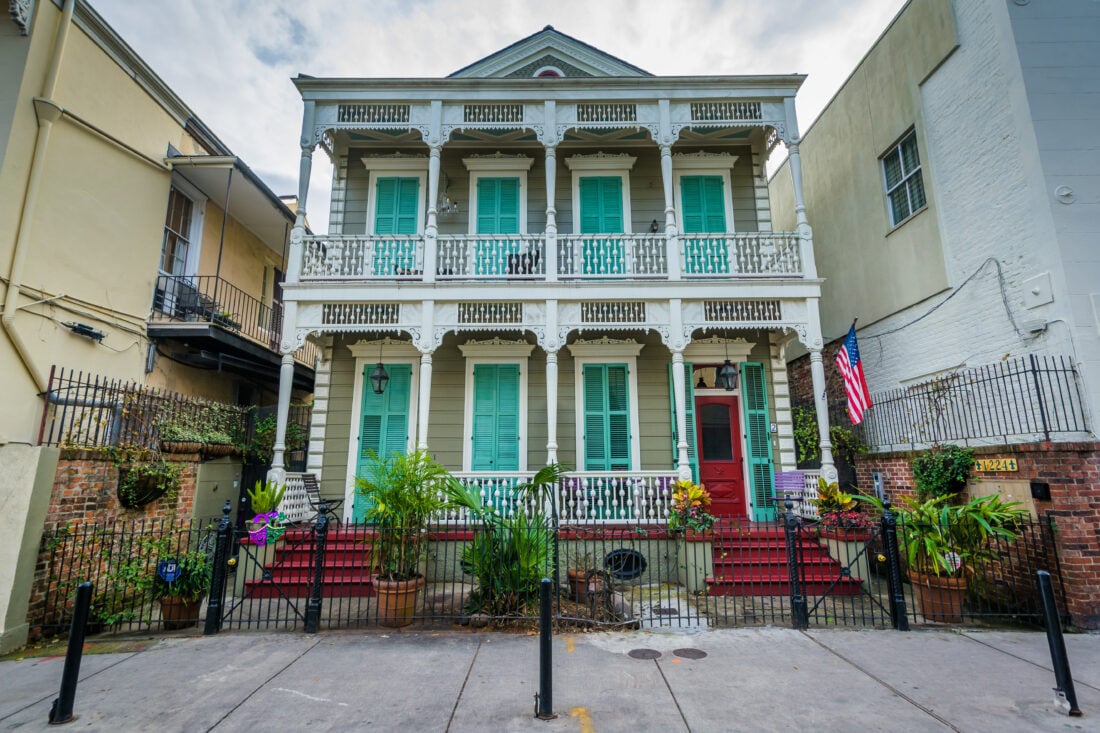
Creole architecture emerged in the early 19th century as a blend of French, Spanish, and African influences. You’ll recognize Creole buildings by their narrow facades, second-floor balconies, and courtyards with gardens.
Creole Cottages
Built between 1790 and 1850, Creole cottages are scattered throughout the French Quarter, Faubourg Marigny, Bywater, and Esplanade Ridge. Key features include:
- Steeply pitched roofs
- Symmetrical four-opening facade walls
- Simple four-room layouts with one central chimney
- Variations with side-gabled roofs or narrow gabled dormers
Creole Townhouses
Creole townhouses are perhaps the most iconic pieces of architecture in New Orleans. They dominate the French Quarter and feature:
- Cast-iron balconies
- Thick walls
- Arcades
- Enclosed courtyards (a Spanish influence)
These townhouses were built after the Great Fire of 1788 and reflect both French and Spanish design principles.
Spanish Colonial Influence: Courtyards and Wrought Iron
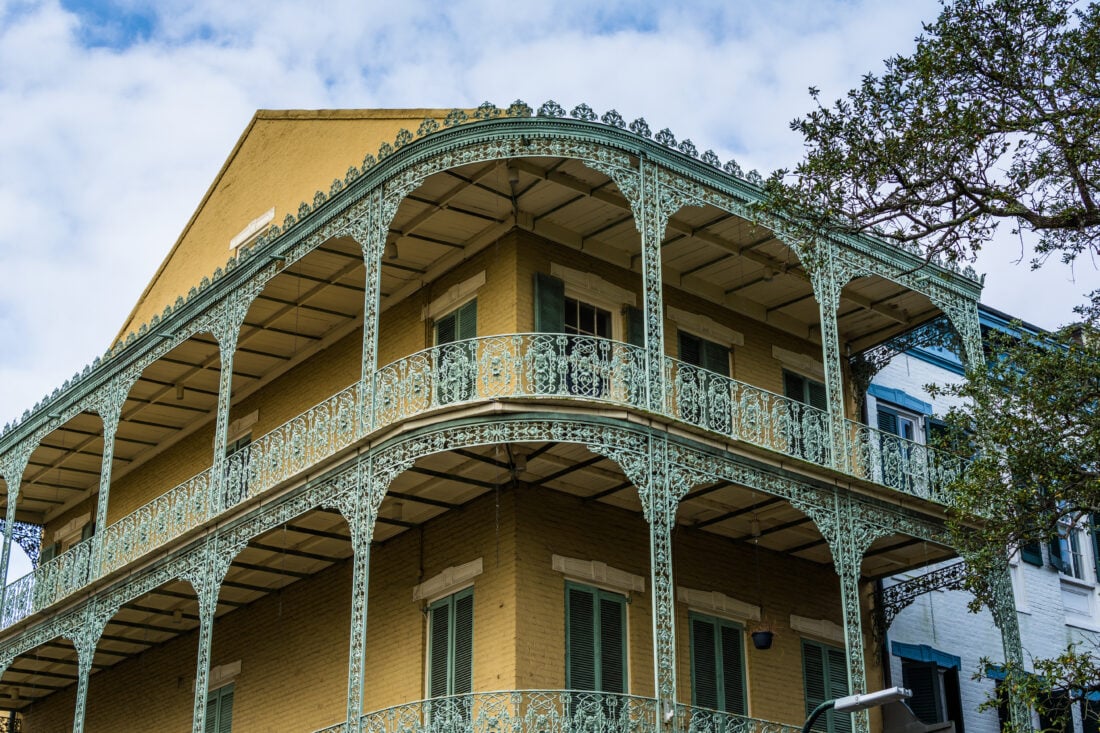
The Spanish colonial period introduced several defining features:
- Wrought-iron balconies that line streets in the French Quarter
- Stucco exteriors
- Enclosed courtyards, which became a signature element of New Orleans architecture
These courtyards, hidden behind street-facing walls, provided private outdoor space and helped buildings respond to the local climate.
American Influence After the Louisiana Purchase
After the Louisiana Purchase in 1803, Americans moved into New Orleans and settled in areas upriver of the French Quarter, including Uptown and the Garden District. Architects from New York brought new styles:
- Greek Revival homes
- Raised Centerhall Cottages
- Double Gallery Houses (two-story homes with covered galleries supported by columns, built between 1820 and 1850)
- American townhouses (narrow structures with asymmetrical facades and second-floor balconies, built between 1820 and 1850)
The Herman-Grimma House, designed by American architect William Brand in 1831, exemplifies this influence. Its bricks were imported from the north.
Creoles adapted American styles, creating two-story brick townhomes with Greek Revival elements that blended into the existing architectural fabric.
Shotgun Houses: A New Orleans Icon
The shotgun house appeared around 1848 and became one of the city’s most recognizable residential styles. These narrow rectangular homes have:
- Doors at each end
- Narrow porches
- Victorian motifs on brackets and columns
- Several variations in layout
Shotgun houses are prevalent throughout New Orleans neighborhoods and represent an efficient use of narrow urban lots.
Greek Revival and Victorian Mansions on St. Charles Avenue
St. Charles Avenue showcases Southern mansions in Greek Revival and Victorian styles. The avenue retains the largest collection of antebellum architecture because it was unscathed following the Civil War capture of New Orleans.
These grand homes, particularly in the Garden District, display classical columns, ornate detailing, and preserved 19th-century craftsmanship.
How Climate Shaped New Orleans Architecture
New Orleans sits in a hot, humid, flood-prone environment. Currently running around 75°F with scattered clouds and relatively low humidity at 30% (as of April 2026), spring is honestly one of the more comfortable times to wander the streets and appreciate these design details. Architecture adapted to far harsher conditions throughout the year, though:
- High ceilings allow hot air to rise
- Large windows promote cross-ventilation
- Open galleries and balconies provide shaded outdoor space
- Elevated living spaces protect against flooding
- Courtyards offer private outdoor areas with shade and airflow
Improvements in water and sewage systems allowed neighborhoods like Gentilly Terrace and Mid-City to develop below sea level. The introduction of air conditioning made California-style bungalows popular, featuring low-slung designs with wooden siding, and these are present in neighborhoods like Mid-City and Gentilly Terrace.
Above-Ground Cemeteries: Architecture Born of Necessity
New Orleans is known for its elaborate European-style cemeteries, including St. Louis Cemetery, Greenwood Cemetery, and Metairie Cemetery. The high water table makes traditional underground burial impractical, so the city uses above-ground stone tombs.
These cemeteries add to the city’s architectural uniqueness with their ornate tomb designs and Latin flourishes.
Architectural Styles by Neighborhood
| Neighborhood | Dominant Styles |
|---|---|
| French Quarter | Creole cottages, Creole townhouses, Spanish Colonial |
| Faubourg Marigny | Creole cottages, shotgun houses |
| Bywater | Creole cottages, shotgun houses |
| Esplanade Ridge | Creole cottages, Latin-Creole style |
| Treme | French and Spanish blend, Latin-Creole cottages |
| Garden District | Greek Revival, Victorian, American townhouses |
| Uptown | Greek Revival, Raised Centerhall Cottages |
| Lower Garden District | American townhouses |
| Central Business District | American townhouses, high-rises (1960s onward) |
| Mid-City | California bungalows |
| Gentilly Terrace | California bungalows |
Modern Architecture and Preservation
New Orleans architecture continues to evolve while honoring its past. Modern developments incorporate energy-efficient materials, solar panels, and floating home designs to combat flooding and environmental challenges.
Organizations like the Preservation Resource Center and Friends of the Cabildo work to maintain the city’s architectural integrity. After Hurricane Katrina and Hurricane Rita, preservation efforts focused on restoring damaged structures while combating urban decline and unstable property values.
Mark Hash, Senior Designer at Eskew+Dumez+Ripple, notes that while new technologies like 3D printing can create previously impossible forms, recreating historical buildings with modern methods would produce a simulacrum rather than genuine progress. He also observes a loss in craft such as terra-cotta and ironwork, which he sees as former ornamental techniques worth revisiting.
Many buildings from the early 1800s remain fully functional today. As Hash puts it, New Orleans can remain “a city outside of time” where old and new coexist.
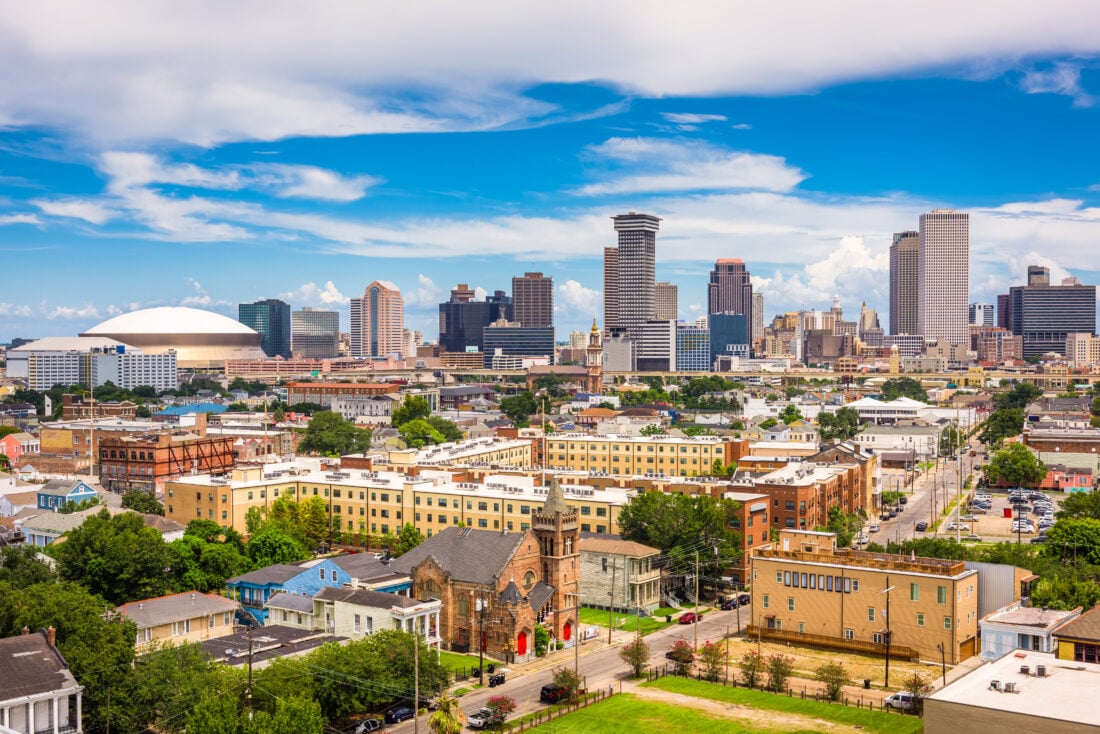
Notable Architectural Landmarks
- St. Louis Cathedral (Jackson Square centerpiece)
- The Cabildo
- The Presbytere
- Pontalba Buildings
- U.S. Custom House (Egyptian Revival)
- Immaculate Conception Church (Moorish Revival)
- Hibernia Bank Building
- Mercedes-Benz Superdome
- One Shell Square
- Hotel Monteleone
- Omni Royal Orleans
Why New Orleans Architecture Matters
New Orleans attracts nearly 20 million tourists annually, drawn in part by its architectural diversity. Unlike many other American cities, New Orleans preserved its historic core through active protection of the French Quarter and surrounding neighborhoods. If architecture is your thing, you’ll want to check out our full list of hot things to do in New Orleans to plan around it. The city also consistently ranks as one of the best places to spend New Year’s in the USA, when those iconic balconies and streets take on a whole different energy.
Each architectural style tells a story of cultural exchange, adaptation to environment, and survival through challenges. From street tiles to the relatively short building heights that maintain human scale, the architecture gives New Orleans its “real” and “historical” feel. Turns out, the live music scene pairs perfectly with all that visual history too. Venues like House of Blues and the Fillmore regularly host touring acts alongside local legends, so your evenings are well covered.
Corner stores are seeing a resurgence as residents seek a smaller-town community feel within the city.
New Orleans architecture is not frozen in time. It represents an ongoing conversation between past and present, where multicultural heritage meets modern innovation, and where the city’s identity remains rooted in the buildings that line its streets.
