
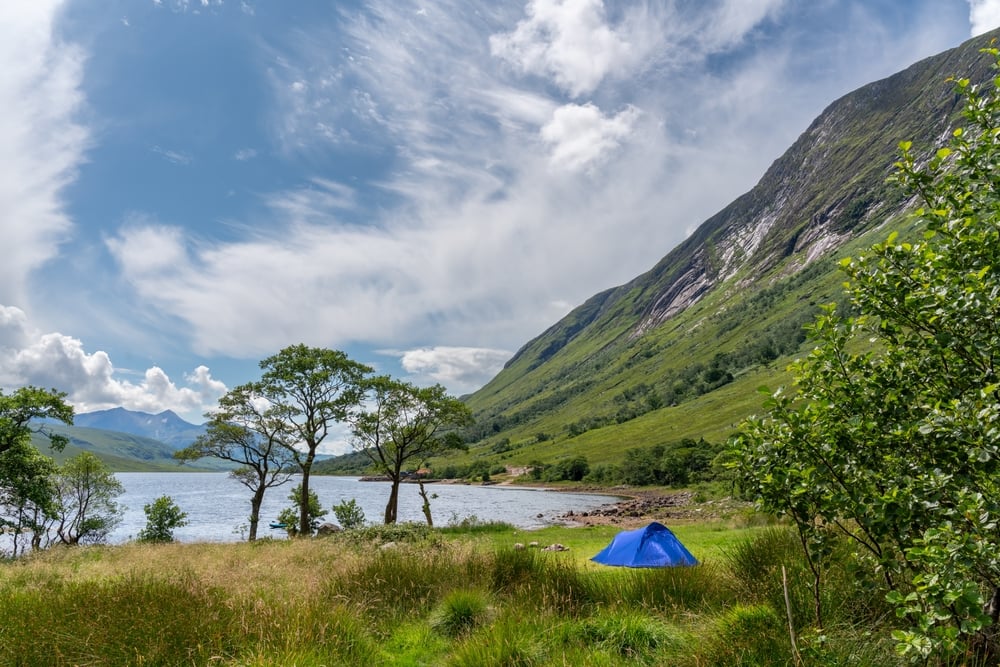
A camping weekend is easier to enjoy when your tent is ready before dark, your sleeping kit stays dry and you can make dinner without emptying every bag. Whether you are visiting the Scottish Highlands, the Lake District or a campsite closer to home, start with the conditions and facilities you expect to find.
This camping packing list covers ordinary tent-camping trips in mild conditions. Adapt it to your group, forecast and location. Winter camping, exposed mountain pitches and remote trips need additional equipment, planning and experience.
Choose Your Campsite Before Finalising Your Kit
Check whether your pitch has nearby drinking water, toilets, washing-up facilities and vehicle access. A family staying beside the car can bring bulkier bedding and a cool box; someone walking to camp needs to carry everything, including water and fuel.
Camping permissions vary. Scotland’s Outdoor Access Code covers responsible lightweight tent camping on most land, subject to its conditions and local restrictions. In the Lake District, the National Park’s guidance says landowner permission is required for wild camping. Check the rules for your exact location before setting off.
If your trip follows Scotland’s north coast, our guide to North Coast 500 campsites can help you shortlist stops. Confirm current facilities and pitch availability directly with the operator.

Camping Essentials at a Glance
| Category | What to pack | Check before leaving |
|---|---|---|
| Shelter | Tent, poles, pegs, guy lines and suitable repair supplies. | Test-pitch the tent and inspect its components. |
| Sleeping | Sleeping bag, insulated mat, pillow and dry storage. | Match the sleeping system to expected overnight conditions. |
| Cooking and water | Suitable stove and fuel if cooking, cookware, utensils, food and drinking water. | Confirm cooking rules and your refill plan. |
| Clothing | Base layers, warm layer, waterproofs, spare socks and suitable footwear. | Keep a dry set for sleeping. |
| Navigation and lighting | Head torch, backup power, offline maps and appropriate navigation equipment. | Test everything and know how to use it. |
| Health and hygiene | First-aid supplies, medication, toiletries, sun protection and rubbish bags. | Check quantities, expiry dates and toilet arrangements. |
Pack a Sleeping Setup That Suits the Weather
Choose a tent with enough room for your group and equipment, and check that it suits the conditions you expect. Pitch it at home first, including the guy lines, so you can spot a missing peg or damaged pole before travelling.
Check your sleeping bag’s comfort rating rather than choosing solely by its season label. Allow for colder nights and your own tendency to feel the cold. Keep the bag and your sleeping clothes in a waterproof liner or dry bag.
A sleeping mat provides ground insulation as well as cushioning, but an inflatable mattress is not automatically warm. Check its insulation specification or R-value: a higher R-value means greater resistance to heat loss through the mat. Bring a compatible repair kit for an inflatable model and test it overnight before the trip.
Keep the Camp Kitchen Simple
Plan meals before choosing cookware. Porridge, soup and one-pot dinners need less equipment than a full breakfast for several people. Pack the utensils those meals require, enough suitable fuel and a meal you can eat without cooking if conditions prevent stove use.
Bring drinking water and confirm where you can refill. Include water for cooking and washing up as well as drinking. Do not assume a nearby stream is safe to drink from. If your route depends on natural water sources, plan appropriate treatment and understand the equipment’s limitations before leaving.
Use fuel-burning camping stoves and barbecues outside, away from tents and awnings. Opening a tent flap does not make indoor use safe. Even a cooling barbecue can release dangerous carbon monoxide. Follow the manufacturer’s instructions, keep cooking equipment stable and attend it throughout use. The Camping and Caravanning Club’s safety advice explains these risks.
Check local fire restrictions and campsite rules before using any flame. Do not rely on gathering firewood or lighting a campfire to cook your meals.
Choose Clothing for Rain, Wind and Cool Evenings
Pack a comfortable base layer, an insulating fleece or jacket, and waterproof outer layers. Add spare socks, a warm hat and weather-appropriate sun protection. Keep insulation dry, particularly if you are using a down jacket.
Choose footwear for the ground you will cover and make sure you have worn it before the trip. Boots are one option, but fit, grip and suitability matter more than a single style. Campsite shoes can be useful if you have room. Our hiking gear packing list covers equipment for the walking part of your holiday.
Bring Lighting, Navigation and First-Aid Supplies
A head torch leaves your hands free for pitching, cooking and finding the toilet block after dark. Test it and pack spare batteries or a suitable charging option. Download maps before departure, and carry a paper map and compass for remote walking if you have the skills to use them.
Pack dressings, blister care and personal medication, adapting supplies to your group and trip length. Know how to use the contents of your first-aid kit. For walks away from camp, tell someone your route and expected return time, and carry an emergency whistle and appropriate emergency shelter.
Choose Cutting and Repair Tools Carefully
Repair tape, spare cord and the right patch kit can solve common equipment problems. A cutting tool may be useful for food preparation or trimming repair cord. When comparing pocket knives, consider the task, safe handling and storage, and the rules that apply to the exact model. A knife is optional equipment, not a requirement for every camping trip.
Before carrying a blade, read the government guidance on buying and carrying knives. It explains that carrying most knives in public requires a good reason, with a limited exception for non-locking folding pocketknives with a cutting edge no longer than three inches. Locking knives do not fall within that exception, even when small. Do not assume a camping trip automatically makes every knife lawful to carry.
Check the laws where you are travelling, along with transport and campsite restrictions. If you are unsure about a particular knife or journey, seek advice from the relevant police service or a qualified legal adviser before taking it.
- Follow the manufacturer’s instructions and use the tool only for tasks it is designed to perform.
- Use a stable work area and keep your hands and other people clear of the cutting path.
- Close or sheath the blade after use and store it securely, out of children’s reach.
- Avoid using sharp tools when tired, distracted or affected by alcohol.
Remember Hygiene and Waste
Bring toiletries, hand-cleaning supplies, a small towel and bags for taking rubbish away. Add insect repellent and a head net where appropriate. Use designated toilets and washing-up points at managed campsites, and plan suitable waste arrangements before a remote trip. Leave your pitch clear of food scraps, litter and spare pegs.
Final Checks Before You Leave
| Check | What to confirm |
|---|---|
| Forecast and location | Overnight temperatures, wind, rain, warnings and a plan to change or cancel if conditions are unsuitable. |
| Pitch and permissions | Booking details or permission, arrival arrangements and local camping restrictions. |
| Equipment | Complete tent components, tested sleeping kit, working lights and charged devices. |
| Cooking and water | Permitted stove use, compatible fuel, drinking-water supply and meals that suit your equipment. |
| Tools and transport | Applicable knife and fuel rules, safe storage and any carrier restrictions. |
| Group arrangements | Shared equipment, medication, emergency contacts and who knows your plans. |
For a walking holiday, pack your rucksack fully and try carrying it before departure. Our West Highland Way packing list offers a useful reference for a multi-day Scottish route. Adjust your own list to the trip you are taking, keeping room for the essentials you will need first on arrival.
Safety and Responsibility Notice
This article provides general travel information, not professional safety training or legal advice. Camping, cooking equipment and cutting tools involve risks. Readers are responsible for choosing equipment suited to their skills and conditions, following manufacturer instructions and complying with applicable laws. A product mention or link does not certify that an item is safe, suitable or lawful for a particular use.
