
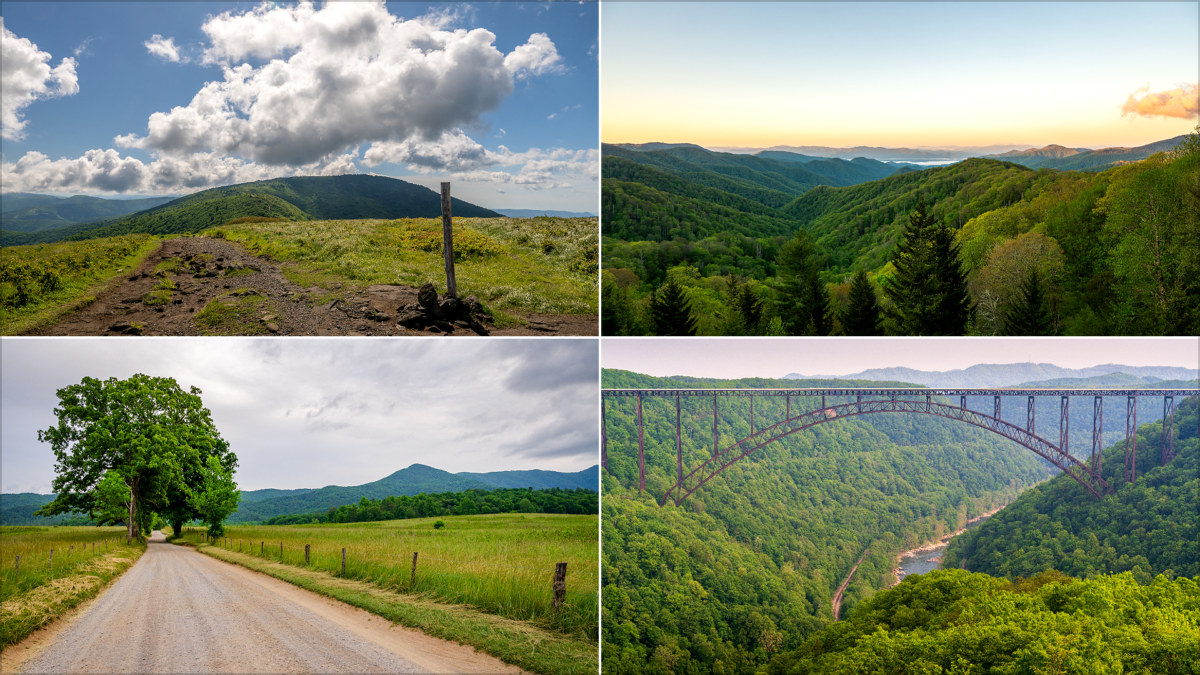
The Appalachian Trail has a way of making even experienced travelers feel small. It stretches for nearly 2,200 miles, crosses 14 states, climbs and drops so often your knees may file a complaint, and still attracts millions of people who only want to walk a tiny slice of it.
If you are curious about the numbers, the history, and the practical details behind this famous route, these fascinating facts about the Appalachian Trail are a good place to start. Some are big-picture facts. Some are the sort of trivia that thru-hikers love and everyone else finds oddly compelling.
You do not need to hike from Georgia to Maine to appreciate the trail. Even a short visit to places like Springer Mountain, Bear Mountain State Park, Shenandoah National Park, or Mount Katahdin can turn the legend into something real. If long walks with a story behind them are your thing, these U.S. historic trails make a fun companion read.
1. The Appalachian Trail crosses 14 states
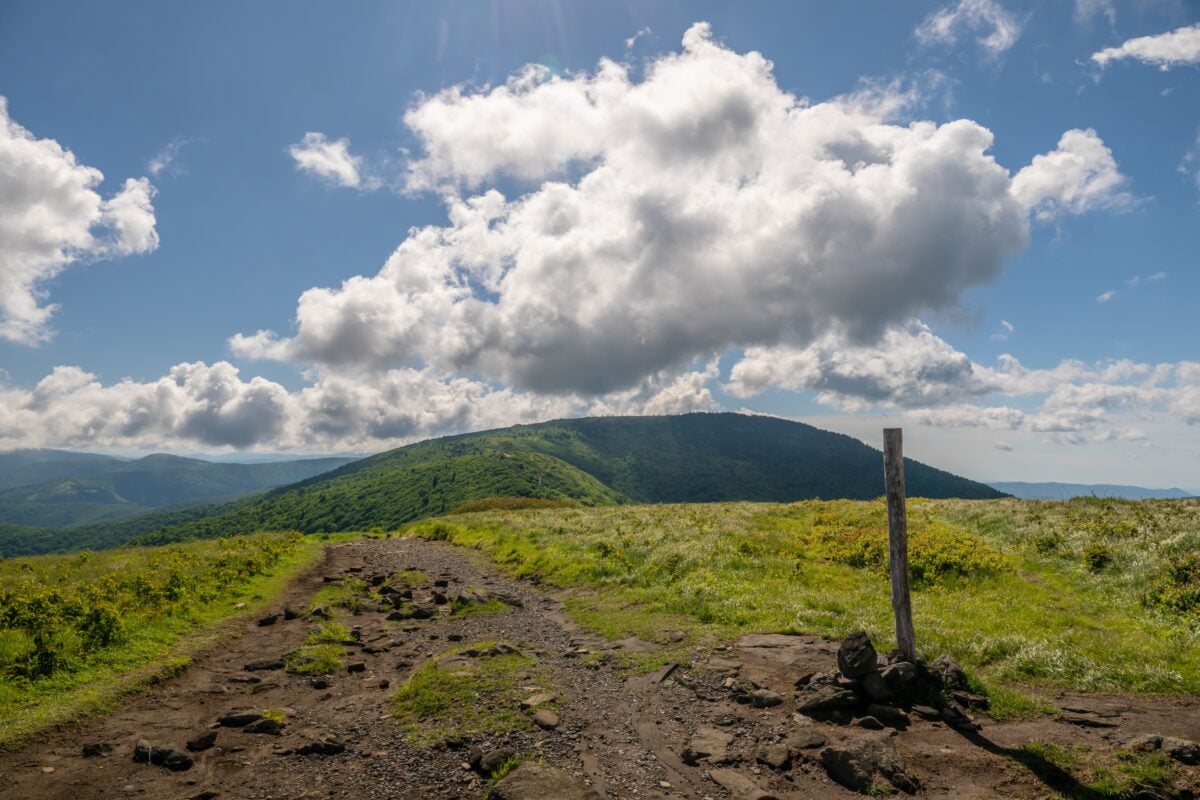
The Appalachian Trail runs from Springer Mountain in Georgia to Mount Katahdin in Maine. Along the way, it passes through Georgia, North Carolina, Tennessee, Virginia, West Virginia, Maryland, Pennsylvania, New Jersey, New York, Connecticut, Massachusetts, Vermont, New Hampshire, and Maine.
That 14-state span is one of the trail’s biggest draws. A single route connects southern hardwood forests, mid-Atlantic ridges, New England peaks, small towns, national parks, and working rural landscapes.
A few state facts stand out:
- Virginia has the longest stretch, with about 544 miles of trail.
- West Virginia has the shortest stretch, at roughly four miles.
- Maryland is another short section, with about 41 miles, often favored by hikers looking for a manageable multi-day trip.
That uneven distribution explains why long-distance hikers talk about some states like old friends and others like very brief acquaintances.
2. Its official length changes
One of the most fascinating facts about the Appalachian Trail is that even its mileage is not fixed forever. A commonly cited official length is 2,197.4 miles, but the exact number has shifted over time as sections are rerouted, rebuilt, or improved.
This is not a case of bad measuring. The trail is a living route. Land protection changes. Erosion happens. Better alignments are created. Short road walks may be replaced with more scenic or safer footpath.
If you see slightly different mileages in guidebooks or on older maps, that is normal. For travelers, the practical takeaway is simple: check route details before planning a section hike, especially in places where relocations are more common.
3. It was first proposed in 1921 and completed in 1937
The trail did not appear overnight. Regional planner Benton MacKaye proposed the idea in 1921, imagining a long footpath through the Appalachian Mountains that could offer an escape from urban life.
The first section opened in 1923 near Bear Mountain in New York. The Appalachian Trail Conservancy was established in 1925, and the full trail was completed in 1937.
That timeline matters because it shows what the Appalachian Trail really is: not just a hike, but a major conservation and public access project that took years of organizing, building, and maintenance.
It later became part of the National Trails System under the 1968 National Trails System Act. That status helped secure its place as one of the best-known long-distance trails in the United States.
4. It is often described as the world’s longest hiking-only footpath
The Appalachian Trail is widely recognized as the world’s longest hiking-only footpath. That distinction matters because the route is designed for people on foot, not for bikes or motorized travel.
For travelers, this gives the trail a particular feel. Shelters, blazes, trail culture, and route management all revolve around walking. It is not a mixed-use corridor where hikers are constantly stepping aside for wheels.
That hiking-only identity also helps explain the trail’s strong sense of community. People are there for the same basic reason: to walk, slowly, and probably eat a truly heroic amount of snacks.
5. Millions of people use it, but far fewer attempt the whole thing
More than 3 million people hike sections of the Appalachian Trail each year. That number includes day hikers, weekend backpackers, and section hikers who tackle the route a piece at a time.
Only a much smaller group tries to complete the entire trail in one 12-month period as a thru-hike. In recent years, annual northbound registrations alone have topped 3,000, and total thru-hike attempts are higher once southbound and flip-flop hikers are included.
This gap between total visitors and full-distance hikers is part of what makes the trail so interesting:
- It is famous enough to attract huge numbers of casual visitors.
- It is demanding enough that a full traverse remains a serious challenge.
- It works for many styles of travel, from a two-hour walk to a five- to seven-month journey.
You do not need to be a thru-hiker to experience the Appalachian Trail well. In fact, many travelers are happiest choosing one or two standout sections and giving them proper time.
6. The total climbing is the real shock
People who are new to the trail sometimes assume the hardest parts must be the very highest mountains. Not quite. The Appalachian Trail’s highest point is Kuwohi, at 6,643 feet, yet the route is notorious because it goes up and down constantly.
A full thru-hike involves cumulative elevation gain and loss often estimated at around 464,000 feet, roughly equal to climbing Mount Everest 16 times. That stat explains why the Appalachian Trail has such a fierce reputation even though it does not cross the towering elevations associated with western mountain ranges.
Flat sections are relatively rare. A modest-looking section on paper can still be tiring because of repeated steep ascents and descents.
| Appalachian Trail quick facts | Detail |
|---|---|
| Official designation | National Scenic Trail |
| Commonly cited length | 2,197.4 miles |
| States crossed | 14 |
| Southern terminus | Springer Mountain, Georgia |
| Northern terminus | Mount Katahdin, Maine |
| Highest point | Kuwohi, 6,643 feet |
| Lowest point | Bear Mountain State Park, 124 feet |
| Completion year | 1937 |
7. Volunteers keep the whole thing going
One of the most impressive Appalachian Trail facts has nothing to do with scenery. The trail is maintained by 31 trail clubs working with the Appalachian Trail Conservancy, the National Park Service, and the U.S. Forest Service.
That means much of the practical work hikers depend on is done by volunteers:
- painting white blazes
- clearing fallen trees
- repairing tread
- maintaining shelters
- building bridges and steps
- managing relocations and reroutes
This volunteer network is one reason the trail feels so well-loved. It is not just a line on a map. It is a huge shared project.
There are also a remarkable number of trail markers. The route is famous for its white blazes, with roughly 165,000 blaze marks guiding hikers.
8. Some of its best-known sections are inside major protected areas
The Appalachian Trail passes through several places that are well worth visiting even if you have no intention of doing a full backpacking trip.
Great Smoky Mountains National Park
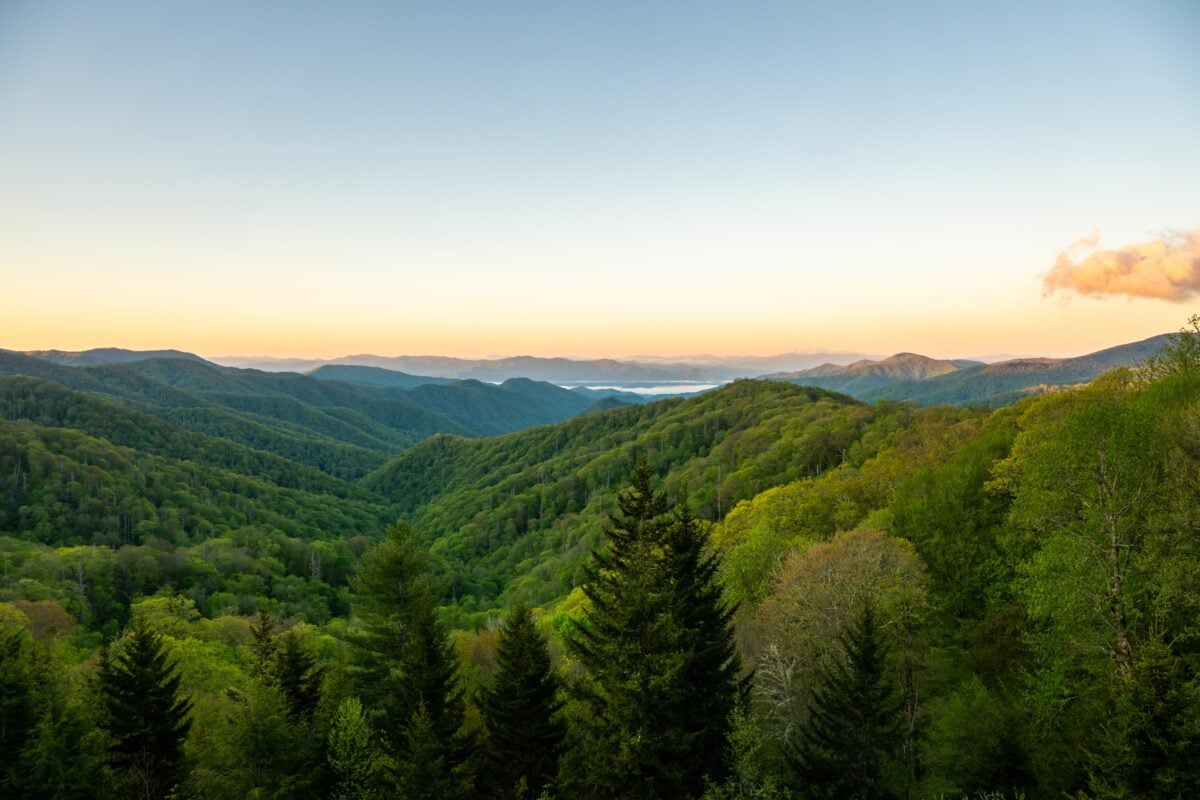
The trail crosses a long section of Great Smoky Mountains National Park, one of the most visited national parks in the United States. This section includes Kuwohi, the highest point on the entire Appalachian Trail.
Why visit? Big views, high ridgelines, and a chance to stand on the trail’s loftiest point without committing to months of hiking. Best time to visit is generally spring through fall for easier access and milder conditions. Weather can change fast at elevation, so carry layers even on a day hike. Parking tags are required for any vehicle parked longer than 15 minutes inside the park, which is a small detail that can save you an annoying surprise at the trailhead.
Shenandoah National Park
The route also runs through Shenandoah National Park in Virginia. This is one of the more accessible places to experience the Appalachian Trail because sections run near Skyline Drive.
Why visit? Easy access points, ridge views, and the chance to pair a hike with a scenic drive. Best time to visit is spring for wildflowers and fall for foliage. Helpful tip: because road access is relatively easy here, this can be a smart first taste of the trail for travelers who want the experience without a heavy logistics puzzle. It is also one of the easiest sections to blend into a broader road trip, especially if you like your hikes followed by a proper meal and a real bed.
Bear Mountain State Park
Bear Mountain State Park in New York marks the trail’s lowest point at 124 feet. It is also tied to the early history of the route, since one of the first completed sections opened nearby.
Why visit? It offers a tangible link to the trail’s origins and an easy way to pair hiking with a park visit rather than a full wilderness outing. If you want Appalachian Trail history without disappearing into the backcountry, this is a strong candidate. Nearby Hudson Valley stops make it an easy add-on for travelers exploring small-town New York or heading toward other small towns in the U.S. you might recognize from movies.
9. The classic thru-hike goes northbound, but that is not the only way
Most thru-hikers start at Springer Mountain in Georgia and walk north to Mount Katahdin. This northbound route is so common that trail culture often treats it as the default.
Still, it is not the only way to do it. Southbound and flip-flop hikes are also part of the trail culture.
Why does that matter to casual travelers? Because crowd levels, shelter competition, and general trail atmosphere can vary a lot depending on where and when you go. A heavily traveled northbound corridor in spring can feel very different from a quieter shoulder-season section hike elsewhere.
If solitude matters, do not assume the most famous starting pattern is the best fit for your trip.
10. It has real hazards, and they are not all dramatic
The Appalachian Trail is famous, but it is not a theme park path with perfect weather and conveniently placed coffee shops every few miles. Common hazards include:
- severe weather
- steep grades
- limited water in some stretches
- dangerous stream crossings
- black bears
- tick-borne illness
- mosquitoes, yellowjackets, and biting flies
- poison ivy and venomous snakes in some regions
The less glamorous dangers are often the ones that cause the most trouble. Bad water treatment decisions, poor footwear, and underestimating humidity can ruin a trip faster than any cinematic bear encounter.
For short trips, the smartest move is boring preparation. Check local conditions, know your mileage, carry water treatment, and plan for temperature swings.

LifeStraw
LifeStraw Personal Water Filter for Hiking, Travel and Emergency, Blue, 1PK | Water Filter…
We earn a commission if you buy through this link, at no extra cost to you.
11. You can experience it without thru-hiking
One reason the Appalachian Trail remains so compelling is that it works at different scales. You can visit for an afternoon or dedicate half a year.
Good ways to experience it include:
- Day hikes near road-accessible points in Shenandoah National Park or Bear Mountain State Park
- Weekend backpacking trips on shorter sections in Maryland or Georgia
- Section hiking over months or years if you want the satisfaction of covering the full route without doing it all at once
- Landmark visits to places like Springer Mountain or Mount Katahdin if you are drawn to the symbolism of the trail’s endpoints
That flexibility is part of the magic. The trail can be a quick travel stop, a fitness challenge, a history lesson, or a life-defining long walk.
12. A few practical facts matter more than trivia
If you are planning to step onto the trail, even briefly, these practical points are worth remembering:
- Thru-hikers usually aim for early spring through autumn, while shorter visits happen year-round depending on location and weather.
- Not every famous section is easy. Accessibility and popularity do not automatically mean gentle terrain.
- The trail passes through both wild and developed areas. Some stretches feel remote, while others cross roads, towns, or farmland.
- Route conditions can change. Always check with the managing agency or local trail club before committing to a plan.
If you are turning your visit into a broader trip, Shenandoah National Park is one of the easiest places to pair Appalachian Trail hiking with scenic driving and overnight planning. Travelers who like mountain scenery beyond the A.T. itself may also enjoy these hidden mountain lakes in the USA.
Why these fascinating facts about the Appalachian Trail still matter
The Appalachian Trail is not just long. It is layered. It is a historic conservation project, a volunteer success story, a physical challenge, and one of the most approachable big-name adventures in the United States.
The numbers are impressive, but the real appeal is how many ways there are to connect with it. You can chase white blazes for five months, walk to a viewpoint for two hours, or visit a famous section in a national park and still come away understanding why this trail has such a grip on people.
That may be the most fascinating fact of all: the Appalachian Trail is enormous, but it still feels personal once your boots hit the dirt.
