

Scottish links golf is a ground-based, wind-exposed form of golf played on firm coastal terrain of sand, dunes, and fine grasses. The ball runs farther, the weather plays a larger role, and a low shot can be more useful than a towering one.
That is the short answer to Scottish Links Golf Explained: What Makes It Different? The longer answer starts with the land itself. A course beside the sea is not automatically a true links, and a famous name on a scorecard does not make the wind any more sympathetic.
What Is a True Scottish Links Course?
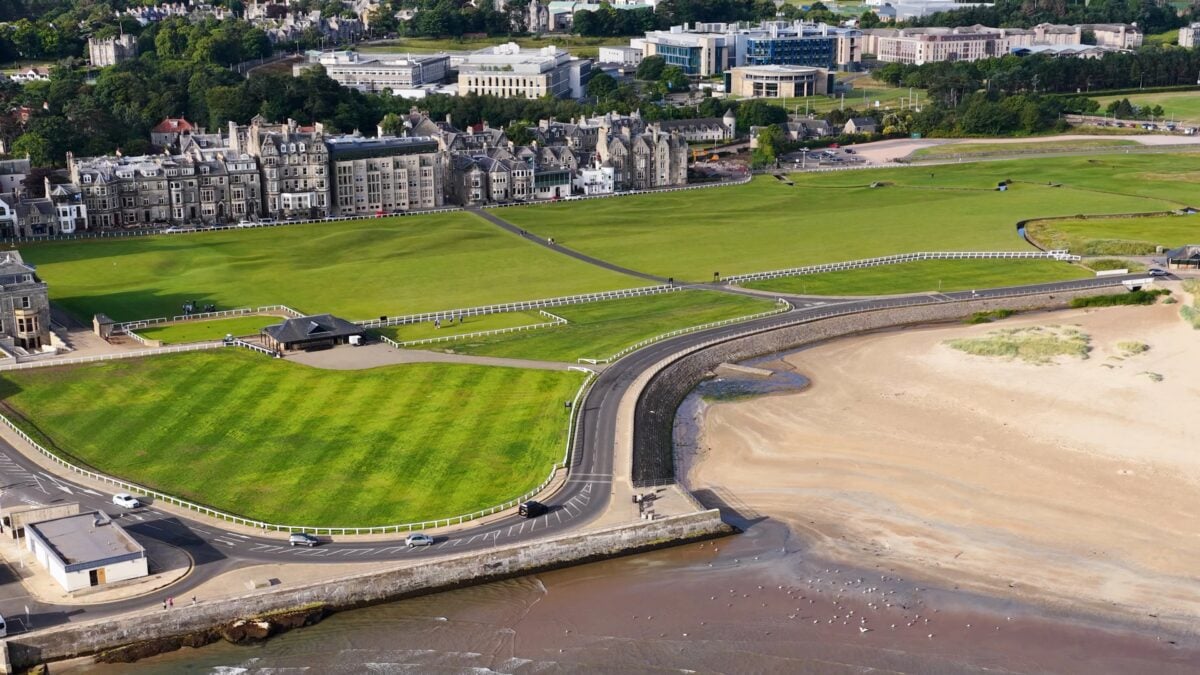
A links is a specific kind of landscape, traditionally found between the sea and more fertile inland ground. The name comes through Scots from the Old English word hlinc, meaning a ridge or rising ground. In Scotland, it came to describe sandy, rolling coastal land that was poorly suited to crops but exceptionally well suited to golf.
True links terrain has sandy soil, natural undulations, dunes, and sparse tree cover. Browntop bent and red fescue are closely associated with this environment. Their fine growth and deep-rooted resilience help produce the fast, firm turf that defines the game.
Scottish Golf History identifies 92 Scottish courses, or 17% of the country’s total, as true links. Plenty of other courses sit by the coast or borrow links-style design features, but the underlying land remains the key distinction. A seaside view alone does not settle the argument.
Why the Ground Changes Every Shot
On a soft parkland course, a well-struck approach often lands near the flag and stops quickly. On Scottish links turf, a ball can take a long first bounce and keep moving. Good shots are frequently planned around where the ball will land and how it will travel after that.
The running game is central to links golf. A player may land a shot well short of the putting surface and allow the contours to feed it toward the hole. A bump-and-run, a low punch, or a putter from off the green can all be sensible choices when the ground is firm.
This does not make high shots obsolete. It does make them less automatic. The best option changes with the wind, the firmness of the turf, the lie, and the slopes around the green. Scottish links golf rewards people who can see more than one route to the target.
If you are looking for more golfing in Scotland content, check our ultimate golf guide to Scotland.
Wind Is Part of the Course

Wind is not an occasional inconvenience on a Scottish links. It is part of the daily puzzle. An exposed course near the North Sea or the Atlantic can ask for a completely different club, trajectory, and target line from one hole to the next.
A strong headwind can turn a comfortable approach into a demanding strike, while a crosswind can make a ball drift far from a flagstick. Choosing less club and making a controlled swing often beats trying to overpower the conditions. The goal is a predictable flight, not a heroic one that disappears into the clouds.
Rain adds another layer, but links courses generally drain quickly because of their sandy foundations. That year-round firmness is one reason this terrain was so useful to the game’s early players, long before extensive irrigation and large-scale earthmoving became standard parts of course construction.
Dunes, Rough, Bunkers, and Few Trees
Scottish links courses tend to follow the natural folds of the coastline. Fairways can be uneven, greens may sit behind humps or in shallow hollows, and the next shot is not always visible from the tee. The landscape asks for attention before the swing begins.
Trees are often scarce because exposed, sandy coastal land is not a friendly place for them. That open setting gives the wind room to work and leaves golfers with few visual barriers. It also creates a particular kind of pressure: there is nowhere to hide a poor shot except, perhaps, in the rough.
Wispy grass and gorse can make recovery difficult even when the ball appears to have a reasonable lie. On traditional links land, the rough is not decorative. It is a genuine penalty for missing the better side of the fairway.
Bunkers developed naturally from the sandy ground and were later shaped into the hazards golfers know today. They are often deep or steep-faced, so simply finding sand can create a demanding next shot. Good links strategy treats bunkers as places to avoid, not as routine interruptions.
How Scottish Links Golf Differs From Parkland Golf
| Feature | Scottish Links Golf | Typical Parkland Golf |
|---|---|---|
| Ground | Firm, sandy, fast-draining turf | Softer, often more moisture-retentive turf |
| Shot style | Low flights, bounces, and run-outs are common | Higher shots that stop near the target are more common |
| Wind | Usually a major strategic factor | Often reduced by trees and inland setting |
| Landscape | Dunes, open horizons, fescue, and few trees | Trees, manicured fairways, and more sheltered holes |
| Course management | Creative routes and safe miss areas matter greatly | Direct aerial play is often more available |
Neither style is inherently better. They simply demand different habits. A player who relies on high-spin wedges and carries hazards with ease may need to learn patience on a links. A golfer comfortable with knockdowns and awkward bounces may feel right at home.

Amazon Basics Core Soft Golf Balls, Low Compression, Side Stamp Alignment, 24-Pack, Yellow
Famous Scottish Links That Show the Difference
St Andrews Old Course in Fife is the most famous example of golf on links land. Its shared fairways, rolling ground, and strategic bunkers show why a direct line to the flag is not always the intelligent one. The Old Course developed on a coastal landscape where the game’s early forms took root.
Montrose Links illustrates the older, rawer character of the terrain: sand, grass, and gorse. The town’s links land reflects the combination that made these coastal areas practical for early golf, with naturally rolling ground that did not need to be manufactured into shape.
Royal Dornoch, on Scotland’s northeast coast, is another enduring example of a course closely tied to dunes and firm turf. It is useful for understanding that links golf is not defined by one architectural formula. The shared thread is the sandy coastal ground and the way it influences every shot.
For contrast, Scotland also has leading parkland and heathland courses. Scotscraig and Longniddry are identified as parkland examples, while The Duke’s and Whitekirk represent heathland golf. Lundin Golf Club is often described as a combination of links and parkland traits, a useful reminder that course labels can have blurry edges. For a wider look at why Scotland remains a leading golfing destination, the variety of courses is a large part of the appeal.
How To Prepare for a Round on Scottish Links
Bring a game built around options. Spend time before the round hitting low shots with a mid-iron, controlled pitches, and putts from short grass around the green. A full lob wedge is useful, though it should not be the only answer in the bag.
- Play the wind before the yardage. Pick a club for the flight and finish you need, not merely the number printed on the scorecard.
- Aim for useful ground. A safe section of fairway or the front of a green can be more valuable than firing straight at a tucked pin.
- Keep the ball low when conditions demand it. A punch shot with a longer club can be easier to control than a full swing with extra loft.
- Study slopes around the green. The route along the ground may offer a wider margin for error than an aerial approach.
- Accept unusual lies. Uneven stances and bumpy fairways are part of the format, not evidence that the course has forgotten to mow.
A waterproof golf jacket is sensible for exposed coastal rounds, where wind and rain can arrive in the same nine holes. Look for a lightweight design that allows a full shoulder turn, since a bulky outer layer can make a controlled swing harder than it needs to be.

fit space Waterproof Golf Rain Suits for Men Performance Rain Jackets and Pants for All Sports (Gray Full-zip, Large)
Use a low-compression golf ball only if it suits your normal swing and feel preferences, but take a few extra balls for the round. Firm fairways can send a slightly offline shot a long way, and long grass or gorse are poor places to conduct a prolonged search party. If you stop for food or drinks after the round, it also helps to know how tipping in Scotland works.
When Does Links Golf Play Its Toughest?
Conditions change the character of a links more sharply than a sheltered inland course. Wind can be severe in any season, while dry, firm ground can make the ball run farther and make greens harder to hold. A calmer day does not make a links easy, but it does reveal the contours and strategic angles with less airborne drama.
Golf began on this terrain partly because sandy links land remained playable when softer ground was wet. The fast drainage still matters. A Scottish links round can be demanding in rough weather, but the ground often remains firmer than golfers accustomed to waterlogged inland fairways might expect.
Scottish Links Golf FAQs
Is Every Coastal Golf Course in Scotland a Links Course?
No. A true links course is defined by its sandy coastal soil and terrain, including dunes and firm, fast-draining ground. Some coastal courses have links-like characteristics without being built entirely on traditional links land.
Why Do Golfers Hit the Ball Low on Scottish Links?
Low shots are less affected by wind and can use the firm turf to run toward the target. A shot that lands short of the green may finish closer than a high approach that is carried off line by a crosswind.
Are Scottish Links Courses Harder Than Parkland Courses?
They can be harder for players used to soft turf and high aerial shots. Wind, firm bounces, deep bunkers, and heavy rough create a different test, while creative ground play can make the course more manageable.
Why Are There So Few Trees on a Links Course?
Traditional links sit on exposed, sandy coastal ground where trees struggle to thrive. The open setting allows wind to become a major part of the course’s challenge.
What Makes Links Golf So Memorable
Scottish links golf asks golfers to work with the landscape instead of trying to overpower it. The fairway may kick a good shot sideways, the wind may demand a club choice that feels faintly ridiculous, and the safest route can run 30 yards away from the flag before it comes back.
That unpredictability is the point. On a true links, the ground is an active playing partner. Learn to use it, and Scottish golf starts to make a great deal more sense.