

Late May through June is the best time of year to play golf in Scotland. It offers the strongest blend of long daylight, comfortable playing temperatures and courses in their full-season rhythm.
There is no weather-proof month in Scotland, and links golf would be missing part of its character without a lively wind and the occasional sideways shower. Still, choosing the right window can make a major difference to tee-time availability, green fees and how many holes you can fit into a day.
The wider Scottish golf travel season generally runs from April to October. Each part of that season suits a different kind of trip, and these tips for travelling in Scotland are useful when you are piecing together transport, weather gear and a multi-course itinerary.
Why Late May and June Are the Best Overall

Late May and June are the safest all-round choices for a first Scottish golf trip. Spring has warmed up, the long winter daylight has returned in force, and the major links courses are open for their main season.
Near the June solstice, the Highlands can have roughly 17 hours of usable daylight, with very early sunrises and late sunsets. That creates room for an unhurried morning round at Royal Dornoch and a second game later in the day, provided tee times line up. It also makes a late afternoon start at Carnoustie far more appealing than it sounds.
Summer temperatures are usually modest rather than hot. Typical June-to-August daytime temperatures commonly sit in the 14°C to 20°C range, which is comfortable for walking a links course but still calls for layers. Scotland can deliver cold rain in July and a blue-sky spell in April, so a date is not a weather guarantee.
June is especially useful for groups playing St Andrews, Kingsbarns and Carnoustie because daylight gives the itinerary some breathing room. A delayed round or a slow fourball is less likely to eat the entire day.
Scotland Golf Weather and Daylight by Season
| Season | Typical Conditions | Best For | Watch Out For |
|---|---|---|---|
| April to May | Cool to mild, with spring rain and brisk winds | Lower shoulder-season prices and better availability | Cold mornings, frost risk and some fixture block-outs |
| June to August | The warmest period and exceptionally long daylight | First trips, marquee courses and 36-hole days | Peak demand, midges in some Highland areas and higher green fees |
| September to October | Cooler weather, with wetter conditions later in autumn | Value-minded repeat trips and quieter courses | Shorter days and reduced choice later in the season |
| November to March | Cold, wet conditions and very short daylight | Flexible golfers seeking low-season opportunities | Course closures, mats and frost delays |
Playing Golf in Scotland in Spring: April and May
April is the value pick for golfers willing to pack properly. In St Andrews, it is often one of the drier months by rainfall, although wind can make a dry day feel distinctly un-springlike. Many courses offer shoulder-season green fees in early April, sometimes well below peak summer prices.
April works well for East Lothian links such as Gullane, North Berwick and Elie. Their coastal settings still demand a windproof outer layer, but spring availability can be much easier than in the high summer rush. Royal Dornoch and Castle Stuart are also strong choices for golfers who want Highland golf before the busiest months. If you are adding a non-golf day in the Cairngorms, this guide to the best things to do in Aviemore can help fill the gap.
May brings warmer conditions and longer evenings, though many courses move to full summer pricing. It is a particularly sensible month if a trip includes an Open Championship venue. Host courses can close for four to six weeks before the championship, so anyone considering The Old Course, Muirfield, Carnoustie, Royal Troon or Turnberry should check the tournament calendar before committing to dates.
Pack a waterproof golf jacket that you can comfortably swing in, even if the forecast looks cheerful. A Scottish links shower is not always polite enough to wait until after the 18th green.

fit space Waterproof Golf Rain Suits for Men Performance Rain Jackets and Pants for All Sports (Gray Full-zip, Large)
Summer Golf in Scotland: June, July and August

June is the best single month for most people planning a golf holiday in Scotland. The days are at their longest, every major course is operating normally, and there is ample time for sightseeing around Edinburgh or a second round after lunch.
July and August are the warmest part of the season, and St Andrews is at its most animated. The Old Course, New Course and Kingsbarns are popular choices for a Fife itinerary, but their popularity comes with limited availability and peak-season rates. Book key tee times first, then build flights and accommodation around them.
Summer is also the most practical period for ambitious itineraries across regions. A group can combine St Andrews and Carnoustie on Scotland’s east coast with Gleneagles inland, or continue north to Royal Dornoch and Castle Stuart. Long daylight is the useful ingredient, not merely a nice extra.
Do not confuse summer with stable weather. Coastal courses such as Trump Turnberry, Royal Aberdeen and Muirfield remain exposed to wind, and a cool, wet round is possible in any month. Bring waterproof golf rain pants if staying dry will determine whether you keep playing or retreat to the clubhouse.

fit space Golf Climastorm Permanent Rain Pants Waterproof 20K Lightweight Performance Sporty Trousers (Black Pro, Large)
Is September a Good Time to Golf in Scotland?
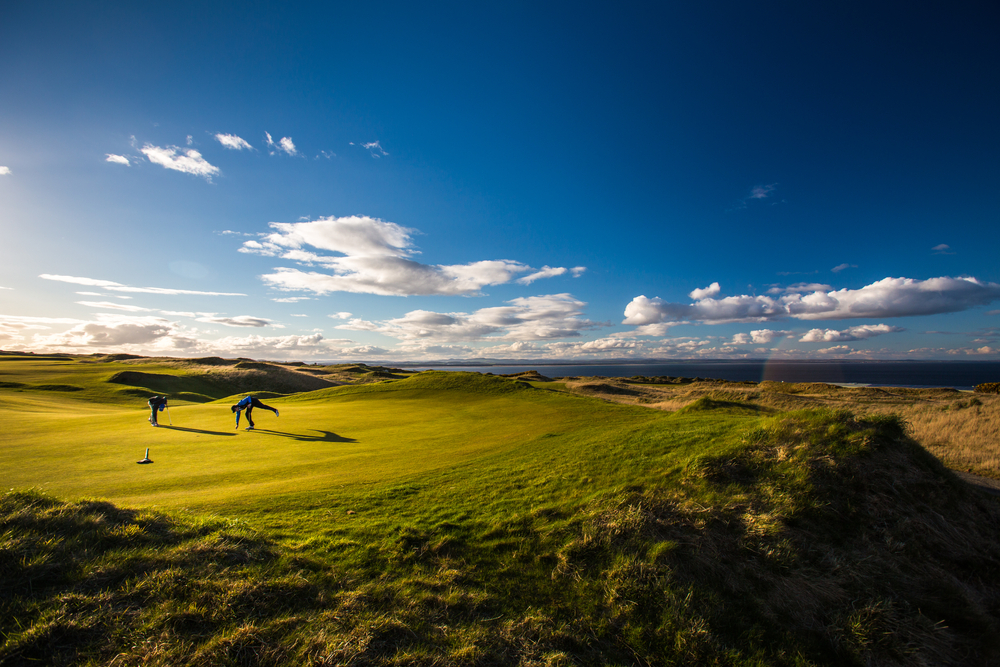
September is an excellent alternative to summer, especially for golfers who have already made the classic June trip. Courses are still in good playing condition, summer crowds begin to ease, and off-peak pricing may return as the season moves on.
Early autumn suits courses with dramatic inland and Highland scenery, including Nairn and Royal Dornoch. East Lothian remains a practical late-season base because its cluster of courses, including Gullane, North Berwick and Muirfield, can reduce driving between rounds.
St Andrews requires extra planning in September if the Old Course is a priority. Demand for tee times remains intense, so do not assume that a quieter overall travel period will produce an easy Old Course booking. Enter the ballot where eligible, explore the singles ballot if travelling alone, and keep alternative courses in the St Andrews area on the schedule.
October and Winter: When the Savings Are Worth It
October can be rewarding for flexible golfers. There can be crisp, clear rounds and meaningful shoulder-season savings, but daylight shrinks quickly and wetter conditions become more likely later in the month. Plan one round per day, not an elaborate 36-hole schedule that relies on everything running perfectly.
Winter golf from November through March is a specialist choice. Temperatures can sit around 1°C to 8°C, daylight is short, and frost can disrupt early starts. At St Andrews, frost delays can lead to early Old Course tee times being cancelled rather than simply moved later.
Several modern links, including Kingsbarns and Castle Stuart, have winter closure periods. Other courses may require fairway mats. Winter can still suit a local or highly flexible trip, but it is a poor fit for a once-in-a-lifetime itinerary built around a fixed list of headline courses.
How to Choose Your Scotland Golf Dates
- Choose late May or June for a first trip, maximum daylight and the broadest course access.
- Choose April or October if lower rates and looser tee-time availability matter more than temperature.
- Choose September for good conditions, quieter surroundings and an autumn atmosphere, while booking St Andrews well ahead.
- Avoid winter for fixed itineraries involving Kingsbarns, Castle Stuart or tightly timed Old Course plans.
- Check The Open schedule first when booking a former or future championship venue, particularly Muirfield, Carnoustie, Royal Troon, Turnberry and The Old Course.
What to Pack for Scottish Links Golf

Bring layers you can remove without slowing down between holes. A base layer, mid-layer, waterproof outer shell, rain pants and a warm hat cover far more situations than a heavy coat. Wind is often the bigger test on a links course, and an umbrella may be less useful than a hood when conditions turn feisty.
For footwear, choose shoes with reliable traction and make sure they are already broken in. The Old Course, North Berwick and Royal Dornoch are courses you will want to walk, not limp around while regretting a brand-new pair of shoes.
Frequently Asked Questions
What is the best month to play golf in Scotland?
June is the best month to play golf in Scotland for most golfers. It combines very long daylight, mild conditions and full access to leading courses, though tee times and green fees are often at their highest.
Is April too cold for golf in Scotland?
April is not too cold for golf in Scotland if you pack waterproof and warm layers. It can be cool and windy, but it offers useful shoulder-season value and good availability at many courses.
Can you play golf in Scotland in October?
Yes, October is within the usual Scottish golf travel season. Expect shorter days and a greater chance of wet weather later in the month, so schedule fewer rounds and keep plans flexible.
When should I avoid a Scotland golf trip?
Avoid November through March for a fixed, marquee-course itinerary. Winter brings short daylight, frost risk, possible fairway-mat rules and closures at courses such as Kingsbarns and Castle Stuart.
Does it rain all summer in Scotland?
Rain is possible throughout the Scottish summer, including June, July and August. The best preparation is to choose a period with long daylight and carry reliable waterproof layers, not to expect a completely dry week.
Final Verdict
For the best time of year to play golf in Scotland, book late May or June. You will have the longest, most forgiving days for links golf, the fullest course choice and conditions that are usually pleasant for walking.
April and October are smart value options, while September is a polished choice for golfers happy to trade some daylight for quieter rounds. Whatever month you choose, leave room for weather, reserve the essential tee times early and treat the wind as part of the green fee.