
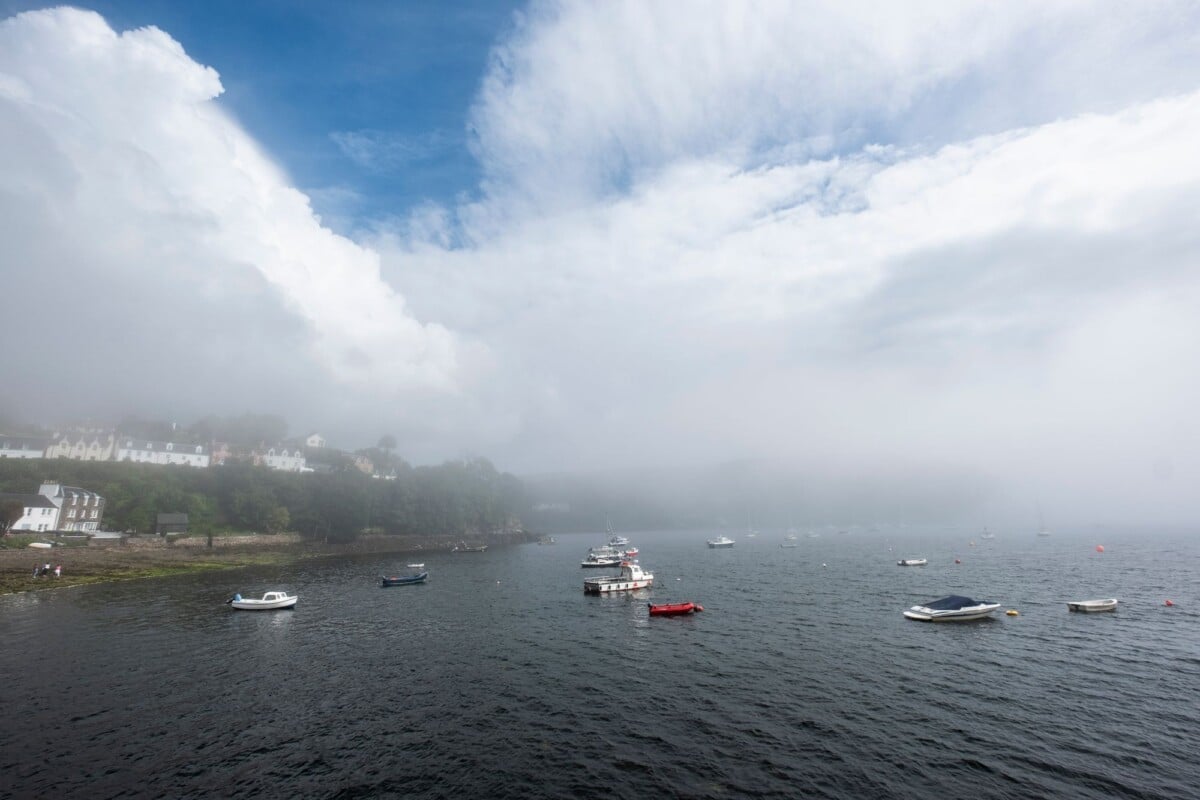
If you want a harbour, a fish supper and a row of painted cottages on your Scotland trip, the fishing villages in Scotland cluster on five stretches of coast: the East Neuk of Fife, the Berwickshire coast, the Aberdeenshire and Moray shore, the far north on the North Coast 500, and the west Highland sea lochs. Many were built for one fish. Ullapool and Tobermory were both laid out in 1788 by the British Fisheries Society to cash in on the herring, and a fair few of their neighbours still land a catch today.
This guide covers 14 fishing villages worth the drive, grouped by coast so you can plan a route, with the heritage stop, the walk and the catch for each. Museum prices and opening times were checked in November 2026.
Fishing Villages in Scotland at a Glance
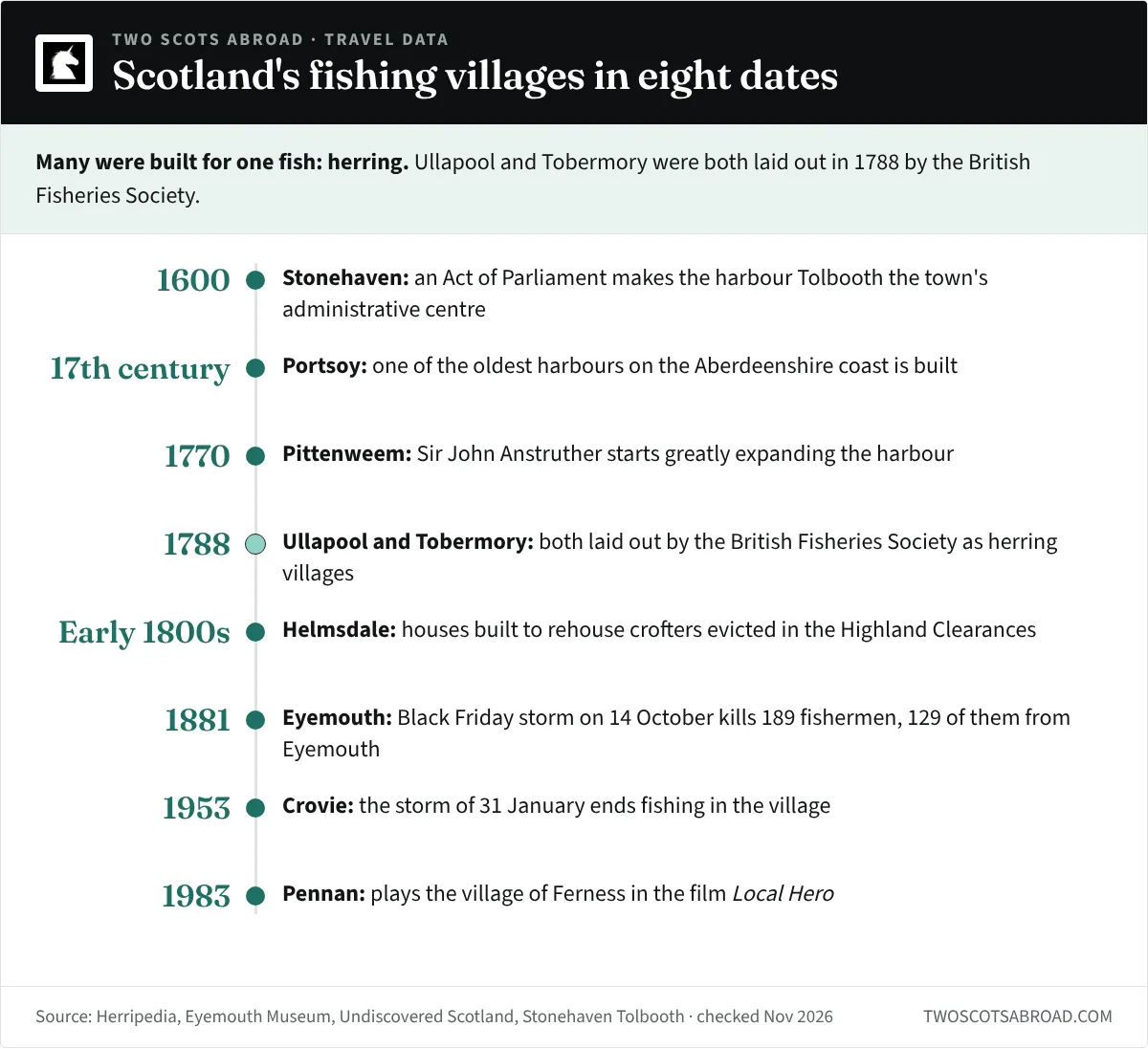
The table gives each village’s region, the date that shaped it and the best stop for its fishing story. Read across a row to see what a visit adds beyond the view.
| Village | Coast | Key date | Fishing heritage stop |
|---|---|---|---|
| Anstruther | East Neuk of Fife | Museum open all year | Scottish Fisheries Museum, £11 adult |
| Pittenweem | East Neuk of Fife | Harbour expanded from 1770 | Morning fish market on the harbour |
| Crail | East Neuk of Fife | Old harbour, little altered | Harbour and Fife Coastal Path |
| St Abbs | Berwickshire | Working harbour | St Abb’s Head nature reserve |
| Eyemouth | Berwickshire | Black Friday, 14 October 1881 | Eyemouth Museum and its tapestry |
| Stonehaven | Aberdeenshire | Tolbooth made town centre in 1600 | Tolbooth Museum, free |
| Pennan | Aberdeenshire | Local Hero filmed here, 1983 | The listed phone box |
| Crovie | Aberdeenshire | Storm of 31 January 1953 | The car-free shore path |
| Portsoy | Aberdeenshire | 17th-century harbour | Scottish Traditional Boat Festival, June |
| Cullen | Moray | Home of Cullen skink | Coastal path to Portknockie |
| Helmsdale | Sutherland | Houses built early 1800s | Timespan heritage centre |
| Lybster | Caithness | Former herring port | Harbour heritage centre |
| Ullapool | Wester Ross | Founded 1788 | Grid-plan streets on Loch Broom |
| Tobermory | Isle of Mull | Laid out 1788 | Mull Museum, Main Street |
Practical tip: the East Neuk and Berwickshire villages work as day trips from Edinburgh, while the Aberdeenshire and Moray villages sit between Aberdeen and Inverness. The west coast pair need a full trip of their own.
How We Chose These Fishing Villages
Every village on this list was built around fishing, still has a working or historic harbour, and gives you something to do beyond a photo stop: a museum, a coastal walk, a market or a festival. Museum prices, opening times and festival dates come from each venue’s own website, checked in November 2026. History comes from heritage records and local museums. Larger fishing towns such as Peterhead, Fraserburgh and Wick are left out because they read as towns, not villages, even though they land far more fish.
East Neuk of Fife Fishing Villages
The East Neuk (neuk is Scots for corner, said nyook) is the corner of the Fife coast around Elie, Anstruther and Crail, and its villages sit a few miles apart along the Fife Coastal Path. You can walk between neighbours in an hour or two. Our things to do in Fife guide covers the inland sights if you have a second day.
1. Anstruther, East Neuk of Fife: Best for Fishing Heritage
Anstruther is the biggest of the East Neuk villages and the one with the best story to tell. The Scottish Fisheries Museum fills a set of historic buildings on the harbour and covers the whole Scottish fishing industry, with boats, archive photos and a working boatbuilding programme. Its flagship is the Reaper, a restored fishing boat berthed in the harbour that visitors can board in high season.
Entry costs £11 for adults and £8.80 for concessions, and the museum opens all year: 10am to 4.30pm Monday to Saturday and 11am to 4.30pm on Sunday, with last entry at 3.30pm. It closes on Tuesdays from November to March, which catches out winter visitors. Check the official page before you go.
The harbour is also where boat trips leave for the Isle of May, for seals, puffins and other seabirds. Then queue for a fish supper on the front, which is the main reason half the visitors came.
2. Pittenweem, East Neuk of Fife: Best for a Working Harbour
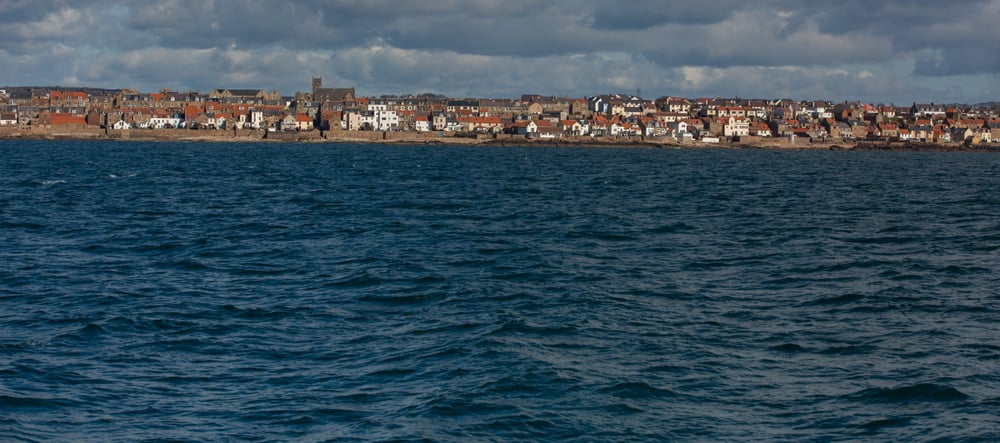
Pittenweem is the East Neuk village that still feels like it works for a living. It is the most active fishing port on the East Neuk coast, and you can watch the fish market in the harbour sheds in the morning. The harbour itself was greatly expanded from 1770 by Sir John Anstruther, who needed it to ship coal and salt.
The name means “place of the cave”, after St Fillan’s Cave in Cove Wynd, which the saint is said to have used as a chapel. Services are still held there, and the key is available locally. In August the village fills up for the Pittenweem Arts Festival, when artists open houses, halls and studios across the village.
3. Crail, East Neuk of Fife: Best for a Quiet Harbour Walk
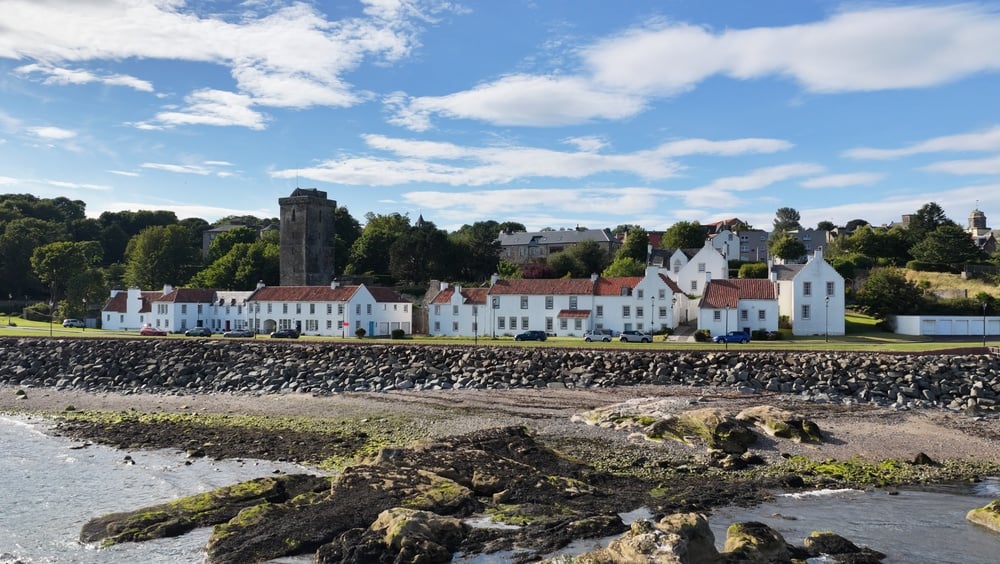
Crail sits at the eastern end of the East Neuk. Its small stone harbour sits below steep lanes of old cottages, and because the village’s fishing fortunes never boomed, much of the old building survived with little change.
Crail suits a slow wander. Walk down to the harbour, buy shellfish if a stall is open, and pick up the Fife Coastal Path along the shore towards Anstruther. If you are staying in St Andrews, Crail is the closest East Neuk village and makes an easy half day.
Berwickshire Coast Fishing Villages
The Berwickshire coast sits just north of the English border, within day-trip range of Edinburgh. It is the best choice if you want cliffs and seabirds with your harbour.
4. St Abbs, Berwickshire: Best for Seabirds and Cliffs
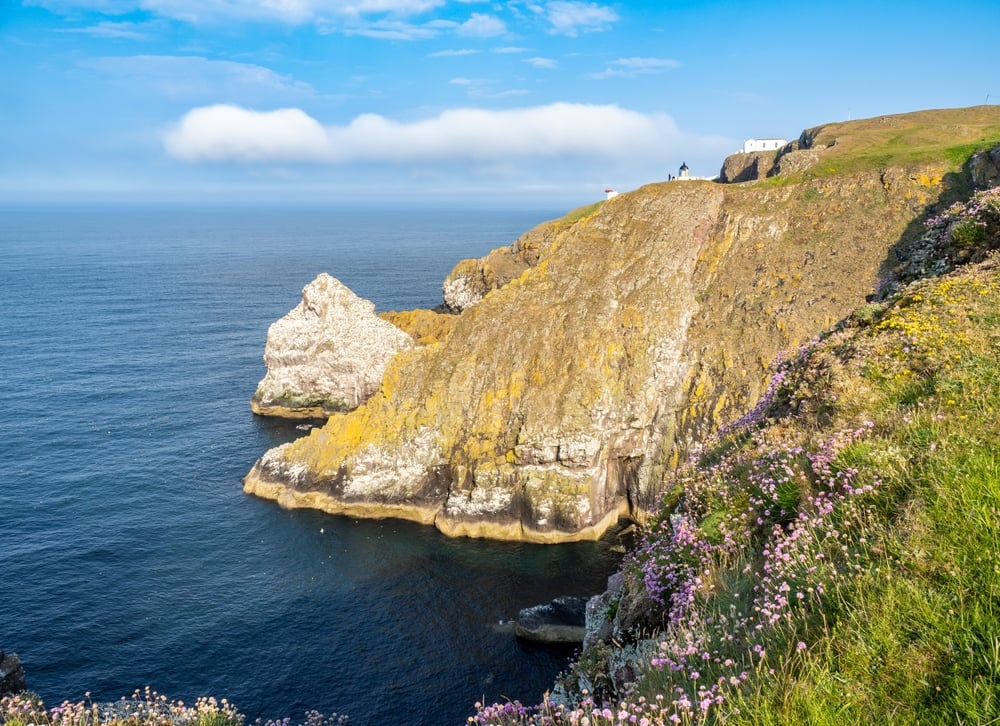
St Abbs is a tiny harbour village below high cliffs, and fishing boats still tie up here. Most visitors come for St Abb’s Head, a National Nature Reserve run by the National Trust for Scotland just north of the village.
The reserve has one of Britain’s more accessible seabird colonies, with guillemots by far the most numerous breeders alongside kittiwakes, razorbills and fulmars. Go between May and July for the busiest cliffs. The clifftop walk out to the lighthouse is steep in places, so wear proper shoes.
5. Eyemouth, Berwickshire: Best for Fishing History
Eyemouth is a working fishing town a few miles south of St Abbs, and it carries the heaviest story on this list. On 14 October 1881, a storm caught the east coast fleet at sea. The disaster, still known as Black Friday, killed 189 fishermen along the coast, and 129 of them were Eyemouth men.
Eyemouth Museum tells the story, and its centrepiece is the memorial tapestry, hand crafted by 24 local women over two years. The museum opens seasonally, so check its dates before you plan around it.
Aberdeenshire and Moray Fishing Villages
The coast between Stonehaven and the Moray Firth holds the densest run of fishing villages in Scotland. Many cling to the bottom of cliffs, reached by steep hairpin roads, so a small car is a help.
6. Stonehaven, Aberdeenshire: Best for a Harbour Town Day Out
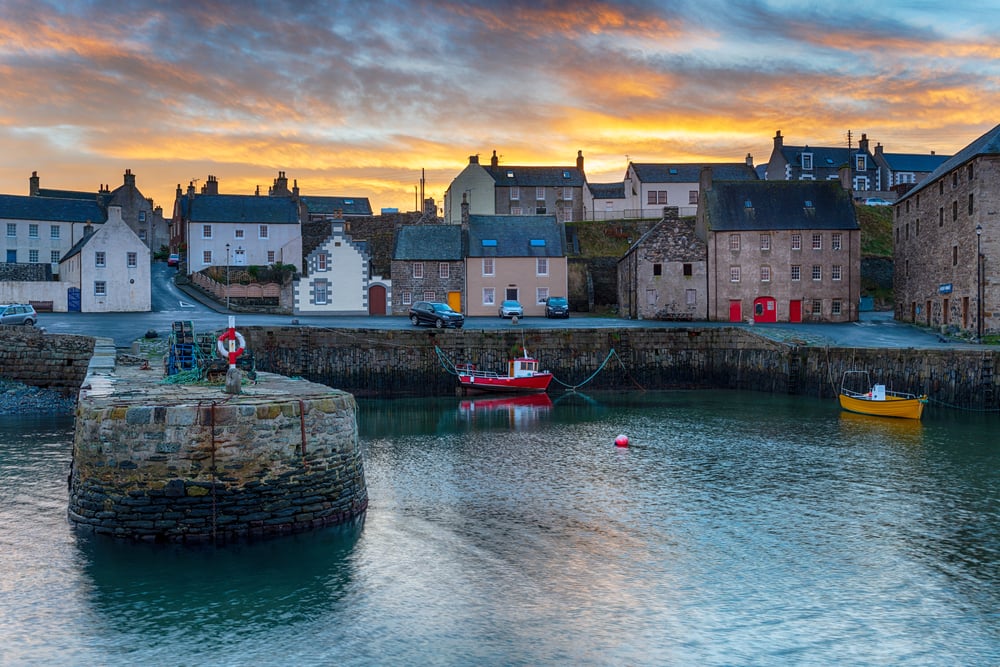
Stonehaven is a harbour town south of Aberdeen with its own train station, which makes it the easiest village on this list to reach without a car. The harbour is lined with cafés and seafood restaurants, and the coastal path south leads to the clifftop ruins of Dunnottar Castle.
On the harbour front, the Tolbooth is the oldest building in Stonehaven. An Act of Parliament made it the town’s administrative centre in 1600, and after 1624 its ground floor served as the prison. It is now a volunteer-run museum with free entry, open Saturday and Sunday from 12.30pm to 3.30pm when checked in November 2026. Hours change at short notice, so check the museum’s website first. At Hogmanay the town swings blazing fireballs through the streets and throws them into the sea.
7. Pennan, Aberdeenshire: Best for Film Fans
Pennan is a single street of gable-end cottages squeezed between the cliffs and a pebble beach. It played the fictional village of Ferness in the 1983 film Local Hero, and the red telephone box became an icon after appearing in it. Visitors still make calls from it.
The box is a listed K6 kiosk, though the one seen on screen was a prop; the real box sat a few yards away. The Pennan Inn also appeared in the film. Look out for dolphins and grey seals off the rocks, and come in winter if you want to see the sea throw itself at the sea wall.
8. Crovie, Aberdeenshire: Best for a Car-Free Village
Crovie (said crivvie) is one row of cottages built on a ledge between the cliffs of Gamrie Bay and the sea, with room only for the houses and the path in front of them. Families cleared from inland estates settled it in the late 18th century, and about fifty owner-operated boats sailed from Crovie by the end of the 19th century.
The storm of 31 January 1953 brought hurricane-force winds, washed away houses and the path to Gardenstown, and ended fishing in the village. Do not drive down into the village: residents leave their cars at the south end, and visitors are asked to use the car park above the final hairpin bend and walk. Gardenstown sits across the bay and makes a good pairing.
9. Portsoy, Aberdeenshire: Best for Boats and Festivals
Portsoy has one of the oldest harbours on this coast, built in the 17th century. Most of the year it is a quiet place for a harbour walk and an ice cream.
The exception is June, when the Scottish Traditional Boat Festival takes over. The 2026 festival ran on 13 and 14 June and draws more than 13,000 visitors for traditional boats, live music, Scottish food and crafts. Book accommodation early if you are coming that weekend.
10. Cullen, Moray: Best for Food and Coastal Walks
Cullen is a former fishing village with a sandy beach and a historic harbour. Cullen skink, a smoked haddock soup, originated here, and ordering a bowl in the village is the point of the visit.
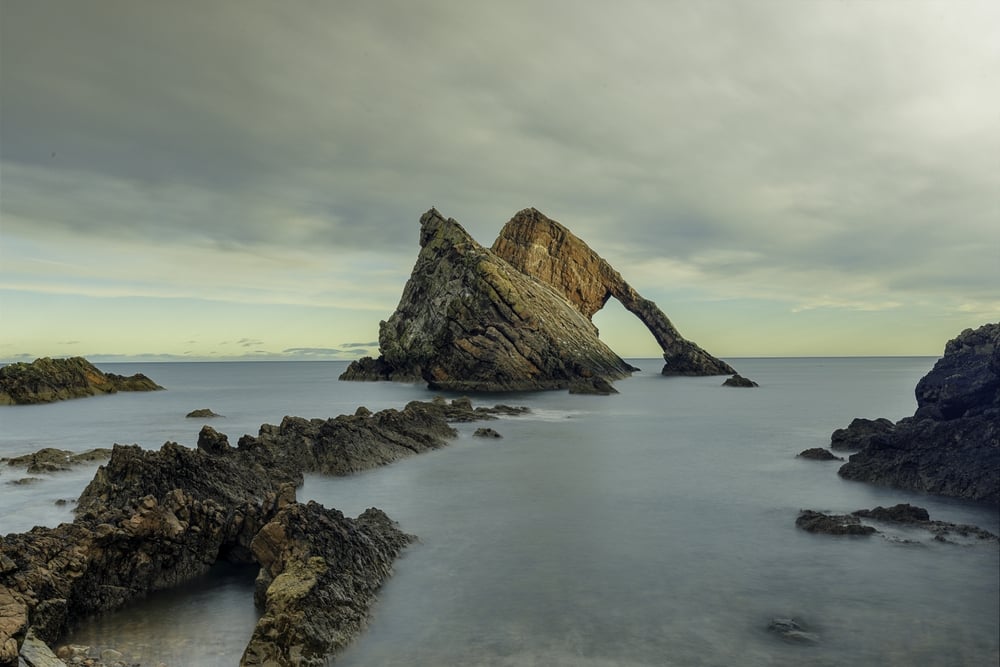
The Three Kings sea stacks rise off the beach, and bottlenose dolphins are often seen in the Moray Firth offshore; our guide to dolphin watching in Scotland covers the best spots. The coastal path west leads to Portknockie and Bow Fiddle Rock, a sea arch shaped like the end of a fiddle bow.
North Coast 500 Fishing Villages
The east side of the North Coast 500, Scotland’s Route 66, passes a string of old herring villages between Inverness and John o’ Groats. If you are driving the route, our North Coast 500 itinerary shows where these stops fit.
11. Helmsdale, Sutherland: Best for Clearances History
Helmsdale has a natural harbour in use since ancient times, but the village you see today has a sadder origin. Most houses date from the early 1800s, built to rehouse crofters evicted during the Highland Clearances and turned into fishermen.
The Timespan heritage centre tells that story and doubles as Sutherland’s only public contemporary art gallery. You can also try gold panning on the Kildonan River, or fish the River Helmsdale, which is known for salmon.
12. Lybster, Caithness: Best for a Quiet Herring Harbour
Lybster sits on the NC500 between the main road and its harbour. It was once a major herring port, and the heritage centre on the harbour covers that history.
It is a short detour off the main road and a quiet one. Lybster is also home to the World Knotty Championships, a version of shinty, the Highland stick-and-ball game.
West Coast Fishing Villages
The west coast pair were both planned settlements, laid out by the British Fisheries Society in the same year to tap the herring shoals of the sea lochs.
13. Ullapool, Wester Ross: Best Base for the Northwest
Ullapool was established in 1788 on the north shore of Loch Broom by the British Fisheries Society as a herring port. Surveyor David Aitken drew the grid plan, and Thomas Telford refined it and designed the church. The plan did not last: from 1798 the big herring shoals stopped arriving, and the Society sold the village in 1849.
Today Ullapool is the busiest village in the northwest, with the ferry to Stornoway on Lewis, seafood on the front and a handy base for the hills of Assynt. Our Ullapool travel tips cover where to eat and what to book ahead.
14. Tobermory, Isle of Mull: Best for an Island Harbour
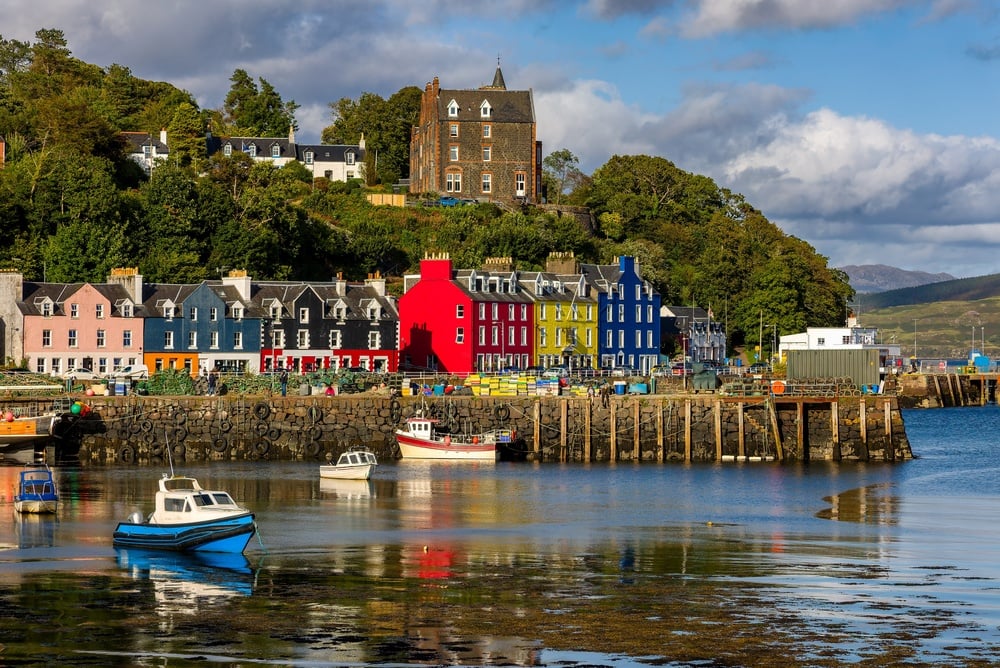
Tobermory was laid out in the same year as Ullapool, 1788, by the British Fisheries Society to house fishermen working the herring trade around a superb natural harbour. Its brightly painted waterfront is the face of Mull on postcards, and it is the island’s main village.
The volunteer-run Mull Museum on Main Street covers the island’s history and people. Boat trips leave the harbour for seals, dolphins and seabirds. Our guide to things to do on the Isle of Mull covers the rest of the island, and you will need a ferry to get there, so book the car space early in summer.
Which Fishing Village in Scotland Should You Visit?
Pick by what you want from the day and where you are based.
Or start with the coast you will be on, and narrow the 14 villages down from there.
- No car: Stonehaven, with a train station and the harbour a short walk away.
- Fishing history: Anstruther for the Scottish Fisheries Museum, or Eyemouth for the 1881 disaster.
- A working harbour: Pittenweem, where the morning fish market still runs.
- Seabirds and cliffs: St Abbs, best between May and July.
- Food: Cullen for skink, Anstruther for a fish supper.
- Somewhere tiny and car-free: Crovie, with Pennan just along the coast.
- A base for several days: Ullapool or Tobermory.
If you only have one day from Edinburgh, do the East Neuk: Crail, Anstruther and Pittenweem fit into one loop with time for lunch.
FAQ
What Is the Most Famous Fishing Village in Scotland?
Pennan in Aberdeenshire is one of the best known because it starred in the 1983 film Local Hero, and Anstruther in Fife is famous for the Scottish Fisheries Museum and its fish suppers. Tobermory on Mull is known for its brightly painted harbour front.
When Is the Best Time to Visit Scotland’s Fishing Villages?
May to September brings the longest days, open cafés and boat trips, and seabirds nest on the cliffs from May to July. Winter is quieter and stormier, and some museums cut their hours, so check opening days before you travel.
Can You Visit Scottish Fishing Villages Without a Car?
Stonehaven has its own train station, so it is the easiest fishing village to reach without a car. Public transport on the East Neuk, Aberdeenshire and NC500 coasts is limited, so Crovie, Pennan and the NC500 villages are far easier with a car.