
Fascinating Facts You Might Not Know About Mount Everest are not just trivia for armchair adventurers. They explain why this mountain keeps swallowing attention, oxygen, and a fair amount of common sense. Everest is more than the world’s highest peak. It is a place with two official names, a border-straddling summit, a height measured to the centimeter, and enough human drama to make even the most hard-boiled backpacker pause mid-noodle cup.
If you are planning a trek to Everest Base Camp, daydreaming about the top of the world, or just trying to win a pub quiz without sounding like a mountaineering fraud, these details matter. A few are practical. A few are bizarre. One involves spiders living where most people struggle to breathe without getting grumpy. And if your plan includes Nepal, Kathmandu flights, or a suspiciously cheap connection, brush up on flight booking myths that could be costing you hundreds before your budget gets altitude sickness too.
Everest Is 8,848.86 Meters High, But The Story Is Messier Than That
The number most people know is 8,848 meters, but the officially agreed height is 8,848.86 meters, or 29,031.7 feet. That figure came from joint measurement work by Nepal and China, and it reflects the summit’s snow-covered height rather than just the rock beneath it. Small difference on paper, massive difference when you are gasping for air in the death zone.
That tiny decimal is a useful reminder that Everest is not a static billboard on the skyline. It shifts. It gets measured. It gets argued over. It earns its fame the hard way, which is very on-brand for a mountain that makes humans pay thousands of dollars for the privilege of being extremely uncomfortable.
And no, the mountain is not the tallest in the world if you measure from base to summit. Hawaii’s Mauna Kea rises more than 10,000 meters from the seafloor, while Everest wins on altitude above sea level. That is the stat most travelers care about when their lungs are filing complaints and their trekking poles suddenly feel like emotional support equipment.
The Mountain Still Grows, Even When Nobody Asked It To
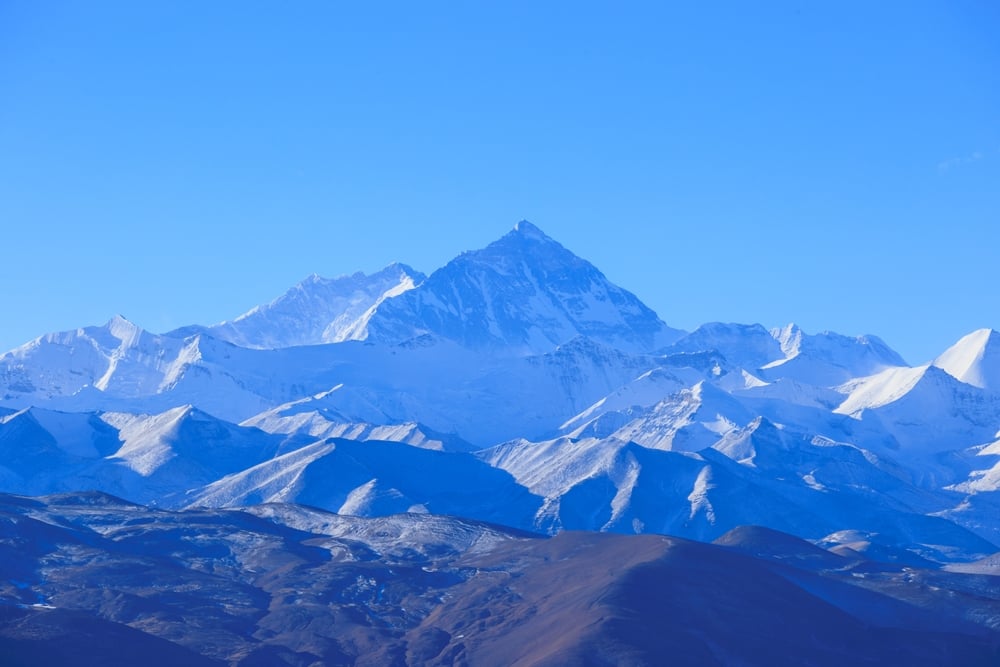
Everest rises by about 4 millimeters a year. That is not dramatic in the way a volcanic eruption is dramatic, but geology does not care about your sense of timing. The mountain exists because the Indian continental plate keeps pushing into Asia, forcing land upward over an absurdly long timescale.
For travelers, this is the kind of fact that makes a tea-house conversation better. For everyone else, it is a reminder that the Himalayas are still very much under construction, just with less scaffolding and more frostbite.
Mount Everest Has Two Names, And Both Mean Something
Everest is known locally as Sagarmatha in Nepal and Chomolungma in Tibet. The names carry cultural and spiritual weight, which matters because this mountain is not just a sports venue for very cold people in expensive jackets. It is a sacred place, and treating it like a giant outdoor selfie prop is how you become the least popular person in the lodge.
That spiritual importance is one reason many climbers and trekkers treat the mountain with a mix of awe and caution. The best budget travelers usually understand this instinctively. Even if your wallet is thin, your manners do not have to be. It is the same basic rule that applies at ancient sites, village trails, and places like mysterious stone circles: show up curious, not entitled.
The First Successful Summit Came On May 29, 1953
Edmund Hillary and Tenzing Norgay became the first confirmed climbers to reach the summit on May 29, 1953. That date remains one of the most famous in mountaineering history. It also launched Everest into the global imagination, where it has refused to sit quietly ever since.
We earn a commission if you buy through this link, at no extra cost to you.
The first serious attempt to climb the mountain came earlier, in 1921, but that expedition did not reach the top. Everest has always been a long game, which is inconvenient if you like tidy travel stories and quick wins. Since then, the mountain has seen thousands of successful ascents and more than 300 recorded deaths, a grim little ratio that should keep anyone from confusing “popular” with “safe.”
There Is Real Traffic On Everest, And Nobody Wants To Be In It
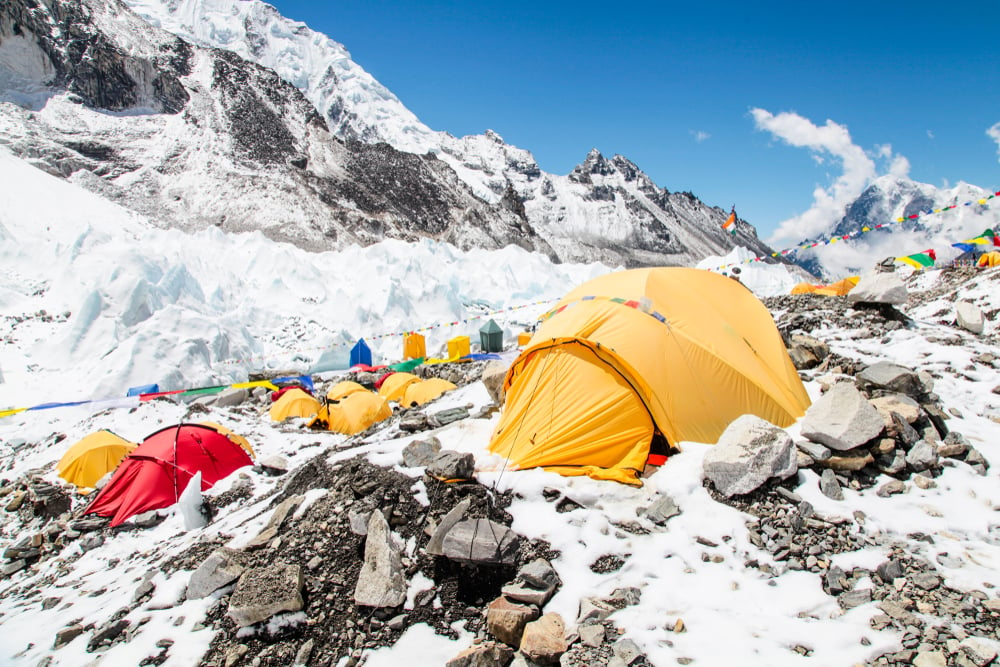
Traffic jams on Everest are not a joke invented by bored travel writers. On busy summit days, climbers can queue in the upper mountain bottlenecks, especially near fixed ropes and narrow sections. Nepal issued 478 Everest climbing permits in spring 2023, one of the busiest seasons on record, and even a smaller permit year can still feel crowded when everyone is chasing the same short weather window in May.
Climbers also follow the so-called 2 o’clock rule, which is less a law than a survival habit. The idea is simple: if you are not near the summit by early afternoon, you turn around. The weather can shift fast, and the descent is where many mistakes become expensive in the most terrifying way possible.
For budget trekkers staying lower down, this is still useful context. Everest looks romantic from a tea house window. It becomes a lot less romantic when you understand how thin the margin for error really is, and why summit teams spend so much money on guides, oxygen, radios, weather updates, and logistics that are deeply boring until they save your life.
Most People Need Oxygen, And Altitude Does Not Care About Your Fitness App
Everest is infamous for the death zone, generally understood as the area above roughly 8,000 meters, where the human body cannot acclimatize properly for long. Air pressure near the summit is roughly a third of what it is at sea level, so even simple tasks become slow, clumsy, and weirdly dramatic. Even with bottled oxygen, climbers can deal with fatigue, nausea, vomiting, hypothermia, and frostbite. In other words, the mountain has no interest in your weekend gym streak.
Fewer than 250 people have climbed Everest without supplemental oxygen, which underlines just how hostile the summit environment is. This is not a place where raw enthusiasm substitutes for preparation. It is definitely not a place where you want to “see how it goes.” The same applies at trekking altitude, where going too high too fast can wreck a trip long before the dramatic summit photos even enter the chat.
Yes, There Are Spiders Up There
One of the strangest Fascinating Facts You Might Not Know About Mount Everest is that life exists much higher than most people expect. At around 6,700 meters, tiny jumping spiders called Euophrys omnisuperstes have been found living in the mountain’s high-altitude environment. They are among the highest permanent animal residents on Earth.
No products found.
That detail is equal parts impressive and unsettling. If a spider can make a home in the thin, brutal air of Everest, then the rest of us can probably stop complaining about a steep hostel staircase. Pack lightly, though. If you are dragging half your wardrobe through airports before a trek, at least know what airport security sees in your bag before your carefully organized chaos gets publicly judged.
Everest Is A Border Mountain, Which Adds To The Logistics Fun
Everest sits on the border of Nepal and Tibet, so the approach depends on which side you travel from. The south side runs through Nepal, while the north side lies in Tibet. That makes the mountain not just a natural landmark but also a cross-border destination with different permit systems, route traditions, and travel styles.
For backpackers, this matters because the full Everest experience is not just one trail. It is a set of decisions about access, timing, altitude, and how much suffering you want in exchange for the bragging rights. Nepal’s Everest Base Camp route usually starts with a flight into Lukla, while slower overland approaches via places like Jiri or Phaplu can save money and add acclimatization time, assuming your schedule is not held together with duct tape and optimism. If long-distance walking is your thing, the planning mindset is not wildly different from figuring out how to choose the right Camino de Santiago path: distance, knees, budget, and ego all need to be in the same room.
The Mountain Has More Than One Reason To Impress You
Some Everest facts are flashy. Some are practical. A few are the kind of thing you only appreciate when planning a trek and trying not to overpack your dignity.
- The summit elevation is officially 8,848.86 meters, not just the rounded figure most people repeat.
- The mountain rises about 4 millimeters a year, because geology likes being annoying at scale.
- Climbing conditions are brutal above 8,000 meters, even with bottled oxygen.
- The best-known summit window is narrow, so timing matters more than optimism.
- There is permanent high-altitude life, including the tiny jumping spider that somehow makes Everest home.
What Budget Travelers Should Actually Take From All This
Everest is not only for elite climbers with deep pockets and a flair for suffering. Plenty of travelers experience it from the trekking routes in Nepal, where the mountain becomes part adventure, part logistics puzzle, and part altitude education. That is where the real value often is for budget-minded visitors: big scenery, strong local character, and far less risk than pushing for the summit. Basic Everest region trekking costs can still rise quickly, thanks to flights, permits, guide or porter fees, gear, charging, hot showers, and food prices that climb with the altitude because everything has to be carried or flown in.
If you are heading toward the Everest region, a few practical truths stand out. Move slowly. Respect the altitude. Budget for more than transport alone, because acclimatization days are not optional if you like having a functioning brain. And if you only remember one thing, make it this: Everest is famous because it is beautiful, extreme, and deeply unforgiving all at once.
That combination is why the mountain keeps pulling people in. Not because it is easy. Quite the opposite. Everest remains one of those rare places where the facts are almost as wild as the view.