
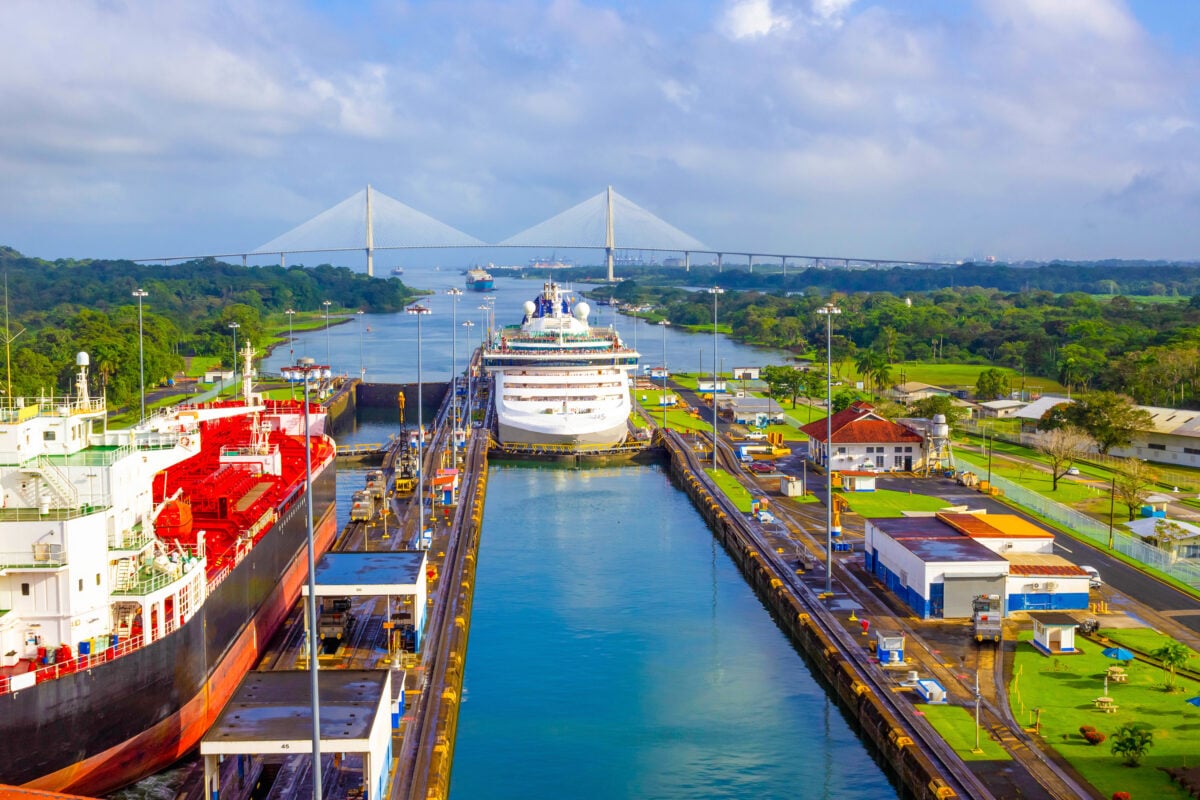
The Panama Canal looks simple from a viewing deck: ship goes in, water moves, ship goes out. Neat. Then you realize this 51-mile shortcut rearranged global trade, chopped huge distances off ocean routes, and still works by using gravity, freshwater, and some very patient engineering.
For budget travelers, A Feat of Engineering: 5 Things You May Not Know About the Panama Canal is more than trivia. Understanding how the canal works makes a visit far more satisfying, especially if you are paying for buses, viewpoints, snacks, and maybe one very sweaty day near Panama City.
Here are five facts that make the canal easier to appreciate before you stand there watching a container ship squeeze through like a floating apartment block with commitment issues. In busy years, well over 13,000 vessels use the route, so this is not some sleepy relic with a gift shop attached. It is working infrastructure with better choreography than most airport boarding groups.
A Feat Of Engineering: 5 Things You May Not Know About The Panama Canal Before You Visit
The Panama Canal is an artificial waterway in Panama linking the Caribbean Sea, part of the Atlantic side, with the Pacific Ocean. It runs about 82 kilometers, or 51 miles, across the Isthmus of Panama.
That sounds short until you remember the alternative for many ships historically meant sailing around Cape Horn at the southern tip of South America. That route was longer, rougher, and about as relaxing as a hostel dorm with one outlet and eight phone chargers.
The canal officially opened on August 15, 1914. Its expansion opened on June 26, 2016, allowing larger ships to use a newer lane of locks. For travelers, the appeal is not just that it is famous. It is that you can watch one of the world’s most important transport systems doing its daily job in plain sight, the same way you might plan cheap things to do in Lisbon: skip the fluff, find the good viewpoint, and spend your money where it actually improves the day.
The Panama Canal Idea Goes Back To The 1500s
The canal may feel like a modern industrial project, but the idea is old. After Vasco Núñez de Balboa recognized in 1513 that the Isthmus of Panama was a narrow strip separating two great oceans, the dream of a shortcut took shape.
By 1534, Emperor Charles V had ordered surveys to explore whether a canal could be built. Spoiler: 16th-century tools were not exactly ready for tropical excavation, landslides, disease, and hydrology. The plan stayed a dream for centuries.
That long timeline matters because it shows the canal was not a sudden “someone had a clever Tuesday” project. It was a problem people kept returning to because the payoff was massive: connect the Atlantic and Pacific without forcing ships to detour around South America. The same geography-first logic is why overland travelers obsess over crossings, ferries, and cheap routes elsewhere in Latin America, from Panama north toward Nicaragua’s island stops like Ometepe.
| Panama Canal Milestone | What Happened | Why It Matters |
|---|---|---|
| 1513 | Balboa identifies the narrow isthmus between the oceans | The shortcut idea becomes geographically obvious |
| 1534 | Charles V orders exploration of a possible route | Early rulers already saw the trade value |
| 1881 | French construction begins | The first major modern attempt gets underway |
| 1914 | The canal opens to navigation | Global shipping routes change dramatically |
| 2016 | The expanded canal opens | Larger vessels gain a new route through Panama |
The French Tried First, And The Original Plan Had A Serious Problem
Many travelers know the canal as a U.S.-completed project, but the French attempt began in 1881. Ferdinand de Lesseps, associated with the Suez Canal, was part of the push to carve a route through Panama.
The early French vision leaned toward a sea-level canal, which sounds tidy on paper. Panama, however, is not a flat desk. The terrain, heavy rainfall, unstable ground, and disease made the job brutal. By 1887, French engineers had recognized that a high-level lock canal was a more practical approach.
This is one of the canal’s biggest lessons: the winning design was not about forcing nature to behave. It was about using the landscape better. The lock system raises and lowers ships rather than digging one continuous trench at sea level from ocean to ocean, which saved impossible amounts of excavation and avoided turning the whole project into a very expensive swamp tantrum.
The Locks Lift Ships Like A Water Elevator
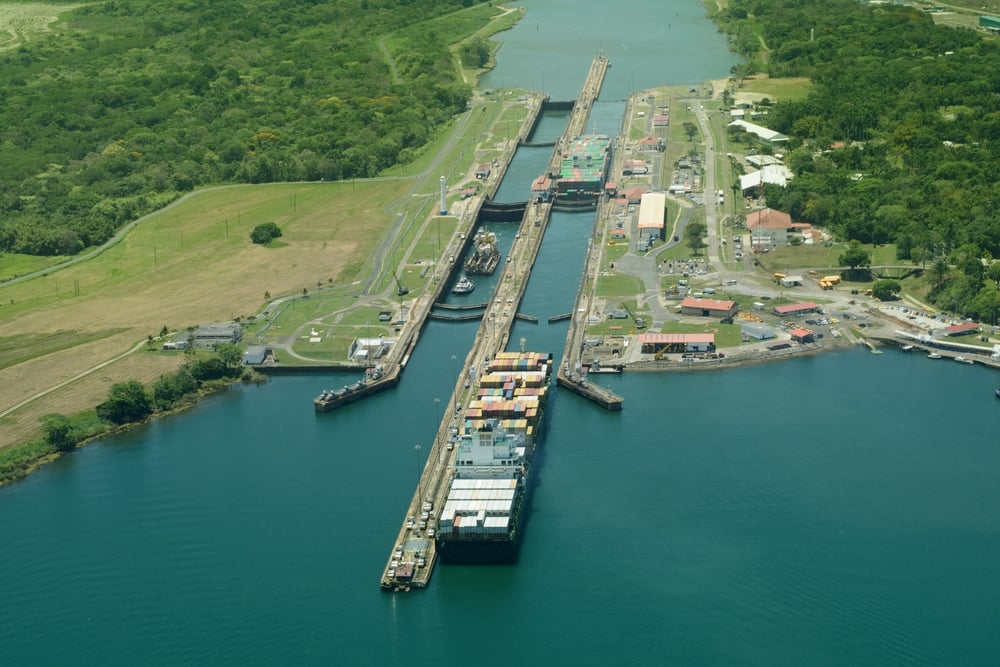
The most satisfying part of visiting the Panama Canal is watching the locks at work. A ship enters a chamber, gates close, water flows in or out, and the vessel rises or drops. It is basically a water elevator for ships, except the passengers are bulk carriers and container ships rather than people pretending they did not press the wrong floor.
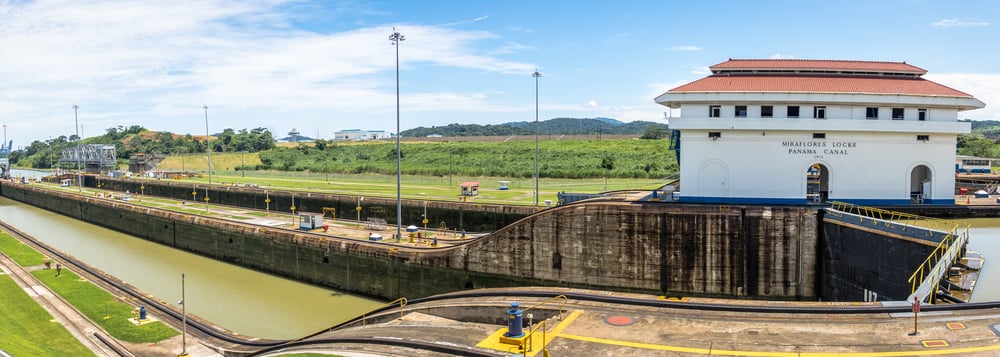
The original lock chambers are listed by the Panama Canal Authority as 33.53 meters wide and 304.8 meters long. Their names come from the towns where they were built: Gatún on the Atlantic side, plus Pedro Miguel and Miraflores on the Pacific side.
A typical transit involves ships being lifted from sea level toward Gatún Lake, crossing the central waterway, then being lowered back down toward the other ocean. That is the part many first-time visitors miss: the canal is not a flat ditch. It is a controlled staircase of water, and each full transit through the older locks can use roughly 52 million gallons of freshwater. That number lands differently after a hot walk to the viewing deck with a bottle you forgot to refill.
- Gatún Locks handle the Atlantic-side lift and descent.
- Pedro Miguel Locks sit on the Pacific-side route.
- Miraflores Locks are among the most accessible for many visitors near Panama City.
- Freshwater is central to the system, helping operate the locks and keeping the two oceans’ waters from simply mixing through one open channel.
If you are visiting on a backpacker budget, a pair of compact travel binoculars can make the lock action more interesting from public viewing areas, especially when the best drama is happening at the far end of a chamber.
Panama Was Not The Only Route Engineers Considered
The canal feels inevitable now, but it was not the only candidate. American engineers also looked seriously at a route through Nicaragua, which had long attracted attention because of its lakes and geography.
Panama ultimately became the route that reshaped shipping. The reason this matters for travelers is that infrastructure is never just about maps. It is about politics, engineering risk, money, terrain, and who can actually finish the work without the jungle collecting the bill.
For Panama, the result is enormous. The canal is not only an engineering landmark. It is part of the country’s identity and a major reason Panama City became such a significant crossroads for finance, logistics, tourism, and international movement. If your wider trip keeps rolling south, the canal also makes a neat contrast with colonial inland stops and slower city wandering, the kind covered in guides to things to do in Popayán Colombia.
The Expanded Canal Handles Much Bigger Ships
The original locks were designed for ships within specific limits, including an original maximum beam of around 28.5 meters. Beam means width, not nautical optimism.
The 2016 expansion added a larger lane of locks. Published canal specifications list maximum dimensions for larger vessels at up to 366 meters in length, 49 meters in beam, and 15.2 meters in draft, with an air draft limit of 57.91 meters. Draft means how deep the ship sits in the water. Air draft means how tall it is above the waterline, because bridges do not care about your shipping schedule.
For visitors, bigger ships mean more spectacle. A large vessel moving through the canal is slow travel in its most literal form. No filter needed, no drone required, no “authentic local experience” sales pitch. Just steel, water, gates, and physics doing the heavy lifting. The newer locks also use water-saving basins that can reuse a large share of the water in each operation, which matters because droughts and low lake levels can affect how many ships the canal can move.
Budget Traveler Tips For Seeing The Panama Canal Without Overcomplicating It
You do not need to be a maritime nerd to enjoy the canal, although it helps if you can tolerate phrases like “lock chamber” without blacking out. The trick is to treat it as a half-day learning stop rather than a vague box to tick between coffee and a rooftop bar.
Keep these practical points in mind:
- Go when ships are moving. The canal is most interesting when vessels are actively transiting the locks. Check local visitor information before heading out.
- Bring sun and rain protection. Panama’s tropical weather can flip from blazing to soaked with very little concern for your outfit.
- Allow time to watch slowly. Lock operations are not instant. That is the point.
- Read up before you arrive. A little background turns “big boat in concrete slot” into one of the smartest travel stops in Central America.
- Use public transport or shared rides where practical. The canal is an easy day-trip focus from Panama City for many independent travelers.
A packable rain jacket is one of those unglamorous items that earns its place fast in Panama. It is more useful than a bulky coat and less tragic than spending the day wrapped in a plastic poncho that squeaks like a haunted grocery bag.
The Panama Canal Is Still One Of The Best Value Lessons In Travel
The canal’s real magic is not just that it connects two oceans. It is that it makes a difficult idea visible. You can stand there and watch engineering, geography, trade, and water management meet in real time.
It also rewards curious budget travelers. You do not need a luxury cruise to understand why the Panama Canal matters. You need a bit of context, decent timing, and enough patience to watch a ship rise inside a lock chamber like the world’s slowest magic trick.
That is why A Feat of Engineering: 5 Things You May Not Know About the Panama Canal still lands as more than a history lesson. The canal is practical, strange, elegant, and stubbornly impressive. In travel terms, that is a pretty strong return on a day out.