

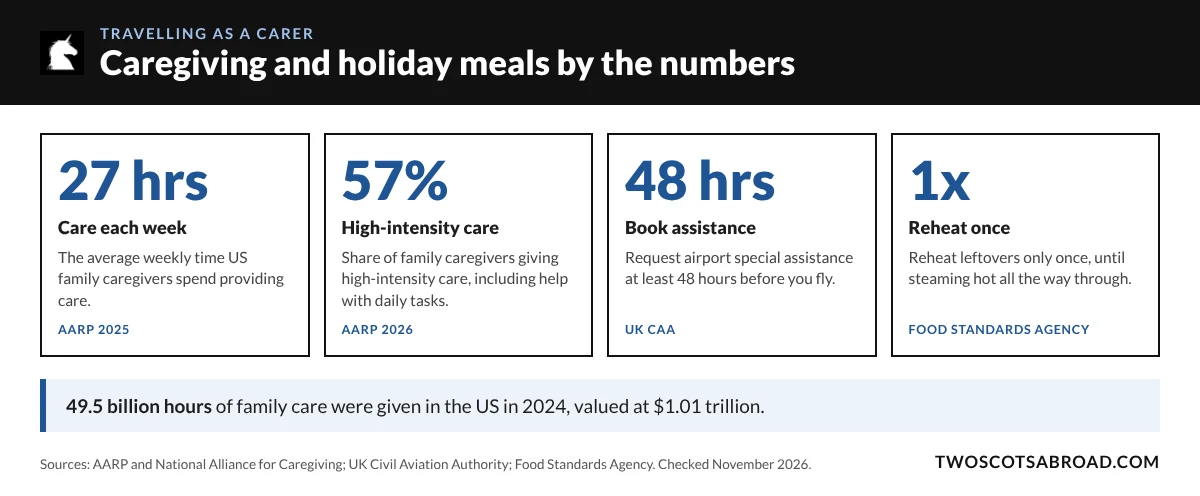
If you care for a parent or partner, a self-catering holiday can feel like more work than staying at home, because every meal still has to suit their needs as well as everyone else’s. Family carers already give an average of 27 hours of care a week, according to AARP’s 2026 research, so the last thing anyone needs on a break is cooking three different dinners.
Below you’ll find how to choose a rental that makes cooking easier, what to prepare before you leave, how to build shared meals that adapt for everyone and how to plan around a loved one’s medical needs on the road.
What Should Carers Look for in a Self-Catering Rental?
The kitchen matters more than the view when you’re cooking for someone with specific needs. Check the listing, and ask the host if the details aren’t there, before you book.
| Feature | Why it helps a carer | What to ask the host |
|---|---|---|
| Full kitchen with oven and hob | Batch cooking and reheating several portions at once | Is there an oven as well as a hob? |
| Freezer compartment | Somewhere to keep the meals you prepared at home | Is there a freezer, or only an ice box? |
| Microwave | Fast, even reheating of single portions | Is there a microwave? |
| Dining table with room for everyone | Shared meals at the same time, whatever is on each plate | How many does the table seat? |
| Step-free access to the kitchen and bathroom | Fewer barriers for someone with limited mobility | Are there steps inside or at the entrance? |
| Shops within easy reach | Quick top-ups without a long round trip | How far is the nearest supermarket? |

Access deserves as much attention as the kitchen. Our guide to planning a trip with a wheelchair user covers the questions to ask about steps, bathrooms and transport before you book.
Why Plan Holiday Meals Around the Person You Care For?
Food is often part of the care itself. A loved one may have a smaller appetite, need softer textures, follow eating instructions from their care team or simply eat at different times because of medication or energy levels. A holiday doesn’t change any of that, so the meal plan has to start with them.
Medical devices are a good example. Someone with an implanted port catheter, used for things like chemotherapy or long-term IV treatment, may have eating, timing or travel considerations set by their care team. Some families are also following news about these devices: the Bard PowerPort lawsuit, for example, involves claims by patients that Bard port catheters degraded inside the body and caused injuries such as blood clots. Those are allegations in ongoing litigation, so speak to the care team about anything that affects the person you look after, and pack their written instructions.
Before you plan a single meal, run through what’s different for the person you care for:
- Appetite: smaller portions or more frequent meals
- Texture: softer foods that are easy to eat
- Instructions: any eating advice from their care team
- Timing: medication, treatment or rest that clashes with normal mealtimes
- Preferences: medical needs don’t cancel out likes and dislikes
What Should You Prepare at Home Before You Go?
A little cooking before you leave saves a lot of decisions on the first tiring days. Think of the freezer as your backup kitchen.
- Single portions of soups, stews and casseroles that reheat well
- Cooked grains, beans or vegetables frozen separately so they can be mixed later
- Flavour builders such as frozen herbs, garlic and onion
- A couple of emergency meals that only need reheating
Freeze in individual portions so you defrost only what you need, and label each tub with what it is and the date. The Food Standards Agency’s advice on freezing food safely also notes that cooked food you’ve frozen can be reheated only once. If the drive is short, frozen portions can travel in a cool bag, then go straight into the rental’s freezer.
Small jobs done in advance free up real time. In a recent report, the Associated Press described a New Hampshire couple whose home robot nudges the husband, who has dementia, to eat lunch and drink water. His wife said it lets her go out, to a mahjong game, knowing he’s looked after. You don’t need a robot on holiday, but the idea holds: the more you sort out before you leave, the more breathing space you’ll have once you arrive.

How Do You Cook One Meal That Works for Everyone?
Build each dinner from a few flexible parts and adjust at the plate. Start with a plain base, add a protein and vegetables, and keep sauces and strong seasoning on the side.
| Shared base | For the person you care for | For everyone else |
|---|---|---|
| Rice with a mild stew | Smaller portion, extra-soft vegetables | Chilli flakes, fresh herbs, a side salad |
| Pasta with a plain tomato sauce | Softer pasta, sauce blended smooth | Garlic, olives, grated cheese |
| Potatoes with poached fish or chicken | Mashed potato, flaked fish | Roast potatoes, a punchier sauce |
| Vegetable soup | Blended smooth | Chunky, with crusty bread |
Cook enough for an extra portion each night, and tomorrow’s lunch is sorted. Rotating three or four bases also means nobody faces a new recipe in an unfamiliar kitchen every evening. If you’re touring rather than staying put, our Scotland road trip planner can help you pick self-catering stops where you’ll want a kitchen.
Get everyone involved too. Older children can set the table, wash vegetables or clear up, which gives the main carer a proper break.
Plan Your Holiday Meals
Use the planner below to turn your trip length, group size and the eating needs of the person you care for into a simple meal plan.
 Carer’s Self-Catering Meal Planner
Tell the planner about your trip and the person you care for. It builds a simple meal plan around shared bases, what to prepare before you leave and what to buy when you arrive.
Your holiday meal plan
Shared bases to rotate
Before you leave
First shop when you arrive
How Do You Look After Yourself as a Carer on Holiday?
Carers often put their own meals last. In Pew Research Center’s 2026 survey, 68% of adults caring for an aging parent said they regularly help with at least one major task, and many said caregiving had a more negative than positive effect on their emotional well-being and physical health. A holiday is a chance to ease that, so plan your own plate as carefully as theirs.
The scale of unpaid care is huge. As CBS News reported in July 2026, citing AARP, family caregivers provided nearly 50 billion hours of unpaid care in 2024, worth more than $1 trillion. That’s a lot of people who deserve a decent dinner and a night off.
Build in at least one meal out if you can, or a simple night of shop-bought food. For more ideas on keeping holiday cooking simple, our guide to eating well in a self-catered chalet is worth a read.
What If You’re Flying With the Person You Care For?
Book help early. The UK Civil Aviation Authority advises requesting airport special assistance when you book, or at least 48 hours before departure, through your airline, travel agent or tour operator. Gatwick, for example, asks passengers taking medical equipment on board to tell the airline at least 48 hours ahead, as some items need extra paperwork.
Pack medication, a copy of prescriptions and the care team’s eating instructions in hand luggage, along with a few familiar snacks in case meals on the journey don’t suit.
Frequently Asked Questions About Self-Catering Holidays for Carers
Is Self-Catering Better Than a Hotel When You’re a Carer?
It often is, because you control what’s cooked and when. A hotel can still work if the restaurant can adapt dishes, so ask before you book.
Can You Take Frozen Meals on Holiday?
For a short car journey, a well-packed cool bag can keep frozen portions cold until you reach the rental’s freezer. Defrost them fully, reheat until steaming hot and reheat each portion only once.
How Do You Keep Meal Planning Simple on a Self-Catering Break?
Rotate three or four shared bases, keep seasoning separate and cook an extra portion each night for lunch. That way each dinner adapts for everyone without starting from scratch.
Make the Break a Real Break
Caring for someone doesn’t stop on holiday, but the cooking can get a lot easier. Pick a rental with the right kitchen, prepare a few meals before you go and build dinners that everyone can adjust. Some days will be easier than others, and that’s fine. What matters is enough flexibility for everyone, including you, to enjoy the trip.