
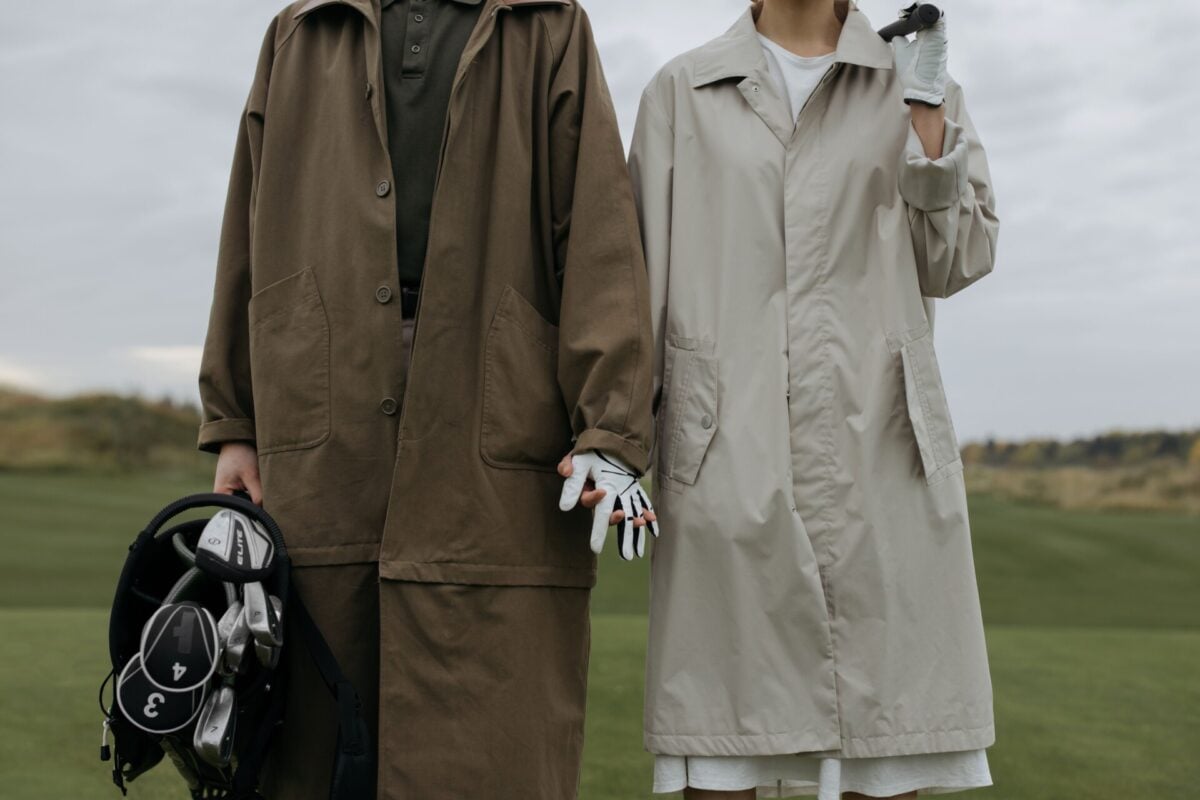
Wear breathable layers, a fully waterproof rain suit, waterproof golf shoes and warm accessories when golfing in Scotland. Scottish rounds can begin cool, turn bright and breezy, then bring rain before the final green, so a flexible kit beats a heavy outfit built for one forecast.
For a golf trip to St Andrews, Ayrshire, East Lothian or the Highlands, pack clothing that works while walking, swinging and waiting out a shower. Most Scottish courses are walking courses, and damp shoes or a restrictive jacket can make four hours feel much longer. Scotland’s famous links are a big part of why Scotland remains a leading golfing destination, but their open coastal settings leave little room to hide from wind.
If you are looking for more golfing in Scotland content, check our ultimate golf guide to Scotland.
The Core Scottish Golf Outfit

Start with a moisture-wicking base layer, a collared golf shirt, a warm mid-layer and waterproof outerwear that is loose enough for a full swing. Merino wool, polyester and similar technical fabrics are useful choices because they dry more quickly than heavy cotton and can be worn comfortably beneath a pullover or jacket.
A long-sleeve compression-style base layer adds warmth without turning your arms into padded tubes. Bring a short-sleeve and long-sleeve collared option, then choose on the morning of the round. A quarter-zip, golf sweater or vest gives you a middle layer that can come on and off easily as the temperature shifts.
Your outer layer should be both waterproof and windproof. Look for a jacket and trousers designed for golf, with enough room through the shoulders, hips and knees to walk and swing comfortably. Gore-Tex is a commonly used waterproof-breathable fabric option, but fit and freedom of movement matter as much as the label.

Men's Waterproof Golf Rain Suit Rain Gear Jacket and Pants Black XL
Why Waterproof Gear Comes First
Rain gear is not a pessimistic extra for links golf. It is standard equipment. Scotland has an oceanic climate, and conditions can be cool, damp and windy through much of the year. Check the Met Office forecast before leaving for the course, but keep waterproofs in the bag even when the outlook looks friendly.
Pack waterproof trousers as well as a jacket. A shower that arrives halfway through a round at St Andrews Links or along the exposed Fife coast can soak regular trousers quickly, and wet fabric makes walking less pleasant. Keep a rain cover on your golf bag and carry a spare towel in a sealed pocket.
An umbrella is handy near the clubhouse and during a light shower, though it becomes awkward in sustained coastal wind. Reliable waterproofs are the better solution when conditions turn rough. Do not rely on a compact travel umbrella as your primary rain plan.
Footwear and Accessories That Earn Their Luggage Space
Bring two pairs of waterproof golf shoes if your itinerary includes several rounds. The second pair gives the first time to dry after a wet afternoon and stops you from starting the next tee time in clammy footwear. Clean your shoes before travel, particularly if they will be carried in a golf travel bag.

Tempo Spikeless Waterproof Lightweight Golf Shoe
Pack more golf socks than your schedule appears to require. A dry pair after a wet round is a small luxury with a disproportionately large effect on morale. Wool-blend or technical socks are a sensible choice for cool days, while lighter socks work well during a warm spell.
Bring at least two waterproof golf gloves. They are useful in rain and in cold wind, and one pair may need time to dry. Add a baseball cap for sun and showers, a warm beanie for exposed days, and sunglasses for the low, bright light that can appear between clouds.
A small bungee cord can be useful if you are hiring a pull trolley. Slim travel golf bags may not sit as securely on a trolley as a regular cart bag, and a simple strap helps keep the bag stable while you walk.
What to Wear Golfing in Scotland by Season

Spring: Build for Cold Starts and Quick Changes
Spring rounds often call for a thermal base layer, long-sleeve polo, mid-layer and waterproof jacket. Keep waterproof trousers accessible, not buried beneath spare clothes. A beanie and rain gloves are sensible additions for early tee times, particularly on open links ground.
Do not leave shorts at home solely because it is spring, but treat them as an optional item. Golf trousers are the safer default when a breeze picks up or rain arrives. Pack layers you can remove one at a time, not one thick garment that is either too warm or not warm enough.
Summer: Pack for Sun and Rain in the Same Round
Summer can bring comfortable shirtsleeve golf, so take several collared polos and one or two lighter mid-layers. A short-sleeve base layer or performance polo helps manage moisture when the sun comes out, while a quarter-zip remains useful for a late-afternoon wind.
Keep your rain jacket, trousers and waterproof shoes in rotation during summer, especially for multi-day tours. Sun protection still belongs in the bag: cap, sunglasses and sunscreen are practical on long, open courses with little shelter.
Autumn: Prioritize Warmth Without Bulk
Autumn is the season to make the thermal top a regular part of your outfit. Pair it with golf trousers, a polo, a sweater or quarter-zip, and waterproof outerwear. Avoid bulky lower-body layers that interfere with walking or your stance; flexible golf trousers with rain trousers available for wet spells are easier to manage.
Bring extra socks, a scarf for off-course walks and at least one additional warm hat. It is much easier to remove a beanie than to recover warmth after you have spent several holes getting chilled.
Winter: Dress for Exposure and Shorter Comfort Margins
Winter golf calls for your warmest practical combination: thermal base layer, long-sleeve polo, insulating mid-layer, waterproof jacket and waterproof trousers. Waterproof winter gloves and a beanie are close to essential on exposed terrain.
Keep your swing in mind. Over-layering can make a golfer feel warm on the first tee and restricted by the fourth. Choose thinner technical layers that work together, then use waterproof outerwear as your shell against wind and rain.
A Practical Packing List for a Week of Golf
For a typical week with multiple rounds, this is a useful starting point. Adjust it for your itinerary, access to laundry and the dress code at the courses and restaurants on your schedule.
- Five to seven collared golf shirts, mixing short- and long-sleeve styles
- Two or three mid-layers, such as quarter-zips, sweaters or vests
- One thermal base layer and one lighter base layer
- Three to four pairs of golf trousers, with shorts as an optional warm-weather extra
- One waterproof golf jacket and waterproof golf trousers
- Two pairs of waterproof golf shoes
- Seven or more pairs of golf socks
- Two pairs of waterproof golf gloves
- A cap, beanie, sunglasses and sunscreen
- A golf bag rain cover, spare towel and compact bungee cord for a pull trolley
Pack less off-course clothing than you first plan to. Smart-casual trousers, a clean shirt or blouse, comfortable evening shoes and one warm layer cover many clubhouse dinners. Check the dress requirements for specific clubhouses and restaurants before departure, since standards can vary.
Dress Codes at Scottish Golf Courses
Collared shirts and tailored golf trousers or shorts are a dependable choice at Scottish clubs. Denim, football shirts and casual beachwear may not be appropriate on the course or in a formal clubhouse, so confirm the requirements with each venue before you travel.
Bring a smart-casual outfit for evenings, especially if your plans include a traditional clubhouse meal. A blazer may be useful for a more formal booking, but do not assume every course requires one. The course or clubhouse is the authority on its own dress code, and it helps to know how tipping in Scotland works before a celebratory dinner after your round.
How to Pack It Without Overpacking

Choose pieces that can do double duty. A merino polo can work on the course and for a relaxed evening, while a neutral quarter-zip can be worn on travel days. This leaves space for wet-weather gear, extra socks and any souvenir knitwear that follows you home.
Keep rain gear, gloves, hat and a towel together in an outer pocket of your golf bag. Your waterproof jacket is no help if it is at the bottom of checked luggage when the weather changes in the car park. If your itinerary pairs golf with Highland or coastal sightseeing, the same layers will come in handy on a West Coast Scotland road trip.
Frequently Asked Questions
Do I Need Waterproof Trousers for Golf in Scotland?
Yes. Waterproof trousers are a sensible part of every Scottish golf packing list because rain can arrive during a round, and many courses involve several hours of walking in exposed conditions.
Can I Wear Shorts Golfing in Scotland?
Yes, if the course permits them and the weather is warm enough. Pack golf trousers as well, because wind and showers can make shorts uncomfortable even during summer.
How Many Golf Shoes Should I Take to Scotland?
Take two pairs of waterproof golf shoes for a multi-round trip. One pair can dry after a wet day while you wear the other.
Are Waterproof Gloves Worth Packing?
Yes. Two pairs of waterproof golf gloves help you keep a secure grip in rain and give one pair time to dry between rounds.
What Should I Wear Off the Course in Scotland?
Pack smart-casual clothes for clubhouse dinners and evenings out, plus comfortable walking shoes and a warm outer layer. Check the dress code for any specific clubhouse or restaurant reservation before you go.
Final Packing Rule
For Scottish golf, prepare for changing conditions without filling your suitcase with duplicate outfits. A breathable base, adaptable mid-layer, dependable waterproof shell and dry footwear will cover far more situations than a wardrobe chosen around a single sunny forecast.