
The most humid places in the USA are mostly along the Gulf Coast and across the Southeast, where warm air, nearby water, and frequent summer storms keep moisture levels high for much of the year. If you want the short answer, Louisiana, coastal Texas, Mississippi, and Florida dominate most humidity rankings.
That said, humidity is a slippery subject. A place can rank high for relative humidity without feeling as oppressive as a hotter city with a high dew point. So if you have ever looked at a weather app and thought, “that number does not match what my skin is telling me,” your skin was probably onto something.
This guide breaks down the most humid places in the USA in a way that is actually useful, with the cities and states that show up most often in long-term climate comparisons, plus what makes them so muggy and what to expect if you are heading there.
What Counts as a Humid Place?
Humidity is usually measured as relative humidity, which compares the amount of moisture in the air to the maximum the air can hold at that temperature. But for comfort, dew point often tells the better story. High dew points are what make the air feel sticky, heavy, and hard to escape.
Warm air can hold more water vapor than cool air. That is why Gulf Coast cities can feel brutal in summer even when another place shows a similar relative humidity reading on paper.
If you are comparing the most humid countries in the world with the U.S., the same basic rule applies. Heat plus moisture is the combo people remember, not just a single percentage point on a chart.
Most Humid Cities in the USA
The same cities appear repeatedly across major humidity rankings built from long-term weather observations. Lake Charles, Port Arthur, Brownsville, Corpus Christi, New Orleans, Jackson, Houston, and Baton Rouge are the names you will see again and again.
| City | State | Typical Ranking Pattern | Why It Feels So Humid |
|---|---|---|---|
| Lake Charles | Louisiana | Often at or near the top | Gulf proximity, wetlands, thunderstorms |
| Port Arthur | Texas | Usually near the top tier | Gulf air and coastal marshland |
| New Orleans | Louisiana | Frequently tops major-city lists | Low elevation, nearby water, Gulf moisture |
| Jackson | Mississippi | Often among the highest inland cities | Persistent Gulf air moving inland |
| Houston | Texas | Regularly among the most humid big cities | Warm coastal air and high morning humidity |
| Brownsville | Texas | Commonly listed in the top group | South Texas Gulf climate |
| Corpus Christi | Texas | Usually in the upper tier | Direct coastal exposure |
| Baton Rouge | Louisiana | Often inside the top group | Heat, Gulf influence, river moisture |
| Meridian | Mississippi | Often included in national rankings | Moist Gulf air inland |
| Miami | Florida | Common in major-city humidity lists | Tropical maritime climate |

Lake Charles, Louisiana
Lake Charles is one of the strongest answers to the search for the most humid places in the USA. Long-term rankings regularly place it at or near the top, with average daily humidity around 78% in one widely cited city comparison.
The geography explains a lot. Lake Charles sits near the Gulf of Mexico and is surrounded by wetlands and open water, which keep the air loaded with moisture. Summer mornings can push above 90% humidity, so the day often starts muggy before the heat has even fully arrived.
New Orleans, Louisiana
New Orleans is the city that often leads rankings of America’s largest metro areas. One long-running comparison of major U.S. cities put New Orleans at roughly 75.9% average relative humidity, with only tiny margins separating it from Jacksonville and Houston.
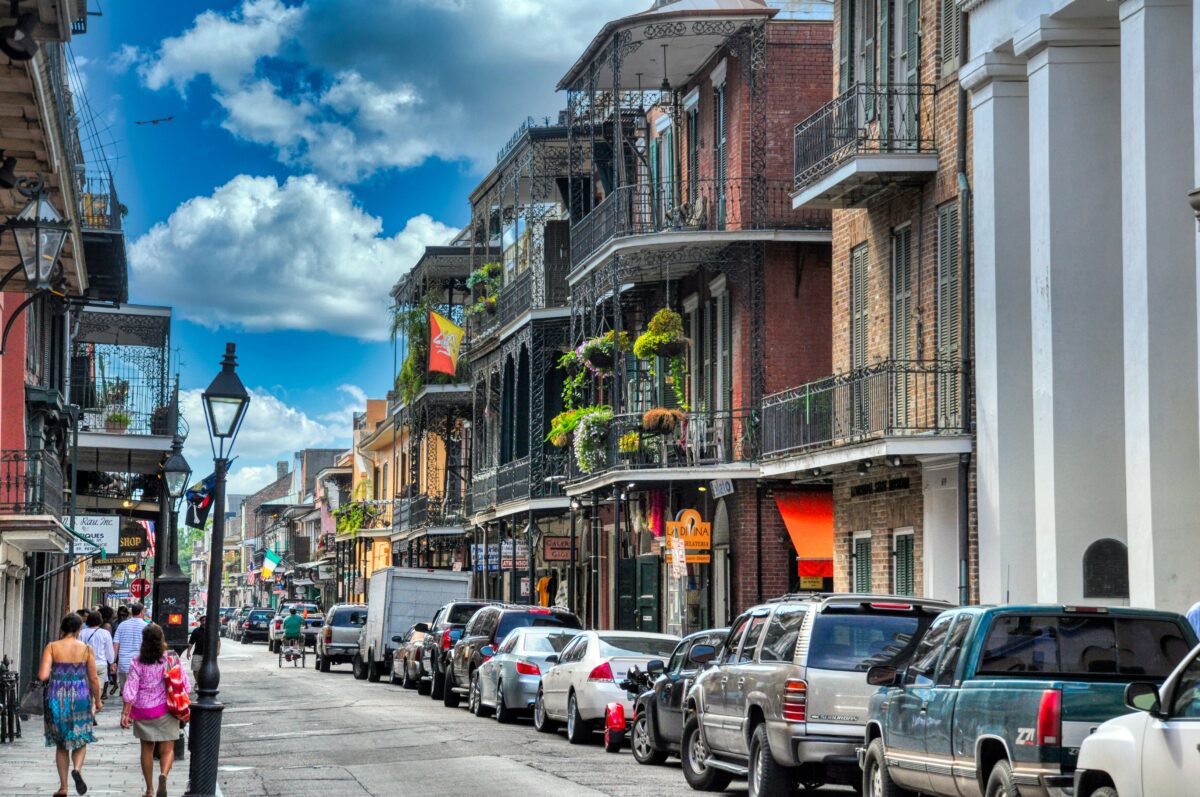
This is not hard to believe if you have walked around the French Quarter in August. New Orleans sits near the Mississippi River, close to Lake Pontchartrain, and within the broader reach of Gulf moisture. The result is air that can feel damp even after sunset. In a typical summer, dew points in the upper 60s to upper 70s are common, which is the kind of weather that has you looking for shade and air conditioning every few blocks.
Houston, Texas
Houston is one of the most humid large cities in the country, and its mornings are especially notorious. In one major-city comparison, Houston posted average peak morning humidity close to 89.7% around 6 a.m.
That makes Houston a good example of how humidity works in real life. By afternoon, the relative humidity may drop as temperatures climb, but the city can still feel oppressive because the air remains warm and moisture-rich. Summer dew points regularly sit in the 70s, which is why even a short walk can feel like you have worn the wrong shirt almost immediately.
Jackson, Mississippi
Jackson surprises people who assume the worst humidity has to be right on the coast. It is inland, but it still ranks near the top thanks to warm, moisture-heavy air flowing north from the Gulf of Mexico.
Some rankings place Jackson at about 75% average daily humidity, while others put it among a small group of cities that regularly hit around 90% on annual humidity measures. The exact methodology changes by list, but Jackson’s overall reputation stays the same: sticky, warm, and not subtle about it.
Most Humid States in the USA
At the state level, Louisiana stands out most consistently. One recent ranking based on NOAA station data placed Louisiana first, with average humidity readings of about 88.25 in the morning and 60.25 in the afternoon.
That same ranking put Michigan, Iowa, Florida, and Minnesota close behind, which is a reminder that “humid” does not always mean tropical. Cold and cool places can log high average humidity too, even if they do not deliver the same sweaty summer feel as Louisiana or Florida.
If you are looking for the states most associated with hot, sticky weather that people actually complain about on vacation, this group tends to matter most:
- Louisiana, especially around Lake Charles, New Orleans, and Baton Rouge
- Texas, particularly the Gulf Coast cities such as Port Arthur, Houston, Brownsville, and Corpus Christi
- Mississippi, with Jackson and Meridian often ranking high
- Florida, where Miami, Jacksonville, Orlando, Tampa, and Gainesville all appear in different humidity comparisons
Why the Gulf Coast Dominates Humidity Rankings
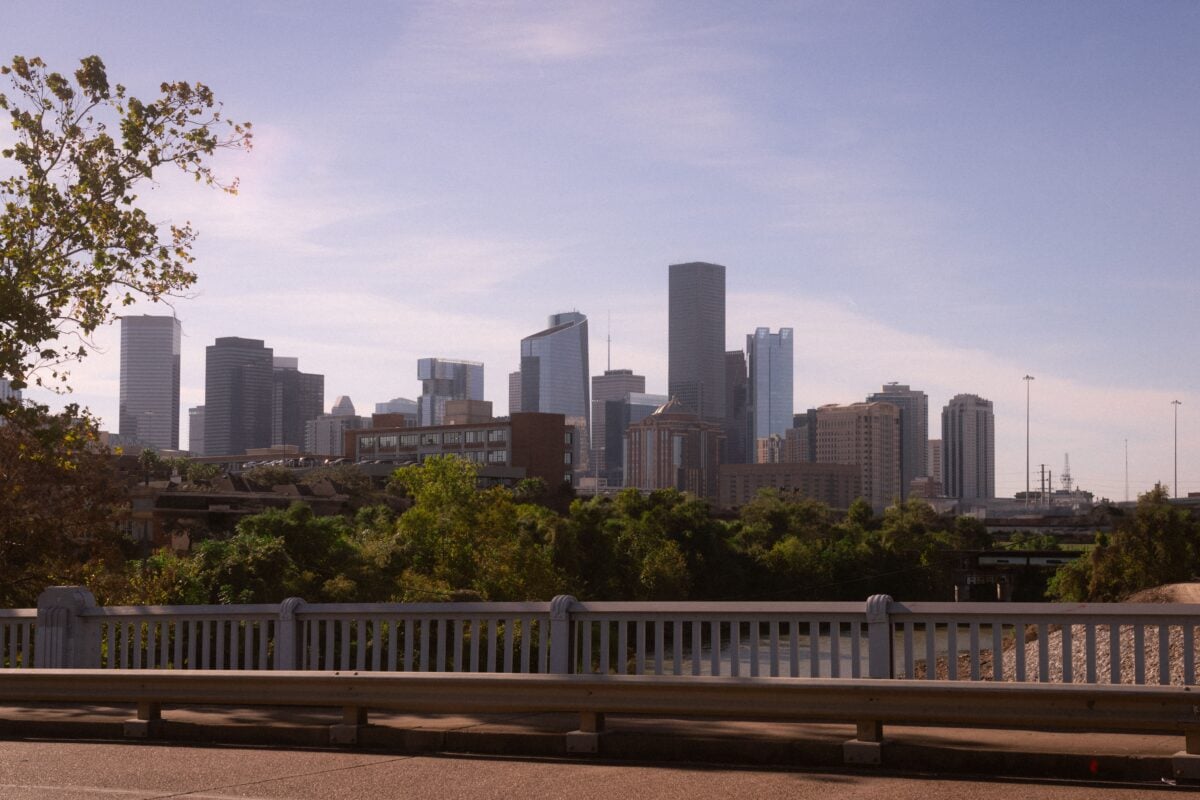
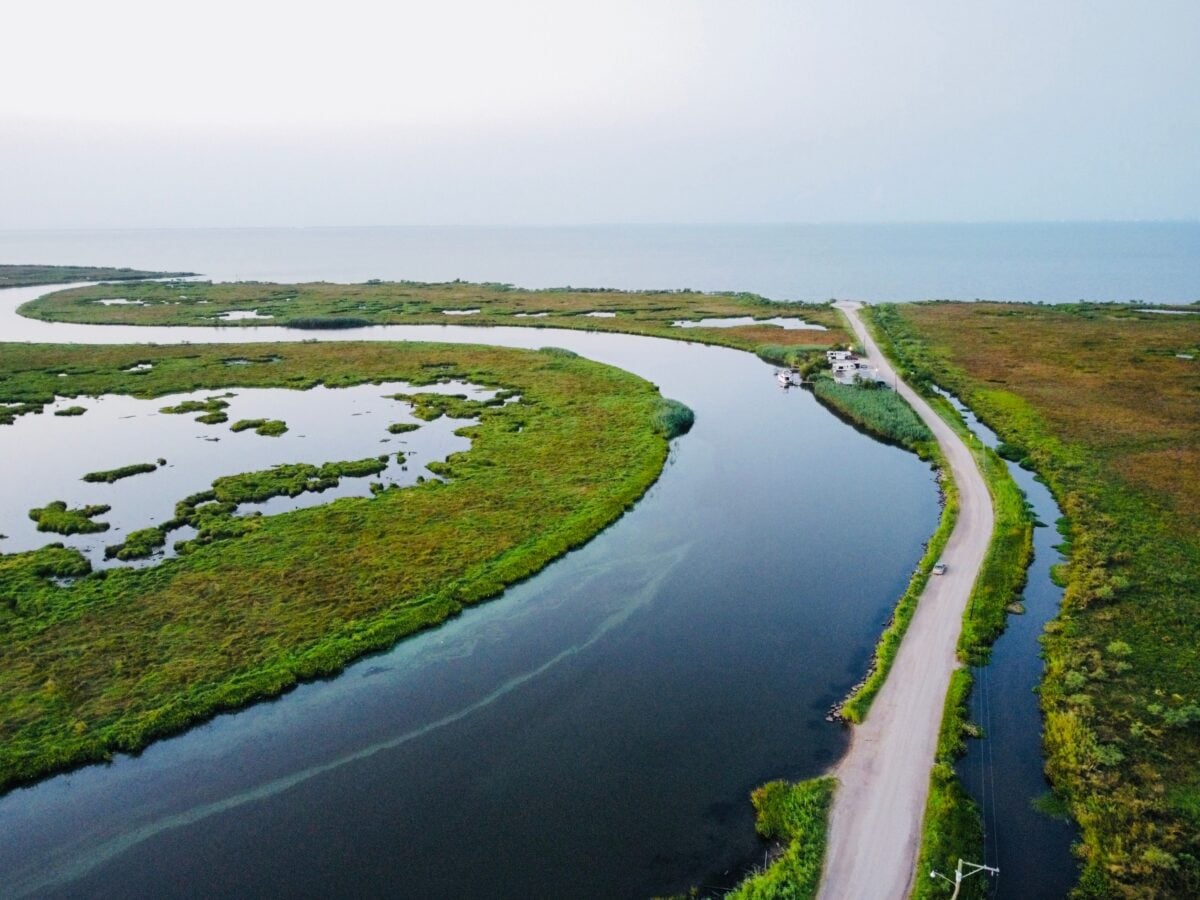
The Gulf Coast has the perfect setup for sticky weather. Warm water, flat terrain, frequent thunderstorms, marshes, bays, and onshore winds all feed moisture into the lower atmosphere.
Louisiana is the clearest example. Cities such as Lake Charles, New Orleans, and Baton Rouge are shaped by nearby lakes, rivers, wetlands, and the open Gulf. Coastal Texas gets much the same treatment, especially around Port Arthur, Corpus Christi, Brownsville, and Houston.
Florida brings another version of the same problem. Jacksonville, Orlando, Tampa, Gainesville, and Miami all show up in big-city or statewide humidity comparisons. In Florida, the peninsula itself helps trap warm marine air, and summer dew points often stay high even when afternoon relative humidity dips. If you are planning around shoulder season, guides to the best places to visit in USA in September or best places to visit in November in USA can make the Gulf and Florida feel a lot more manageable.
Humidity vs Heat: Which Places Feel Worst?
If your real question is not “which places are most humid” but “which places feel the worst,” you need to combine humidity, temperature, and dew point. New Orleans, Houston, Miami, and Lake Charles tend to feel especially rough because the heat stays high while the air remains loaded with moisture.
By contrast, some cooler cities can rank as humid on annual averages without delivering the same swampy effect in summer. That is why a national state list can include places like Michigan or Minnesota while people still talk about the Deep South as the true home of sticky weather.
If dry air is more your speed, the contrast with the world’s muggiest countries is interesting, but the same rule still applies in the U.S.: what people hate most is usually high dew point plus heat, not just a high annual humidity average. For the opposite end of the scale, see our guide to the least humid countries in the world.
What Humidity Means for Travel and Daily Life
High humidity affects comfort, health, buildings, and energy bills. Moist air makes it harder for sweat to evaporate, so hot days feel hotter. That raises the risk of heat stress and dehydration, especially during long walks, outdoor events, or afternoon sightseeing.
Humidity also pushes air conditioning systems harder and helps mold and mildew grow. To combat these issues and maintain clean indoor air, many homeowners rely on high-performance air purifiers like Molekule to eliminate airborne pollutants and mold spores.. If you are staying for more than a few days in a Gulf Coast city, you will notice that indoor climate control is not a luxury item. It is part of the survival plan.

We earn a commission if you buy through this link, at no extra cost to you.
For trip planning, the simplest advice is practical:
- Do outdoor activities early, especially in places like Houston or New Orleans where morning humidity is high but midday heat gets worse.
- Hydrate more than you think you need to. Hot, humid places can drain you faster than dry heat.
- Plan indoor breaks during the afternoon, particularly in summer.
- Pack breathable clothes and assume you will want a change of shirt if you are out all day.
Best Places To Expect Extreme Humidity on a Trip
If you are planning a trip and want to know where humidity is most likely to shape your day, these cities deserve extra preparation: New Orleans, Houston, Miami, Lake Charles, and Port Arthur. They combine high moisture with warmth in a way that is hard to ignore.
For a hotel search in one of the muggiest major cities, New Orleans is the most natural place to start because it appears so consistently in national humidity comparisons and is a frequent trip-planning destination. For a less sweaty version of the South, warm places to visit in December in USA usually work much better than July or August. If you would rather skip the stickiness altogether, these countries with the best weather year-round are worth a look.
Are the Most Humid Places in the USA Always in the South?
No. The most oppressive hot-weather humidity is mostly Southern, especially along the Gulf Coast. But annual humidity rankings can include cooler places in the Midwest, Pacific Northwest, or even Alaska because relative humidity is measured differently than “summer stickiness.”
That is why lists of humid states sometimes look different from lists of humid cities. A state can post high average readings across weather stations without feeling as punishing in summer as New Orleans or Houston.
FAQ About the Most Humid Places in the USA
What is the most humid city in the USA?
Lake Charles, Louisiana often ranks first in city-by-city humidity comparisons, while New Orleans, Louisiana frequently leads lists limited to the country’s biggest cities. The answer changes slightly depending on the dataset and whether the list measures all cities or only major metros.
What is the most humid state in the USA?
Louisiana is the state most often identified as the most humid in the country. It combines Gulf Coast exposure, wetlands, rivers, and long warm seasons that keep moisture levels high.
Why is New Orleans so humid?
New Orleans sits close to the Gulf of Mexico, the Mississippi River, and Lake Pontchartrain. That surrounding water keeps moisture in the air, especially during the warm season.
Is Florida more humid than Louisiana?
Florida is extremely humid, but many rankings place Louisiana higher overall. Florida has several very humid cities, including Miami, Jacksonville, Orlando, Tampa, and Gainesville.
What time of day is humidity usually worst?
Relative humidity is usually highest in the early morning, when temperatures are coolest. In places like Houston, average daily peak humidity is often reached around sunrise, but the afternoon can still feel worse once heat builds.
The Short Version
If you want the plain answer, the most humid places in the USA are concentrated in Louisiana, coastal Texas, Mississippi, and Florida. For individual cities, Lake Charles, New Orleans, Houston, Jackson, Port Arthur, Brownsville, Corpus Christi, Baton Rouge, Meridian, and Miami are the names to know.
So yes, the Gulf Cofst really is as sticky as people say. Sometimes worse.
