
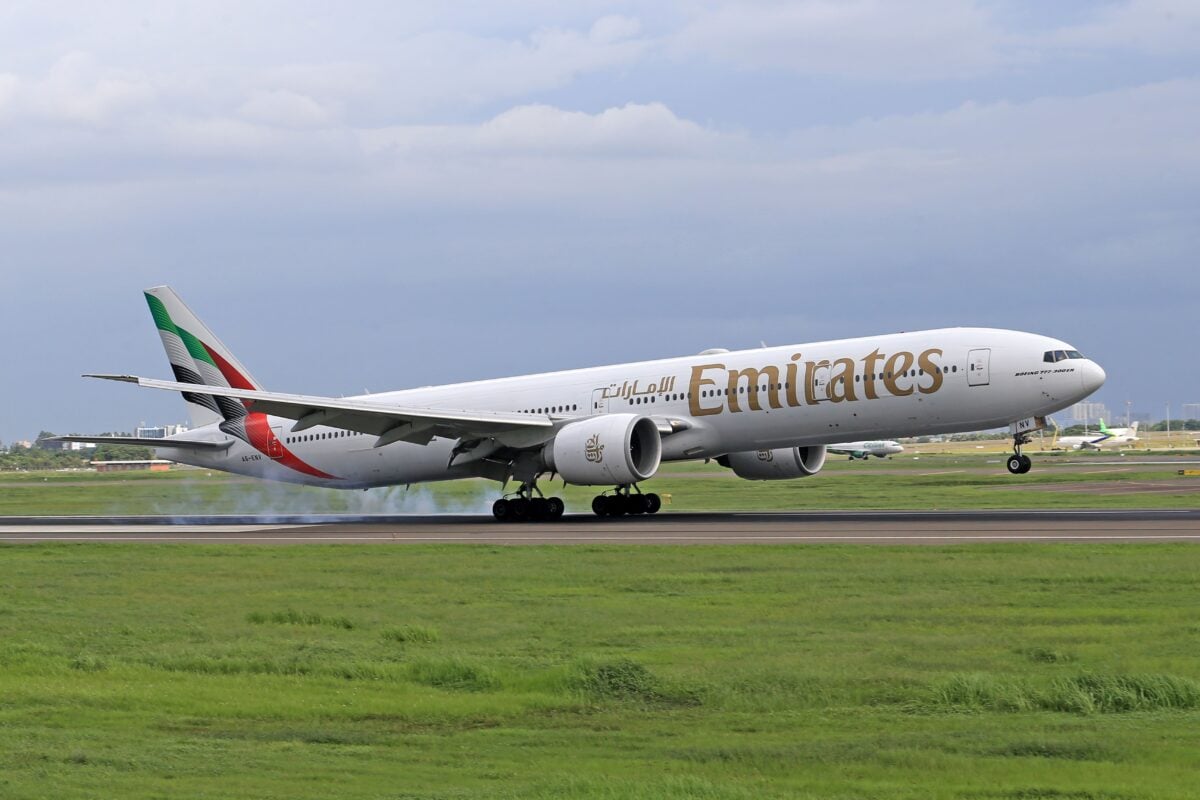
Emirates is moving back toward a normal flying programme, with the Dubai-based airline expecting to operate at 92% of planned capacity from August 1. That is a faster recovery than anticipated while the Iran war was still disrupting route planning across the region.
Sir Tim Clark said Emirates has kept a firm grip on its cash position and profitability, with both performing better than expected in parts of the business. Regional airspace uncertainty is rarely cheap for an airline, so that is a notably sturdy result.
Dubai’s biggest airline remains a useful gauge of how Gulf aviation is handling conflict-related disruption, shifting demand and the knock-on effects for European and regional connections. Its broad network links Europe, Asia, Africa and Australia through Dubai, so schedule changes can ripple a long way beyond the UAE.
Emirates Is Back To 92% Of Planned Capacity
Clark said Emirates will reach 92% of its intended capacity from August 1, putting much of its planned network back in place sooner than first forecast. Capacity refers to the total number of seats an airline can offer, so it is a better measure of recovery than simply counting flights.
The rebound has come before the conflict has fully settled. Emirates had reduced its expectations during the most difficult period, but demand and operations recovered more quickly than the airline had feared.
Speaking at the Farnborough Airshow, Clark said the company was in a stronger financial position than expected by the end of the first quarter. Cash generation and profitability were not merely holding steady; they were running ahead of internal forecasts.
Demand Stayed Strong Across Markets
Demand has remained solid across Emirates’ markets and cabin types, from Dubai stopovers to long-haul connections. That gives the airline more confidence to reinstate capacity without filling aircraft with heavily discounted seats just to make the numbers look busy.
The carrier’s seat factor, the percentage of seats occupied by paying customers, reached 82% last week. That compares well with Emirates’ pre-crisis average and suggests that restored flights are carrying meaningful loads rather than operating with rows of empty seats.
Yields have also stayed healthy. In airline language, yield is the average revenue made from each passenger, and strong yields generally mean ticket prices are holding up well enough to cover the hefty costs of fuel, crews, airport fees and long-haul operations.
Anyone looking for an Emirates fare through Dubai may still find that extra flights do not automatically produce a bargain. More seats can improve choice and make connection times less awkward, but popular dates and premium cabins can remain expensive when demand is this resilient.
How Emirates Is Managing The Turbulence
Emirates has not published every detail of its operational response, but the financial results point to a familiar crisis-management approach: adjust routes, protect the most valuable connecting flows and return aircraft where demand has held up. The airline has dealt with major network shocks before, and a large hub operation needs that muscle memory.
Long-haul hubs are particularly dependent on timing. A disruption affecting one part of the network can alter aircraft rotations, crew schedules and connections elsewhere, even when a route itself is not directly affected. Emirates has had to balance those moving parts while keeping Dubai viable as a transfer point.
Its broader network planning has also continued beyond the immediate recovery, including an Emirates travel rehearsal programme in Madagascar. That sort of preparation matters on routes where accessibility support and passenger confidence can shape demand as much as the timetable does.
- Planned capacity from August 1: 92%
- Seat factor last week: 82%
- Financial position: cash and profitability improved versus expectations
Why European Services Are Taking Longer To Come Back
European airlines including Lufthansa and KLM are expected to take longer to return to normal Dubai operations. Their schedules remain tied to the continuing disruption around the conflict, along with their own aircraft availability, crew planning and network priorities.
That leaves Dubai with an uneven recovery. Emirates can restore flights more quickly within its own system while overseas carriers work through separate risk assessments and scheduling decisions. People comparing options may see good Emirates availability on a route while a European alternative remains reduced, absent or less convenient.
Route recovery is seldom tidy. A major hub can be close to normal on paper while individual airlines are still rebuilding flight frequencies, reconnecting onward services and deciding when conditions are stable enough for a full return.
What The Capacity Rebound Means For Dubai Air Travel
A return to 92% capacity should bring more choice for anyone connecting through Dubai, particularly across Emirates’ long-haul routes. More departures can mean better connection windows and fewer situations where you have to accept a punishing overnight layover because the useful flight only runs a few times a week.
Prices may not soften immediately, especially during school holidays and on routes with limited competition. It is still sensible to compare nearby dates, try different departure airports and check whether a longer Dubai connection meaningfully cuts the fare before booking.
The larger signal is Emirates’ resilience. The airline is emerging from a regional shock with finances in better shape than initially feared, while keeping its global network moving. Its Madagascar accessibility initiative also shows that network growth and service planning are continuing alongside the operational recovery.
Clark’s comments indicate that Emirates is comfortable rebuilding without dramatic cuts. Demand remains present, profitability is holding up and the carrier appears to believe the most severe part of the disruption has passed, at least for now.
For an airline built around connection traffic, premium long-haul demand and a vast Dubai transfer hub, stability is nearly as valuable as growth. Emirates appears to have regained a fair amount of both.
