
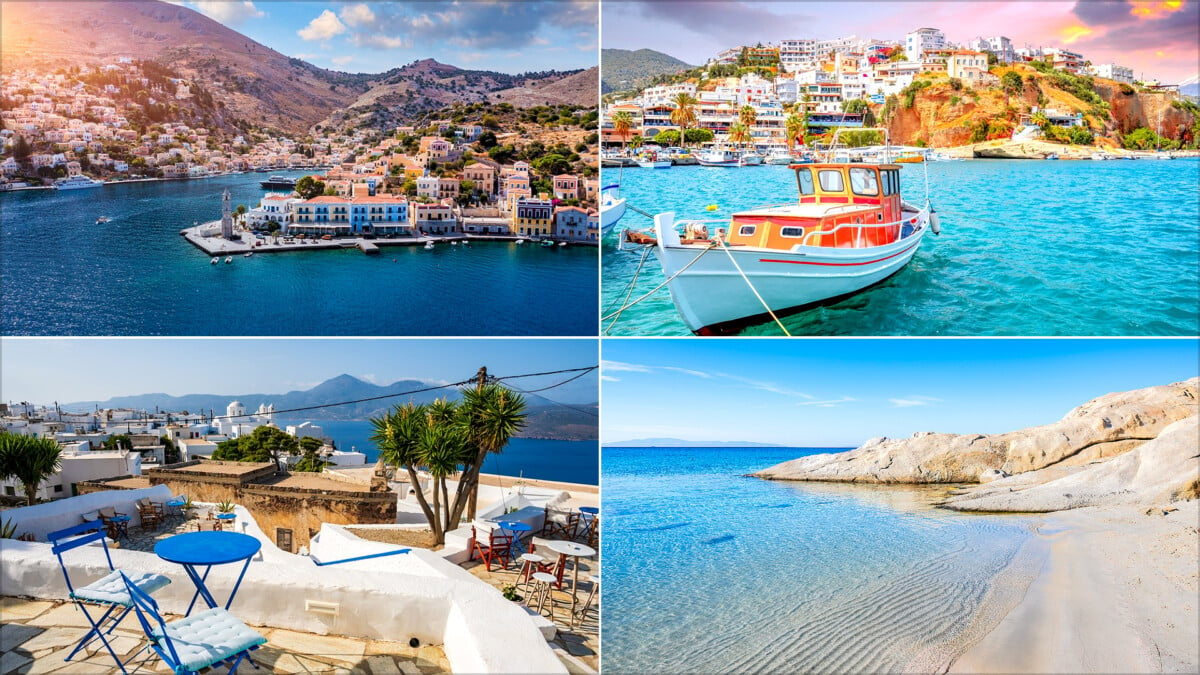
Greek island travel is dominated by Santorini and Mykonos, but the country has 227 inhabited islands spread across several island groups. Beyond the best-known Cycladic destinations are islands shaped by very different geology, histories and local food traditions. Across the Aegean and Ionian seas, travellers can encounter Venetian fortifications, former mining landscapes, volcanic terrain and hidden sea caves.
Choosing a less familiar island can also open up different hiking routes, archaeological sites and smaller towns that don’t revolve around the same tourism patterns. Travellers comparing their options can explore some of the most beautiful Greek islands, while those travelling on a tighter budget may want to consider affordable all-inclusive Greek resorts. Here’s a closer look at five Greek islands that show how varied the country can be once the focus moves beyond Mykonos and Santorini.

Milos: Dramatic Volcanic Landscapes and Hidden Caves
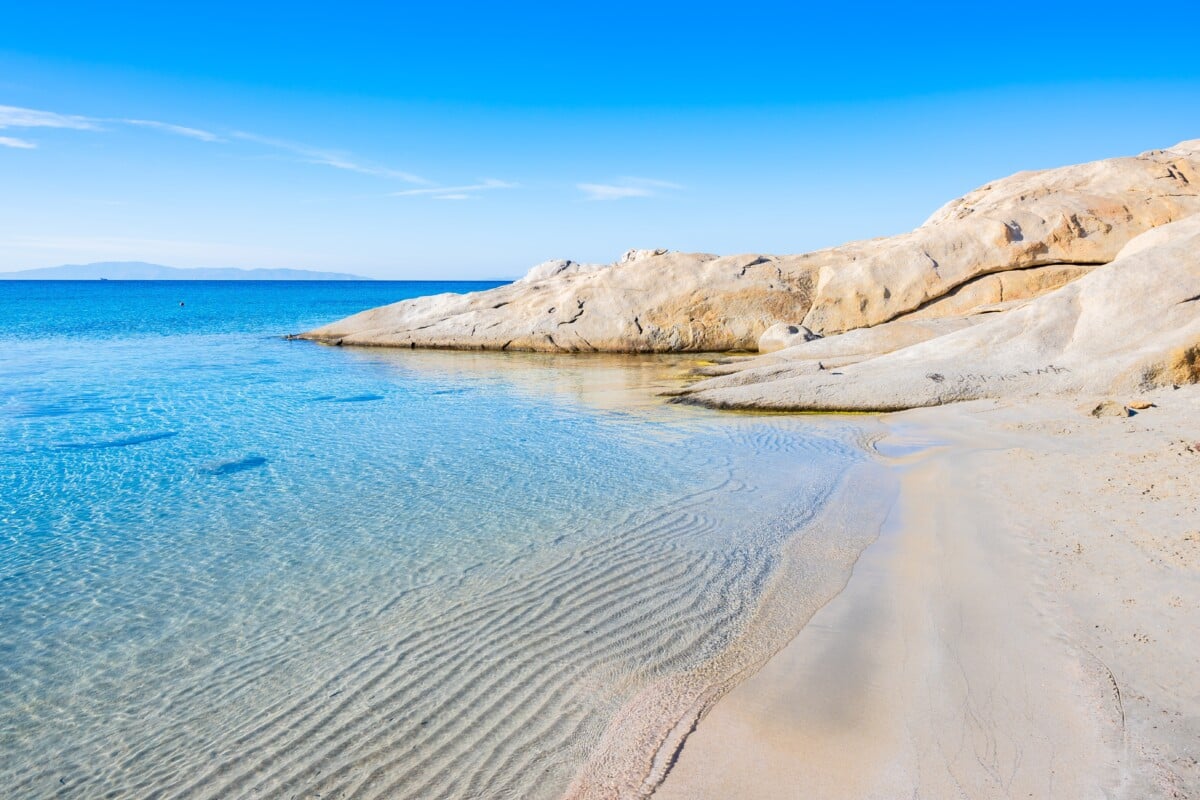
Milos has some of the Aegean’s most distinctive coastal geology, shaped by its volcanic past. On the northern shore, Sarakiniko is known for smooth white volcanic formations carved by wind and sea. In the southwest, Kleftiko has white rock formations, natural arches and sea caves once used as shelter by pirates. Boat trips to the area leave from Adamas and other points around the island.
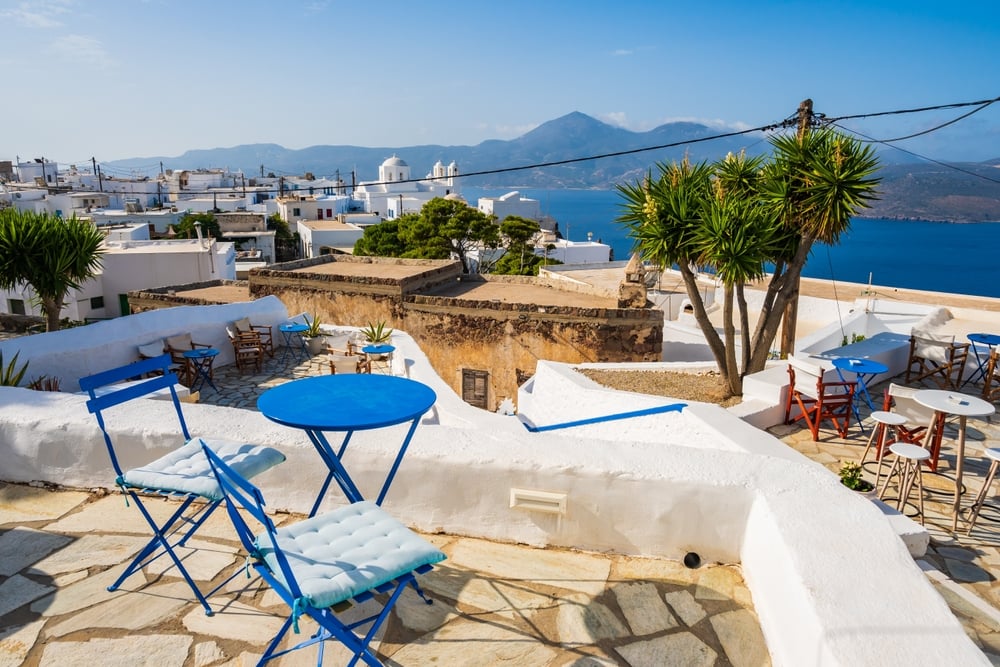
Inland, the Catacombs of Milos near Trypiti are among Greece’s most important early Christian sites. High above the port, the hilltop capital of Plaka has narrow paved lanes and views across the Gulf of Milos. Pollonia, on the north-eastern coast, is another useful base, with restaurants and access to nearby beaches. Milos also suits private villa holidays, particularly around Pollonia, where self-catering stays sit close to the waterfront and local tavernas.
Naxos: Mountain Villages and Local Food Culture
Naxos is the largest island in the Cyclades, with agriculture still playing an important role alongside tourism. Mount Zas rises to 1,003 metres, making it the highest peak in the Cyclades, with hiking routes starting from the area around Filoti. Across the central interior, villages such as Apeiranthos have marble-paved lanes, stone archways and a women’s weaving cooperative that continues local textile traditions.
The island is known for local products including Graviera Naxou cheese, Naxos potatoes and Kitron, a citron liqueur associated with the Vallindras Distillery in Halki since 1896. Potatoes are grown extensively in the Livadi valley, while the island’s dairy industry supports a long-established cheese-making tradition.
At the entrance to Naxos Town harbour stands the Portara, the monumental marble gateway left from an unfinished sixth-century BC Temple of Apollo. Together, the island’s mountain routes, inland villages and food traditions give travellers plenty to explore away from the coast.
Crete: Ancient History and Pristine Coastlines
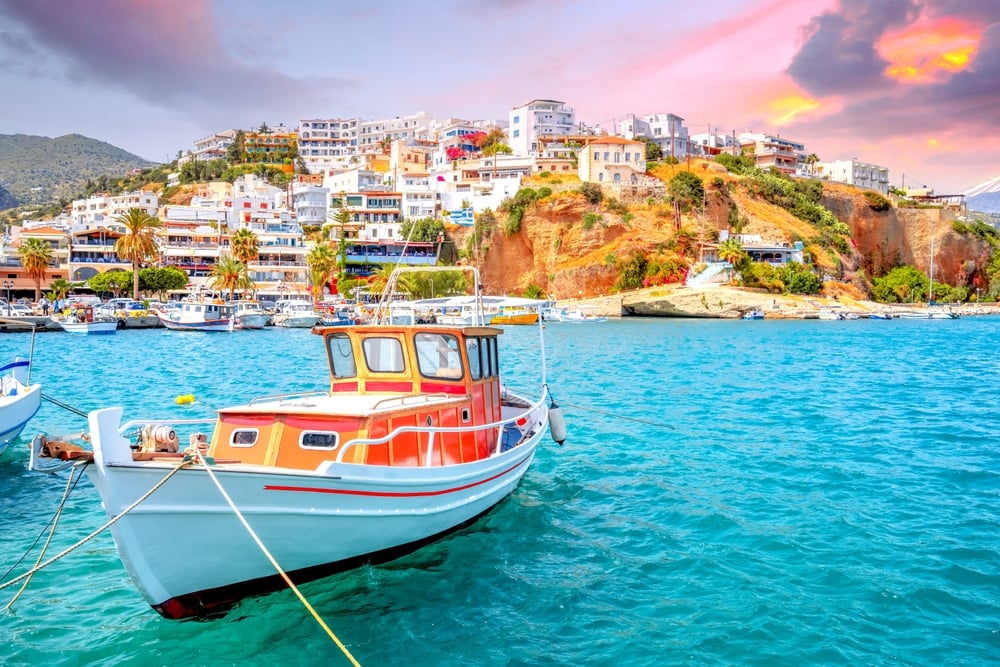
Crete covers around 3,200 square miles, making it Greece’s largest island. About 5 km southeast of Heraklion, the Palace of Knossos was the largest centre of Minoan power and contains remains that date back to the Bronze Age. Extensive restoration work carried out by archaeologist Arthur Evans helped shape the site visitors see today. Farther west, Chania Old Town retains its Venetian harbour, Egyptian lighthouse and streets shaped by both Venetian and Ottoman rule.
The island’s southern and western edges have some of its most dramatic natural features. The Samaria Gorge runs for 12.5 km through the Lefka Ori, with the full walking route continuing for around 16 km to Agia Roumeli on the Libyan Sea. Villages such as Loutro are reached by boat or on foot rather than by road, making this stretch of coast a natural fit for small boat cruises in Greece that call at more remote harbours. Farther west, Elafonisi is known for shallow water and distinctive pink-tinted sand.
Corfu: Venetian Architecture and Lush Greenery
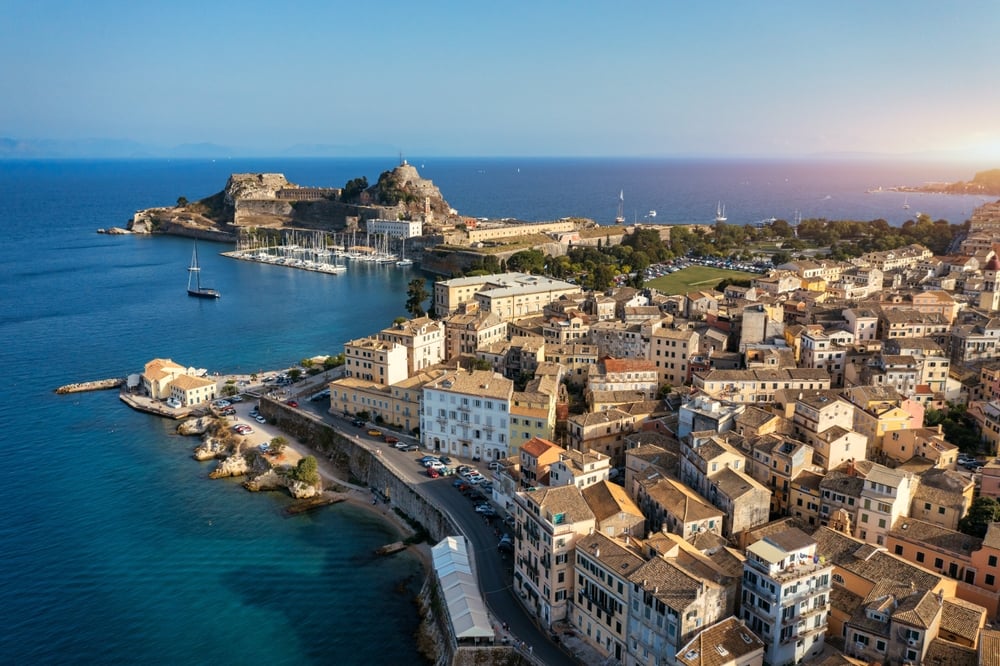
Located in the northern Ionian Sea, Corfu receives more rainfall than many Aegean islands, helping sustain more than four million olive trees across its hillsides. Venetian rule from 1386 to 1797 heavily shaped the island’s urban layout and architectural heritage. Corfu Town features the imposing Old Fortress, separated from the rest of the town by the artificial moat known as the Contrafossa.
The UNESCO-listed Old Town centres on the Spianada, the largest square in the Balkans, bordered by the Liston promenade built during French rule and inspired by Paris’s Rue de Rivoli. Moving north towards Mount Pantokrator, which rises 908 metres above sea level, travellers reach Old Perithia, a fourteenth-century village that was largely deserted before restoration work began bringing it back to life.
On the north coast, the Canal d’Amour near Sidari is formed by sandstone cliffs carved by wind and sea into narrow channels and coves. Corfu’s Venetian architecture, mountain villages and greener landscape give it a very different character from the whitewashed Cycladic islands.
Rhodes: Medieval History and Sun-Drenched Beaches
Rhodes sits in the southeastern Aegean as the largest of the Dodecanese islands, close to the Turkish coast. The Knights of St John controlled the island from 1309 until the Ottoman conquest in 1522, building extensive fortifications around Rhodes Town. Inside the UNESCO-listed Medieval City, the Street of the Knights leads to the Palace of the Grand Master, which was restored during the Italian occupation and now contains exhibitions on the island’s history and ancient mosaic floors.
Around 55 km south of Rhodes Town, Lindos sits below an acropolis perched 116 metres above the sea. The site includes the fourth-century BC Temple of Athena Lindia, a Hellenistic stoa and later fortifications overlooking the surrounding bays.
At the island’s southern tip, Prasonisi is connected to Rhodes by a long strip of sand during summer conditions. The water can be noticeably rougher on one side and calmer on the other, helping make the area a popular spot for windsurfing and kitesurfing.
Which Greek island will you visit first?
Looking beyond Santorini and Mykonos opens up a whole different side to Greece, from the volcanic coastline of Milos to Corfu’s Venetian architecture and Naxos’s mountain villages. Each island has its own history, landscapes, food and practical considerations, so the right choice depends on what travellers actually want to see and do.
Researching archaeological sites, hiking routes, coastal access and transport before planning a route makes those differences much clearer. Whether the priority is ancient ruins, mountain trails, local food or unusual geology, these five islands give travellers plenty of reasons to look beyond Greece’s best-known destinations.
