
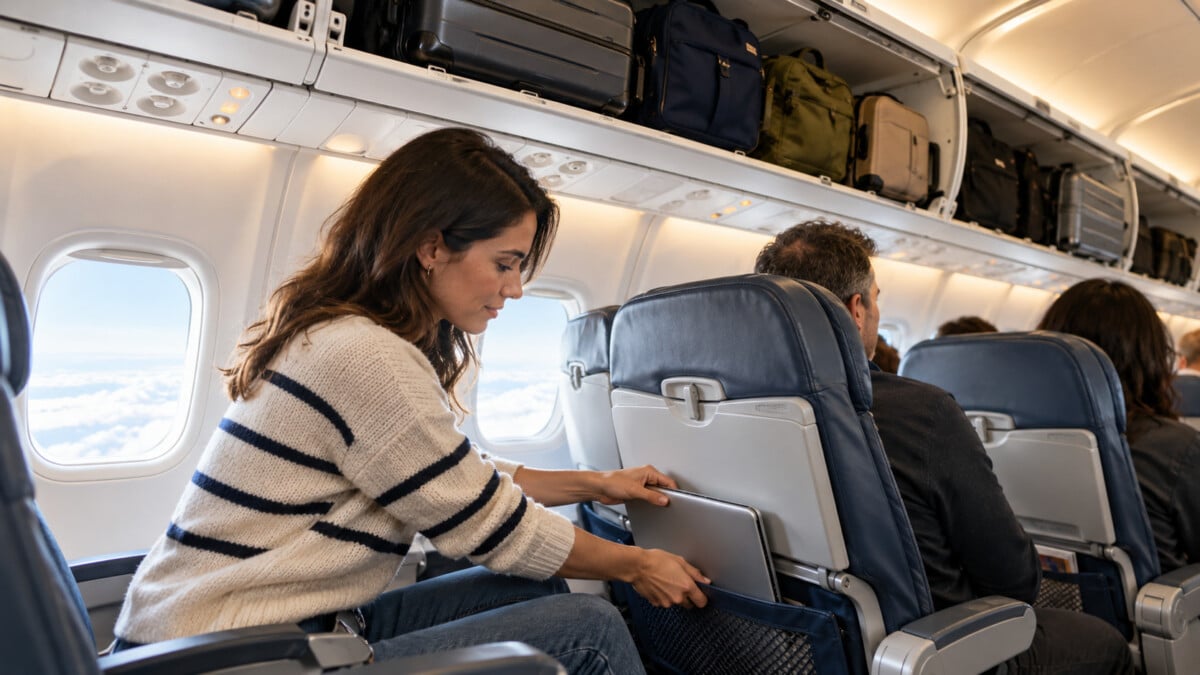
Laptops and electronics deserve special attention as you settle in for your flight, and there are three good reasons to keep a laptop within reach: a crushed screen, a stolen bag and, most seriously, a lithium-ion battery fire hidden from view.
Short version: if it fits, put your laptop under the seat in front of you. A slim laptop bag or padded sleeve helps protect it without taking up all your foot space.
What Do Airlines Allow for Laptops in Overhead Bins?
Airlines set their own stowage rules, and laptops are widely allowed in the bin. Southwest Airlines says laptops weighing 2 pounds or more must be stowed under the seat or in an overhead bin for taxi, takeoff and landing, so the bin is an approved option on that carrier. Always follow the crew’s instructions, particularly if you are sitting somewhere without under-seat storage.
Bins fill quickly during boarding, and a laptop that goes in early can end up under heavier bags for the rest of the flight. That leaves a delicate screen vulnerable to pressure as other passengers squeeze their luggage into the remaining space.
Why Is a Laptop in the Overhead Bin a Fire Concern?
Most laptops run on lithium-ion batteries, the same type found in power banks. A damaged battery can enter thermal runaway, an overheating chemical reaction that can lead to fire, and a crowded bin makes early warning signs such as heat or smoke harder to spot.
The Federal Aviation Administration raised the same worry in a safety alert to airlines in 2025, noting that batteries in overhead bins or carry-on bags may be “obscured, difficult to access, or not readily monitored by passengers or crew members”. That delay can slow both detection and firefighting. The alert is guidance for operators and does not ban laptops from bins.
If you notice a device overheating, swelling, smoking or burning, tell cabin crew straight away. They are trained to respond to battery fires, so do not wait to see whether the problem settles down.
What Happened When a Laptop Went Missing on a United Flight?
In October 2025, a United flight from Washington Dulles to Rome turned back after a laptop slipped behind a cabin wall panel and through a small gap towards the cargo hold. A battery fire in a space crew could not see would be hard to detect, and the crew decided the safest option was to return, so the aircraft went back to Dulles, retrieved the laptop and then continued to Rome.
A laptop in a bin is not the same as one behind a panel, but the logic is similar: the less visible the device, the harder it is to act quickly. Keeping electronics accessible gives you a better chance of noticing a problem and alerting the crew.
Who Pays if a Laptop Is Crushed or Stolen?
Do not assume the airline will cover damage to items you keep with you. Delta, for example, says it does not assume liability for unchecked items unless they are handed to its staff for storage during the flight or otherwise delivered into its custody.
That leaves you with little recourse if your laptop is crushed under a heavier bag or taken from a bin while you sleep. Travel insurance may help cover the cost, but check the policy’s valuables limit, excess and exclusions for unattended belongings. The amount covered may be lower than the price of a replacement laptop.
Where Should You Keep Your Laptop on a Flight?
A practical spot is under the seat in front of you, where the laptop stays close and out of the bin crush. Keep the bag fully tucked away so it does not obstruct the aisle or anyone’s exit. A padded laptop sleeve or bag helps if the bin is the only space left, and our guide to travel items that earn their space in your bag covers other cabin essentials.
If you need to use the overhead bin, avoid leaving the laptop loose between suitcases or placing it where another passenger’s bag could bear down on it.
For more on what to expect in the cabin, see our look at the dirtiest and cleanest parts of an airplane.
