
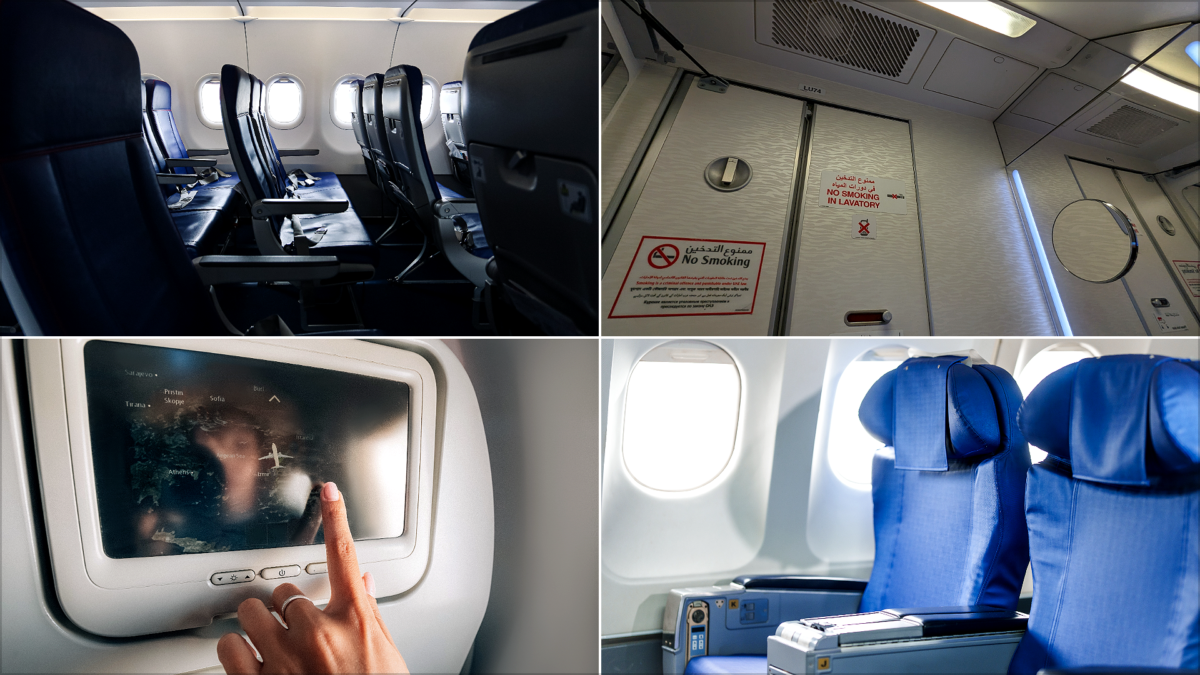
The dirtiest and cleanest parts of an airplane are not always where travelers expect them to be. The lavatory gets most of the suspicion, understandably, but the surface holding your in-flight snack can be a bigger concern.
Cabins turn around quickly between flights, and cleaning crews have a lot to cover. High-touch areas shared by every passenger can accumulate microbes between more thorough cleans, especially tray tables, seat-back pockets and armrests. The same shared-space common sense applies on the ground too, particularly if you are brushing up on hostel dorm etiquette before a multi-stop trip.
This is not a reason to fear flying. It is a good reason to make a small pre-flight routine as automatic as buckling your seat belt.
A quick guide to airplane touch points
| Surface | Why it needs attention | Simple traveler response |
|---|---|---|
| Tray table | Used for eating and touched by successive passengers | Wipe before meals or using it as a workspace |
| Seat-back pocket | Can collect rubbish and is difficult to clean deeply | Store belongings in your personal bag |
| Seat belt buckle and armrest | High-contact surfaces at every seat | Sanitize hands after handling, especially before eating |
| Seat-back screen and air vent | Frequently adjusted or tapped, sometimes overlooked in cleaning | Use a suitable wipe and avoid spraying liquids |
| Lavatory handles and tap | Shared before users wash their hands | Wash carefully, then use sanitizer after leaving |
What makes an airplane surface dirty?
“Dirty” can mean several things. A surface may have crumbs, spills and visible grime, or it may carry bacteria, yeast or mold that cannot be seen. Swab tests of aircraft cabins have repeatedly found more microbial material on heavily handled surfaces than on areas that receive focused disinfection.
A positive swab does not automatically mean a traveler will become ill. Microbes are widespread in everyday life, and the type, amount and route of exposure all matter. Still, the practical lesson is straightforward: avoid transferring whatever is on a shared surface to your eyes, nose, mouth or food.
The most likely culprits are familiar because they are touched often and can be missed in a fast turnaround. Think of the cabin as a busy shared office with wings, except someone may also have changed a baby or rested bare feet on the desk.
The dirtiest parts of an airplane
1. Tray tables
Seat-back tray tables consistently rank among the grimiest surfaces in cabin testing. One widely cited set of tests found tray tables carried far more bacteria per square inch than lavatory flush buttons. It makes sense: passengers eat on them, lean on them, use them as makeshift workspaces and occasionally treat them in ways no dining table should have to endure.
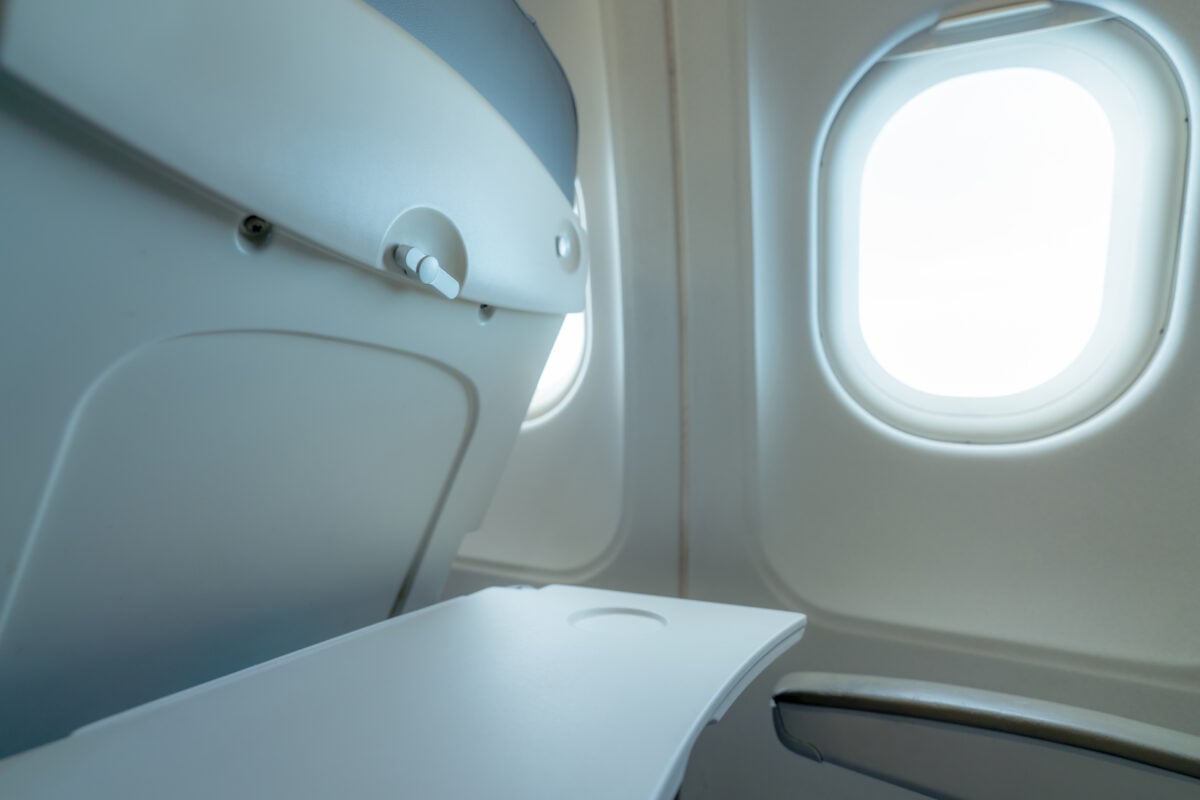
Best move: Wipe the tray table, including its latch and outer edge, before placing food, a phone or a child’s toys on it. Let a disinfecting wipe remain wet for the contact time printed on its packaging. A quick dry swipe may remove crumbs, but it is not the same thing as disinfecting.
2. Seat-back pockets
The pocket in front of you is convenient, but it is also a catch-all. Cabin crews remove rubbish when possible, yet these fabric or mesh compartments can be harder to clean thoroughly than a smooth plastic surface. Passengers may leave behind used tissues, food wrappers and items that have been on the floor.
Keep passports, boarding passes and electronics in your own bag rather than directly in the seat-back pocket. If you use it for a safety card or airline magazine, wash or sanitize your hands before reaching for a snack.
3. Seat belt buckles, armrests and headrests
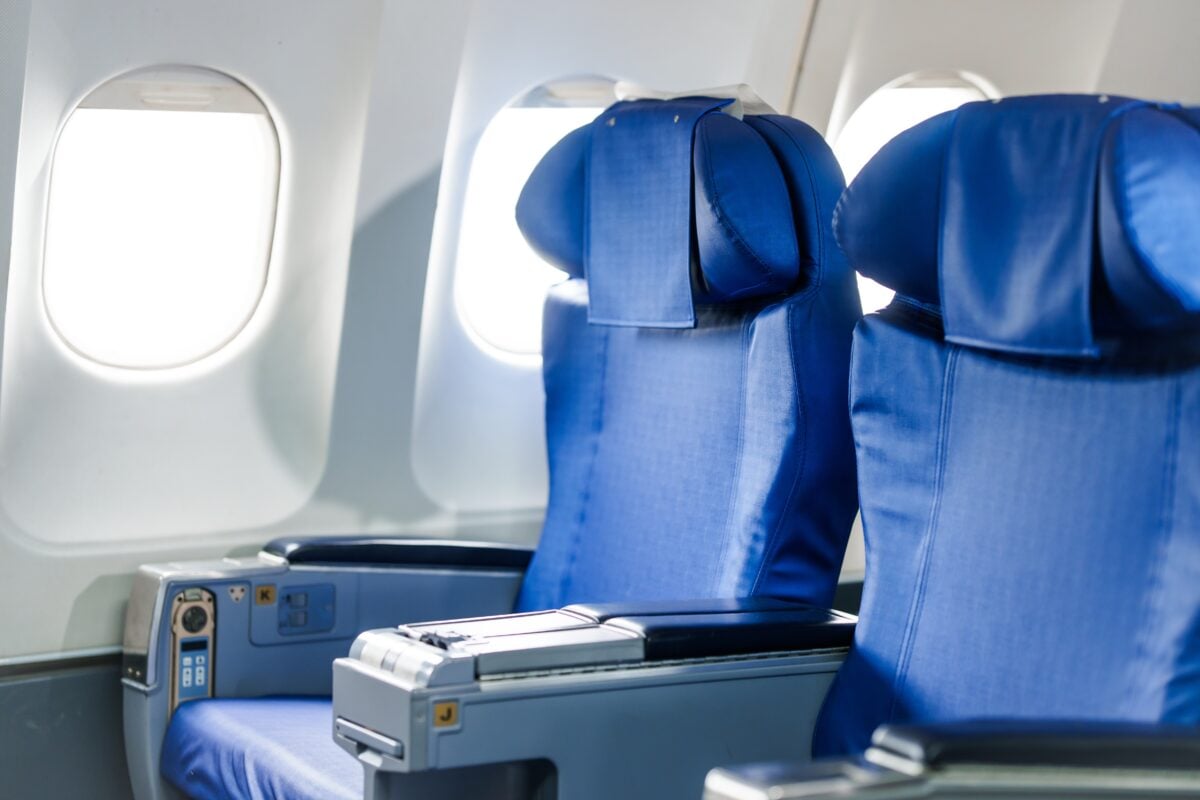
These are classic high-touch points. Seat belt buckles and armrests are handled by nearly every passenger in the row. Headrests can pick up hair, skin contact and, on overnight flights, a surprising amount of face-to-fabric time.
Cabin sampling has identified bacteria, yeast and mold on seat-area touch points, while some tests have found organisms including E. coli and staph on armrests and headrests. These findings are a reminder to clean your hands, not an instruction to try to sanitize the entire seat before departure.
- Use your sleeve or a wipe to handle a visibly sticky buckle.
- Place a clean layer, such as a scarf or travel pillow cover, between your face and a headrest if you plan to sleep.
- Avoid using the armrest as a food surface.
4. Seat-back screens and air vents
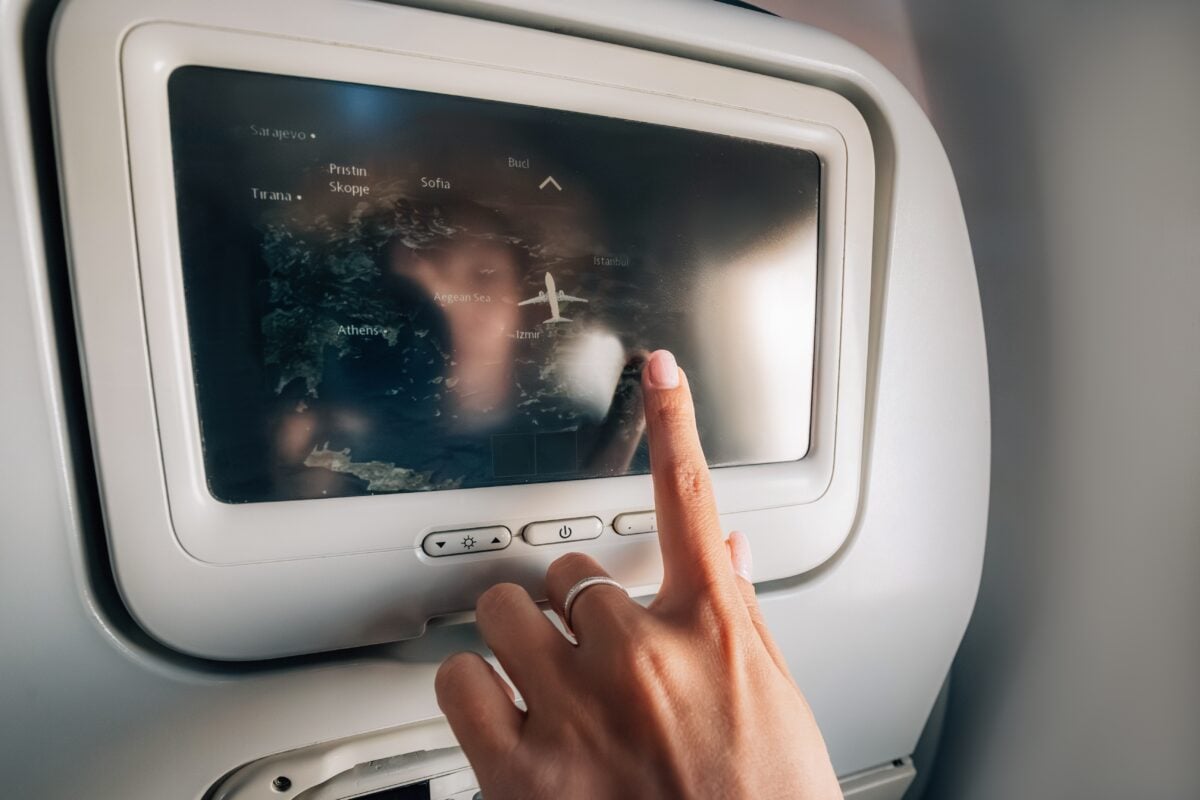
Touchscreens attract fingerprints, and the remote control or screen buttons are handled throughout the day. Overhead air vent nozzles are also frequently touched as passengers adjust airflow, yet they may receive less attention than obvious lavatory surfaces during a quick clean.
Use a screen-safe wipe if you choose to clean an in-flight entertainment display, and never spray liquid directly onto it. For the vent, clean the outer adjustment ring rather than pushing a wet wipe into the nozzle. Keeping the vent aimed gently toward your face can also make the air around your seat feel more comfortable, while the cabin’s dimmed cabin lights before takeoff and landing serve an entirely different safety purpose.
5. Lavatory door handles and sink taps
The lavatory is full of shared touch points in a small space. Door handles and sink tap handles are especially worth treating cautiously because they are touched before handwashing. In cabin tests, sink handles have been among the most contaminated surfaces.
Wash your hands with soap and water, then use a paper towel to operate the handle where possible. Once back at your seat, alcohol-based hand sanitizer adds a useful final step. The U.S. Centers for Disease Control and Prevention’s handwashing guidance recommends scrubbing hands with soap for at least 20 seconds.
The cleanest parts of an airplane may surprise you
There is no universally clean surface on a busy aircraft, and conditions differ by airline, route and turnaround schedule. However, some areas fare better than travelers might expect.
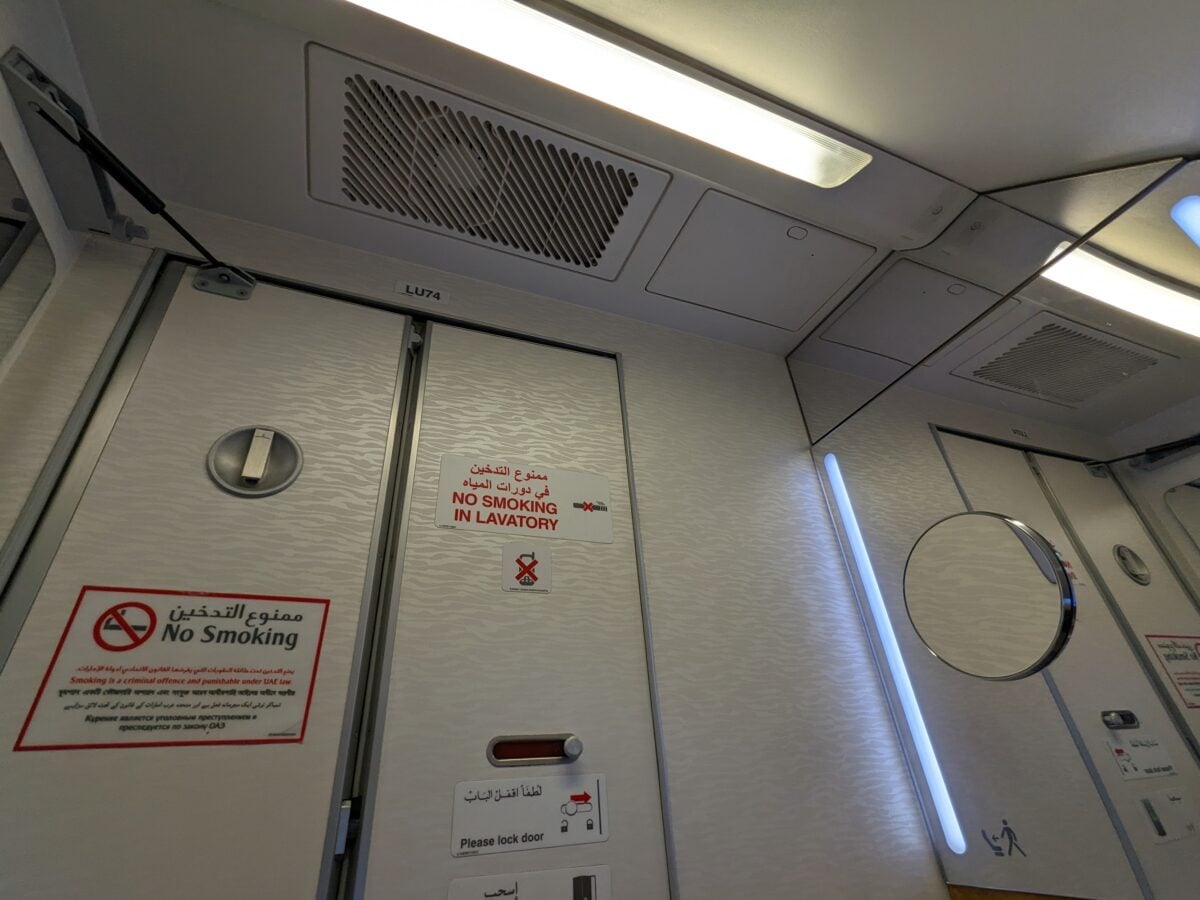
Lavatory flush buttons
Tests have found lavatory flush buttons among the cleaner cabin touch points. That is likely because there are relatively few of them and cleaning teams know they are an obvious priority. It is still a shared bathroom control, so use a tissue or the back of your hand if that makes you more comfortable, then wash your hands properly.
Safety cards
Safety instruction cards have also performed comparatively well in some aircraft cleanliness testing. They are handled less often than tray tables and are typically stored in a dedicated seat pocket. Read the card before departure, but do not assume a clean-looking card makes the pocket itself clean.
Cabin air
The cleanest part of the cabin is not a surface at all. Commercial aircraft use a mix of fresh outside air and recirculated air filtered through high-efficiency particulate air, or HEPA, filters. The International Air Transport Association says cabin air is refreshed roughly 20 to 30 times an hour, with a complete air exchange every two to three minutes.
HEPA filtration is designed to capture at least 99.97% of particles measuring 0.3 microns, including dust, pollen and many airborne microbes. It does not make close contact with an unwell passenger risk-free, but it does challenge the idea that airplane air simply sits unchanged around the cabin for an entire flight. Read more about air travel health and cabin air through the International Air Transport Association.
A practical five-minute seat routine
You do not need a laboratory kit or a hazmat suit to travel comfortably. Pack a small, accessible hygiene pouch in your personal item so it is available after boarding.
- Take your seat, then clean the tray table and buckle. Focus on the places that will touch your hands, food and belongings.
- Clean your hands before eating. This matters more than attempting to wipe every inch of the cabin.
- Keep personal items off the floor and out of the seat pocket. A tote bag or zipped daypack is the better storage choice.
- Use the lavatory thoughtfully. Wash with soap, dry your hands, and use sanitizer when you return to your row.
- Do not touch your face unnecessarily. It is simple advice, but the hand-to-face route is how surface contamination becomes more relevant.
Should you bring wipes and hand sanitizer on a flight?
Yes, provided they are packed and used according to airline and airport security rules. A small pack of disinfecting wipes and an alcohol-based hand sanitizer are useful, low-fuss additions to a carry-on. Keep wipes away from aircraft controls, avoid soaking electronic screens, and dispose of them in a bin rather than the seat-back pocket.
For families, a clean disposable barrier for snacks can be helpful when a tray table is needed. Travelers who bring their own blanket or neck pillow also avoid relying on loose cabin bedding, which may not have been freshly laundered unless sealed in plastic.
The sensible takeaway
The dirtiest and cleanest parts of an airplane are less about appearances than cleaning priorities and passenger behavior. Tray tables, seat pockets, buckles and lavatory handles earn extra caution because they are handled constantly. Flush buttons, safety cards and filtered cabin air can be cleaner than expected, though none should be treated as sterile.
Clean the surfaces that will touch your food and hands, wash or sanitize before eating, and keep your belongings in your own bag. It is a small routine that makes a shared cabin feel much less grimy, without taking the joy out of the journey.
