
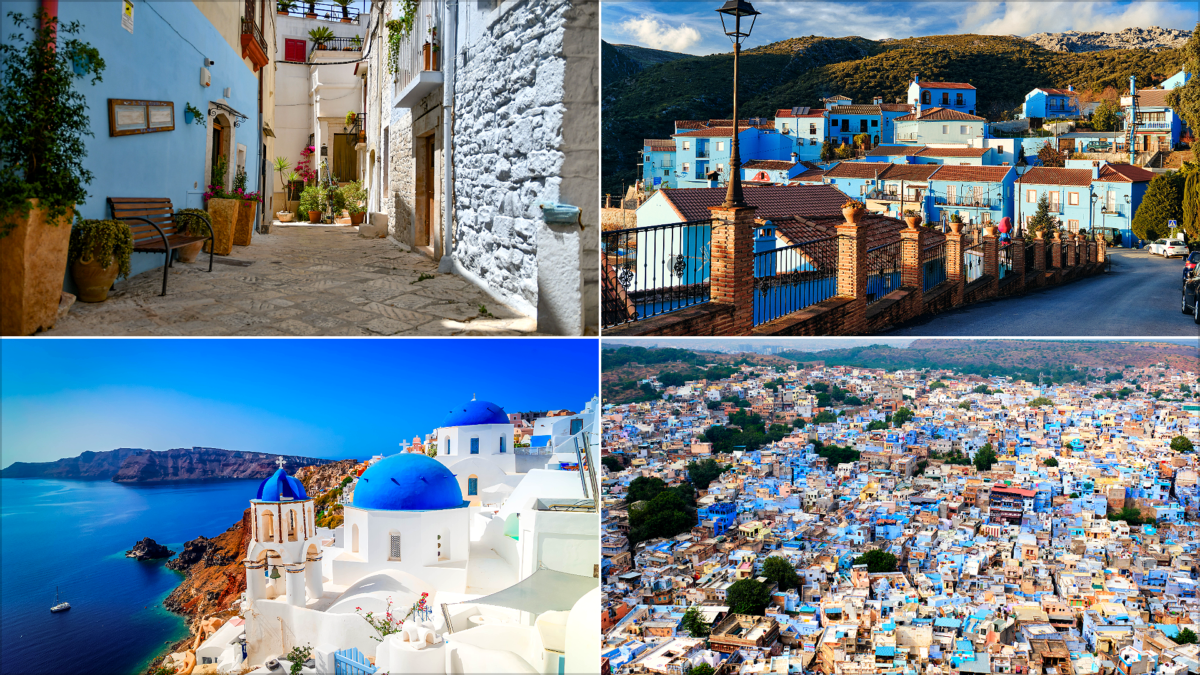
The world’s best-known “blue towns” are easy to spot and oddly hard to forget. A lane turns a corner, a staircase catches the light, and suddenly everything is washed in cobalt, indigo, or powder blue. It feels theatrical, but these places are not theme sets. They are real communities with their own histories, legends, and practical reasons for all that paint.
Some blue towns are famous for religion or local tradition. Others owe their color to climate, public health, or a wildly effective tourism idea. One village in Spain turned blue for a film tie-in and simply never looked back. That is a sentence no urban planner expects to read.
If you are planning a trip around the world’s best-known “blue towns,” these are the places that come up again and again, along with what makes each one special and what to know before you go.
The world’s best-known “blue towns” at a glance
| Place | Country | What makes it blue | Best for |
|---|---|---|---|
| Chefchaouen | Morocco | Blue-painted medina houses and lanes | Walking, photography, mountain setting |
| Jodhpur | India | Blue homes across the old city and beyond | History, forts, urban views |
| Oia | Greece | Blue domes and whitewashed buildings | Island scenery, architecture, sunsets |
| Júzcar | Spain | Village painted blue in 2011 | Road trips in Andalusia, quirky backstory |
| Casamassima | Italy | Historic blue-painted old quarter | Southern Italy detour, local legend |
Chefchaouen, Morocco
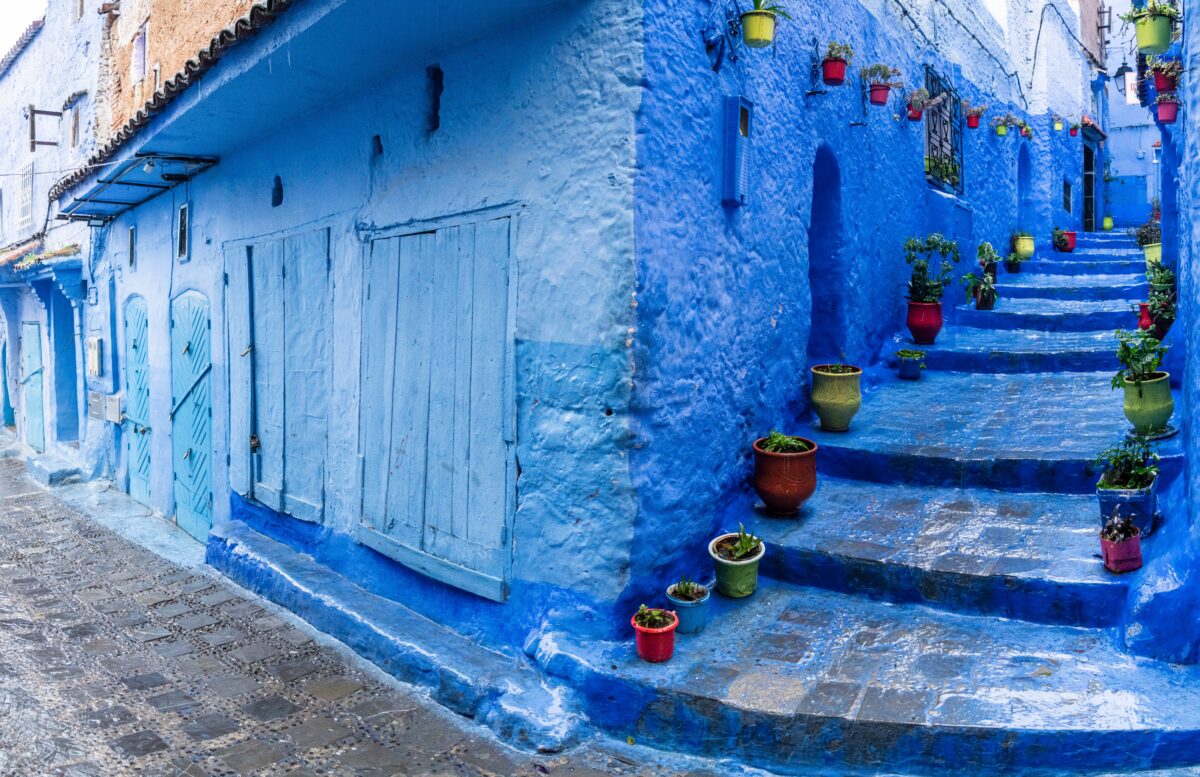
Chefchaouen is probably the first answer many travelers give when asked about the world’s best-known “blue towns.” The city sits in northwestern Morocco in the foothills of the Rif Mountains, and its medina is lined with blue-washed walls, steps, doors, and alleyways that seem designed to make cameras behave like overexcited tourists.
What makes Chefchaouen worth visiting is not just the color. The old medina has a compact layout that is pleasant to explore on foot, and the mountain backdrop gives the city a softer, calmer feel than some of Morocco’s larger urban centers. It is also one of Morocco’s most recognizable small-city stops, with tourism numbers staying strong year after year thanks to its walkable core and easy pairing with the Rif Mountains.
What to see
- Old Medina of Chefchaouen. This is the heart of the city and the main reason people come. The narrow lanes are full of blue facades, small shops, and corners that reward slow wandering. Expect stairs, uneven stone, and the occasional scooter slipping through spaces that do not look scooter-sized.
- Kasbah of Chefchaouen. Located in the old quarter, the kasbah adds a dose of history to the color overload. The gardens offer a shady break from the maze-like streets, and the small ethnographic displays help explain the city beyond its camera-friendly paint job.
- Ras Elma. This waterside area on the edge of town is a useful breather after the medina’s busy lanes. It is especially pleasant in the late afternoon, when locals and visitors both drift here to cool off.
- Akchour Waterfalls and Talassemtane National Park. These nearby outdoor areas are a strong reason to stay longer than a quick photo stop. Hikes range from manageable half-day outings to more demanding walks, so decent shoes are more useful than a purely fashionable packing strategy.
Best time to visit: Spring and autumn are generally the easiest seasons for walking and hiking in the surrounding mountains.
Helpful tip: Chefchaouen works best at a slower pace. Build in time for an overnight stay instead of trying to rush it as a day trip.
Good to know: The medina is compact, but many riads are reached via steps or narrow lanes, so pack light. If Spain is part of the same trip, it is worth checking can you drink the tap water in Spain before you switch countries and habits.
For planning, the Moroccan National Tourist Office page for Chefchaouen is a useful starting point.
Jodhpur, India
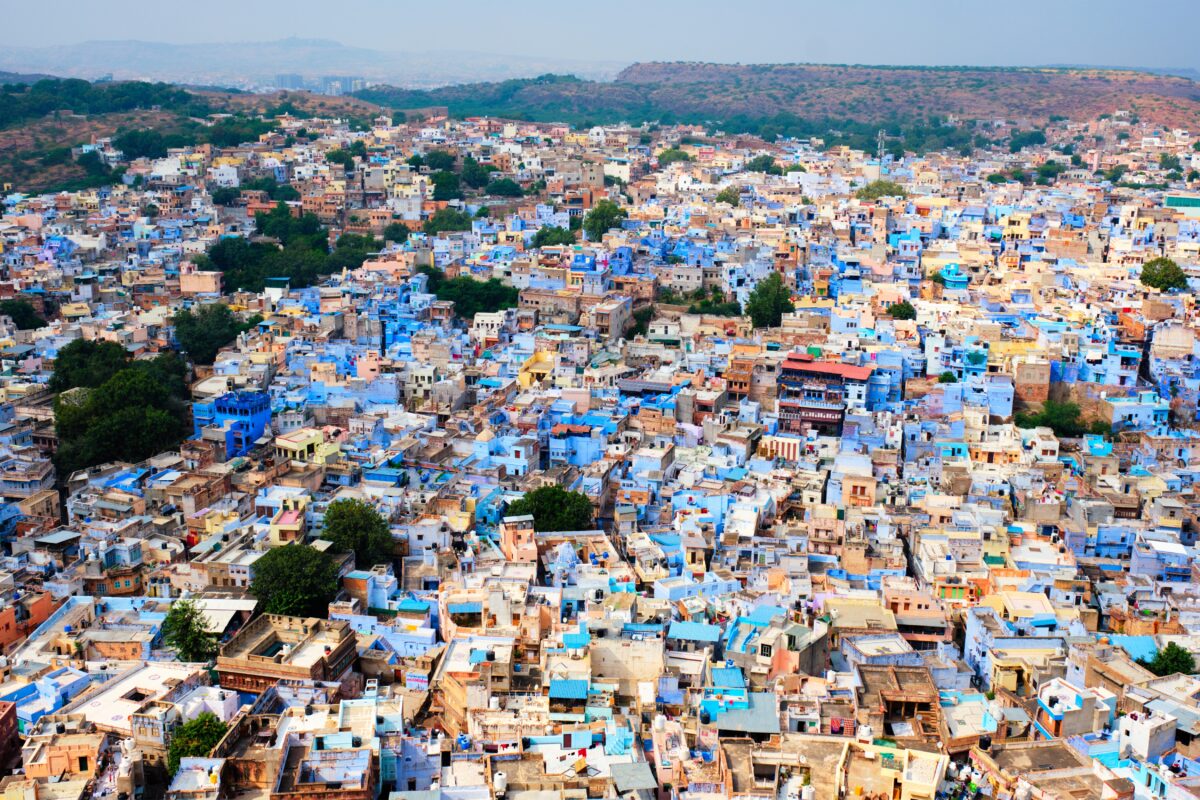
Jodhpur is one of the most distinctive blue cities anywhere, and unlike smaller blue towns, it delivers the effect at a much larger scale. Founded in 1459, it was once the capital of the kingdom of Marwar and grew as an important trading hub on routes linking East and West. It is widely known as the Blue City of India.
The blue houses are concentrated around the old city, but the color extends beyond the historic core. Seen from above, the effect is striking. Seen from street level, it is a blur of painted walls, old neighborhoods, and desert light. The city proper now has a population well above one million, which means this is not some tiny preserved quarter but a living urban sprawl with a very memorable center.
Why Jodhpur is unique
- Multiple origin stories. One theory links the blue paint to Brahmin households. Other explanations say the color helps keep houses cool, discourages termites, or came from available building materials such as limestone and copper sulfate.
- Scale. Jodhpur is not a tiny village wearing one visual gimmick. It is a major city with more than a million residents.
- Historical depth. The blue scenery is part of a larger story about trade, religion, and life in Rajasthan.
Best time to visit: Cooler months are more comfortable, since Jodhpur is known for very high temperatures and regularly pushes past 40C in late spring and early summer.
Helpful tip: The blue effect is most impressive from elevated viewpoints over the old city. If you only see Jodhpur at street level, you may miss its full impact.
Nearby context: Jodhpur works well for travelers interested in Rajasthan’s historic cities, especially those building a wider cultural itinerary rather than a quick stop focused only on photos. Travelers who like dramatic city backdrops and upland scenery often end up enjoying places with a similar visual payoff, even if the setting is completely different, like the destinations in U.S. college towns with mountain backdrops.
India’s official tourism portal also highlights Jodhpur’s blue old city and the local belief that the color once marked Brahmin homes, while also helping with heat.
Oia, Santorini, Greece
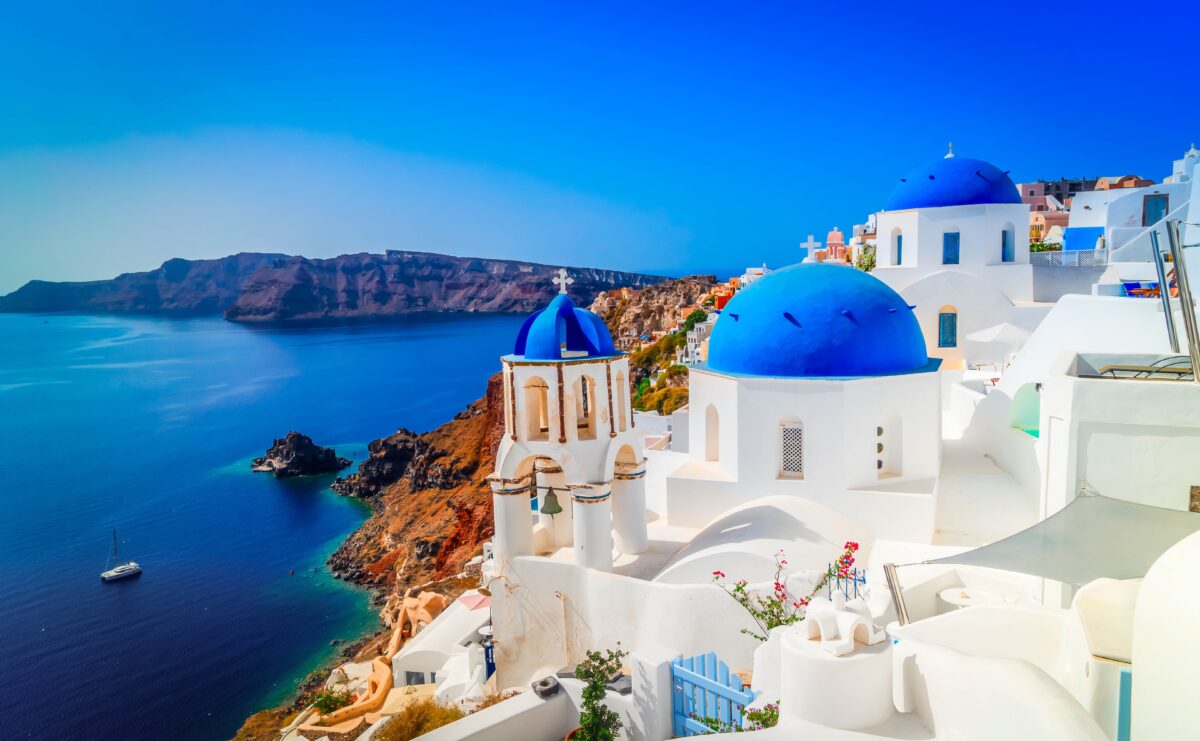
Oia is a different kind of blue town. It is not blue from top to bottom in the same way as Chefchaouen or Jodhpur. Instead, the look comes from the contrast between whitewashed buildings, blue rooftops, and the island’s famous blue-domed churches.
That visual formula made Oia one of the most recognized places in the Greek islands. It is polished, photogenic, and almost too pretty to trust. Yet it really does look like that, especially when the light softens near sunrise or late afternoon. In peak summer, though, the narrow lanes can feel more like a slow-moving queue with excellent sea views.
What stands out in Oia
- Blue-domed churches. Among the best-known are Church of Panagia Platsani and Anastasi Church. These are part of a wider village fabric rather than stand-alone attractions, which is exactly why the setting feels so iconic.
- Aegean setting. The sea is part of the color palette, not just the backdrop. Sunset viewpoints along the caldera are the obvious draw, but sunrise is calmer and far less elbow-heavy.
- Classic Cycladic architecture. The blue-and-white pairing reflects the colors long associated with Greece.
The wider island also has more blue-domed scenes in Imerovigli, where the Church of Panagia Malteza sits against volcanic cliffs, and along the route between Firostefani and Fira. If you are traveling in the shoulder months and want a sense of seasonal conditions before you go, guides like Amalfi Coast weather in November can be surprisingly useful for comparing Mediterranean travel patterns, even though Santorini has its own quirks.
Best time to visit: Shoulder season is often the sweet spot for lighter crowds and comfortable weather.
Helpful tip: Early morning is ideal if you want cleaner photos of the domes without the usual crowd choreography.
Traveler reality check: Oia is beautiful, but it is not exactly a secret whispered between seasoned travelers. Book well ahead if you want a caldera-view stay, and expect premium prices in summer.
Júzcar, Spain
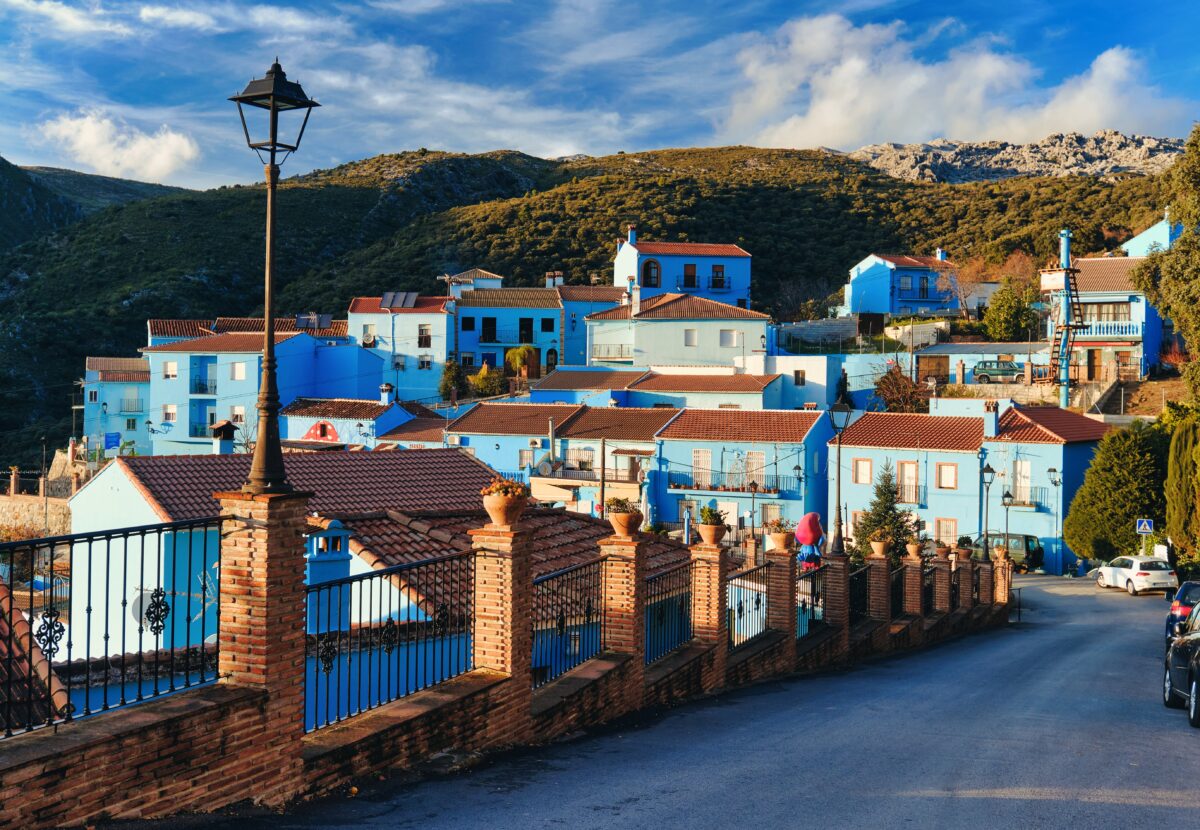
Most Andalusian villages are famous for being white. Júzcar decided to be the exception, and it did so for a very specific reason. The village was painted blue in 2011 to celebrate the premiere of the Smurfs movie. The plan was temporary. Tourism reportedly jumped dramatically, and residents voted to keep the blue look.
That story alone makes Júzcar one of the world’s best-known “blue towns,” even if its route to fame is more pop culture than centuries-old tradition. It is also a handy example of how a single tourism stunt can permanently rewrite a place’s identity.
Why stop in Júzcar
- It is genuinely unusual for the region. In an area known for white villages, an all-blue one stands out immediately.
- The backstory is memorable. Not many destinations can say a movie promotion changed the village identity.
- It pairs well with nearby Andalusian sights. The area is within driving range of Ronda, a major draw in the region.
Best time to visit: Spring and autumn are good for road-tripping through inland Andalusia.
Helpful tip: Treat Júzcar as part of a wider itinerary rather than a long standalone stay. It is best as a character-filled detour.
Nearby experience: Ronda is known for the Puente Nuevo, the dramatic bridge spanning a deep gorge. Pairing the two makes for a strong day of contrasting Andalusian scenery. If you enjoy small places with an outsized identity, the mood is a little similar to small towns in the US you will recognize from movies, just with fewer ranch porches and more blue paint.
Casamassima, Italy
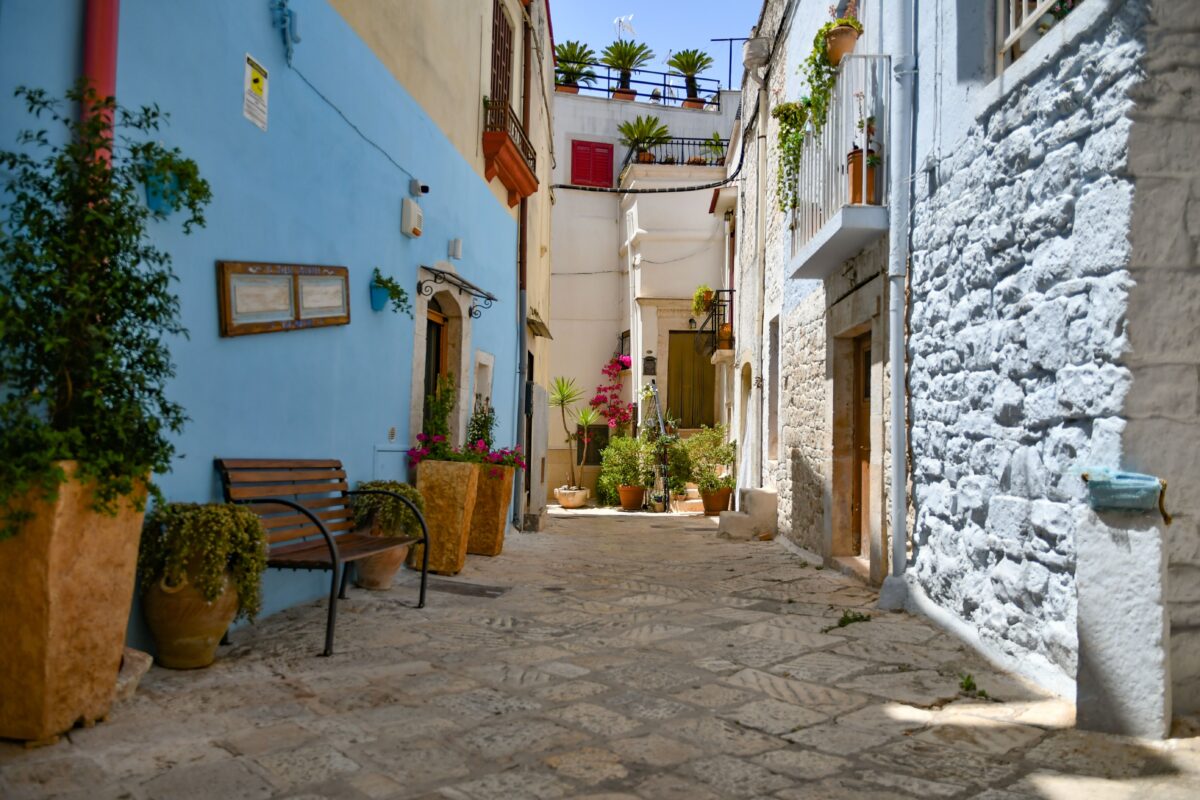
Casamassima, near Bari in southern Italy, is less internationally famous than Chefchaouen or Santorini, but it belongs in any serious conversation about blue towns. Its old quarter is known for blue-painted houses, and local lore adds a layer of mystery.
One story traces the blue color to the 1600s, when Duke Odoardo Vaaz is said to have hoped the paint would protect residents from plague. Another interpretation connects the color to the town’s Jewish community. As with many blue towns, the exact explanation is less tidy than the photos suggest.
Why Casamassima deserves a look
- It feels more local than overtly staged. That appeals to travelers already exploring Puglia.
- The history is debated. For travelers who like layered stories, that is part of the appeal.
- It is easy to combine with Bari. That makes it a manageable detour rather than a logistical headache.
Best time to visit: Spring and early autumn are comfortable for walking southern Italian towns.
Helpful tip: Go in with realistic expectations. Casamassima is more about atmosphere and context than a huge checklist of major sights.
Why linger a little: The old quarter is often called the paese azzurro, or blue town, and it works best when you give it time for a slow walk, a coffee, and a bit of people-watching rather than a five-minute photo lap.
How to choose between the world’s best-known “blue towns”
If you are trying to pick just one, it helps to match the town to your travel style.
- Choose Chefchaouen for the strongest all-over blue effect and easy medina wandering.
- Choose Jodhpur for a bigger city with deeper historical weight and dramatic elevated views.
- Choose Oia for island scenery, blue domes, and classic Greek postcard architecture.
- Choose Júzcar for a quirky Andalusian road-trip stop with a modern tourism backstory.
- Choose Casamassima for a quieter southern Italy detour with local legend attached.
Practical tips for visiting blue towns
- Stay at least one night where possible. Blue towns can feel overcrowded in the middle of the day and much calmer in the morning or evening.
- Bring a daypack, not bulky luggage. Many of these places have steep lanes, steps, or uneven surfaces that are annoying with large suitcases.
No products found.
- Do not reduce the trip to photos. The best visits include nearby hikes, historic sites, or local food stops, not just a fast walk through the bluest alley.
- Respect residential areas. These places may be famous online, but many of the most photogenic streets are still lived in.
- Check vehicle access before arrival. Historic centers in Morocco, Spain, Greece, and Italy often mean limited parking or a final walk with bags.
- Start early for the best experience. Blue walls look great in soft light, and you will usually beat both the heat and the selfie-stick traffic.
Why blue towns stay popular
The appeal is obvious, but it is not only visual. The world’s best-known “blue towns” offer a rare mix of instant recognition and local specificity. They are easy to understand at a glance and still interesting once you look closer.
Blue can signal religion, status, climate, health fears, civic identity, or a very successful tourism gamble. That is what keeps these places from feeling interchangeable. The color draws people in. The context gives the trip staying power.
If you visit one, take the photos. Of course you will. Then put the camera down for a bit and notice the rest. The painted walls are only the beginning.
