
You know the sort of place name that makes you look twice at the road sign, then laugh a little, then wonder who on earth thought that was a good idea. I like towns like that. They feel less polished, more human.
And the nice thing is, the name is usually only the start of it. Under the joke, or the odd bit of phrasing, there’s often a proper local story involving a post office, a mining camp, a radio host, or somebody who simply had a better line than everyone else in the room.
So here are six places that prove there’s nothing boring about these 6 U.S. small town names. If you do find yourself passing through, don’t rush. Towns with names this memorable tend to reward a slower stop, a bit like these oddly named U.S. landscapes that are just as memorable in person.
Boring, Oregon, is not trying to entertain you with the name
Boring sits in Clackamas County, about 12 miles southeast of downtown Portland, in the foothills of the Cascade Range. The name sounds like a prank, but it comes from a person, William H. Boring, a Union veteran and early resident whose family helped shape the community in the late 1800s.
That small fact changes the whole mood of the place. It’s not a town calling itself dull. It’s a family name that happened to land badly, at least for anyone reading a map too quickly.
Boring has leaned into the joke in a gentle way. August 9 is known as Boring and Dull Day, a nod to the town’s partnership with Dull in Scotland. If you happen to be nearby then, you can expect the kind of cheerful silliness that only really works in small places, with performances that have included bagpipes, kilted drummers, and barbershop singers.
The area itself is a better fit for a slow afternoon than a checklist. The Clackamas River is the sort of name to remember if you want to spend time outside, and the farms around Boring are part of the appeal too, especially for seasonal activities and animal encounters. The Springwater Corridor also runs through town, which makes it an easy place for a bike ride or a quiet wander if you want to stretch the drive.

We earn a commission if you buy through this link, at no extra cost to you.
Truth or Consequences, New Mexico, really did change its name for a radio show
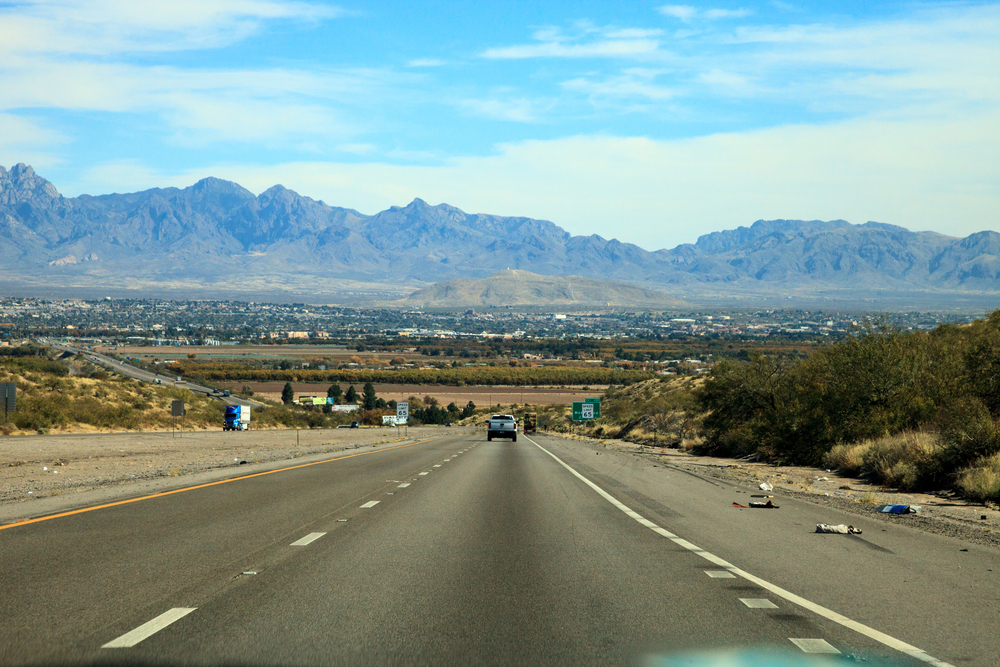
This is the one that almost sounds made up, but it isn’t. The town was originally called Hot Springs. In 1950, radio host Ralph Edwards marked the 10th anniversary of his game show, Truth or Consequences, by offering to broadcast from a town willing to rename itself after the program. Hot Springs said yes.
That is still such a wonderfully unhurried, slightly offbeat bit of American town history. No grand rebrand strategy, just a radio stunt that stuck.
The old name mattered too, because the place was known for its thermal waters. Even though Hot Springs is no longer the official name, those waters are still part of the town’s draw, with more than a dozen bathhouses and hot spring hotels in and around the historic downtown. So if you stop here, the smart move is not to overcomplicate it. Let the name be funny, then do the obvious thing and sink into the hot springs culture that was there long before the quiz show arrived.
This is one of those towns where the strange name gets the attention, but the older identity gives it depth. That combination tends to make for a better stop than the places that are famous only for the sign. If you like places where history lingers in a slightly odd way, it has some of the same appeal as U.S. cities that used to go by very different names.
Why, Arizona, got its name from a road junction
Why is a tiny community in southern Arizona, and its name came from the shape of a nearby intersection. State Routes 85 and 86 once met in a Y shape, which locals wanted reflected in the town name.
There was a snag. Arizona place-naming rules required at least three letters, so a single Y would not do. Why did.
It’s the sort of bureaucratic accident that leaves behind a better story than anything a branding consultant could invent. And the beauty of a place like Why is that the name does half the work before you even arrive. It gives the landscape a little extra character.
If you’re drawn to desert drives, this is exactly the kind of stop that suits a loose plan. Pull over, take the photo, stretch your legs, and enjoy the fact that an intersection shape became a lasting town identity. It also sits on the road toward Organ Pipe Cactus National Monument, so it works well as one of those small pauses that quietly improve a long day in the car.
What Cheer, Iowa, sounds like a greeting from another century
What Cheer was first called Petersburg, which is about as plain as it gets. When the post office rejected that name, the town needed another one, and What Cheer won out in 1879.
The likely origin is an old English greeting, “What cheer with you?” Another local theory ties it to a miner’s excited shout after finding coal. Either version works nicely, and both feel rooted in the town’s past as a coal community.
I like this one because it sounds unexpectedly warm. You can imagine it painted on a storefront or called across a street. It doesn’t feel ironic. It feels old-fashioned in a good way.
What Cheer is also a reminder that unusual names often survive because they are useful. You don’t forget them. A place trying to distinguish itself from every other Petersburg on the map did exactly that. The town still keeps a bit of that local energy going with annual events like the What Cheer Flea Market, which draws a big crowd for a place of this size.
Rough and Ready, California, once tried being its own republic
Rough and Ready started as a Gold Rush town in 1849 and was named after President Zachary Taylor, whose nickname was “Rough and Ready.” So far, so straightforward.
Then the story takes a turn. In 1850, frustrated by taxes on gold mining, the town voted to secede from the Union and called itself the Great Republic of Rough and Ready. That lasted only about three months. The practical problem, according to local lore, was that nearby towns did not want to sell liquor to the new “foreigners.”
That is such a specific small-town problem, and honestly a better historical detail than most monuments can offer.
Rough and Ready is a good example of how a name can hold two histories at once. There’s the official origin tied to Taylor, and then there’s the town’s own rebellious little episode that gave the name even more personality. These days the town still marks that past with an annual Secession Day celebration, which feels exactly right for a place that once briefly decided it was done with the Union.
Experiment, Georgia, is exactly what it sounds like
Experiment got its name from the Georgia Experiment Station, a state agricultural project established in 1888 in Spalding County. The work there focused on practical farm research, including crop varieties, livestock feeding, pest control, and methods suited to Georgia’s climate.
The University of Georgia now runs the station, and the name remains one of the plainest and strangest on the map. No romance to it at all, really. Just a place called Experiment because that is what was happening there.
And yet that directness is part of the charm. Not every odd town name comes from folklore or a punchline. Some come from work, science, and the everyday business of trying things out and seeing what grows. The wider Griffin area is still closely tied to agricultural research, so the name has not drifted away from its roots.

We earn a commission if you buy through this link, at no extra cost to you.
Why names like these make a trip better
A strange town name changes the pace of a drive. It gives you a reason to pause when you might have kept going. Sometimes that pause is all you need.
These places also carry a very American kind of naming history. Some were shaped by post office rules. Some came from local boosters. One came from a game show. One came from a man’s surname. None of that feels polished, which is exactly why it sticks.
If you like the slower side of travel, town names are a decent guide. They often point toward places that have not sanded off their local quirks. If that’s your thing, you’d probably also enjoy these U.S. historic trails, where the story is half the reason to go.
- Boring, Oregon gives you a family name that turned into a joke and then into a celebration with Dull, Scotland.
- Truth or Consequences, New Mexico gives you radio history layered over a long-standing hot springs identity.
- Why, Arizona gives you a naming rule and a Y-shaped junction turned into a community name.
- What Cheer, Iowa gives you either an old greeting or a miner’s cry, both tied to a coal-town past.
- Rough and Ready, California gives you Gold Rush history and a brief breakaway republic.
- Experiment, Georgia gives you an agricultural research station plain and simple.
If you ever spot one on a road sign, stop
You don’t need a big plan for any of these places. That’s part of the appeal. Towns with unusual names are often best approached with a bit of spare time and low expectations.
Take the photo of the sign if you want. Then hang around long enough to find out what the joke is covering up. In Boring, it’s a real person. In Truth or Consequences, it’s a radio-era publicity move that outlived the broadcast. In Rough and Ready, it’s a tiny brush with independence and a shortage of willing bartenders.
That’s usually how these places work. The name gets you to slow down. The story gives you a reason to stay a little longer.
