
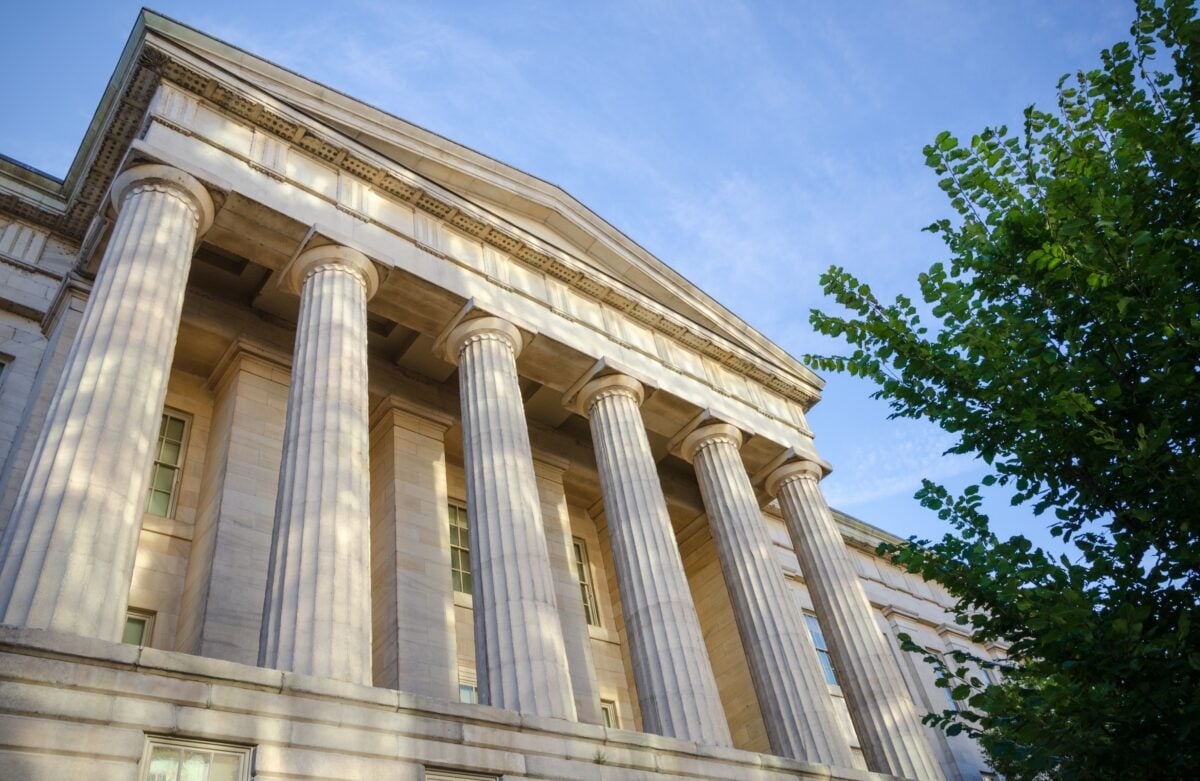
Big history museums do something smaller institutions often can’t. They let you see a civilization at scale. Not a single masterpiece in isolation, but whole worlds assembled room by room, object by object, argument by argument.
That scale can be thrilling, and a little ridiculous. You arrive planning a neat two-hour visit and leave realizing you’ve just spent half the day with the Aztecs, the British Empire, early America, or all three.
If your goal is to step back in time at the world’s largest history museums, a short list rises quickly to the top. Some are conventional museum buildings packed with galleries. Others are living history sites spread across acres, where the past is interpreted through streets, workshops, and working trades rather than display cases.
What counts as a “largest” history museum?
Before naming names, it helps to clear up a common point of confusion. “Largest” can mean very different things in the museum world.
Sometimes it means gallery space, the square footage devoted to collections and exhibitions. Sometimes it means campus size, measured in acres. And sometimes it means an entire museum system rather than a single building. That’s why the Smithsonian, Colonial Williamsburg, and the British Museum can all show up in the same conversation without anyone exactly being wrong.
So instead of pretending there’s one tidy champion, it’s more useful to think in categories. Here are four places that genuinely belong in the discussion, and each offers a different way to experience the past.
National Museum of Anthropology, Mexico City
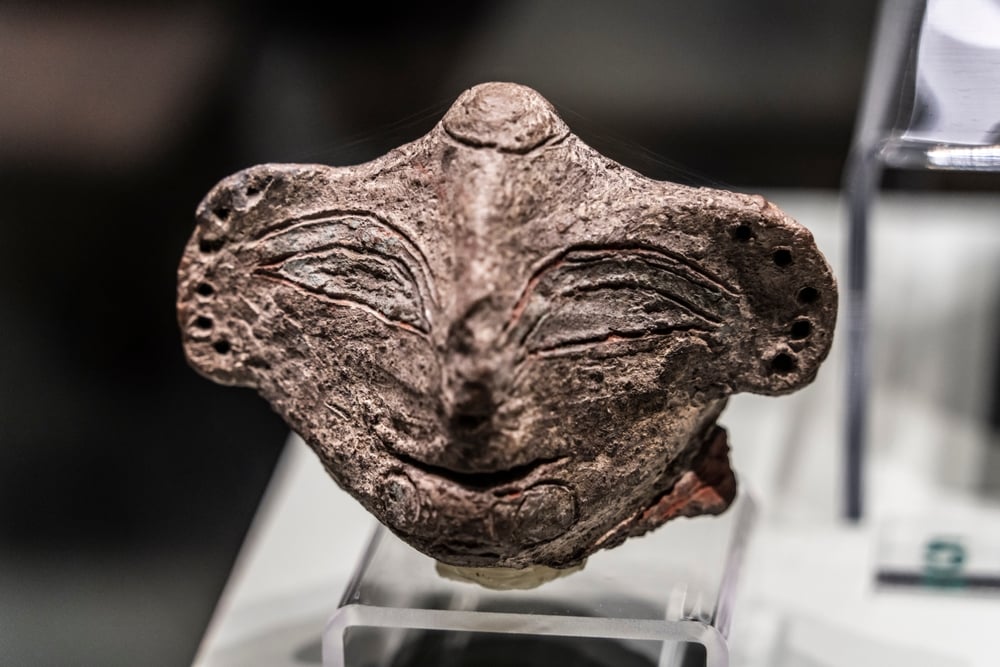
If you want a museum that explains a nation through archaeology and anthropology, the National Museum of Anthropology in Mexico City is hard to beat. Known in Spanish as the Museo Nacional de Antropología, it sits inside Bosque de Chapultepec, a setting that matters more than it first appears. Chapultepec is not just a convenient green space. It is one of the defining public landscapes of the city, and the museum’s placement there gives it room to breathe.
The institution was founded in 1825, took its current name in 1939, and moved into its present building in 1964. That building is famous in its own right, especially for the vast courtyard structure known as El Paraguas, or “The Umbrella,” a dramatic concrete canopy with water falling from its center. Even people who arrive for the artifacts tend to remember the architecture.
In practical terms, this is a very large museum. The site covers nearly 20 acres, with more than 80,000 square feet of interior space and 23 exhibition halls. Its collection runs to roughly 600,000 objects. You are not “doing” this place in a quick stroll. You’re triaging, choosing what kind of deep dive you want.
The headline objects are famous for good reason. The Aztec Sun Stone, weighing 24 tons, is the kind of object that resets your sense of scale. The museum also holds major material from the Olmec world and a reconstruction of the tomb of the Maya ruler K’inich Janaab Pakal I, who reigned from 615 to 683 CE. If you’re flying in specifically for this kind of museum-heavy trip, a few long haul flight comfort hacks are not a luxury, they’re basic self-defense.
My practical advice here is simple. Don’t try to conquer all 23 halls on one visit unless museum fatigue is your hobby. Pick a historical thread, Aztec, Maya, or broader Indigenous Mexico, and follow that. You’ll remember more, and your feet will complain less.

Majosta
Writing Journal: Lined Paper Notebook for Creative Writers or Personal Use (A large SOFTBACK…
We earn a commission if you buy through this link, at no extra cost to you.
The British Museum, London
The British Museum belongs on any list of giant history museums because its scale is both physical and civilizational. It covers about 990,000 square feet in all, with roughly 807,000 square feet open to the public, and contains more than 60 galleries. That is not a museum visit so much as an extended negotiation with your own attention span.
What makes it especially important is range. This is not a museum about one nation alone. It is a museum whose collections span continents, empires, ancient religions, and long arguments about collecting, ownership, and interpretation. You can move from ancient Egypt to Greece to Mesopotamia without ever needing your coat.
That breadth is the reason to go, and also the reason to go carefully. A museum this large can flatten history into spectacle if you rush it. Better to enter with a plan. Decide whether you want to spend your time on the ancient Mediterranean, the civilizations of the Near East, or another specific cluster of galleries.
London rewards that kind of focus anyway. The British Museum sits in Bloomsbury, about a mile north of the River Thames, so it’s easy to build a day around the neighborhood rather than treating the museum like a box to tick. If you’re stitching together a broader heritage trip, it pairs nicely with ideas from these European castles that look like they belong in a storybook, provided your feet are still on speaking terms with you.
Smithsonian museums, Washington, D.C.
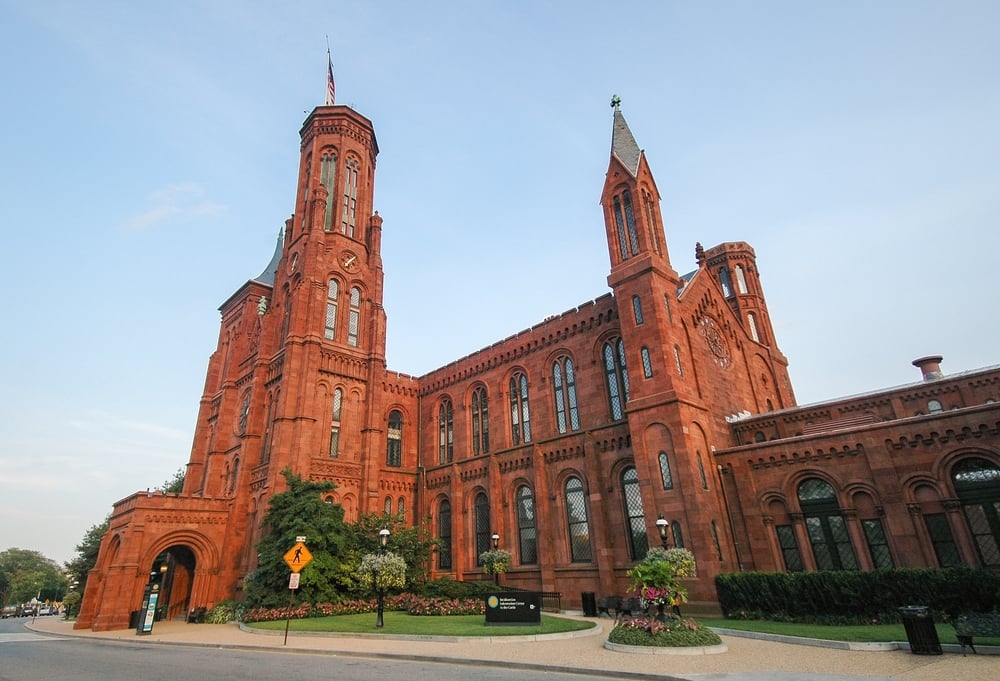
The Smithsonian complicates the question in the best possible way, because it is not just one museum. It is a museum system, and a very large one. Across 21 museums, the National Zoo, and multiple research centers, it functions on a scale no single history museum can really match.
For anyone trying to step back in time at the world’s largest history museums, that system matters because it lets you approach history through different lenses. The National Museum of American History is the obvious anchor if your interest is the American past. The National Portrait Gallery adds a more personal route into political and cultural history. The National Air and Space Museum is not a history museum in the narrowest sense, but it absolutely belongs in conversations about how nations remember invention, war, exploration, and identity.
There’s also a practical advantage here that is almost suspiciously generous. Admission is free at Smithsonian museums, with the exception of Cooper Hewitt in New York. For travelers, that changes the whole rhythm of a visit. You can split your time across multiple museums without feeling the pressure to “get your money’s worth,” which is a phrase that has ruined many perfectly good museum days.
The National Museum of American History is open daily except December 25, usually from 10:00 a.m. to 5:30 p.m. Admission is free, and timed entry is generally not required for regular visits. If you are planning around the National Mall, the Smithsonian system also gives practical transit guidance. Federal Triangle serves museums on the north side of the Mall, while L’Enfant Plaza and Smithsonian stops are useful for the south side. If American museums are your lane, you might also want a look at the most visited museum in America, because scale and popularity do not always point to the same place.
For visitors who want to stay close to the museum core, the Mall is one of the few places where a hotel location can genuinely save both time and patience.
Colonial Williamsburg, Virginia
Here’s the category shift that matters. Colonial Williamsburg is usually described not as the largest conventional history museum, but as the world’s largest living history museum. That distinction is worth keeping intact because the experience is completely different.
Instead of moving through gallery halls, you move through 301 acres of restored and reconstructed 18th-century streetscapes. The subject is colonial America and the Revolutionary era, but the method is immersion. Trade shops, demonstrations, historic buildings, and interpreters all work together to make daily life legible. That sounds lofty. In practice, it means you can watch blacksmiths, carpenters, and wigmakers at work and understand that politics was only one part of the colonial story. Labor, craft, class, and supply chains were there too, even if no one called them supply chains at the time.
The best reason to include Colonial Williamsburg on a list like this is that size here changes the meaning of the visit. At 301 acres, it feels less like entering a museum building and more like entering a historical environment. Streets, distances, and working spaces do part of the interpretive work. You stop reading the past and start navigating it.
If you travel with children, this is often the point where history clicks. If you travel without them, it still works. Adults tend to appreciate just how much infrastructure lies beneath a neat textbook phrase like “colonial life.” Families planning a multigenerational trip will probably get useful mileage from these simple big family holiday tips, because places this large are fun, but they do expose every weak point in a plan.
Plimoth Patuxet Museums, Massachusetts
Plimoth Patuxet Museums is smaller than Colonial Williamsburg, but it deserves a place in this conversation because it shows how a living history museum can use space and interpretation with much more precision than a casual visitor might expect.
The campus spans more than 30 acres and includes four distinct settings tied to early 17th-century New England, about seven years after the arrival of the Pilgrims. The main site presents both an English village and a Native community setting. That dual structure is the key point. It reminds visitors that the history of Plymouth was never a single story told from one side.
Two additional sites sit about 2.5 miles from the main campus, the Plimoth Grist Mill and Mayflower II in downtown Plymouth. That means you should think of a visit as a small network rather than one single stop.
If you like museum visits that involve reading labels in peace, this may not be your place. If you like interpretation that asks you to think about encounter, conflict, and daily life in layered ways, it’s unusually strong.
How to plan a visit without hitting the history wall
Large museums are glorious, but they are also where good intentions go to die. A little planning helps.
- Choose one historical lane. At the National Museum of Anthropology, that might mean focusing on Mexica and Maya collections. At the British Museum, it might be Egypt or the ancient Near East.
- Respect the site’s format. A living history museum like Colonial Williamsburg rewards slower movement and conversation. A gallery museum rewards targeted route planning.
- Use the practical freebies. Free Smithsonian admission makes it easy to split one big day into several shorter visits.
- Wear shoes you trust. This is not glamorous advice, but giant museums are where optimistic footwear goes to fail.
No products found.
So which one should you prioritize?
If you want the pre-Columbian and Indigenous history of Mexico told at monumental scale, start with the National Museum of Anthropology.
If you want a vast, cross-civilizational collection in one of the world’s classic museum cities, the British Museum is the obvious choice.
If you want flexibility, free admission, and multiple entry points into American history, the Smithsonian system is the strongest practical option.
If you want to feel the spatial reality of the past rather than view it through cases and labels, Colonial Williamsburg is in a category of its own.
And if what interests you is the complexity of early colonial New England, especially where Indigenous and English histories meet, Plimoth Patuxet Museums offers a more focused but still substantial experience.
Final thought
The best large history museums do not merely store old things. They argue with you a little. They force comparisons. They remind you that every empire, kingdom, republic, and settlement thought it was living in the present too, which is an unnerving thought if you sit with it long enough.
That’s why people keep seeking out these giant institutions. Not because bigger is always better, but because scale can make history feel less remote. You stop seeing the past as a chapter summary and start seeing it as a world dense with objects, labor, belief, and contradiction. That’s a much better way to travel through time.