
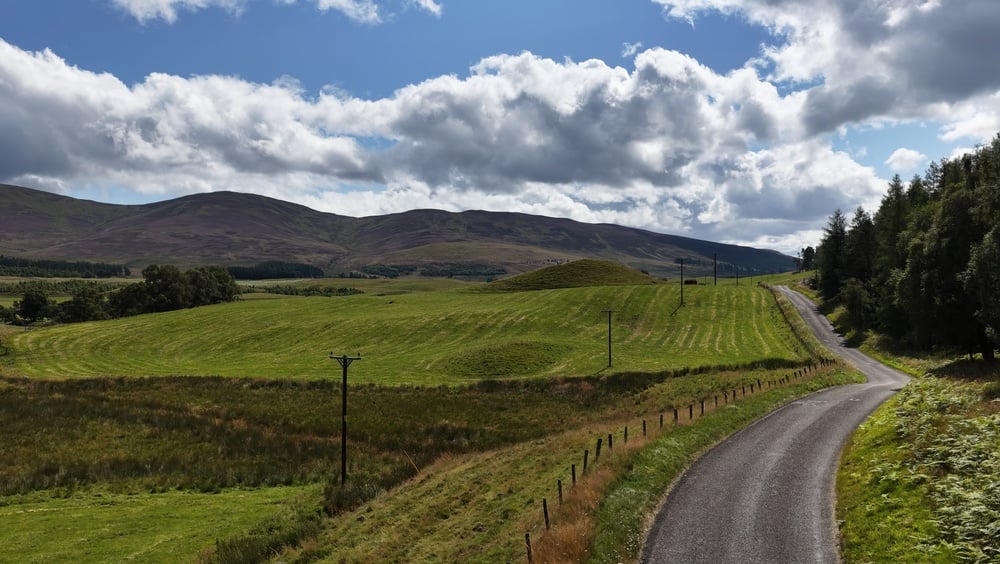
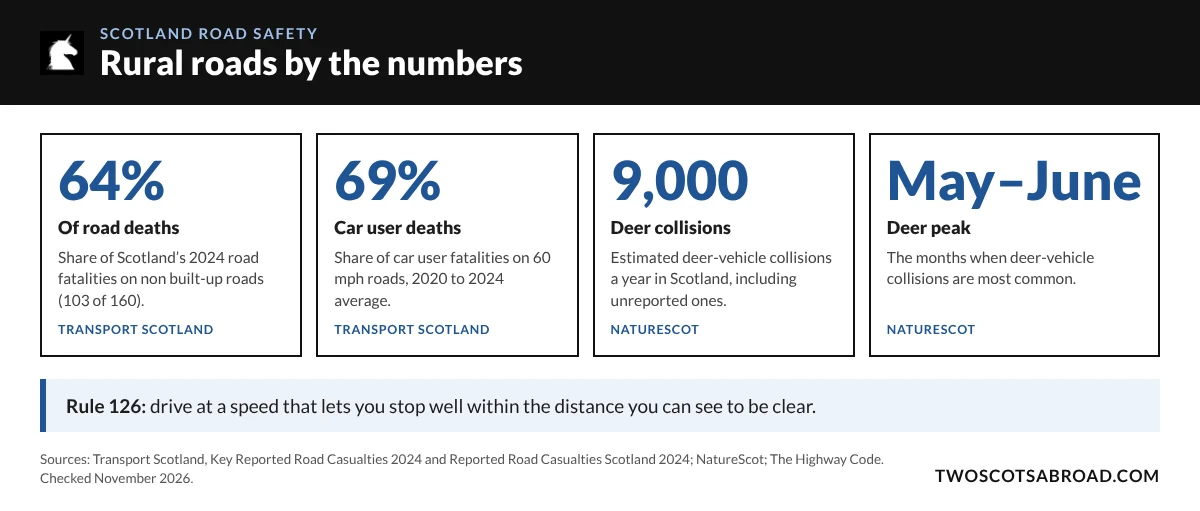
Driving Scotland’s single-track roads for the first time can feel daunting when a campervan appears round a blind bend and there’s nowhere obvious to go. The roads ask for care: in 2024, almost two thirds of Scotland’s road deaths happened on non built-up roads, according to Transport Scotland.
Below you’ll find how passing places work, how to set your speed, what to plan before a remote drive and the etiquette that keeps everyone moving.
How Do Single-Track Roads Work?
Single-track roads carry traffic in both directions but are only wide enough for one vehicle at a time. You’ll meet them all over the Highlands and islands, including if you’re travelling along the North Coast 500 or heading out to the Isle of Skye, and they take you through some of the best scenery in the country.
Passing places, usually marked with a white diamond or square sign, let vehicles get by each other. Once you understand how they work, the rules are simple. Traffic Scotland’s advice is to pull into a passing place on your left when you meet an oncoming vehicle, or wait opposite one on your right so the other driver can pull in. Never cross the road to use a passing place on your right.
| Situation | What to do |
|---|---|
| Oncoming car and a passing place on your left | Pull into it and wait |
| Oncoming car and a passing place on your right | Stop opposite it so the other driver can pull in |
| You’ve just passed the last passing place | Reverse carefully back to it if the other driver can’t reach one |
| A faster vehicle behind you | Pull into the next passing place on your left and let it by |
| You want to stop for a photo | Find a proper lay-by or car park, never a passing place |

That last one matters. Passing places aren’t parking spaces, and stopping in one to admire the view blocks other drivers and can back up traffic in both directions.
How Fast Should You Drive on Single-Track Roads?
Slower than you think. The national speed limit often applies, but it’s an upper limit, and on many stretches you’ll want to drive well below it. Rule 126 of the Highway Code says to drive at a speed that lets you stop well within the distance you can see to be clear, and on a twisting road that can be very short.
Slow down before blind corners and crests, and watch for hazards that come with the landscape:
| Hazard | When to expect it | What to do |
|---|---|---|
| Sheep and cattle | Unfenced roads, especially near farms | Slow right down and let them move off the road |
| Deer | Dawn and dusk, peaking in May and June | Brake in a straight line and avoid swerving sharply |
| Standing water and loose stones | After heavy rain | Ease off and keep to the firmer centre of the road |
| Soft verges | When pulling over to let traffic pass | Stay on the tarmac or in the passing place |
| Blind bends and crests | Throughout the Highlands | Slow before you reach them so you can stop in the space you can see |
Deer are a real risk. NatureScot estimates that deer-vehicle collisions could reach 9,000 a year in Scotland, with the highest risk in May and June. If a deer steps out, Traffic Scotland advises against swerving sharply, as that can make a collision worse.
The wider numbers back this up. Transport Scotland found that over 2020 to 2024, 69% of car user deaths happened on roads with a 60 mph limit.
What Should You Plan Before a Remote Highland Drive?
A journey that looks short on the map can take far longer once you add narrow roads, oncoming traffic and slow vehicles. Before you set off:
- Check your route and allow extra time between stops.
- Download offline maps, as mobile signal can disappear in remote areas.
- Fill up with fuel before isolated stretches, where petrol stations can be far apart and close early.
- Check the weather, especially between November and March. Our guide to where and when it snows in Scotland shows which routes are most affected.
It’s also worth taking a minute to check your car insurance and confirm your policy covers the trip you’re planning, particularly if you’re adding other drivers or taking your own car further than usual. If you’re hiring, read the rental agreement for the excess and any restrictions on single-track roads or islands.
For help mapping out the whole trip, our Scotland road trip planner breaks routes into realistic daily legs.
How Long Will Your Drive Really Take?
Use the estimator below to get a rough driving time for a leg with single-track sections, based on your vehicle and the time of year.
 Single-Track Drive Time Estimator
Map apps can underestimate Highland driving times. Enter the leg you are planning to see a more realistic estimate, plus a few things to check before you set off.
Rough driving time
Before you set off
How Do You Share Single-Track Roads Considerately?
For locals, farmers and delivery drivers, these roads are part of everyday life. A bit of give and take keeps everyone moving:
- Pull into a passing place on your left to let faster traffic overtake, even if nobody is coming the other way.
- Give cyclists and walkers plenty of room, and only pass when you can see well ahead.
- Thank drivers who wait for you with a wave or a lifted finger from the steering wheel.
- If you’re driving a campervan or motorhome, check your mirrors often for a queue building behind you.
Popular spots get busy in summer. If you’re heading for somewhere like the Fairy Pools on Skye, arrive early so you’re not hunting for parking on a narrow road.
Frequently Asked Questions About Driving Single-Track Roads in Scotland
Who Has Right of Way on a Single-Track Road?
Neither driver has automatic right of way. Whoever is nearest a passing place on their left pulls in, or waits opposite one on their right. The Highway Code also asks drivers to give way to vehicles coming uphill whenever they can.
Can You Park in a Passing Place?
No. Passing places are for letting vehicles pass, and parking in one blocks the road for everyone. Use a lay-by or car park instead.
Is It Safe to Drive Single-Track Roads at Night?
It can be, but it’s harder. Visibility drops, deer are more active around dusk and passing places are tougher to spot, so plan to finish remote drives in daylight where you can.
Enjoy the Slow Road
Single-track roads reward patience. Take your time, use passing places properly, plan your fuel and signal and give a wave to the drivers who wait for you. Do that, and some of Scotland’s most memorable views are just round the next bend.