
Scottish last names that start with L include some of the best-known surnames in Scotland, from Logan and Leslie to strongly Gaelic names such as Lamont, MacLachlan and MacLaine. Some come from places, some from personal names, and some sit inside the old clan system.
This guide is part of our Scottish Names collection. Browse our complete Scottish Names directory for A–Z first names, surnames, Gaelic names, meanings, and themed collections.
If you are building a family tree, choosing a name for a character, or just trying to work out whether a surname is actually Scottish, the trick is to look at origin, spelling variants and region. Scottish records include many L surnames, but not every name found in Scotland began there.
This guide pulls apart the most useful Scottish L surnames, explains what they usually mean, gives a plain-English pronunciation where that helps, and flags famous bearers you may already know. If you also enjoy the wider cultural side of naming, plenty of these surnames overlap with things associated with Scotland far beyond family records.
Scottish Names Beginning With
Choose which type of Scottish name you would like to explore.
How Scottish Surnames Work
Scottish surnames usually fall into a few broad groups. Some are patronymic, meaning they come from a father or ancestor’s personal name. That is where many Mac names sit, with Mac meaning “son of”. Others are territorial or locational, tied to an estate, river, district or landscape feature. A third group comes from occupations or descriptive nicknames.
Spelling is where things get lively. A surname may appear in several forms across parish registers, census returns and court records. That is especially common with Gaelic names translated into English spelling. You might see Lachlan, Laughlan and MacLachlan in related lines, or Laing attached to more than one family origin.
That is why surname lists found in Scottish records can include names that are present in Scotland without being Scottish in origin. Records matter, but origin still matters too.
Scottish Last Names That Start With L You Will See Most Often
These are some of the L surnames most people come across first when reading Scottish history, clan material or family records.
Laing
Laing is a long-established Scottish surname, especially in the east and north-east. It appears in more than one family line and is also associated with different clans in historical surname lists, so it is not a one-origin name with a neat single story.
Pronunciation is usually “layng”, rhyming with “saying” without the first syllable. If you are tracing Laing ancestors, expect spelling stability more than with many Gaelic surnames, though context still matters.
A well-known bearer is R. D. Laing, the Scottish psychiatrist and writer.
Lamont
Lamont is one of the classic west Highland surnames and a recognised clan name. The name is generally linked to Norse and Gaelic influence in Argyll, which is not unusual in western Scotland.
Pronunciation is straightforward at “la-MONT”. Variants recorded in Scottish surname collections include forms such as Lamon, Lamond and Lamondson, which is helpful if a paper trail suddenly appears to go off-piste.
The clan connection makes Lamont especially useful for people researching Highland ancestry, though clan surname lists should be treated as a starting point, not a verdict.
Lennox
Lennox is a territorial Scottish surname linked to the old district of the Lennox around the River Leven and Loch Lomond area. It is one of those surnames that sounds noble because, well, it has been tied to aristocratic history for a long time.
Pronunciation is “LEN-uks”. You will also see it used as a given name, especially outside Scotland.
A famous bearer is Annie Lennox, whose surname preserves that Scottish place-name link in plain sight.
Leslie
Leslie is another major Scottish surname with place-name roots, associated with Aberdeenshire and later with a notable noble family. It has also travelled widely as a first name.
Pronunciation is “LEZ-lee”. Variants such as Lesley may appear, though Leslie is the better-known surname form in Scottish history.
Among famous bearers, Rose Leslie is an easy modern example for many readers.
Logan
Logan is a familiar Scottish surname and place name, often linked to the idea of a small hollow. It is widespread enough that you should not assume all Logans come from one family line.
Pronunciation is simply “LOH-gun”. Like Lennox and Leslie, it has crossed comfortably into first-name territory.
The best-known modern bearer is probably Kenny Logan, the former Scottish rugby international. If your interest is naming rather than genealogy, Logan is one of the most recognisable Scottish surname-to-first-name crossovers.
Lyle
Lyle is found in Scotland and also has roots beyond Scotland, which makes it a reminder that surnames do not obey modern borders particularly well. It is commonly explained as a name for someone associated with an island.
Pronunciation is “lyle”, one syllable. Short, clean and easy to carry, which probably helps explain why it has stuck around.
Gaelic Scottish Last Names That Start With L
If you want the surnames that feel most immediately Highland and Gaelic, this is the section to read first. These names often appear with several anglicised spellings, and that can make records both fascinating and mildly maddening.
MacLachlan
MacLachlan is one of the most recognisable Gaelic L surnames in Scotland. The Gaelic form is MacLachlainn, usually understood as “son of Lachlann”. The personal name Lachlann is tied to the idea of Scandinavia or the land of the lochs in older Gaelic usage, though exact historical shades can vary by source and period.
Pronunciation in English is often given as “mək-LOKH-lən” or “mack-LAKH-lan”, depending on family and region. The guttural sound in the middle is the bit that causes trouble for non-Scots. If you cannot produce the ch of “loch”, you will not be the first.
Recorded variants include Lachie, Lachlan, Lauchlan, Laughlan, Laughlin, Laflan, Laflin and several similar forms. That long tail of variants is extremely useful in genealogy searches.
The surname is associated with Clan MacLachlan, based historically in Argyll.
MacLaine
MacLaine is the Gaelic surname MacGilleEathain in related clan tradition, though in practical record use you are more likely to meet anglicised forms such as MacLaine, MacLean and older shorter forms linked by family history. Within surname lists, Lain, Laine and Lane can appear as variants tied to MacLaine or MacLean lines.
Pronunciation is usually “mack-LANE”. The name is strongly connected with the Isle of Mull and west Highland history, particularly the branch known as MacLaine of Lochbuie.
Because MacLaine and MacLean histories overlap in records and clan material, this is a surname where place names matter as much as spelling.
MacLaren
MacLaren begins with M rather than L, but it often appears in L-variant surname collections because shortened and related forms can show up under Lair, Lare and Larnach. The Gaelic form is MacLabhrainn, usually understood as “son of Labhran”, itself linked to Lawrence.
Pronunciation is “mack-LARR-en”. This is another established clan surname with Highland roots.
If you are working from old handwritten registers, MacLaren is a good example of why one surname can hide behind several spellings without changing family identity.
Other Scottish L Surnames Found In Historical Records
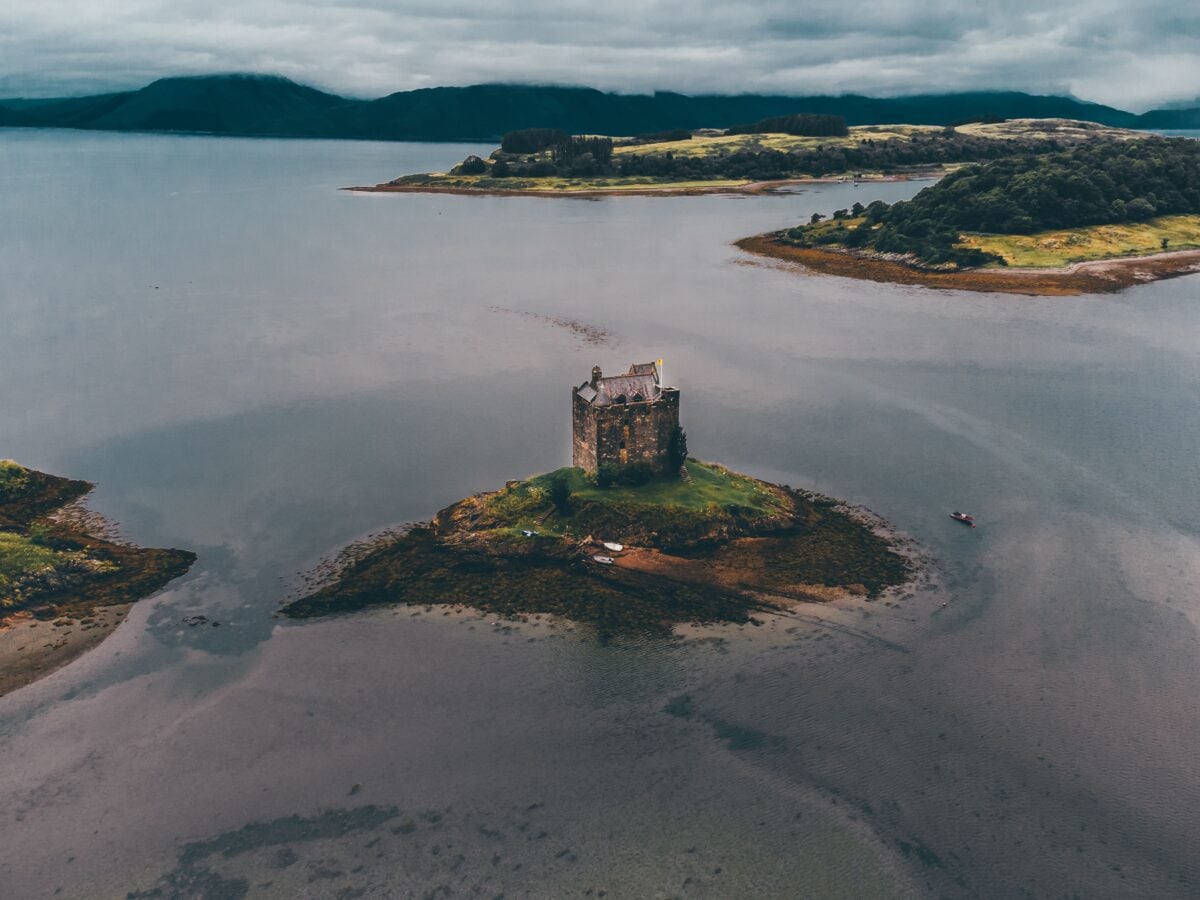
Scottish records and clan surname collections also show a wide mix of L surnames that are Scottish by use, association or long presence, even if their deeper origins vary.
- Laidlaw and Laidler, both seen in Lowland records and associated in some surname lists with Border families.
- Leask, including older forms such as Laesk, Laisk and Lask.
- Learmonth, with variant forms including Larmonth.
- Leith, tied to the Edinburgh port name and also used as a surname.
- Lumsden, another established Scottish surname with place-name roots.
- Lang, a straightforward surname that appears across Scotland and is often descriptive in origin.
- Langlands, a more locational form that turns up repeatedly in Scottish records.
- Lamb and Lambie, both found in Scotland, though not exclusively Scottish in origin.
- Latimer, Lattimer and related spellings, which appear in Scottish surname material even though the occupational origin is broader than Scotland alone.
This is where family history gets interesting. A surname can be well documented in Scotland without being uniquely Scottish, and that does not make it any less relevant to a Scottish family line.
Why So Many L Surnames Have Multiple Spellings
There are three main reasons. First, Gaelic names were often written down by English-speaking clerks, who spelled what they heard. Second, standard spelling in older records was a flexible concept at best. Third, many people themselves were not using surnames in a rigid modern way for much of Scottish history.
That is why one family might appear as MacLachlan, Lachlan and Laughlan across different documents. It is also why surname lists often group names by likely relationship rather than pretending every spelling is separate.
If you are searching records, try the obvious variants first. For L surnames, that often means swapping ai, ay, au and augh, and checking whether a Mac form has been shortened away entirely.
How To Research A Scottish L Surname Properly
You do not need to leap straight into clan lore and tartan tea towels. Start with records.
- Check civil and church records first. In Scotland, surnames become much easier to track once you have solid dates and places.
- Search variant spellings. This is essential for names like MacLachlan, Lamont and Leask.
- Use place names. A Lamont in Argyll and a Leslie in Aberdeenshire already give you stronger clues than the surname alone.
- Treat clan associations carefully. They can help, but they do not prove descent from a chief’s line, despite what souvenir shops would like you to believe.
- Watch for non-Scottish origins in Scottish records. A surname found in Scotland is not automatically Scottish by origin.
For official research, the Scottish government genealogy service holds guidance on surname searching and family history records, including births from 1 January 1855, when compulsory civil registration began in Scotland. If your wider interest is first names as well as surnames, it helps to compare these with unusual Scottish girl names with Gaelic roots, where the same spelling quirks crop up again.
Scottish Last Names That Start With L And Their Usual Type
| Surname | Usual Type | Notes |
|---|---|---|
| Laing | Established Scottish surname with multiple associations | Common in eastern and north-eastern Scotland |
| Lamont | Clan and patronymic tradition | Strong west Highland association |
| Lennox | Territorial | Linked to the old Lennox district |
| Leslie | Locational | Associated with Aberdeenshire |
| Logan | Locational | Also widely used as a first name |
| Lyle | Locational or descriptive | Found in Scotland and beyond |
| MacLachlan | Patronymic Gaelic surname | Many variant spellings in records |
| MacLaine | Gaelic clan surname | Closely linked with west Highland history |
| Leask | Established Scottish surname | Several older spelling forms recorded |
| Lang | Descriptive | Appears widely across Scotland |
Are These Surnames Also Used As First Names?
Yes, quite a few are. Logan, Lennox, Leslie and Lachlan are all familiar as given names, especially in English-speaking countries outside Scotland. That crossover is one reason many people search surname lists while actually naming a baby.
If that is you, the safest route is to separate surname use from first-name use. A name may sound Scottish and be common as a first name without being one of the major surnames in Scottish historical records. Lachlan is the clearest example here, since it is both a personal name and part of the longer surname history behind MacLachlan.
FAQ About Scottish Last Names That Start With L
What Is The Most Common Scottish Last Name That Starts With L?
Logan, Leslie, Laing and Lamont are among the best-known Scottish surnames beginning with L. Exact rankings vary by dataset, spelling treatment and whether a list includes names found in Scottish records regardless of deeper origin. In recent baby-name use, Logan and Lennox also remain far more visible as first names than many people realise, which can blur the surname question a bit.
Is Lachlan A Scottish Surname?
Lachlan is better known as a Scottish given name, but it also appears in surname history and in variant forms connected to MacLachlan. In records, shortened forms and related spellings can overlap.
Is Lennox A Scottish Surname?
Yes. Lennox is a Scottish territorial surname linked to the old Lennox district. It is also widely used as a first name.
Is Lamont A Clan Name?
Yes. Lamont is a recognised Scottish clan surname with strong west Highland roots.
Why Do Scottish Surnames Have So Many Spellings?
Mainly because of Gaelic-to-English spelling shifts, non-standard historical spelling, and clerks writing names as they heard them. The same family can appear under multiple variants in different records.
Are All L Surnames Found In Scotland Scottish In Origin?
No. Some surnames are well attested in Scottish records but have broader British, Norse, French or occupational origins. Presence in Scotland and origin are related questions, but they are not identical.
Final Thoughts
Scottish last names that start with L cover a lot of ground. Some are deeply Gaelic, some are territorial, some belong to major clan histories, and some simply became part of Scotland through long use in records and communities.
If you only remember one thing, make it this: check the variants. A neat modern spelling can hide a much messier, and more interesting, Scottish past.
If you are exploring more naming guides, the next sensible stops are a broader Scottish Names hub and dedicated posts on Scottish girl names and Scottish boy names. The surnames and first names overlap more than you might think, especially once you start comparing them with wider UK family travel ideas and the sort of cultural shorthand people still attach to Scottish names.