
Scottish last names that start with K include well-known surnames such as Keith, Kerr, Kincaid, Kinloch, Knox and Kyle. Some come from places, some from landscape words, and some changed spelling over time, which is very normal in Scottish records.
This guide is part of our Scottish Names collection. Browse our complete Scottish Names directory for A–Z first names, surnames, Gaelic names, meanings, and themed collections.
If you are building a family tree, naming a character, or just curious about Scottish surnames, the letter K is a useful one to dig into. It covers names tied to old estates, marshland, woods, river names and parish places, plus a few surnames that appear in Scotland even if their deeper origin is more mixed.
Below, you’ll find a practical guide to Scottish Last Names That Start With K, with meanings where they are well established, phonetic help, and notes on usage in Scottish history and records.
Scottish Names Beginning With
Choose which type of Scottish name you would like to explore.
How Scottish Surnames Usually Work
Before getting into the K list, it helps to know that Scottish surnames are rarely one neat category. A surname might come from a place name, a landscape feature, a father’s given name, or a spelling that shifted over generations.
In Scottish records, spelling variation is common. A family recorded one way in an Old Parish Register might appear slightly differently in later civil records, wills, valuation rolls or census returns. Names like Ker and Kerr, or Kidd and Kydd, are classic examples of the kind of variation you see when tracing Scottish families.
That matters for anyone doing genealogy. If your family name starts with K, check nearby spellings too, especially in nineteenth-century census returns and older parish material.
Scottish Naming Traditions Behind K Surnames
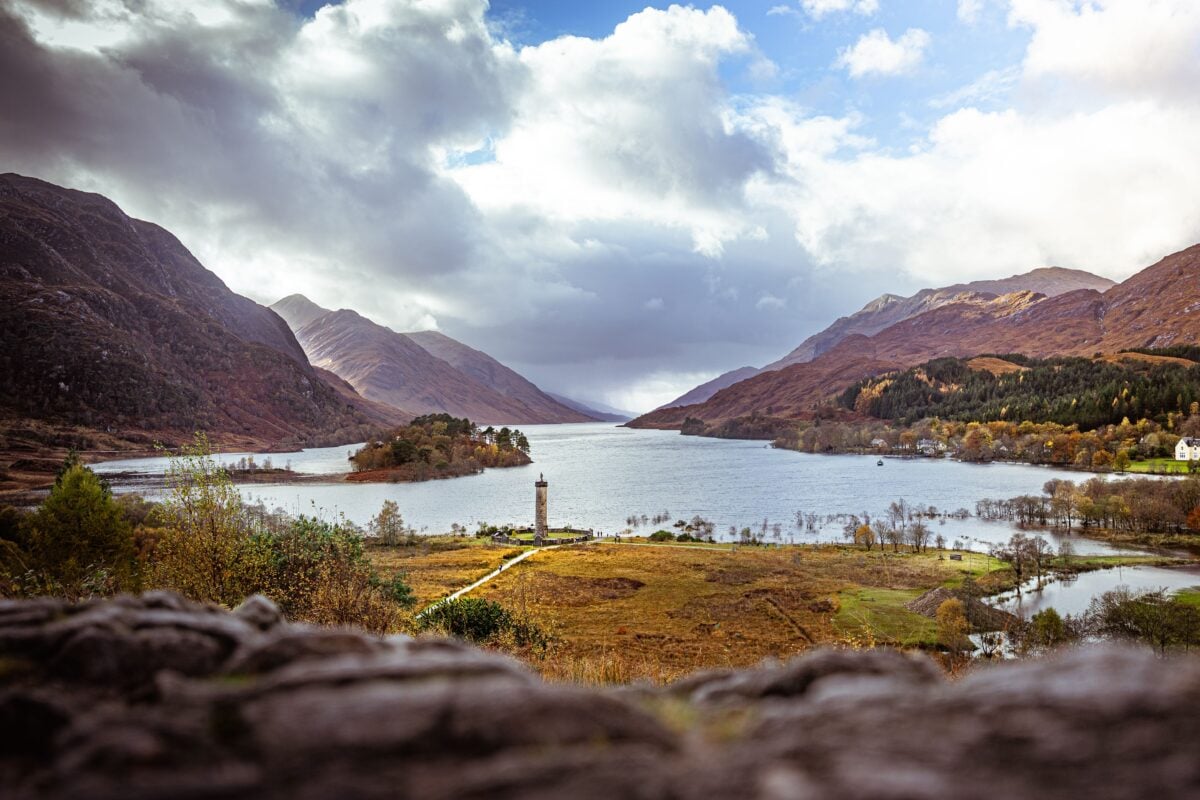
Many Scottish surnames are tied to land and locality. That is especially true with K names beginning with Kin- or Kyl-, which often point back to a place rather than a personal name.
You’ll also run into Gaelic influence, Scots influence and Norse influence depending on the part of Scotland. A surname found in Argyll may have a different linguistic background from one found in the Borders or Aberdeenshire. Scotland likes to keep things interesting, and plenty of these naming patterns overlap with other things associated with Scotland far beyond surnames alone.
One more useful note. A surname being found in Scottish records does not always mean it is Scottish in origin. Some names became established in Scotland through migration, landholding, trade or long local use.
Scottish Last Names That Start With K
Keith
Pronunciation: Keeth
Meaning: Commonly linked with wood or forest.
Keith is one of the better-known Scottish surnames beginning with K, and it is also familiar as a given name. As a surname, it has deep roots in Scotland and is associated with the historic Keith family and the old earldom of Marischal.
It is also a place name in Moray, which helps explain why the surname feels firmly planted in Scottish ground. If you’re researching Keith ancestors, keep an eye on both the surname and local place connections.
Kerr
Pronunciation: Ker or Kerr, depending on the family
Meaning: Often given as from the marshland.
Kerr is one of the most recognisable Border surnames. You will also see the shorter form Ker, and both spellings matter in Scottish records. It is one of those names where one missing letter can send a family historian into a small but very real sulk.
The surname is strongly associated with the Scottish Borders and with well-known riding and clan history. If your line switches between Ker and Kerr, that is not unusual.
Ker
Pronunciation: Ker
Meaning: Usually treated alongside Kerr.
Ker deserves its own mention because it appears as a distinct spelling in Scottish records. In practical genealogy terms, Ker and Kerr should always be searched together. Record sets often preserve whichever version a clerk heard, preferred or happened to write down that day.
Kyle
Pronunciation: Kile
Meaning: Usually explained as narrow strait, channel or narrow spit of land.
Kyle is a place-based Scottish surname and also a familiar given name. In Scottish geography, a kyle is a narrow stretch of water, which helps explain why the name has a strong landscape feel.
You may also see the meaning simplified to slender in baby-name style lists, but the geographic sense is usually the more useful one for surname research.
Knox
Pronunciation: Noks
Meaning: Generally linked to a round hill or hillock.
Knox is an old Scottish surname, and many people know it through John Knox, the Protestant Reformer. The name is compact, sturdy and very Scottish-sounding even to people who know little about surnames.
As with many topographic surnames, it likely began as a way of identifying someone by the land around them. If your ancestors lived near a rounded hill, medieval naming habits were not especially subtle.
Kincaid
Pronunciation: Kin-cade
Meaning: A territorial surname from Kincaid in Stirlingshire.
Kincaid is a classic Scottish place surname. The exact older language roots are debated, so it is best to keep the meaning broad and focus on what is secure: it is tied to a named place in Scotland and to a recognised Scottish family line.
This is a good example of a surname where the place connection is clearer than any single neat translation.
Kinloch
Pronunciation: Kin-lokh
Meaning: From a place at the head of a loch.
Kinloch is one of the more transparent Scottish surnames if you know a little Gaelic place-name structure. It is commonly understood from Gaelic elements referring to the end or head of a loch.
You’ll find Kinloch as both a surname and a place-name element in different parts of Scotland. For family history, that can be helpful and mildly annoying in equal measure.
Kinnear
Pronunciation: Kin-neer
Meaning: Usually treated as a Scottish surname with place or territorial associations, though exact explanations vary.
Kinnear is established in Scotland, particularly in eastern records. Like several older surnames, it does not always come with one universally agreed modern gloss, so it is smarter not to force a meaning where the evidence is thin.
If you are tracing the name, focus on regional distribution and record spelling before worrying about a perfect one-line definition.
Kinross
Pronunciation: Kin-ross
Meaning: From the place name Kinross.
Kinross is another place-rooted surname. Anyone with Scottish family links will recognise it from the county and town name. Territorial surnames like this often began with people identified by where they came from, where they held land, or which district they were tied to.
Kirk
Pronunciation: Kirk
Meaning: Church.
Kirk is common in Scots place language and appears in many Scottish surnames and place names. While it is also found outside Scotland, it sits very comfortably within Scots naming tradition.
As a surname, it may have referred to someone who lived near a church or was associated with church land or settlement. Short name, simple meaning, no fuss.
Kirkpatrick
Pronunciation: Kirk-pat-rick
Meaning: Usually read as church of Patrick.
Kirkpatrick is one of the most recognisable compound Scottish surnames. It has a strong territorial feel and long association with Dumfriesshire. If you like surnames that sound unmistakably rooted in place, this is one of them.
Kennedy
Pronunciation: Ken-uh-dee
Meaning: From Gaelic Cinnéidigh, often explained as helmeted head or similarly interpreted forms.
Kennedy is one of the biggest Scottish surnames beginning with K, particularly associated with Carrick in Ayrshire. Its Gaelic form is often given as Cinnéidigh. Older Gaelic-derived surnames can attract slightly different translations in modern sources, so expect variation in wording.
Even so, the surname’s Scottish standing is not in doubt. It is one of the major names in any K list.
Kenneth
Pronunciation: Ken-eth
Meaning: More common as a given name, but does appear as a surname.
Kenneth is primarily known as a first name in Scotland, linked to Gaelic forms such as Coinneach. As a surname, it is much less common than Kennedy, Keith or Kerr, but it does appear.
It is worth including because people searching surname lists often meet names that move between first-name and last-name use over time.
Kenmure
Pronunciation: Ken-myoor
Meaning: Territorial, tied to the place name Kenmure.
Kenmure is a less common but unmistakably Scottish surname. Names like this are useful reminders that not every family name beginning with K will be widespread. Some are strongly local, landed or historical rather than common in everyday modern directories.
Kyd And Kydd
Pronunciation: Kid or Kyd
Meaning: Exact origin varies by line and spelling history.
Kidd, Kyd and Kydd are worth grouping together because Scottish records frequently show the sort of vowel and consonant shifts that can hide a family in plain sight. The switch between i and y is well known in Scottish surname records.
If your ancestor disappears under one spelling, try the others before assuming the trail has gone cold.
Kilgour
Pronunciation: Kil-goor
Meaning: Usually treated as a Scottish surname with place-name roots.
Kilgour is found in Scotland and is especially associated with eastern districts. The exact linguistic breakdown is not always presented consistently, so the safest route is to treat it as a recognised Scottish surname with local and territorial roots.
Why So Many Scottish K Surnames Are Place Names
Once you start listing Scottish Last Names That Start With K, a pattern jumps out. Many of them are built from land, water, churches and settlements. Kyle points to a narrow channel. Kinloch points to the head of a loch. Kirk points to a church. Kinross and Kincaid point back to named places.
That pattern fits wider Scottish naming history. In a smaller medieval community, identifying someone by their land, parish or nearby feature was practical. It was also apparently more efficient than inventing something poetic.
How To Research A Scottish K Surname
If you are tracing family, start with the spelling you know, then widen the search. Scottish records often preserve variants that look small on paper but make a big difference in search results.
- Search variant spellings such as Ker and Kerr, or Kidd and Kydd.
- Check census returns from 1841 to 1911 if you are working in the nineteenth and early twentieth centuries.
- Use parish records for earlier baptisms, marriages and burials.
- Look at statutory registers from 1855 onward for births, marriages and deaths.
- Pay attention to place names if the surname is territorial, especially with Kin-, Kirk- and Kyle-based names.
Scottish surname research gets easier when you stop expecting one fixed spelling. Clerks, ministers and registrars were not designing a future family-history database for your convenience. If you’re also thinking about first names from the same tradition, unusual Scottish girl names with Gaelic roots show the same habit of spelling shifts and local history leaving their fingerprints everywhere.
Most Common Scottish K Surnames
Among the better-known Scottish surnames beginning with K, Kennedy, Kerr, Keith, Kirk, Knox and Kyle are the names most people are likely to recognise quickly. Exact rankings vary depending on which record set is being counted, because a surname may appear differently across census records, parish registers, valuation rolls, wills and civil registration.
That is why popularity lists can be useful as a guide but should not be treated as the final word. A name can be common in one region, rare nationally, and still dominate one branch of your own family tree. In modern Scotland, Kennedy and Kerr remain especially familiar surnames, while Keith and Kyle are also widely recognised because they continue to turn up as first names as well.
Gaelic Forms And Accuracy Notes
Not every Scottish surname that starts with K has a simple Gaelic equivalent. Some are Scots or territorial names, while others have Gaelic roots but no single modern form used by all families.
Where a Gaelic form is widely established, such as Cinnéidigh behind Kennedy, it is worth noting. Where the evidence is less tidy, caution is better than confidence. Surname sites and baby-name pages often flatten complicated history into one cheerful line. Family names are rarely that cooperative.
Related Scottish Names You May Also Be Looking For
If you landed here while building a bigger shortlist, the next useful step is to compare K surnames with other Scottish family-name groups and with Scottish given names. Names like Keith, Kennedy and Kyle also appear as first names, especially in the US.
You may also want to explore a broader Scottish names hub, plus dedicated lists of Scottish girl names and Scottish boy names if you are moving between surnames and given names. For a wider cultural backdrop, a quick skim of classic symbols and traditions linked with Scotland helps put these names back into the places and language they came from.
FAQ About Scottish Last Names That Start With K
What are common Scottish last names that start with K?
Common and well-known examples include Kennedy, Keith, Kerr, Kirk, Knox and Kyle. In records, Ker should also be checked alongside Kerr.
Is Kerr a Scottish surname?
Yes. Kerr is a well-established Scottish surname, especially associated with the Borders. The spelling Ker also appears in Scottish records and may refer to the same family line.
What does the Scottish surname Keith mean?
Keith is commonly explained as meaning wood or forest. It is both a Scottish surname and a Scottish place name.
What does Kyle mean as a Scottish surname?
Kyle usually refers to a narrow channel, strait or narrow spit of land. It is closely tied to Scottish geography and place naming.
Are all K surnames in Scotland Gaelic?
No. Some have Gaelic roots, some are Scots, and many are territorial or place-based. A surname can be long established in Scotland without being purely Gaelic in origin.
Why do Scottish surnames have different spellings?
Spelling changed over time because of local pronunciation, clerks’ choices, literacy levels and record-keeping habits. Variants such as Ker/Kerr and Kidd/Kydd are normal in Scottish genealogy.
Final Thoughts
If you want a quick shortlist of Scottish Last Names That Start With K, start with Keith, Kerr, Ker, Kyle, Knox, Kincaid, Kinloch, Kinross, Kirk, Kirkpatrick and Kennedy. Those names give you a good spread of Scottish surname history: landscape, place, parish, Gaelic inheritance and the usual spelling chaos.
For family history, the big takeaway is simple. Search widely, expect variant spellings, and pay attention to place names. In Scotland, surnames and geography are often tangled together in the most useful way possible, much like the broader story behind Scottish culture, language and identity.