
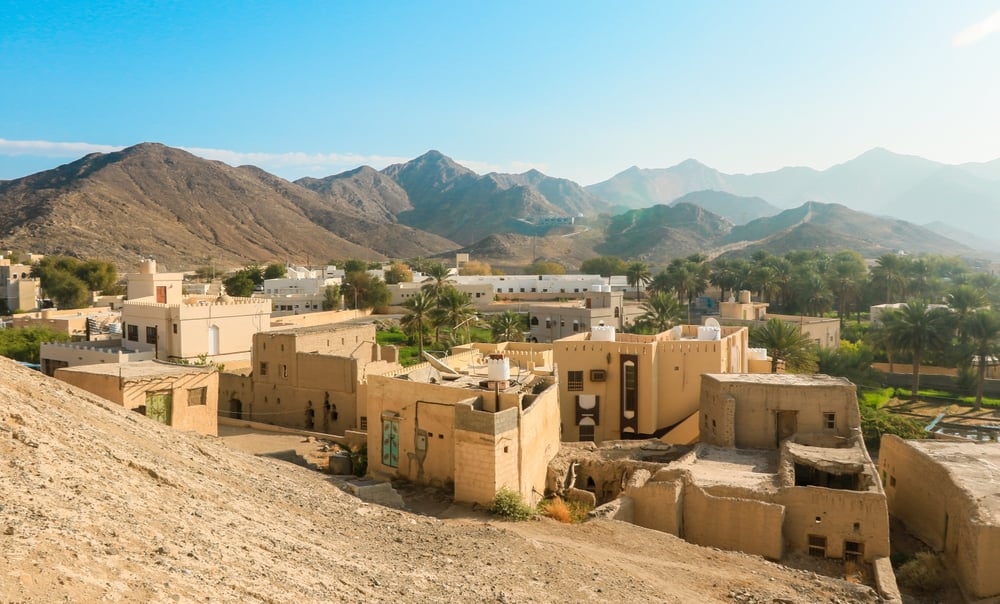
Oman is the kind of destination that looks made for a road trip. Mountains rise behind Muscat, wadis cut through rocky valleys and desert landscapes begin surprisingly close to the capital. For many visitors, hiring a car is the obvious way to get around.
But what if you don’t want to drive?
Visiting Oman without a rental car is possible, particularly on a short first trip. The key is to avoid trying to cover too much ground. Base yourself mainly in Muscat and combine buses, taxis, pre-arranged transfers and organised day trips for places that are difficult to reach independently.
This five-day Oman itinerary focuses on Muscat, Nizwa and the country’s spectacular eastern landscapes without requiring you to spend the holiday behind the wheel.
Sponsored content: This article contains paid links to travel and transport providers. The itinerary and practical travel information have been written to help readers independently plan a trip to Oman.
Can You Really Visit Oman Without Hiring a Car?
Yes, but it takes more planning than visiting a destination with an extensive rail network.
Oman’s Mwasalat bus network operates routes within Muscat as well as intercity services. Destinations available from Muscat include Nizwa and Sur, making public transport useful for some of the larger stops visitors are likely to consider.
The difficulty comes when you want to visit wadis, mountain villages, forts away from the main transport routes or the desert. For these parts of the trip, a taxi, driver or organised excursion is usually more practical.
If you’re still deciding whether to drive, our guide to the pros and cons of hiring a car abroad covers some of the things worth considering before booking.
| Journey | Practical car-free option |
|---|---|
| Muscat Airport to hotel | Taxi or pre-booked transfer |
| Around Muscat | Bus, taxi or driver |
| Muscat to Nizwa | Intercity bus, tour or private driver |
| Wadis and desert areas | Guided tour or private driver |
| Muscat to Sur | Intercity bus, tour or private transfer |
Day 1: Arrive in Muscat and Keep Things Easy
Don’t make your first day unnecessarily complicated. After arriving at Muscat International Airport, head to your accommodation, drop your luggage and use the remainder of the day to get your bearings.
Muscat is spread out rather than built around one compact centre, so distances between attractions can be greater than they appear on a map. Public buses cover parts of the city, but taxis and pre-arranged transport can save time when you’re trying to fit several areas into a short visit.
If you’d rather have the airport journey arranged in advance, one example of the services visitors may come across is private airport and city transport with Chauffeur Muscat. As with any pre-booked transfer, check the current price, pickup arrangements and cancellation terms before confirming.
Depending on your arrival time, keep the evening simple with a walk around Muttrah. The waterfront and souq make an easy introduction to the capital without trying to squeeze a full sightseeing day into your arrival.
Day 2: Explore Muscat
Give Muscat a full day rather than treating it purely as somewhere to sleep between excursions.
Popular stops include Sultan Qaboos Grand Mosque, the National Museum, the area around Al Alam Palace and the Muttrah waterfront. The Royal Opera House is another option depending on your interests and how much you want to fit into the day.
Because these attractions are spread across the city, group nearby sights together rather than repeatedly crossing Muscat.
- Start early if you plan to visit the Grand Mosque and check current visitor hours and dress requirements.
- Allow time for Muttrah Souq rather than treating it as a five-minute photo stop.
- Carry water, particularly during warmer months.
- Use taxis strategically when a bus journey would involve a lengthy wait or awkward connection.
If Oman is part of a wider Gulf trip, our Dubai travel tips may also be useful when planning the UAE portion of your journey.

Day 3: Take a Day Trip to Nizwa
Nizwa is one of the easiest places to add to a short Oman itinerary and provides a very different experience from the capital.
The city is known for Nizwa Fort and its traditional souq, and it works particularly well as a cultural day away from Muscat. Mwasalat lists Nizwa among its intercity destinations from the capital, so independent travellers have a public transport option.
However, check the latest timetable before building your entire day around the bus. Public transport gives you less flexibility over arrival and departure times, and reaching attractions outside central Nizwa can require additional transport.
This is where a guided or private day trip can make sense, especially if you want to combine Nizwa with another stop rather than simply travelling there and back. Travellers researching that option may encounter private Oman itineraries with Oman Tour, alongside other local tour and transport providers. Compare the proposed route, inclusions and current pricing before deciding which option suits your plans.
Day 4: Wadi Shab and the Coast
This is the day when not having a rental car requires a little more organisation.
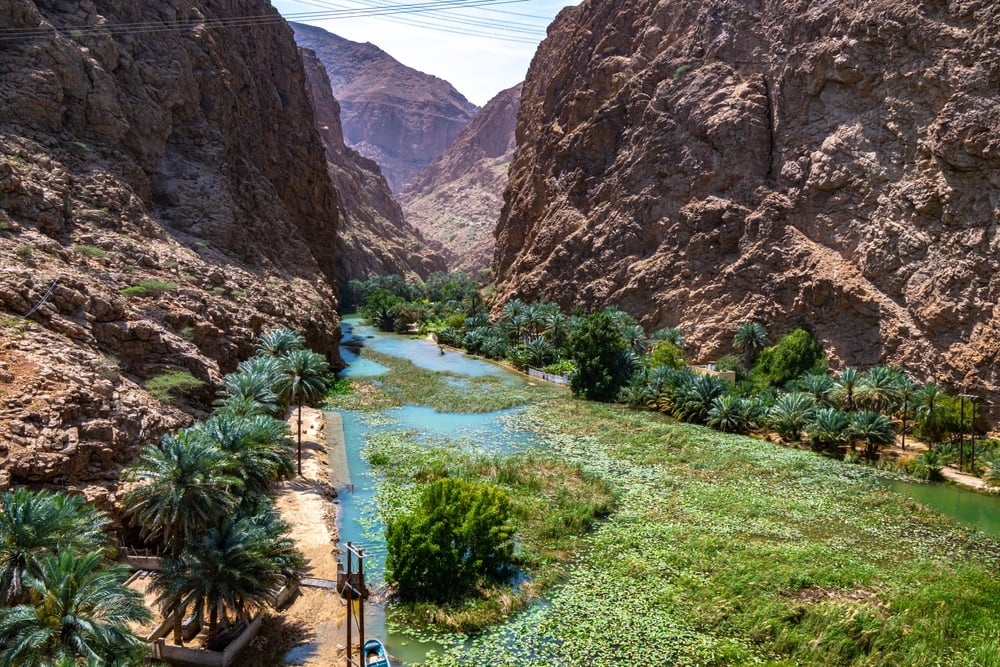
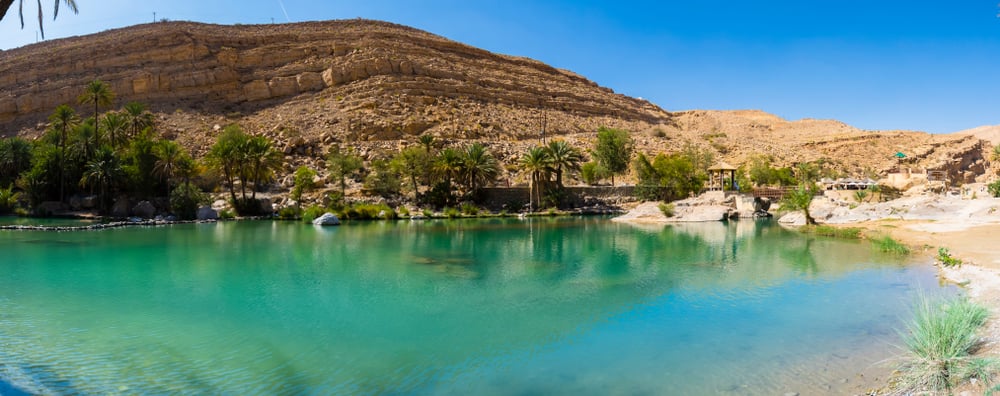
Wadi Shab is around 170 kilometres from Muscat International Airport and is one of Oman’s best-known natural attractions. The visit involves a short boat crossing followed by walking through the wadi, with natural pools along the route.
Wear footwear suitable for uneven ground and bring water, sun protection and swimming gear if you intend to enter the pools. This isn’t a day for flip-flops and an unplanned taxi ride.
Without your own car, a day tour or private driver is generally the straightforward approach. Depending on the itinerary, you may also be able to include coastal stops around Tiwi or continue towards Sur.
If you choose public transport instead, Mwasalat operates a Muscat to Sur route with stops along the journey, including Tiwi. Check the current timetable carefully because a scheduled bus won’t give you the same flexibility as having a driver waiting while you explore.
Day 5: Desert Scenery or a Slower Final Day
For your final day, choose between another ambitious excursion and a slower finish in Muscat.
If seeing the desert is high on your Oman wish list, A’Sharqiyah Sands is the obvious direction to head. Wadi Bani Khalid is another popular attraction in the same broader region, although trying to combine several distant places in one day can result in spending more time in transit than actually exploring.
These are places where organised transport is particularly useful. Rather than stitching together multiple taxis and buses, arrange the full route in advance and confirm exactly where you will be picked up and dropped off.
Alternatively, stay in Muscat. A relaxed final morning, lunch near the coast and a few hours revisiting Muttrah can be much more enjoyable than racing back from the desert before an evening flight.
Tips for Planning a Car-Free Oman Trip
The biggest mistake with a five-day Oman itinerary is trying to see the entire country. Distances add up quickly, and travelling without your own vehicle makes an overpacked itinerary even harder.
- Check bus timetables shortly before travelling. Routes and schedules can change.
- Pre-book important transfers. This is particularly useful for early flights and full-day excursions.
- Confirm what’s included. Ask whether tour prices include attraction entry, meals and return transport.
- Build in extra time. Don’t plan a long-distance excursion immediately before your flight home.
- Download offline maps. They are useful even when somebody else is doing the driving.
- Don’t underestimate the heat. Carry water and plan outdoor activities appropriately for the season.
For a more general approach to organising multi-stop trips, our guide on how to plan a travel itinerary can help you decide how much is realistic to fit into each day.
Is Oman Worth Visiting Without a Car?
Absolutely, as long as you plan around the transport you actually have rather than building an itinerary designed for someone with a rental car.
For a five-day first visit, Muscat makes a practical base. From there, buses can handle some longer journeys, taxis are useful within the capital and organised transport fills the gaps for wadis, mountains and desert areas that are harder to reach independently.
You might not see every corner of Oman in five days, but that’s not really the point. A sensible route with time to enjoy Muscat, Nizwa and at least one of Oman’s striking natural landscapes makes for a much better introduction than spending the entire trip rushing between stops.
