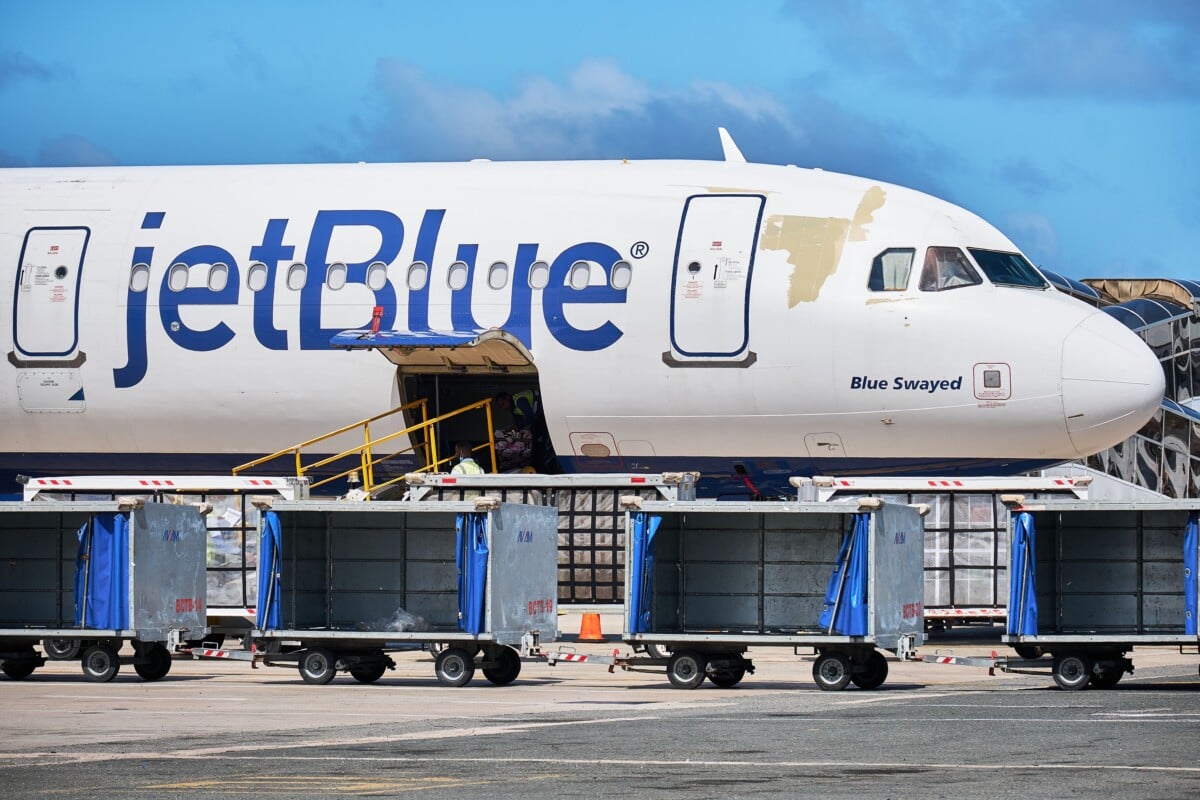
JetBlue’s $2 billion in bonds backed by its TrueBlue frequent flyer programme have reportedly fallen to 72 cents on the dollar. That signals concern among bond investors about the airline’s finances. The steep discount is a warning sign, but it does not establish that JetBlue is about to file for bankruptcy.
View from the Wing reports the discounted bond price and says investors are demanding a substantial return for holding debt backed by the loyalty programme. The report also says JetBlue still has cash. That matters: market anxiety is not the same as evidence that the airline cannot meet its obligations.
What JetBlue’s Discounted Frequent Flyer Bonds Signal
A price of 72 cents on the dollar means the bonds are valued at 72% of their face value. This is the market price of the debt, not an automatic reduction in the amount JetBlue owes under its borrowing agreement.
Bondholders can sell existing debt to other investors. When the market price falls, a buyer pays less for the contractual payments that come with that debt. If those payments arrive as agreed, the lower purchase price increases the buyer’s potential return.
A substantial discount can reflect doubts about repayment, concerns about the borrower’s finances or wider market conditions. View from the Wing reads JetBlue’s pricing as a sign of growing lender concern. But the price alone cannot tell you how likely a default is or when one might happen.
The quoted price needs a trading date to give it context, too. Without that date, the bonds’ interest rate and their maturity dates, you cannot calculate a reliable current yield or treat 72 cents as a live market quote.
Why the TrueBlue Backing Matters
TrueBlue is JetBlue’s frequent flyer programme, which the airline used to back this borrowing, according to the report. The concern here is that investors are applying a substantial discount even to debt supported by an asset the source describes as particularly valuable.
Asset backing does not guarantee full repayment. To assess the protection bondholders have, you need the borrowing documents. These set out the precise assets pledged and the rights lenders would have if payments were missed. The label “loyalty-backed” does not answer those questions by itself.
For frequent flyers, the programme has a separate purpose: earning and redeeming rewards. JetBlue’s loyalty partnership with United concerns those customer benefits. The discounted bonds concern financing and repayment risk, rather than those rewards.
Does the Discount Establish Imminent Bankruptcy?
The reported bond discount does not establish imminent bankruptcy. The evidence presented here includes investor concern and the source’s statement that JetBlue still has cash. It does not include a confirmed bankruptcy filing or a missed debt payment.
Cash gives the airline some financial flexibility, but the amount matters, along with how quickly it spends it. No cash balance accompanies the reported price. The available figures therefore cannot tell you how long JetBlue could fund operations and meet its obligations.
The timing of debt repayments matters just as much. A meaningful assessment needs a confirmed maturity schedule, upcoming interest payments and the airline’s latest financial disclosures. The available report gives no specific maturity date to support a conclusion that a repayment deadline is approaching.
If you are weighing up a JetBlue booking, this report alone does not establish an impending interruption to flights. It supports a narrower conclusion: bond investors are pricing substantial concern into the airline’s loyalty-backed debt. Any stronger claim about near-term bankruptcy needs additional, dated evidence.