

If you wake up in a static caravan to windows running with water, learning how to stop condensation in a caravan comes down to a handful of daily habits and one routine before you lock up. The moisture starts with you: one person asleep breathes out about half a pint of water overnight, and a compact caravan bedroom gives it very few places to go.
This guide covers where hidden damp collects, how to cut steam from cooking, showers and washing, when heating and a dehumidifier help, and the checks to do before you leave.
Quick Answer: How to Stop Condensation in a Caravan
- Ventilate: keep the fixed vents clear and open a window when you are there to keep an eye on it.
- Cut steam at source: lids on pans, extractor fans on, bathroom door shut, washing dried outdoors or at the park laundry.
- Wipe every morning: dry the windows and frames, then take the wet cloth outside or to the sink.
- Heat gently: use the fitted heating to keep surfaces warmer, and never use the cooker to heat the caravan.
- Pick the right dehumidifier: a desiccant model copes better than a compressor one in a cold caravan.
- Leave it dry: give the last morning time to air out before you lock the door.
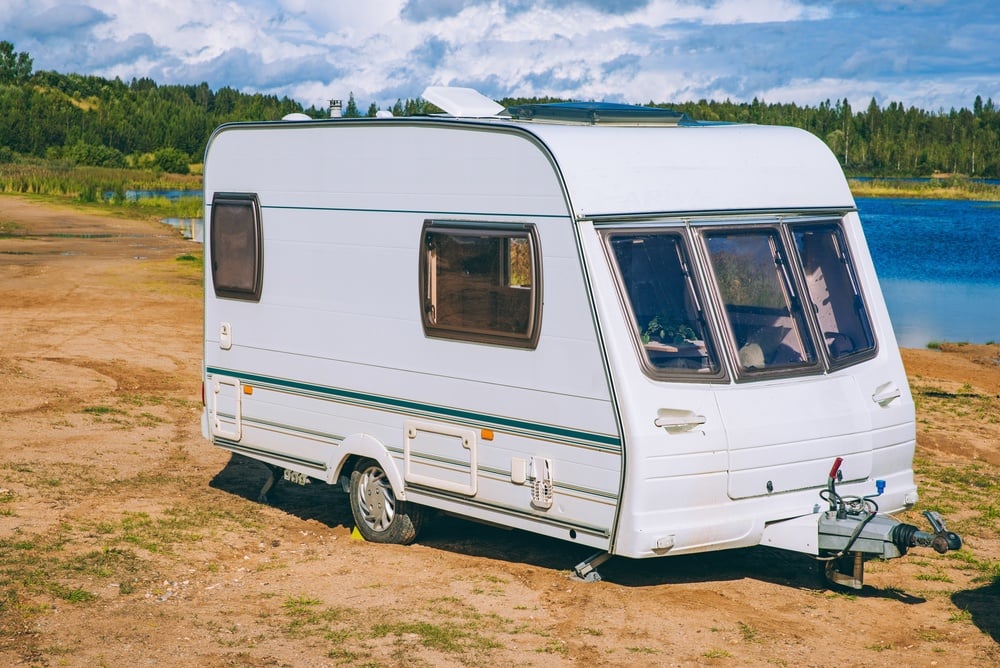
Why Do Static Caravans Get So Much Condensation?
Condensation forms when warm, moist air hits a surface cold enough to turn the water vapour back into droplets. If you want the science, our explainer on what dew point means covers exactly when that tipping point arrives. A static caravan packs people, a kitchen and a shower into a small space with thin walls, so it reaches that point quickly, especially on a cold, dreich (grey, drizzly) morning.
Glass makes it obvious, but it is only the place you notice it. Willerby, which builds static caravans, points out that corners, window surrounds and cupboard interiors can stay damp and grow mould. When you arrive, check inside wardrobes, under mattresses and behind furniture pushed against outside walls before you unpack, and note any wet patches or musty smells.
Everyday life adds more water than most holidaymakers expect. These are Northumberland County Council’s estimates for a typical home, so treat them as a rough guide for a caravan:

| Source of moisture | Estimated moisture | What cuts it |
|---|---|---|
| One person asleep overnight | Half a pint (about 0.28 litres) | Bedroom vents clear, window ajar where safe |
| A bath or shower | 2 pints (about 1.1 litres) | Door shut, extractor on, surfaces wiped |
| Cooking and boiling the kettle in a day | 6 pints (about 3.4 litres) | Lids on pans, extractor vented outside |
| Drying clothes indoors | 9 pints (about 5.1 litres) | Outdoor line or the park laundry |
| Bottled gas heater, 8 hours | 4 pints (about 2.3 litres) | Use the caravan’s fitted heating |
Drying washing indoors adds the most water of anything on that list, so getting it outside is the easiest single win.
Keep the Caravan’s Vents Clear
Every static caravan has permanent vents in the floor, walls or roof, and they are there for safety as well as airflow. The National Caravan Council explains that gas appliances need a constant air supply and that blocking the ventilation could lead to carbon monoxide poisoning. Do not cover a vent to stop a draught, and keep bags, bedding and boots away from them.
The same booklet recommends two audible carbon monoxide alarms, one near the bedrooms and one in the main living area, tested at least once a month. That is worth checking on your first night, whatever the condensation is doing.
While you are in the caravan, open a window or roof vent for extra airflow, taking rain and security into account. Window restrictors let you leave a window slightly open without it swinging wide, which helps on breezy coastal parks.
How to Cut Steam From Cooking, Showers and Washing
Tackle steam where it is made. Put lids on pans, turn the heat down once water boils and run the cooker hood while you cook. Check which kind of hood your caravan has: a recirculating model filters the air and blows it back into the room, and the manufacturer Faber lists it as less effective against humidity and steam, so open a window as well.
Keep the bathroom door closed while you shower, run the extractor fan and leave it going for a while afterwards. Squeegee or wipe the shower tray and walls when you are done, because any water left there ends up in the caravan air.
Wet towels, coats and washing are the big one. Use an outdoor line or the park’s drying facilities where there are any, and avoid draping damp clothes over furniture or heaters. Lincolnshire Fire and Rescue also warns against drying clothes over the stove, which adds a fire risk to the damp problem.
Each morning, wipe the water from the windows and frames. Then wring the cloth out at the sink or outside. Hang it on a radiator and you have simply moved the water back into the room, which is a wee bit like bailing a boat into itself.
Do Heating and a Dehumidifier Stop Caravan Condensation?
Heating helps by warming the cold surfaces where droplets form, but it does not remove water from the caravan. Use the fitted heating as its instructions say, warm the caravan gently, and keep ventilating at the same time. Never use a gas hob or oven to heat the caravan; Pembrokeshire County Council’s carbon monoxide advice is plain that you should not use a cooker to heat a room. A portable bottled gas heater adds moisture as it burns, which is one more reason to rely on the caravan’s own system.
A dehumidifier pulls water out of the air, but the type matters in a caravan that gets cold between stays:
| Type | Works best | Trade-off |
|---|---|---|
| Compressor dehumidifier | Heated spaces above about 10°C | Small models struggle below 15°C and spend more time defrosting as it gets colder |
| Desiccant dehumidifier | Cold or unheated spaces | Higher running costs, though the warm air it blows out helps a chilly room |
| Moisture absorber tubs | Wardrobes and small cupboards | Need checking and replacing, and only deal with small amounts |
Dehumidifier maker Meaco explains that compressor units are only effective above about 10°C, while desiccant models keep working in the cold. Check the operating temperature range on any model before you buy it for a caravan, and follow its instructions on where to put it and how to drain it.
A full tank tells you the dehumidifier is working. It does not tell you the cause has been dealt with, so treat it as back-up to ventilation and cutting steam. If you are heading up for a late-season break, our guide to Scotland in November covers the weather that makes this part harder.
Your Caravan Condensation Checklist Before You Lock Up
Build drying time into the last morning. A shower straight before you leave fills the caravan with steam just as you are closing it up, so shower earlier or open everything up afterwards. Then work through this in order:
- Take the wet stuff home, because damp towels, clothes, cloths and any bedding that has not dried properly will keep releasing water for days.
- Wipe the windows, frames and bathroom, because standing water is the easiest moisture to remove.
- Check cupboards and under mattresses, then arrange cushions and mattresses for airflow the way the manufacturer recommends, because hidden spots dry slowest.
- Lock windows and doors with the fixed vents left clear, because the caravan still needs background airflow while you are away.
- Follow the manufacturer’s and the park’s guidance on heating, utilities and winter shutdown, because drain-down and frost rules vary by park.
Only leave a heater or dehumidifier running while you are away where the appliance instructions and the park rules allow it. If you also own a touring caravan, our guide to keeping a caravan in top shape between trips covers storage, tyres and the battery.
Buying a Static Caravan? What to Check at a Viewing
Condensation control is easier when you know how the caravan is meant to work from day one. Find the permanent vents, then ask how the extractor fans and heating controls operate. If you are comparing static caravans for sale in Scotland, ask for these systems to be demonstrated during a viewing, including how they should be used during stays and when the caravan is shut down for winter.
A few other questions are worth asking before you sign anything:
- Is it built to the EN 1647 holiday caravan standard or the BS 3632 residential standard? Willerby says BS 3632 models have better insulation and ventilation, while holiday-standard models may get slightly more condensation.
- Does it have double glazing, and is the cooker hood ducted outside or recirculating?
- What does the park allow while you are away, such as low heat, a dehumidifier or a full drain-down?
- Are there any stains, soft patches of wallboard or musty cupboards? On a pre-owned caravan, ask what caused them and what was repaired.
Condensation or a Leak? When to Get Damp Inspected
Morning droplets on cold glass are normal. Water that keeps appearing at one joint, or a stain that grows after rain, is a different problem. Persistent wet patches, soft wallboard, damaged finishes or mould that keeps coming back need investigating even after you have improved the ventilation.
Before you call anyone, keep a short record:
- Photograph the affected area each time you see it.
- Note when the moisture shows up: after a night in the caravan, after showers, after heavy rain or after weeks with nobody there.
- Note whether it dries out or stays wet.
Share that record with park maintenance or a suitably qualified caravan repairer. Damp that appears after rain while the caravan is empty points towards a leak, while damp that only appears after you have stayed points towards condensation, and the timing helps them find the cause faster.
Static Caravan Condensation FAQ
Is Condensation in a Static Caravan Normal?
Some condensation on static caravan windows on a cold morning is normal, because breathing, cooking and showering all add moisture to a small space. Water that keeps appearing in the same spot, or after rain when nobody has stayed, suggests a leak that needs inspecting.
Which Dehumidifier Is Best for a Static Caravan?
A desiccant dehumidifier usually suits a static caravan that gets cold between visits, because compressor models are only effective above about 10°C. Check the operating temperature range and the park’s rules before leaving any dehumidifier running while you are away.
Should I Block the Vents in My Caravan to Keep It Warm?
Do not block the vents in a static caravan. They supply the air that gas appliances need to burn safely, and the National Caravan Council warns that blocking them could lead to carbon monoxide poisoning.
Do Moisture Absorbers Work in a Caravan?
Moisture absorber tubs can help in wardrobes and small cupboards, but they only deal with small amounts of water and need checking and replacing. Treat them as a back-up to ventilation and cutting steam at source.