
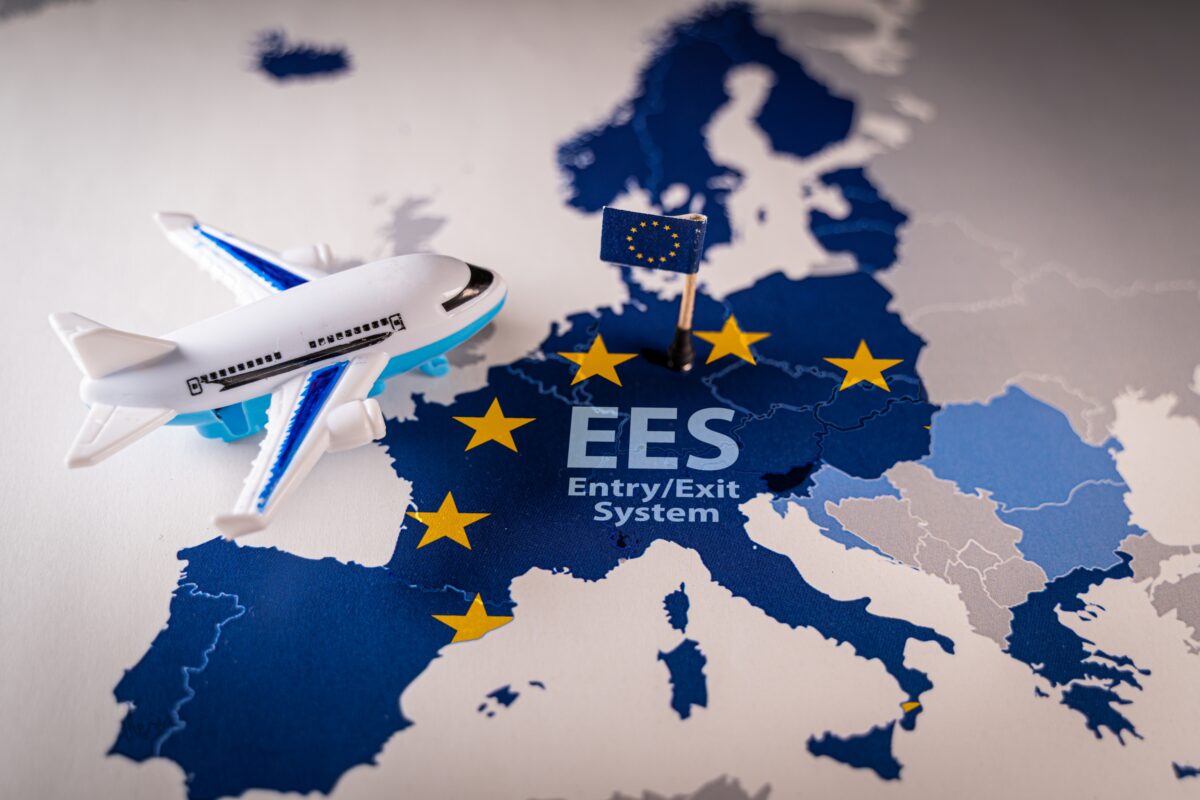
Europe’s new border routine is here, and it is not exactly built for speed
If you are heading to the Schengen area with a US passport, the EU Entry/Exit System, or EES, is now part of the deal. The upside is a more modern border record. The downside is that your first entry may take longer than the old stamp-and-go routine, which is just the sort of bureaucratic excitement nobody booked a flight to Europe for.
EES started rolling out on October 12, 2025, and became fully operational across participating Schengen border crossings on April 10, 2026. For budget travelers, the practical takeaway is simple: arrive with more buffer time, keep your trip details handy, and do not assume border control will move at airport-snack speed.
The system is already live, and it affects most short-stay visitors from outside the EU, including US travelers.
Quick breakdown for US travelers
| Topic | What to know |
|---|---|
| EES status | Fully operational since April 10, 2026 |
| Who it affects | Most US passport holders visiting Schengen countries for short stays |
| Cost | No fee |
| Pre-travel step | None |
| Border process | Passport check, facial image, fingerprints on first entry |
| Stay limit | 90 days in any rolling 180-day period |
What EES actually does
EES is a digital border database for non-EU nationals visiting Schengen countries for stays of up to 90 days. It replaces passport stamps with an electronic record.
That record stores:
- Your passport details
- Your entry and exit dates
- A facial image
- Your fingerprints
The digital record remains valid for three years. However, travelers must use the same passport that was used to create the record. If your passport changes, your details will need to be updated at the border.
Who needs to deal with it
Most US passport holders visiting Schengen countries for tourism, business, or other short stays will go through EES. Children are included, although those under 12 do not need to provide fingerprints.
The Schengen countries covered include popular destinations such as France, Spain, Italy, Germany, Greece, Portugal, and Switzerland, along with many others across the zone.
Some travelers are exempt, including US nationals legally resident in a Schengen country and people holding a valid residence permit or long-stay visa.
How registration works at the border
There is no form to complete before departure, no separate EES application, and no fee.
Instead, registration happens on arrival. During a first trip under the system, travelers will typically:
- Present their passport
- Be directed to a kiosk or border-control booth if required
- Have a digital record created
- Have their face scanned
- Have their fingerprints taken
Future trips should generally be faster because the biometric record is already stored in the system.
Travelers should also be wary of websites claiming to sell an “EES permit.” No such permit exists, and there is nothing to purchase before travel.
Why the queues may feel longer
EES introduces extra steps at border control, particularly for first-time users.
Delays are expected to be most noticeable during busy travel periods, especially at major airports, ferry ports, and rail terminals. Early reports from airports in Spain, France, and Portugal have already pointed to longer waits at border control during peak travel times.
That matters if you are trying to squeeze a cheap trip into a tight connection. Border-control time is no longer something travelers can safely ignore.
Useful traveler tips
- Arrive earlier than you think you need to
- Keep accommodation details easy to access
- Have onward travel plans ready if requested
- Allow extra time for departures, since exits are also recorded
Airlines and transport providers may issue their own guidance on arrival times, so it is worth checking before you travel.
What happens if border delays wreck your flight
Missing a flight because of border-control delays does not automatically entitle travelers to free rebooking or compensation.
Under EU Regulation EC 261/2004, border-control delays can be considered extraordinary circumstances, which may affect eligibility for compensation.
If you miss a flight, head directly to the airline desk, keep all travel documents, and request written confirmation of the delay if possible.
Not glamorous, but neither is paying for a last-minute replacement flight because bureaucracy chose violence.
The 90/180-day rule still applies
EES does not change the Schengen short-stay limit. US citizens without a visa or residence rights are still limited to 90 days within any rolling 180-day period.
What changes is enforcement. Instead of relying on passport stamps, authorities now have a digital record showing exactly when travelers entered and left.
That is especially important for:
- Frequent travelers
- Second-home owners
- Digital nomads and remote workers
- Anyone making multiple trips to Europe each year
The EU also provides an online tool to help travelers monitor their remaining authorized stay, although keeping your own records remains a good idea.
EES is not ETIAS
This is where many travelers get confused.
EES is the biometric border-check system that is already operating. ETIAS is a separate travel authorization program, similar to the US ESTA, and is expected to launch in autumn 2026. Applications are not yet open.
So if you are planning a Europe trip right now, EES is the system you need to understand.
The budget traveler version
If you are trying to keep Europe affordable, EES is not a reason to cancel your trip. It is a reason to stop cutting airport timings so finely.
For backpackers, that could mean building more breathing room into an itinerary, especially when connecting through busy hubs or traveling on low-cost carriers. Missing a connection because border control took longer than expected is a painful way to blow a travel budget.
The good news is that EES is not a visa, not a fee, and not another online form to wrestle with at midnight. The bad news is that border queues may be a little less forgiving than they used to be.
In other words, Europe still welcomes you. It just wants your face, your fingerprints, and a little more of your time.
