
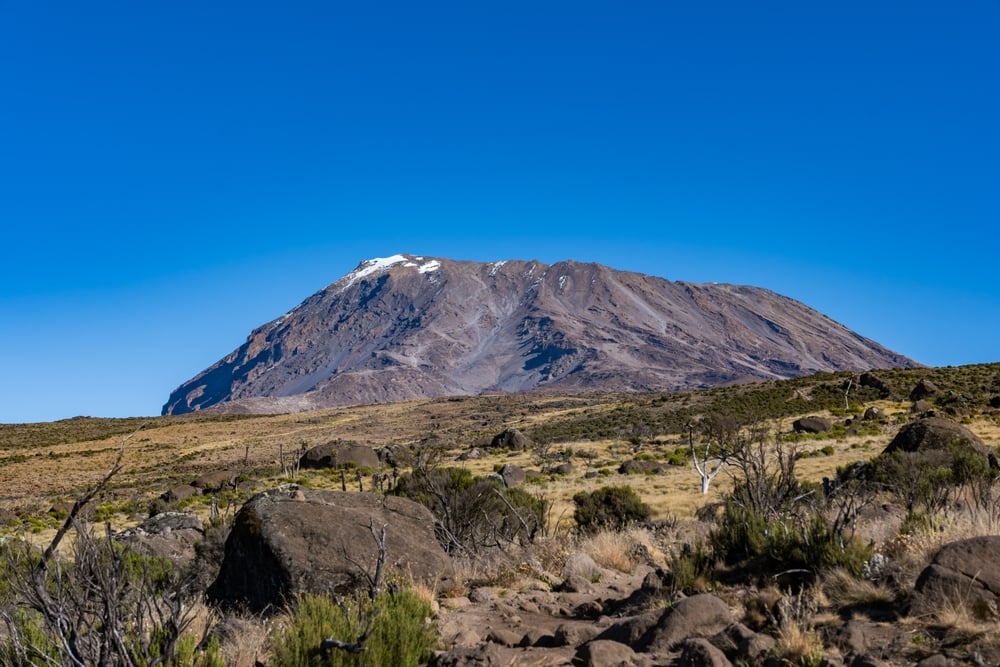
If you’re weighing up a big trip to East Africa, the reasons to visit Tanzania start with how much fits into one country. At 5,895 m, Kilimanjaro is the highest point in Africa, and the Serengeti, Ngorongoro Crater and Zanzibar’s beaches are all a short drive or domestic flight from its airport.
Below are the five reasons in turn: the climb, the Great Migration, Ngorongoro, Zanzibar’s beaches and Stone Town. After that come the best months for each, a sample two-week route and the entry rules that changed on 1 October 2026.
Quick Answer: Why Visit Tanzania?
- Kilimanjaro: Africa’s highest mountain, climbable on foot with no ropes or technical experience, over five to nine days.
- The Serengeti: home of the Great Migration, with over a million wildebeest moving through it every year.
- Ngorongoro Crater: a sunken caldera where all of the Big Five, including the endangered black rhino, are possible in one game drive.
- Zanzibar: warm Indian Ocean beaches at Nungwi and Kendwa, plus Stone Town, a UNESCO World Heritage Site.
- Getting there: fly into Kilimanjaro International Airport (JRO) for the climb and the northern parks, then take a domestic flight to Zanzibar.

1. Climbing Kilimanjaro, Africa’s Highest Mountain
This section is general information for planning. It doesn’t replace advice from your GP, a travel clinic or a qualified mountain guide.
Kilimanjaro tops out at 5,895 m (19,341 ft), and UNESCO describes it as the largest free-standing volcanic mass in the world. If you’ve bagged a few Munros, picture Scotland’s highest mountain, Ben Nevis, stacked four times over with a bit to spare.
The good news is that the standard routes need no ropes, crampons or climbing experience. It’s a long walk up a very big hill. The hard part is the altitude: each breath at the summit holds about half the oxygen it would at sea level, which is why routes take five to nine days and build in time to acclimatise.
On the way up you pass through the mountain’s vegetation zones: montane forest on the lower slopes, then heath and moorland, alpine desert and finally the bare, icy summit. Summit night usually starts around midnight in temperatures well below freezing, and sunrise near the crater rim is the photo everyone comes home with.
Most of what you’ll wear is normal hiking kit, and our best travel gear list covers the basics. Boots and a proper down jacket matter more here than on almost any other trip, though. If the climb is on your list, there’s a step-by-step guide to what to sort out, in the order you’ll need it, covering training walks, kit and the gear check when you land.
Ask any operator how its porters are paid and how much they carry. The Kilimanjaro Porter Assistance Project monitors how trekking companies treat their crews and is a good place to start reading.
2. The Serengeti and the Great Migration
The Serengeti is the safari most people picture: open grass plains, flat-topped acacias and lions dozing in the shade. It’s also home to the Great Migration, where over a million wildebeest, along with zebra and gazelle, follow the rains on a circuit of around 1,000 km that crosses into Kenya and never really stops.
Timing decides what you see. Roughly January to March, the herds gather on the southern plains to give birth, and the predators follow. Roughly July to October, they’re in the north, crossing the Mara River in the scenes you’ll know from nature documentaries.
Game drives start early, when the animals are most active, so expect a few pre-dawn alarms. Safaris here range widely, big lodges at one end and small tented camps at the other, so check the transfers, what’s included and how many people share your vehicle before you book.
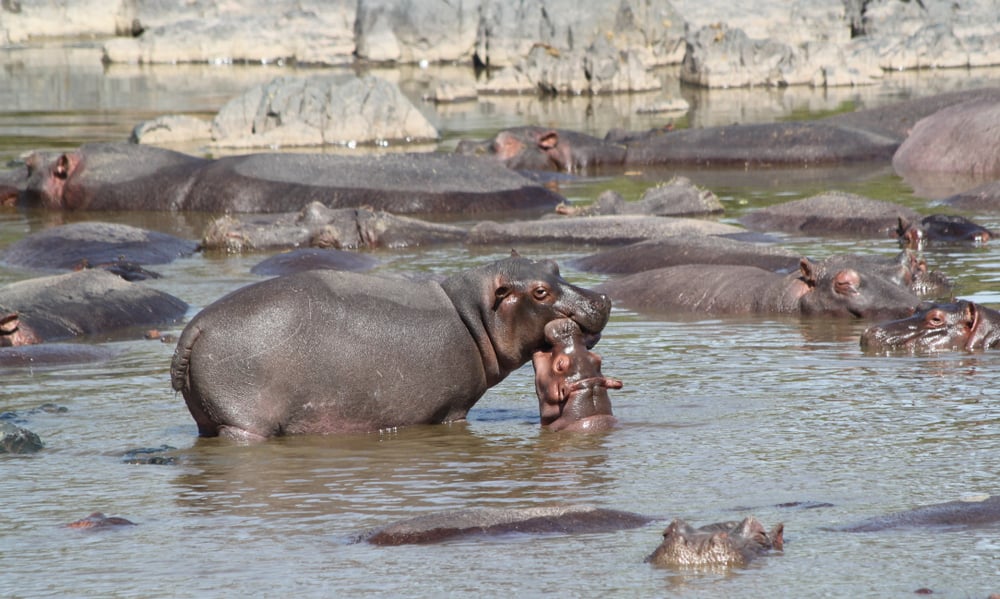
3. Ngorongoro Crater: The Big Five in a Day
Ngorongoro is the collapsed remains of a huge volcano and the largest unbroken caldera in the world. The crater floor covers almost 260 square kilometres and sits around 600 m deep. The animals inside have water and grazing all year, and UNESCO counts the area among the places with the highest density of mammalian predators in Africa.
It’s one of the best places in Tanzania to spot the endangered black rhino. With lions, elephants and buffalo around, and the odd leopard, all of the Big Five are possible in a single game drive. Dropping down the crater wall at first light, with mist still sitting on the floor, is worth the early start on its own.
4. Zanzibar’s Beaches: Nungwi and Kendwa for Swimming
After the mountain and the dust of the safari tracks, Zanzibar is where the trip slows down. The north coast is the pick for swimming, and Nungwi made our list of the best beaches in Africa for calm, warm water.
Tides shape the day here. On the east coast, around Paje and Jambiani, the sea can pull back a long way at low tide, which suits kitesurfers and seaweed farmers more than swimmers. Nungwi and neighbouring Kendwa, on the northern tip, are far less affected. Boat trips out to Mnemba Atoll are the classic snorkelling day.
5. Stone Town, Zanzibar’s UNESCO Old Town
Zanzibar’s old town is a complete change of pace from the beach. UNESCO lists Stone Town as a fine example of the Swahili coastal trading towns of East Africa, and centuries of Swahili, Arab, Persian, Indian and European influence show in its carved wooden doors, coral-stone houses, mosques, markets and cathedrals.
Two things not to miss: a spice farm tour (cloves, nutmeg and cinnamon are why Zanzibar is called the Spice Island) and the evening food stalls at Forodhani Gardens on the seafront. Queen fans can also look for the house linked to Freddie Mercury, who was born in Stone Town.
When Is the Best Time to Visit Tanzania?
If the climb is the anchor of the trip, build your dates around Kilimanjaro’s two dry seasons: June to early October and mid-December to early April. The rest lines up well, as the table shows.
| Months | Kilimanjaro | Serengeti | Zanzibar |
|---|---|---|---|
| Mid-December to March | Dry season, a good climbing window | Calving on the southern plains | Hot, mostly dry |
| April and May | Long rains: the hardest time to climb | Green season | Long rains, the wettest months |
| June to early October | Main dry season | Peak season; Mara River crossings roughly July to October | Dry and pleasant |
| Late October to early December | Short rains | Herds head back south | Short rains |
June to October is peak safari season, when the grass is short and the animals gather around water. Zanzibar is at its best outside the long rains of April and May.
How to Fit Kilimanjaro, a Safari and Zanzibar Into One Trip
Most people do it in this order: climb first, safari second, beach last. You start the mountain fresh, the safari is a few easy days in a jeep while your legs recover, and Zanzibar becomes the reward at the end.
Two weeks is tight but doable for all three. The illustrative plan below takes 15 days, with a seven-day climb, three days on safari and a short Zanzibar finish. Two and a half weeks is more comfortable.
| Day | Where | What |
|---|---|---|
| 1 | Kilimanjaro International Airport to Moshi | Arrive, check in, gear check with your climb operator |
| 2 to 8 | Kilimanjaro | A seven-day route, with summit night near the end |
| 9 | Moshi or Arusha | Hotel night: shower, sleep, settle the crew tips |
| 10 to 12 | Ngorongoro Crater and the Serengeti | Three days of game drives by jeep |
| 13 | Arusha to Zanzibar | Short domestic flight, then on to Nungwi or Kendwa |
| 14 | Zanzibar | Beach day, or a Mnemba Atoll snorkelling trip |
| 15 | Stone Town | Spice farm tour, Forodhani Gardens, then fly home |
Swap in a longer or shorter route to suit your fitness and budget. A longer route gives your body more time to acclimatise, and operators’ prices usually rise with each extra day on the mountain.
Tanzania Travel Requirements: What to Sort Before You Go
- Fly into Kilimanjaro International Airport (JRO). It sits between Moshi, the usual base for the climb, and Arusha, the safari hub.
- Apply for your Tanzanian e-visa online before you travel. Your passport needs at least six months’ validity on arrival and one blank page.
- Since 1 October 2026, visitors have also needed Tanzania’s mandatory government inbound travel insurance, bought online beforehand or on arrival. On the mainland it comes from the National Insurance Corporation and costs US$44 per visitor for up to 92 days. If Zanzibar is your first stop, buy the Zanzibar Insurance Corporation policy instead.
- Keep your own policy too. Our guide to what travel insurance covers explains the basics, and for Kilimanjaro, check that yours covers trekking to 6,000 m and helicopter evacuation.
- Book a travel clinic appointment a couple of months ahead for vaccinations and malaria advice. You’ll need a yellow fever certificate if you’re arriving from a country with a risk of transmission.
- Carry some US dollars in newer notes in good condition, as older or damaged notes can be refused, and budget for tipping your mountain crew and safari driver-guide. Tips are customary and a meaningful part of their income.
- Park fees make up a large share of any Kilimanjaro or Serengeti price, so if you’re starting a fund for this one, here’s how to save money for travel.
Tanzania Trip FAQs
Do You Need Climbing Experience for Kilimanjaro?
No. The standard Kilimanjaro routes are long, steep walks with no ropes or crampons needed. The main challenge is the altitude, so good fitness and a route with enough days to acclimatise matter more than experience.
How Many Days Do You Need in Tanzania?
About two weeks covers a seven-day Kilimanjaro climb, three days on safari and a few days on Zanzibar, though it’s tight. Two and a half weeks gives you breathing room for a rest day between the mountain and the jeep.
Is Tanzania Travel Insurance Mandatory?
Yes, since 1 October 2026 most foreign visitors must buy the government’s inbound travel insurance, US$44 from the National Insurance Corporation for the mainland. It’s valid for up to 92 days and is separate from your own travel insurance.
Where Is the Best Place to Swim on Zanzibar?
The north coast, around Nungwi and Kendwa, is the best place to swim on Zanzibar because the tide goes out far less there. On the east coast around Paje, the sea can retreat a long way at low tide.
That’s five reasons, and we haven’t even got to Mount Meru, Lake Manyara or Tarangire’s elephants. Has Tanzania made your list yet?