
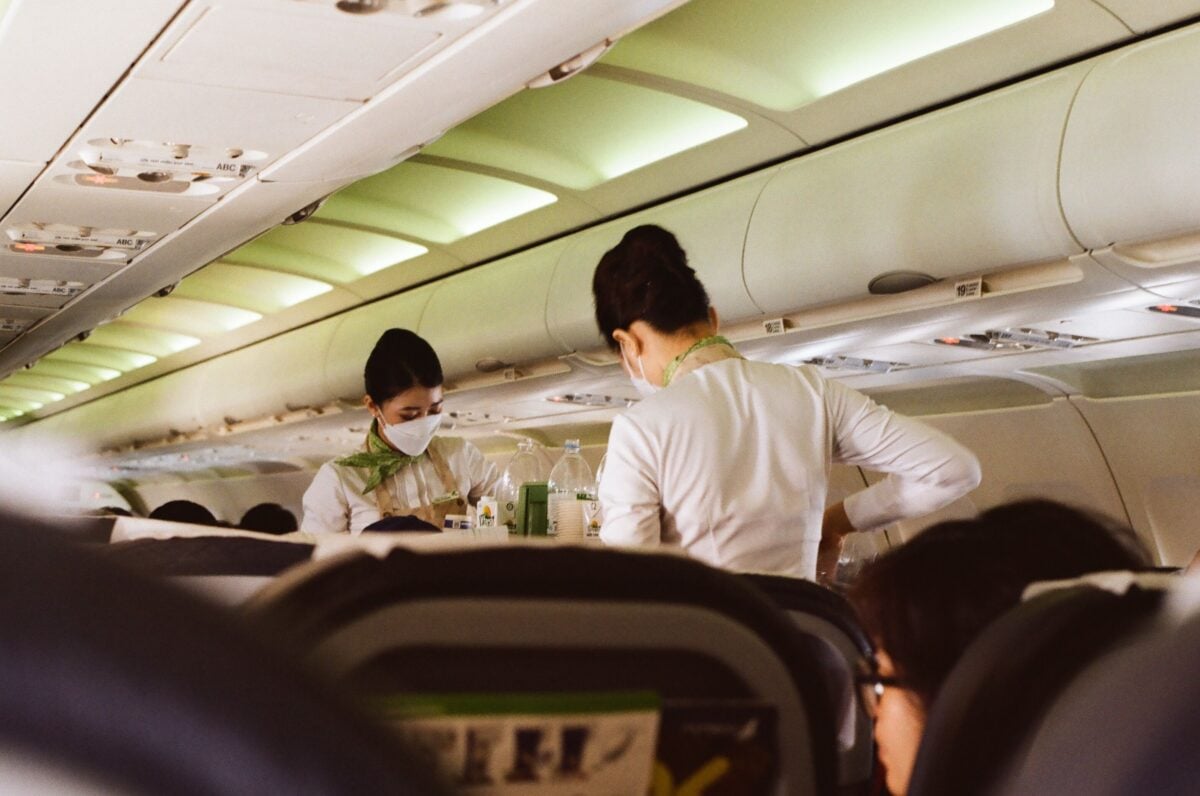
If you have ever reached for a few dollars after especially kind service in the air, you are not the only one. It feels like a simple thank you. On a plane, though, the rules are different.
The short answer to the question can you tip your flight attendant is usually no. On most major U.S. airlines, flight attendants are not supposed to accept cash tips from passengers. That does not mean appreciation is unwelcome. It just means cash is often the wrong tool for the job.
Here is how tipping flight attendants actually works, why policies vary, and what to do instead if you want to say thanks without making the moment awkward at 35,000 feet.
Can you tip your flight attendant?
In most cases, no. Major U.S. airlines generally do not allow flight attendants to accept tips from passengers. That means handing over cash after a drink service or at the end of a flight can put a crew member in an uncomfortable spot, even if your intentions are good.
There is one notable exception that travelers talk about often: Frontier Airlines. Frontier has used payment screens during inflight purchases that allow passengers to add a gratuity when buying snacks or drinks with a credit card. The airline does not accept cash onboard for those purchases, so the tipping prompt is built into the card transaction rather than handled like a discreet handoff.
Southwest Airlines is often described as more flexible than some competitors. Reports about its practice suggest tips are discouraged, but may be accepted if a passenger insists. That is still not the same as a general expectation to tip.
For carriers such as American Airlines, Delta Air Lines, and United Airlines, the safer assumption is that cash tipping is not part of the onboard culture. If you are already juggling other travel etiquette questions, why your boarding pass says seat assigned at gate is another one that catches people off guard.
Why tipping is different on a plane
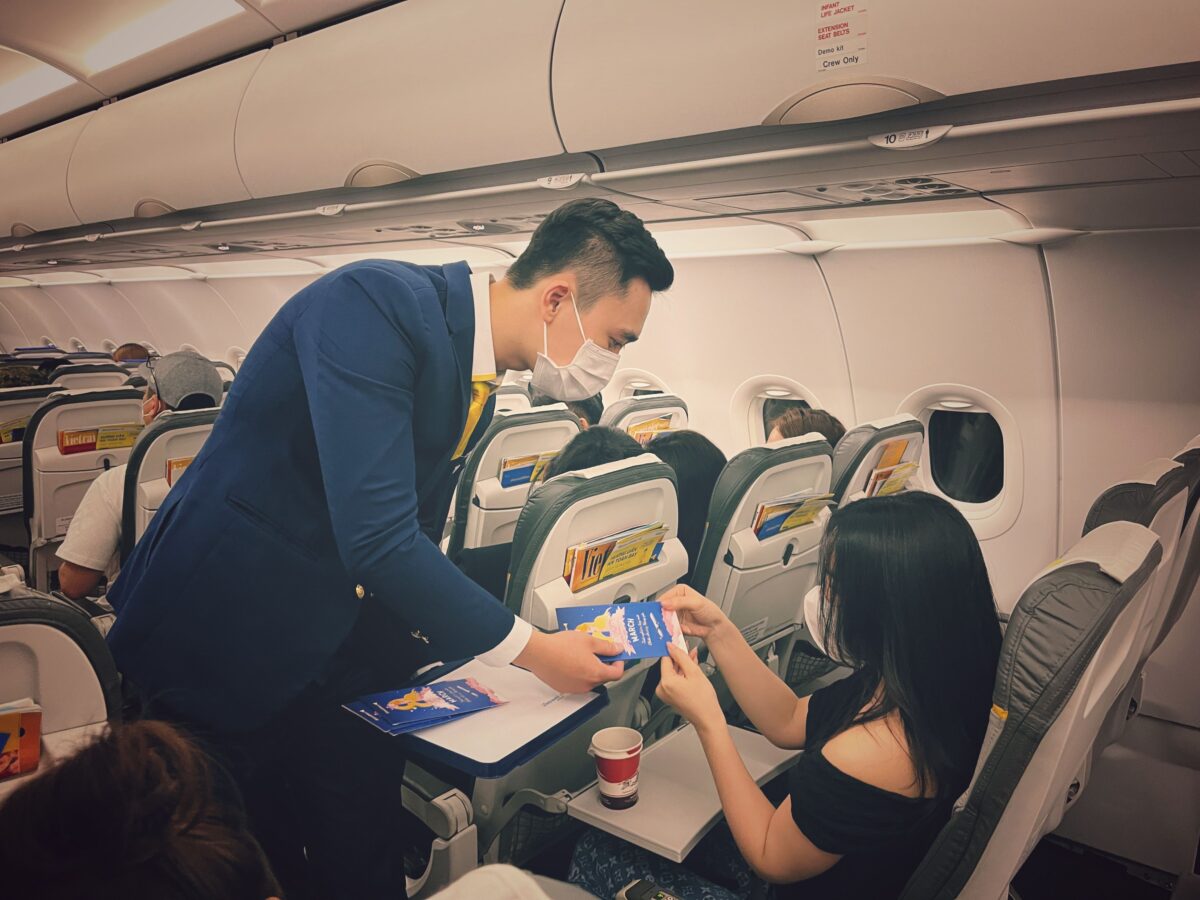
Flight attendants provide customer service, but that is only part of the job. They also handle safety, security, medical situations, evacuations, and compliance in the cabin. Federal rules require a minimum number of flight attendants based on aircraft size, and airlines cannot board passengers unless those crew positions are covered, which tells you a lot about how the role is viewed.
The logic is simple. If safety is a core function of the role, pay should not depend on variable gratuities the way it might in a restaurant or bar. You may still feel like your crew member was part server, part concierge, part therapist, and part magician who found overhead bin space where none existed. Fair enough. But airlines and unions have generally not embraced tipping as standard practice.
This also explains why the etiquette feels murkier than it does on the ground. You are in a service environment, but not one built around tips.
Why airline policies vary

We earn a commission if you buy through this link, at no extra cost to you.
Airlines do not all make money the same way, and onboard service is not the same across brands.
On an airline like Frontier, where food and drinks are commonly sold rather than included, a card reader prompt for gratuity fits the low-cost carrier sales model. On a full-service airline, where crew members are not ringing up every snack purchase in the same way, a tipping prompt would feel much less normal.
There is also a culture issue. Many travelers already feel overloaded by tip screens on the ground. Adding that pressure in a narrow aisle, with a flight attendant holding the device and your seatmate pretending not to watch, is not exactly relaxing.
That is why the best rule is this: assume tips are not expected unless the airline itself presents tipping as part of the transaction.
Quick guide: what to expect by airline
| Airline | General expectation | What travelers should know |
|---|---|---|
| American Airlines | No tipping expected | Cash tips are generally not part of standard onboard policy or etiquette. |
| Delta Air Lines | No tipping expected | Many travelers and crew discussions point to tips not being accepted, and inflight service is not structured around gratuities. |
| United Airlines | No tipping expected | Best to avoid offering cash unless the airline clearly says otherwise. |
| Southwest Airlines | Usually discouraged | Some reports suggest a crew member may accept if a passenger insists, but it is not standard practice. |
| Frontier Airlines | Tipping may be offered during purchases | Inflight credit card transactions have included gratuity prompts for snacks and drinks, so passengers may see tipping as part of checkout rather than as cash etiquette. |
Practical tip: if you are unsure, do not press cash into a crew member’s hand. Ask politely or choose a non-cash way to show appreciation.
Should you ever offer a cash tip?
If the airline does not openly support tipping, cash is usually not the best move.
There are a few reasons:
- The crew member may have to refuse it. That can be awkward for both of you.
- It can look like you want special treatment. Even if you do not, airlines are sensitive to anything that resembles favoritism or a bribe.
- It creates inconsistency. One flight attendant may accept, another may decline, and a third may not be sure what the policy allows.
If you bought food or drinks on an airline that clearly includes a tipping screen, that is different. In that case, the airline has built gratuity into the onboard process, and you can choose yes or no just as you would anywhere else. If you are trying to trim travel costs more broadly, it is also worth knowing the flight booking myths that could be costing you hundreds in 2026.
Better ways to thank a flight attendant
If you had a genuinely great crew, there are better options than cash. These tend to be more widely appreciated and less likely to conflict with policy.
1. Say thank you clearly and specifically
A warm, direct compliment still goes a long way. Instead of a vague thanks, mention what stood out.
- “Thanks for helping my family get settled so quickly.”
- “I appreciated how calm you were during the delay.”
- “You handled that full cabin like a pro.”
That kind of feedback lands better than you might think.
2. Write to the airline
This is one of the best options. If a crew member made your flight better, contact the airline through its customer service channels and mention the flight number, route, date, and the attendant’s name if you caught it on a badge.
Why it matters: formal compliments can reach supervisors and may actually help with recognition inside the company. A five-dollar bill disappears fast. A documented compliment can stick.
If you need the airline’s support pages, the official customer service sections for American Airlines and Southwest Airlines are reasonable places to start.
3. Offer a small packaged treat
Many crew members say sealed snacks are appreciated. Think simple, shareable, and easy to stash in a galley bag.
- Individually wrapped chocolates
- Mini snack packs
- Single-serve candy
Important: keep it sealed and store-bought. Homemade brownies might be wonderful, but airline crews are not in a great position to investigate your kitchen hygiene mid-taxi.
4. Give a modest gift card if appropriate
Small gift cards, especially to familiar coffee chains, are another common thank you. Travelers often choose coffee cards because they are practical on long workdays and layovers.
This is still worth handling carefully. Policies can vary, and anything too generous could be declined. Keep it clearly a token of appreciation, not a request for favors.
5. Be the easy passenger everyone silently roots for
Not glamorous, but effective.
- Board with your headphones, documents, and seat assignment ready.
- Keep the aisle clear while stowing your bag.
- Follow crew instructions the first time.
- Use the call button for actual needs, not because you are bored.
- Say hello and make eye contact like you are speaking to a human, not an in-seat beverage app.
Kindness is not a substitute for fair pay, but it absolutely improves the cabin experience for everyone. The same general rule applies in other awkward tipping situations too, including tipping in Scotland without the awkwardness.
What not to expect if you do give something
A tip, snack, or gift should never be used to angle for perks.
Do not expect:
- seat upgrades
- free alcohol
- extra meal choices
- rule bending on baggage or seating
A good thank you is just a thank you. Once it starts looking transactional, it crosses into territory airlines do not like at all.
What about premium cabins?
This is where the question comes up most often. If you are in business class or first class, the service can feel closer to a restaurant or lounge. Multiple courses, frequent drink refills, and more personalized attention naturally make some travelers wonder if a gratuity is appropriate.
Even there, the same broad rule applies. On most airlines, tipping is still not standard. Premium cabin service may feel more hands-on, but that does not automatically change company policy.
If you want to mark exceptional service in a premium cabin, a written compliment to the airline is still one of the strongest options. A small sealed treat or modest gift card may also be better received than cash, provided it does not conflict with policy.
Holiday flights and long-haul trips are a special case, but not that special
Some travelers feel more inclined to give something during the holidays or on very long trips. That instinct makes sense. Crews are working odd hours, missing celebrations, and managing tired passengers in a metal tube. Not exactly a silent retreat.
But the etiquette does not fundamentally change. A thoughtful non-cash token is usually safer than money, and a message to the airline after the flight remains one of the most useful forms of appreciation.
Bottom line
So, can you tip your flight attendant? Usually not with cash, and usually not on major U.S. airlines. Frontier is a notable exception because gratuity can appear during inflight purchases, and Southwest is often described as more flexible than some competitors. But the default assumption should be that tipping is not expected.
If you want to thank a great crew, the best moves are simple:
- be polite onboard
- offer specific verbal thanks
- consider a small sealed treat or modest gift card
- send a compliment to the airline after the flight
That approach respects airline policy, avoids awkwardness, and still gives credit where it is due. Which, after a delayed boarding and three gate changes, might be the most civilized thing anyone does all day.