

Holiday flight horror stories are common for a reason, which is exactly why these numbers land differently. Alaska and Hawaiian say they completed 99.37% of scheduled flights during the jammed July 2 to July 6 travel rush, right when airports were doing their annual impression of a crowded theme park with less joy and worse snacks.
For budget travelers, that matters far more than airline chest-thumping. Reliable flights can save real money, especially when one cancellation triggers an extra hotel night, a missed connection, or a panic-booked backup fare that costs more than the original trip.
The holiday performance also fits a bigger pattern. Alaska Air Group, which includes Alaska, Hawaiian, and Horizon Air, says it ranked No. 1 among U.S. carriers for on-time performance in the first half of 2026. If you are comparing similar fares, reliability is part of the math, right up there with bag fees and how much suffering you can tolerate before coffee.
Alaska And Hawaiian Put Up Strong Numbers Over The July 4 Rush
The July 4 holiday stretch is a proper stress test for any airline. Flights go out full, airports clog up fast, and one aircraft swap or weather delay can spread through the network like a bad group chat.
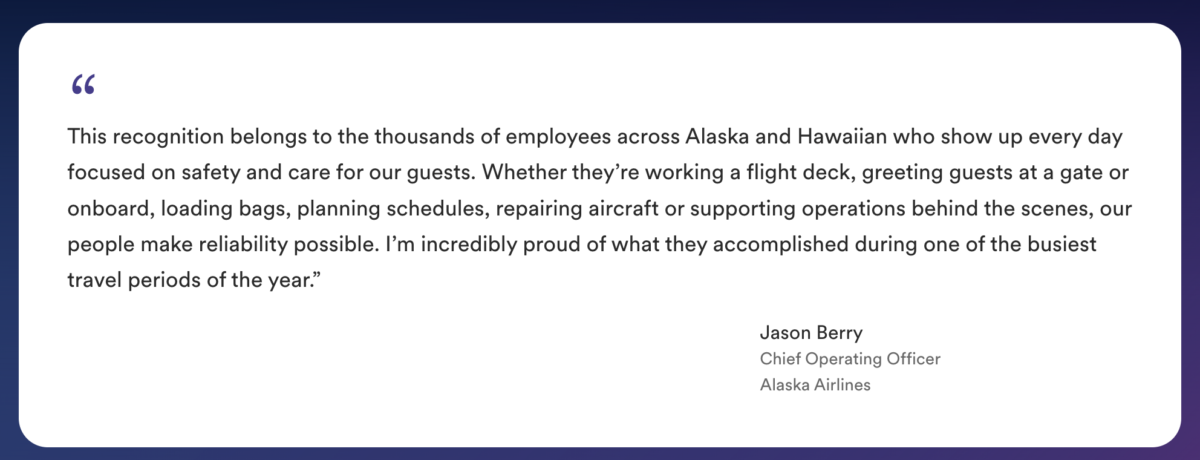
During July 2 through July 6, Alaska and Hawaiian said they completed 99.37% of scheduled flights. The group also said it finished first among U.S. carriers during that holiday window.
One number stands out more than most: on July 2, Alaska Airlines had zero cancellations. In peak summer, that is a seriously tidy result.
The operation was not exactly having an easy week, either. The period included three of the 10 busiest flying days in company history, specifically July 6, July 2, and July 5. So these results did not arrive on a quiet week with half the country staying home.
- Holiday travel period: July 2 to July 6
- Completion rate: 99.37%
- July 2 cancellations on Alaska: 0
- Busiest days making the top 10 company list: July 6, July 2, and July 5
What On-Time Performance Actually Means For Travelers Trying To Save Money
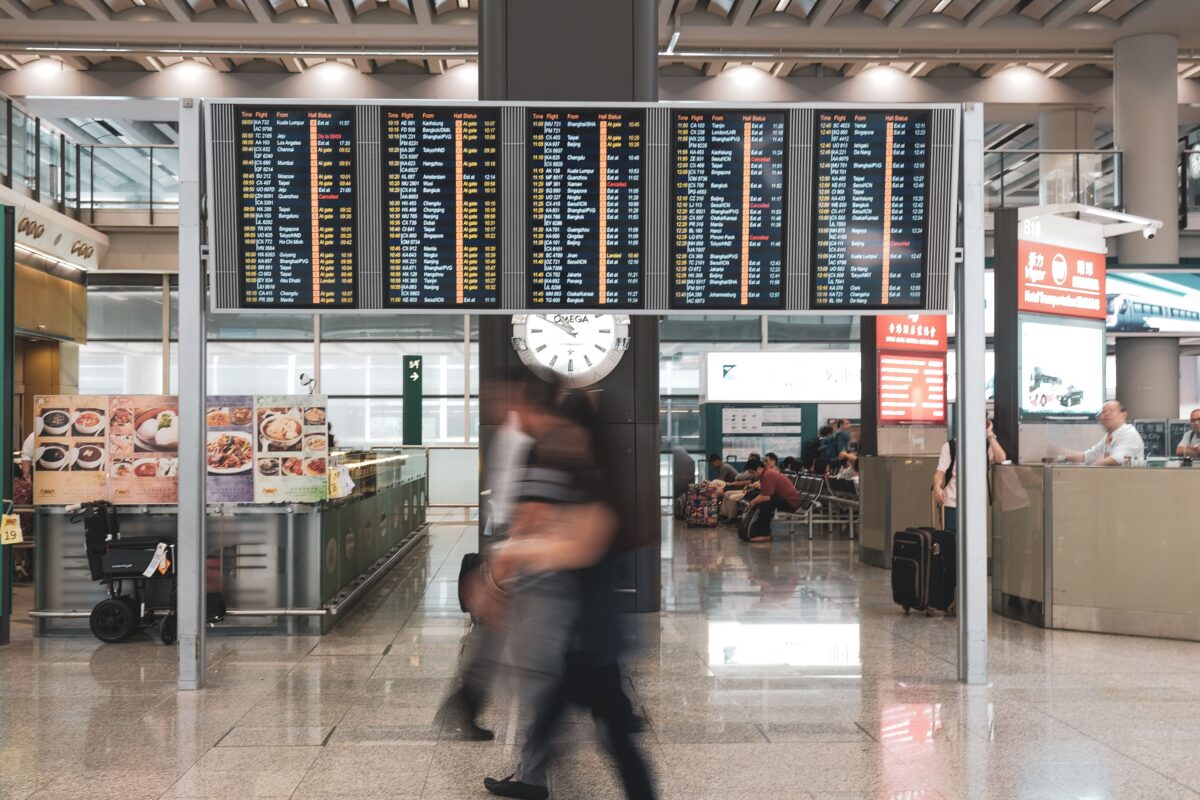
Airline stats can sound like spreadsheet wallpaper, but on-time performance and completion rate have very real consequences when your trip budget has no room for surprises.
Completion rate measures how many scheduled flights actually operate. In normal-person language, it is one of the clearest signs of how likely you are to avoid a cancellation altogether.
On-time performance is about flights arriving as scheduled, or close enough to avoid blowing up the rest of your day. That matters if your plan includes a tight connection, airport shuttle, last train, ferry, or hostel check-in cutoff. Backpackers and budget travelers usually build in less financial cushion, so one delay can kick off a chain reaction of extra costs.
If an airline runs smoothly during a holiday crunch, that can mean:
- Less chance of paying for an unplanned overnight stay
- Lower risk of missing onward transport, especially on separate tickets
- Better odds of bags arriving when you do if operations stay stable
- Less need to rebook at painful peak prices during a busy weekend
It is not flashy. It is just the sort of boring competence that keeps a cheap trip from becoming an accidental premium experience, and not in a fun way. If delays do happen, it is worth knowing your rights in some markets, especially with rules like those covered in flight delayed in the UK here’s how to claim compensation and get paid.
Alaska Air Group Says It Led U.S. Carriers In The First Half Of 2026
The July 4 numbers were not framed as a lucky five-day sprint. Alaska Air Group also said Cirium ranked the company No. 1 in on-time performance among U.S. carriers for the first half of 2026.
That covers Alaska Airlines, Hawaiian Airlines, and Horizon Air, across a six-month stretch that included winter weather, spring break traffic, and the start of summer. In other words, not exactly a gentle exam.
For travelers, the real takeaway is consistency. A strong holiday weekend is useful. A strong six-month run is more convincing because it suggests the operation held up across different seasons, demand spikes, and the usual collection of aviation chaos.
There is also a practical booking angle here. If you are staring at two fares that are close in price and departure time, reliability belongs in the value equation. Chasing the absolute cheapest option can still work, but it is worth balancing that instinct with the risk of disruption. If you need a refresher on bad booking habits, flight booking myths that could be costing you hundreds in 2026 is relevant for exactly this kind of decision.
Why This Matters More During Peak Summer Travel
Summer is when airline networks get stretched thin. Aircraft utilization rises, thunderstorms start lobbing delays across entire regions, and airports become obstacle courses with rolling suitcases.
That is why a strong Independence Day performance stands out. This was a major U.S. holiday travel crunch, not a random calm weekday in February when half the country is still pretending it likes winter.
For Alaska and Hawaiian, the timing is useful because summer bookings are still flowing. Late July, August, and shoulder-season Hawaii and Alaska trips are still on plenty of travelers’ radar. Strong recent numbers may give some passengers more confidence, especially those trying to keep a trip simple, cheap, and low-drama.
Still, no airline is bulletproof. Weather, air traffic control slowdowns, mechanical issues, and disruptions elsewhere in the network can wreck a tidy operating day in a hurry. Reliable does not mean invincible. It just means the odds may tilt a little more in your favor.
How Budget Travelers Can Use Airline Reliability When Booking
If you are trying to travel cheap, the temptation is usually to grab the lowest fare and ask questions never. Sometimes that works beautifully. Sometimes it ends with a six-hour layover, a missed bus, and dinner from a vending machine that seems angry you are there.
Recent performance data is one of the few useful signals travelers can actually apply when comparing airlines beyond the first displayed fare. It should not be the only factor, but it is far from meaningless.
When Reliability Should Matter More Than A Small Fare Difference
- Short connections: If the buffer is tiny, on-time performance matters more.
- Separate bookings: If your onward flight, ferry, bus, or train is not protected on one ticket, delays get expensive quickly.
- Event, tour, or cruise departures: Missing the start time can sink the whole plan.
- Remote destinations: Fewer daily flights mean fewer rescue options if something goes sideways.
- Peak travel dates: Rebooking gets harder and pricier when flights are already full.
Put simply, a slightly cheaper ticket is not always the bargain it first appears to be. The true cost of a trip includes disruption risk.
Simple Ways To Cut Your Own Risk
- Avoid the last flight of the day on important routes if you can
- Leave more time between separate tickets than you think you need
- Travel carry-on only when the itinerary is tight, with one of the best personal item bags for flights making life easier
- Build in a buffer night before a cruise, wedding, or guided trip
- Pick reliability over tiny savings when the trip has no margin for error
Where Alaska And Hawaiian Fit In The Bigger Network
Alaska Airlines, Hawaiian Airlines, and Horizon Air sit under the Alaska Air Group umbrella. The company says it operates hubs in Seattle, Honolulu, Portland, Anchorage, Los Angeles, San Diego, and San Francisco.
It also says the network reaches more than 140 destinations across North America, Latin America, Asia, the Pacific, and Europe.
That scale matters because reliability gets more valuable as itineraries become more complicated. A simple domestic nonstop is one thing. A longer trip with a West Coast connection, an island hop, or an international onward ticket has more moving parts and more ways for a delay to ripple through the whole plan.
The group also says Alaska and Hawaiian are part of the oneworld alliance, and that Atmos Rewards members can earn and redeem points with partner airlines serving more than 1,000 worldwide destinations. For frequent travelers, that opens up more redemption and routing options, though the actual value still depends on fare rules, award space, and how flexible your dates are.
Passenger experience matters too, even if reliability is the main headline here. Anyone eyeing a long transpacific or mainland hop might also care that your next Alaska or Hawaiian flight might finally have better wi fi than your apartment, which is not nothing when a delay turns the gate area into your temporary office.
What To Watch As Summer 2026 Continues
The next test is pretty straightforward: can the strong first half and solid July 4 stretch hold through the rest of summer?
That is when tidy airline claims have to survive real-world conditions day after day. Late-summer thunderstorms, packed flights, aircraft rotations, crew timing, and airport congestion have a habit of humbling even the cleanest performance charts.
There is also the customer side of the story. Even when headline reliability is strong, flyers still grumble about the usual pain points: tight seating, uneven customer service, bag fees, and occasional irregular-ops communication that feels slower than it should. Good completion stats do not magically erase those complaints. They just reduce the odds that your trip falls apart before those other annoyances even get a chance to show up.
Still, Alaska and Hawaiian have posted numbers worth watching so far:
- No. 1 U.S. on-time ranking for the first half of 2026
- 99.37% completion rate over the July 2 to July 6 holiday period
- Zero Alaska cancellations on July 2
- Three of the busiest flying days in company history fell within that same stretch
For travelers, especially the carry-on crowd trying to keep costs low, the takeaway is refreshingly practical. A dependable airline can be a money-saving tool, even if that benefit does not shout at you from the first search results page.
Cheap flights are great. Cheap flights that actually operate on time are better. A radical concept, apparently, but a useful one if your budget has better things to do than fund avoidable travel chaos.
