
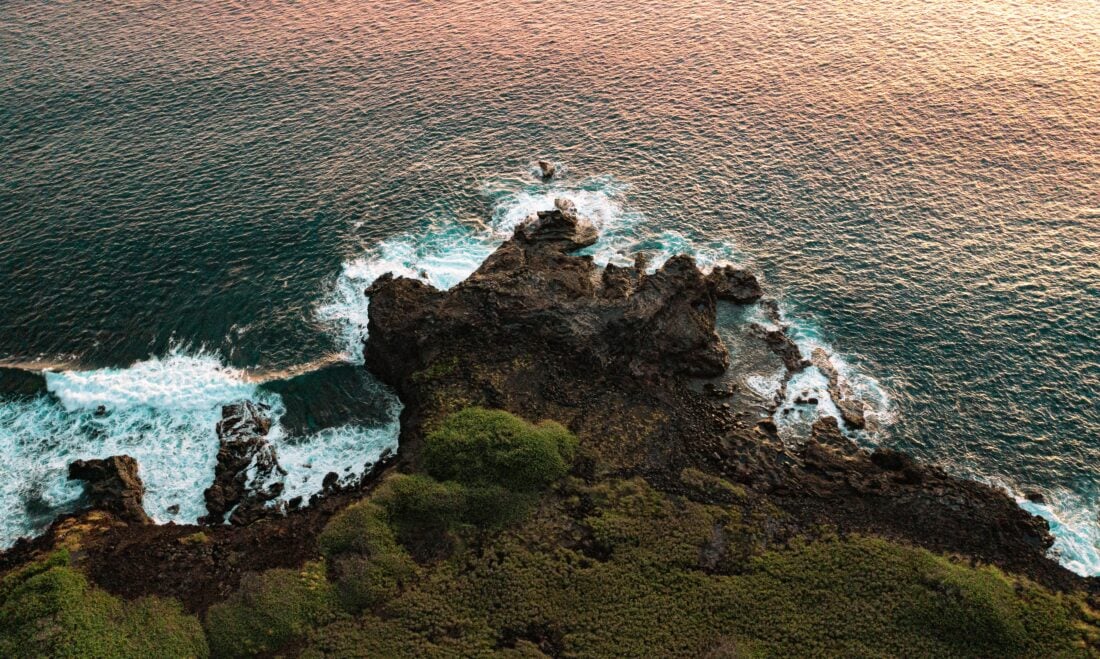
Reunion Island is a French overseas department in the Indian Ocean that packs volcanic craters, jungle cirques, lagoon beaches, and Creole food markets into a single destination. The headline draw is Piton de la Fournaise, one of the world’s most active volcanoes, but the island earns its nickname “The Island of Adventure” through a full range of activities from multi-day hikes to canyoning, helicopter flights, and cultural exploration in towns shaped by French, Creole, African, and Indian heritage.
Search interest for Reunion Island travel has been rising over the past year, with peaks in August, December, and January, so it’s clearly landing on more radars. If you’re into volcanic island adventures like Rishiri in Japan, Reunion takes that concept and cranks the intensity up several notches.
Piton de la Fournaise: Reunion Island’s Number One Attraction
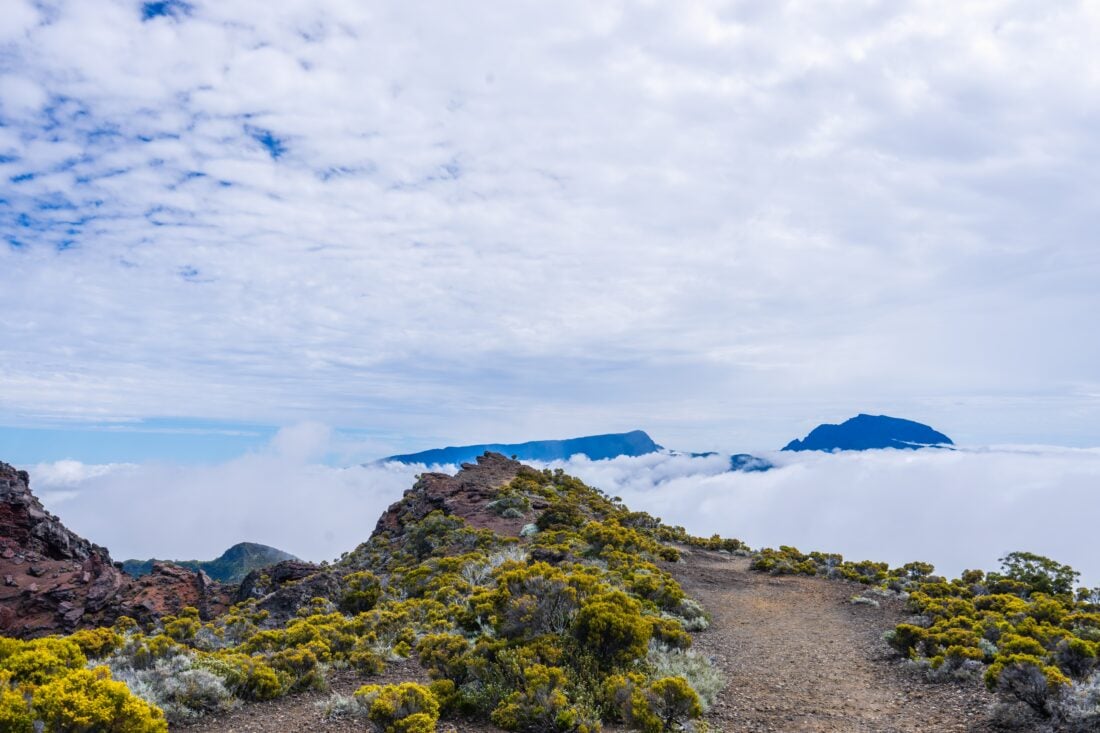
Piton de la Fournaise is the island’s single most visited site. It is an effusive (not explosive) volcano, which means lava flows rather than violent eruptions, and it is monitored around the clock. Hiking around the crater is permitted even during eruptions when conditions are deemed safe.
The only road to the crater is the RF 5 (route forestiere du volcan). Along the way, stop at the viewpoint Nez de Boeuf and cross the Plaine des Sables, a stretch of terrain that genuinely resembles a Martian landscape. The road from Saint-Philippe to Piton-Saint-Rose passes lava streams from eruptions in 2007, 1998, 2001, 2002, 2004, and 2005. The 2004 flow formed tunnels suitable for a guided speleology (lava tube) tour. No buildings are permitted along this coastal stretch because of ongoing volcanic activity, and the island’s landmass has actually grown from lava platforms created by successive eruptions.
Guided hikes around Piton de la Fournaise are available, and a lava tubing tour inside an old lava flow adds an underground angle to the visit.
Piton de la Fournaise
Hiking the Three Cirques
Reunion’s three cirques, Cirque de Mafate, Cirque de Cilaos, and Cirque de Salazie, are large calderas formed by volcanic collapse. Each has a distinct character.
Cirque de Mafate is the wildest. No roads lead in; access is on foot or by helicopter only. A two-day hiking trip into Mafate, staying overnight in one of the small villages, is widely considered the best single experience on the island. Accommodation in Mafate ranges from roughly €17 to €40 per night (for reference, £1 gets you about €1.15 and $1 about €0.87 as of April 2026). The best viewpoint overlooking Mafate is Belvedere du Maido, reached by road.
Cirque de Cilaos is accessible by road, making it the most practical base for day hikes. It developed as a spa destination in the late 19th century and still has tourism infrastructure. Canyoning is also available here.
Cirque de Salazie contains the historic Creole town of Hell-Bourg, described as the most Creole town on the island. Hell-Bourg sits inside an ancient thermal station and offers a pedagogical slavery history trek (around 250 m elevation gain) and the Trois Cascades hike, a steep climb that ends at three waterfalls suitable for bathing. The Bebour et Belouve rainforest nearby offers a three-hour round-trip hike with views of Piton des Neiges and the cirque.
Reunion also has a second volcano, Piton des Neiges, which is less active than Piton de la Fournaise. Climbing it involves 1,700 m of elevation gain and is best started early morning to stay ahead of mist. Honestly, if you’ve done any serious hill walking (even something like hiking in the Scottish Highlands around Aviemore), you’ll have a sense of the fitness level needed, though the tropical humidity adds an extra layer of fun.
Canyoning at Riviere Langevin
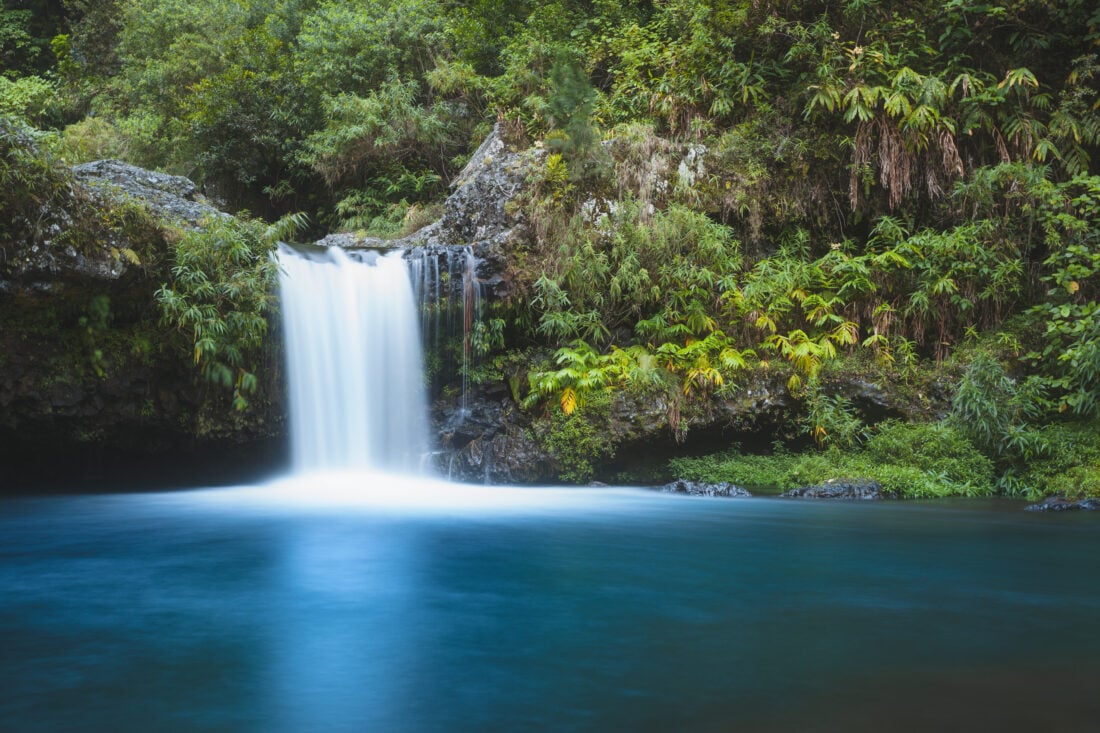
Canyoning at Riviere Langevin is one of the most popular adventure activities on the island. It involves jumping off waterfalls into natural pools. A half-day session costs around €50. The canyon ends near Cascade de Grand Galet, one of the island’s most photographed waterfalls. The Takamaka Valley is another area noted for spectacular waterfall scenery, and it sits in the wettest part of the island.
For a gentler waterfall experience, Langevin and Trois Bassins both have picnic spots with swimming access.
Riviere Langevin
Beach and Lagoon Activities
Reunion is not primarily a beach destination in the way Mauritius or the Seychelles are, but its western lagoon is genuinely impressive. The reef-protected water runs along the entire western side of the island and functions as a natural aquarium.
- L’Hermitage in Saint-Gilles-Les-Bains is the main beach for swimming and snorkeling. The lagoon is calm and safe; the open ocean is not recommended for swimming.
- Etang Sale is a beach with volcanic black sand, also good for swimming and snorkeling.
- La Saline Les Bains is another western beach, known for sunset views.
- Transparent kayak rental is available at La Saline Les Bains for around €20 per hour, letting you see the coral and fish below.
- Dolphin and whale watching tours operate from the coast, with some including snorkeling or free-diving.
Note: Boucan Canot beach has had issues with shark activity, so check current conditions before swimming there.
Helicopter and Microlight Tours
A helicopter flight over Reunion is one of the most effective ways to understand the island’s scale. From the air you can see the three cirques, the waterfalls, the lagoon, and Piton de la Fournaise in a single sweep. Aerial tours start from around €210. Microlight flights are also available and cover similar ground.
Guided hikes into Cirque de Mafate with a helicopter return are offered through operators including Reunion Mer et Montage. Not gonna lie, the helicopter-out option after a long hike into Mafate sounds like the kind of justified splurge I can get behind.
Cultural Highlights: Towns, Markets, and History
Saint-Denis, the capital, has a European feel with museums along Rue de Paris, the Tamil temple Kovil Kalikambal, and Maison Carrere. Street art is visible throughout the city, much of it by Jace, a street artist who originates from the island.
Hell-Bourg has La Maison Folio, a typical Creole house from 1870 open for guided (€6) or self-guided (€4) tours, and Le Musee des Musiques et Instruments (Maison Morange), an interactive museum open Tuesday to Sunday with a €7 entry fee.
Saint-Pierre hosts a Saturday market that ranked third in the national championship of “most beautiful markets in France” in 2019. It runs from 5:00 am to 12:00 pm and features food stalls, music, and handcrafted goods.
Saint-Paul Market opens on Fridays and Saturdays with local and French foods.
The Cimetiere Marin (Marine Cemetery) in Saint-Paul contains the grave of poet Charles Marie Leconte de Lisle and the alleged tomb of pirate Olivier Levasseur, known as “La Buse.” The cemetery was restored in 1977. A cyclone in 2007 revealed a previously unknown section containing the remains of around 2,000 people, believed to be a slave cemetery.
The Nassaringua-Perournal Tamil temple is the largest Tamil temple on the island.
The Musee Stella Matutina in Piton-Saint-Leu is a large museum complex set inside a former sugar factory, covering the history of sugar production on the island.
Food, Rum, and Creole Cuisine
Reunion’s food scene blends French culinary standards with Creole cooking. The signature dish is rougail-saucisse. A traditional Creole dinner typically begins with rum punch and ends with rum. La Bonne Marmite restaurant offers a Creole buffet of 15 dishes with locally infused rum for around €32.
Markets are the best place to eat cheaply. Saint-Pierre’s Saturday market is a particularly good option for food stalls.
Rum punch is the island’s national drink. Vanilla is sold at every market; look for dark brown, dried beans rather than fresh ones, as the aroma develops over a nine-month drying process. Turns out, the French language skills you may or may not have will get a workout here since Reunion is fully French-speaking (with Creole mixed in), and menus, signage, and market chatter are all in French.
Vanilla Farms and Botanical Gardens
L’Escale Bleue near Saint-Philippe is a vanilla farm offering guided visits (30 to 45 minutes, €5 entry) Monday to Saturday, 9:30 am to 5:30 pm, closed Sundays. The farm explains the nine-month aroma development process and sells vanilla-based products including sugars, drinks, sweets, and scrubs.
Le Domaine du Cafe Grille is a Creole botanical garden that traces the history of the island’s flora chronologically and includes a video on coffee cultivation and roasting.
Jardin des Parfums et Epices de Mare-Longue is another notable botanical garden, though it is best visited during a guided tour as it lacks signposts otherwise.
Jardin d’Eden is a botanical garden on the island suited to those wanting a quieter nature stop.
Wildlife: Sea Turtles and More
Kelonia in Saint-Leu is a nursing station for injured sea turtles. It is a family-friendly stop on the western coast.
Practical Information for Visiting Reunion Island
Getting there: Air Austral flies direct from Paris (around 11 hours) and from Johannesburg twice a week (around 4 hours).
Best time to visit: May to November (the Austral winter) is cooler and drier. March is also recommended as cooler and less crowded than January. If you’re planning a December island escape, Reunion is an option, but be aware that December falls in the warmer, wetter season, so hiking conditions can be less predictable.
Getting around: Rent a car. The roads to Cirque de Cilaos and the Route du Volcan are winding; an automatic transmission is recommended. Public transport exists but is limited.
Where to stay: Three practical bases for a two-week itinerary are Hell-Bourg (for the cirques and northeast), Les Avirons near Saint-Pierre (for the south), and La Saline Les Bains near Saint-Paul (for the western beaches).
Budget notes: Costs are broadly comparable to mainland Europe. Reunion uses the euro (€), same as mainland France, so there’s no currency conversion hassle if you’re coming from the continent. For UK visitors, £100 gets you roughly €115, and for those coming from the US, $1 is worth about €0.87 (as of April 2026). Creole food at markets is affordable; helicopter flights and French restaurants sit at the higher end.
Health: Tiger mosquitoes carry Dengue and Chikungunya; use repellent containing DEET or Icaridine. Tap water is safe for most visitors. UV radiation is high, especially when hiking.
Booking: Reunion Island Tourism can be contacted at resa@reunion.fr with your travel dates, group size, and accommodation preferences.
Frequently Asked Questions
Is Piton de la Fournaise safe to visit?
Yes. Piton de la Fournaise is effusive rather than explosive, and it is monitored 24 hours a day. Hiking is permitted even during eruptions when authorities confirm conditions are safe. The volcano does not threaten inhabited areas.
How do you get into Cirque de Mafate?
Cirque de Mafate has no road access. You enter on foot via hiking trails or by helicopter. A two-day hike with an overnight stay in one of the villages inside Mafate is the standard approach; accommodation costs roughly €17 to €40 per night.
How long do you need in Reunion Island?
Two weeks is the recommended minimum to cover the main highlights, including multi-day hikes, the volcano, beaches, and cultural towns. A seven-day stay is feasible if you base yourself in one location and prioritize.
What is the best viewpoint in Reunion Island?
Belvedere du Maido is widely considered the best viewpoint on the island. It overlooks Cirque de Mafate and is accessible by road, making it a practical stop even without hiking into the cirque itself.