
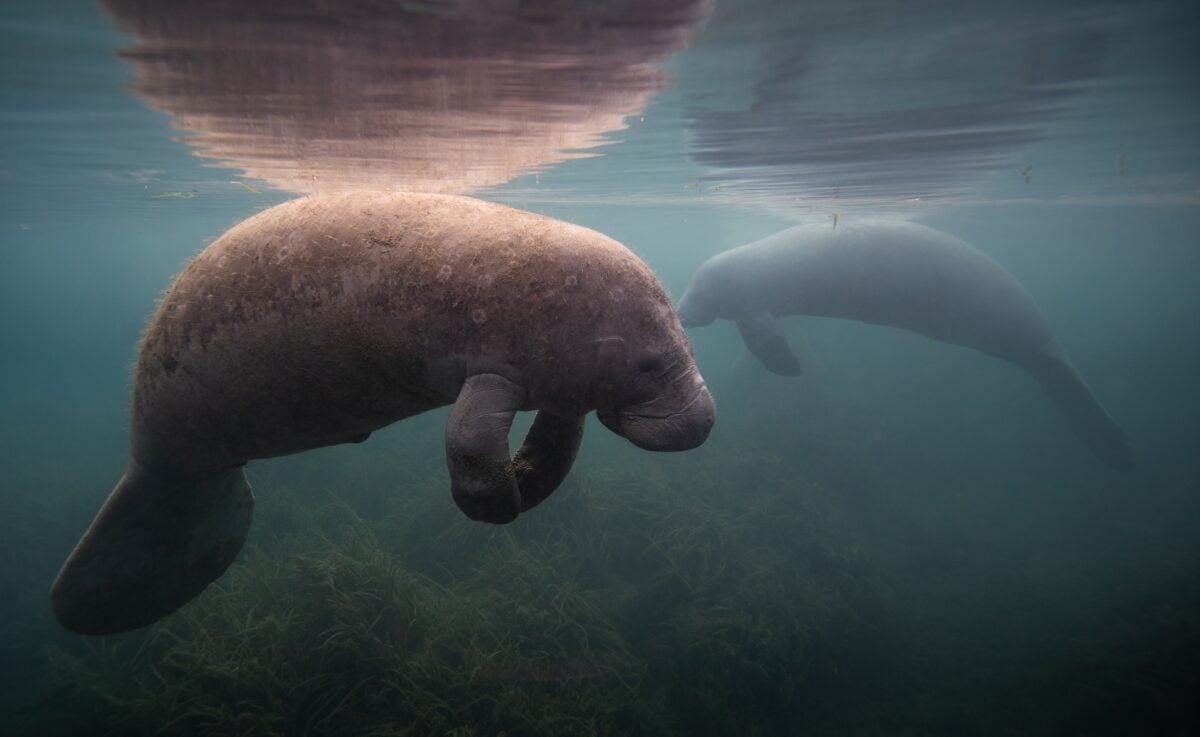
Florida’s winter manatee season can turn a simple boardwalk stop into a proper wildlife day out, often for free. Cold snaps send these gentle, slow-moving animals toward warm springs and power-plant outflows, where you can watch them from dry land without paying for a boat trip or crowding the water.
The most reliable window is winter, when cooler water encourages manatees to gather in sheltered warm spots. Springs, waterfront parks, wildlife refuges, and viewing decks make it surprisingly easy to spot them from shore, with far less fuss than chasing sightings from a tour boat.
Why Land Viewing Works So Well
Manatees usually stick to shallow water and rarely spend much time deeper than around 6 feet. They become especially visible when water temperatures fall below 68 degrees Fahrenheit, as cold stress can be dangerous and warmer water becomes essential.
Watching from land is also easier on the animals. You can see manatees feeding, surfacing for air, and drifting through clear spring water while giving them plenty of space. A quiet boardwalk and a bit of patience generally beat splashing about near wildlife.
TECO Manatee Viewing Center, Apollo Beach
TECO Manatee Viewing Center remains one of Florida’s strongest free manatee stops. Tampa Electric recorded a remarkable gathering of 1,100 manatees during late December 2023, when cold conditions brought huge numbers into the warm-water discharge canal beside the power station.
The usual season runs from November through April, and colder days from December onward often bring the biggest concentrations. Elevated viewing platforms, the 900-foot Tidal Walk, and a 50-foot observation tower overlook Tampa Bay and the warm channel where manatees gather.
The paths are suitable for wheelchairs and strollers, while the education center covers local habitats and manatee conservation. It is an easy half-day outing from Tampa, especially if you are building a Florida bucket list without loading it up with expensive attractions.
Blue Spring State Park, Orange City
Blue Spring State Park protects one of the state’s most important winter refuges. Counts here have risen dramatically since researchers found just 36 manatees in the 1970s, and the spring’s constant 72-degree water now draws hundreds during colder months.
Orange City is within manageable driving distance of Orlando and Daytona Beach, making it a useful detour for a central Florida break. The spring run stretches roughly one-third of a mile, and the boardwalk lets you look straight down into water where manatees glide past beneath the trees.
Reservations are required and popular dates disappear quickly, particularly during holiday periods and sharp cold spells. Early mornings tend to be best, when clear water and low crowds make it easier to notice mothers and calves moving through the run.
Three Sisters Springs, Crystal River
Three Sisters Springs sits within the only national wildlife refuge in the United States established specifically to protect manatee habitat. Crystal River takes its manatees seriously, and the protected springs are one of the clearest places to see why.
Between November 15 and March 31, manatees can only be viewed from the boardwalk at the Three Sisters Springs Center. You can arrive by trolley, bicycle, or on foot from 601 Three Sisters Springs Trail. General parking is not available at the refuge, apart from limited accessible spaces, and final entry is at 3:30 p.m.
Boardwalk overlooks provide broad views over strikingly clear spring water, while winter ranger programs add useful background without turning the visit into a lecture. More than 100 bird species also use the area, so bring binoculars if you have room in the daypack.
Ellie Schiller Homosassa Springs Wildlife State Park, Homosassa
Ellie Schiller Homosassa Springs Wildlife State Park combines a wildlife park, rehabilitation facility, and dependable manatee-viewing stop. Permanent residents Ariel and Betsy can be seen year-round, and Homosassa is only about 10 miles south of Crystal River.
From November 15, the river gate opens and wild manatees can move into the springs. Daily numbers may reach 200 animals, with January often producing the busiest days. The gate generally remains open until April 1.
The Underwater Observatory gives you a rare below-water view through glass. The Long River Bridge is useful for spotting animals passing underneath, while the Garden of the Springs deck can reveal the largest gatherings. It is a particularly good Gulf Coast option for families and anyone who wants more than one viewing angle.
Lee County Manatee Park, Fort Myers
Lee County Manatee Park is a free Fort Myers stop where winter sightings depend on warm water released near the Florida Power & Light plant. Manatees arrive from the Gulf when temperatures dip, with the most dependable period usually falling between December and February.
A properly chilly day can bring dozens into the canal. Walking paths and viewing areas run along the banks, and boats are excluded from the immediate viewing zone, so it stays a calmer experience than many busy coastal sites.
The water can be murky, so you may first spot a nose, tail, or rounded back before seeing the full animal. An underwater audio feed and polarized viewing panel help, alongside winter talks and exhibits. Pair it with other free things to do in southwest Florida if you are staying around Fort Myers.
Manatee Lagoon, West Palm Beach
Manatee Lagoon in West Palm Beach recorded more than 240 manatees during a February 2026 cold spell, showing how quickly numbers can climb when lagoon temperatures fall. Entry and parking are both free, which is a welcome change in a part of Florida where small costs can mount up fast.
The center opens from 9 a.m. to 4 p.m., Tuesday through Sunday, and the usual viewing season stretches from mid-November through late March. The upper deck looks across Lake Worth Lagoon, while the lower platform places you closer to the warm-water outflow.
Free guided walks run daily at 2 p.m. with Manatee Masters, the site’s education ambassadors, and the indoor exhibits remain open all year. Fishing is permitted nearby too, so non-manatee obsessives in the group will have something else to do while you wait for a snout to appear.
Merritt Island National Wildlife Refuge, Titusville
Merritt Island National Wildlife Refuge is one of the more flexible places for a sighting, since the shallow Indian River Lagoon can support manatees through much of the year. Winter remains useful, but this is not a destination that shuts down outside the cold-weather rush.
The free land-based deck is located on the east side of the Haulover Canal Bridge and can be visited around the clock. Winter water is sometimes cloudy, though an on-site polarized viewer and interpretive signs make the wait easier. Guided and self-guided options are also available without an admission charge.
The refuge is excellent for birding as well, with 357 recorded species, plus regular dolphin sightings. It fits neatly into a Cape Canaveral day, particularly if you are already near the Kennedy Space Center area and want a quieter stop between the big-ticket attractions.
Manatee Springs State Park, Chiefland
Manatee Springs State Park requires a little more driving than the central Florida sites, but the setting feels properly wild. An 800-foot boardwalk crosses cypress woodland before reaching a first-magnitude spring that releases between 50 and 150 million gallons of water each day.
The spring stays near 72 degrees Fahrenheit, drawing manatees inland from roughly November through April. The park opens year-round from early morning until sunset and lies about 6 miles west of Chiefland.
Clear conditions reveal slow gray shapes beneath the surface, while staff and volunteers log sightings each day. Up to 20 manatees may use the spring at once. High water on the Suwannee River can muddy the run, so checking conditions before the drive is sensible. The surrounding area also suits anyone exploring Florida’s free trails and wildlife spots.
Manatee Observation & Education Center, Fort Pierce
Manatee Observation & Education Center in downtown Fort Pierce is a low-cost stop with admission set at $3. It overlooks Moore’s Creek, where warm water, freshwater flow, and sheltered conditions can attract manatees throughout the year.
Roughly 55,000 people visit annually, using its covered water-level walkway and second-floor observation tower to look over the creek. Volunteer docents cover manatee biology, coastal ecosystems, and the Indian River Lagoon’s changing habitats.
Sightings are never guaranteed, as manatees have no interest in performing to a timetable. The center is also used as a release location for rehabilitated animals, giving the place a conservation focus that feels more meaningful than simply ticking off a wildlife attraction.
Flamingo Marina, Everglades National Park
Flamingo Marina offers the most atmospheric setting on this list. As evening settles over Florida Bay, manatees often surface in the warm water of Buttonwood Canal, and shore-based watchers may spot up to a dozen on a good day.
Wildlife here does not stop with manatees. American crocodiles regularly appear around the marina, while ospreys return each winter to nest nearby. The scale of the Everglades makes even a short wander around the waterfront feel like a proper escape from the developed coast.
The Flamingo Lodge is the only accommodation inside the park, with dolphins and manatees sometimes visible close to the rooms. The Guy Bradley Visitor Center is a short walk away, and a ranger is available daily from 10:30 a.m. to noon for local wildlife and ecology questions.
How To Plan A Cheap Manatee-Watching Trip
Keeping costs down mostly comes down to timing and picking the right sites:
- Visit in winter, when warmer refuges draw larger groups and sightings are more dependable.
- Choose free or cheap stops including TECO Manatee Viewing Center, Lee County Manatee Park, Manatee Lagoon, and Fort Pierce’s $3 education center.
- Arrive early on cold days, when many animals have already moved into warm-water areas.
- Pack polarized sunglasses to cut glare on canals, lagoons, and darker spring water.
- Confirm reservations and opening times before leaving, especially for Blue Spring and Three Sisters Springs.
A cold morning, a bit of patience, and decent sunglasses can get you excellent manatee views without an expensive wildlife cruise. Florida’s boardwalks do much of the hard work for you.
