

Thailand is one of those destinations that sounds like it needs months of planning. Visa research, island comparisons, weather charts, internal flight logistics, deciding between Phuket and Koh Samui, the rabbit hole can get deep very quickly.
Which makes it all the more surprising that Thailand is actually one of the easiest long-haul destinations to book at short notice.
Good flight connections, a huge range of accommodation options, straightforward transport, and enough variety to suit every type of traveller make it a surprisingly forgiving destination for spontaneous trips.
If you’re browsing last minute holidays and Thailand keeps appearing in your search results, there’s a good reason for it.
Here’s how to make a last-minute Thailand trip work without turning it into a planning headache.
Disclaimer: This article is sponsored by travelodeal.co.uk
Why Thailand Works Well for Last Minute Travel
Unlike some destinations that become prohibitively expensive close to departure, Thailand often remains relatively accessible right up until travel dates.
Multiple airlines connect the UK with Bangkok every day through major hubs such as Dubai, Doha, Abu Dhabi, Istanbul, and Singapore. That steady flow of flights helps maintain availability even when booking within a few weeks of departure.
Accommodation is another advantage.
Bangkok alone has thousands of hotels, guesthouses, apartments, and hostels spread across every budget level. Whether you’re looking for a luxury rooftop pool or a simple city-centre base, you’ll usually find options available.
The islands can become busier during peak season, particularly around Christmas and New Year, but flexibility goes a long way. Travellers willing to consider different beaches, towns, or islands often find plenty of accommodation even at relatively short notice.
The First Thing You Should Book
Many travellers focus on hotels first.
That’s usually the wrong move.
The accommodation is rarely the problem. Domestic flights are.
Routes from Bangkok to destinations such as Phuket, Krabi, and Koh Samui can increase significantly in price as departure dates approach. Airlines such as AirAsia, Nok Air, Thai VietJet, and Bangkok Airways offer excellent coverage, but the best-value fares tend to disappear first.
Lock in your internal flights before finalising hotels.
Once your transport is secured, the rest of the trip becomes much easier to arrange.
What Last Minute Actually Means
Most people aren’t booking a Thailand holiday 48 hours before departure.
Typically, “last minute” means anywhere from two to six weeks before travelling.
For Thailand, that’s actually a comfortable planning window.
UK passport holders can currently enter Thailand visa-free for stays of up to 60 days, removing one of the biggest administrative hurdles. Flights are usually still available, hotels remain plentiful, and there is enough time to organise travel insurance and any remaining trip essentials.
The sweet spot tends to be around four to five weeks before departure.
At that stage, you can often find attractive pricing without dealing with the stress that comes with booking extremely close to travel dates.
Many travellers also find that bundled Thailand holidays can work out cheaper than booking flights, accommodation, and transfers separately.
A Proven Two-Week Thailand Route
One reason Thailand remains such a popular destination is that it naturally lends itself to a manageable two-week itinerary.
As we found during our own 2 weeks in Thailand itinerary, combining Bangkok, Chiang Mai, and one southern island provides a balanced mix of culture, adventure, and beach time without feeling rushed.
Bangkok delivers the temples, street food, rooftop bars, and organised chaos that make the city memorable. Chiang Mai offers a completely different atmosphere, with mountain scenery, markets, waterfalls, cooking classes, and ethical elephant experiences. The islands provide the relaxation most travellers are ultimately seeking.
For short-notice travellers, this route has another advantage.
It keeps logistics simple.
Instead of constantly packing and unpacking, you focus on a few destinations and spend more time enjoying the country.
Bangkok Is Worth More Than a Stopover
Many visitors treat Bangkok as little more than a transit hub.
That is a mistake.
The Thai capital deserves at least two or three full days.
Explore famous landmarks such as Wat Arun and Wat Pho, sample street food in local markets, take a boat along the Chao Phraya River, and spend an evening exploring one of the city’s many night markets.
Yes, Khao San Road still exists, and yes, most people eventually end up there regardless of how much they insist they won’t.
Bangkok can be loud, chaotic, and overwhelming at first, but it’s also one of the most fascinating cities in Southeast Asia.
Why Chiang Mai Is Worth Considering
If your trip allows for a domestic flight north, Chiang Mai offers a completely different side of Thailand.
Located in the mountains, it feels noticeably slower and calmer than Bangkok.
Many visitors use the city as a base for exploring waterfalls, night markets, temples, and surrounding countryside.
One of the most memorable experiences is visiting ethical elephant sanctuaries, which focus on conservation and rehabilitation rather than rides and performances.
Chiang Mai has also become popular with digital nomads thanks to its affordable living costs, excellent cafés, and growing remote-work community.
If you’re trying to choose between adding another island or adding Chiang Mai, many experienced travellers would argue for Chiang Mai.
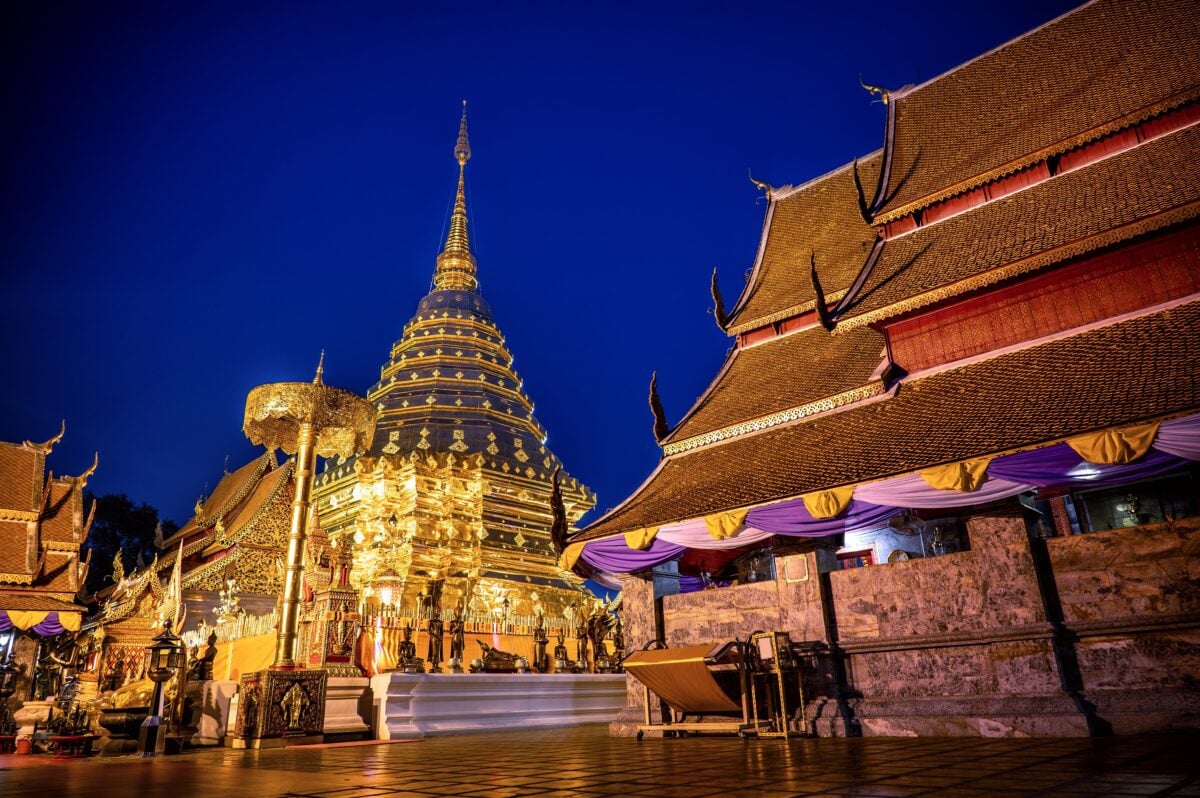
Night time view of Wat Phra That Doi Suthep near Chiang Mai, Thailand
One Island Is Usually Better Than Three
A common planning mistake is trying to squeeze multiple islands into a short holiday.
While island hopping sounds exciting on paper, it often means spending a surprising amount of time dealing with ferries, transfers, and hotel check-ins.
Choosing one island and experiencing it properly is often the better option.
Phuket
Thailand’s largest island remains one of the easiest places to arrange at short notice.
There are dozens of beaches, accommodation options for every budget, and plenty of excursions available.
While Patong receives most of the attention, areas such as Kata, Karon, Kamala, and Nai Harn offer a much more relaxed atmosphere.
Koh Samui
Koh Samui combines good infrastructure with a slower pace of life.
Direct flights make access straightforward, and visitors can enjoy beaches, waterfalls, temples, and day trips without needing to move accommodation repeatedly.
Krabi
Krabi remains one of Thailand’s most visually impressive destinations.
Its limestone cliffs, turquoise water, and long-tail boats have become iconic images of Thailand tourism.
It’s an excellent option for travellers looking for scenery as much as relaxation.
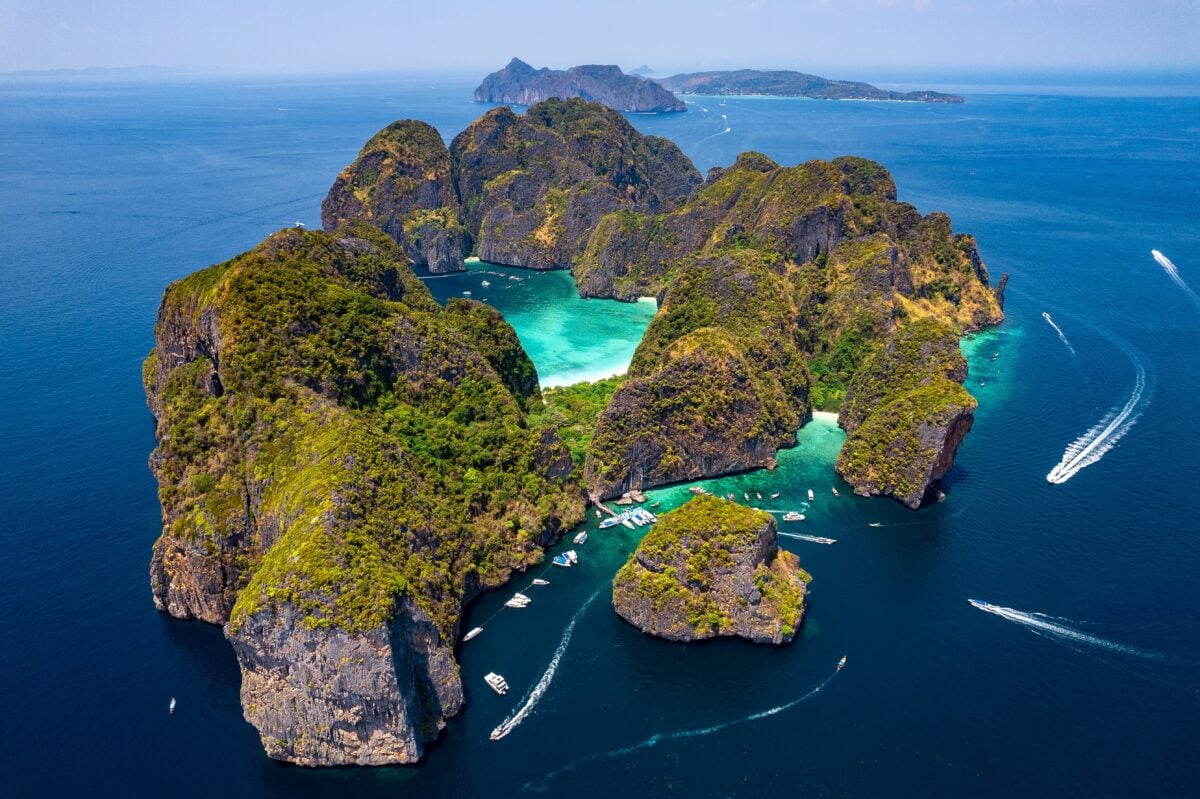
Travel drone photo of Phi Phi Leh with Maya Bay and Pileh Lagoon, Krabi province, Thailand. Aerial top view of amazing tropical island with turquoise water and white beach.
Understanding Thailand’s Weather Can Save Your Holiday
Thailand does not have a single rainy season.
This catches many first-time visitors off guard.
The west coast islands, including Phuket and Krabi, generally experience their wettest conditions between May and October.
The east coast islands, including Koh Samui and Koh Phangan, tend to receive heavier rainfall between September and December.
As highlighted in our Thailand itinerary, choosing the right island for the time of year can have a significant impact on your trip.
Ten minutes spent researching seasonal weather patterns can save you from a week of cancelled boat trips and grey skies.
How Much Does Thailand Cost?
Thailand can be incredibly affordable.
It can also become surprisingly expensive.
The difference usually comes down to lifestyle choices.
Street food remains one of the best-value dining experiences in the world. Local restaurants and markets offer excellent food at reasonable prices.
On the other hand, nightly cocktails at beachfront resorts and regular meals at tourist-focused restaurants can quickly increase spending.
The same principle applies to accommodation.
Comfortable hotels with pools can often be found for surprisingly reasonable rates, while luxury resorts naturally command premium pricing.
Most travellers find Thailand offers excellent value compared with many long-haul beach destinations.
Quick Tips for Last Minute Thailand Travel
- Book domestic flights before accommodation.
- Choose one island rather than several.
- Research seasonal weather patterns.
- Allow time in Bangkok.
- Consider adding Chiang Mai for a different experience.
- Keep transfer days to a minimum.
- Stay flexible with accommodation locations.
- Compare package holidays against booking independently.
- Leave some unplanned time in your itinerary.
Final Thoughts
Thailand looks complicated from the outside because there are so many choices.
In reality, it’s one of the easiest destinations in the world to book at relatively short notice.
Keep your itinerary focused, secure internal flights early, choose destinations based on seasonal weather patterns, and resist the temptation to see everything in a single trip.
Do that, and you’ll quickly discover why Thailand remains one of the world’s favourite destinations for spontaneous adventures.
