
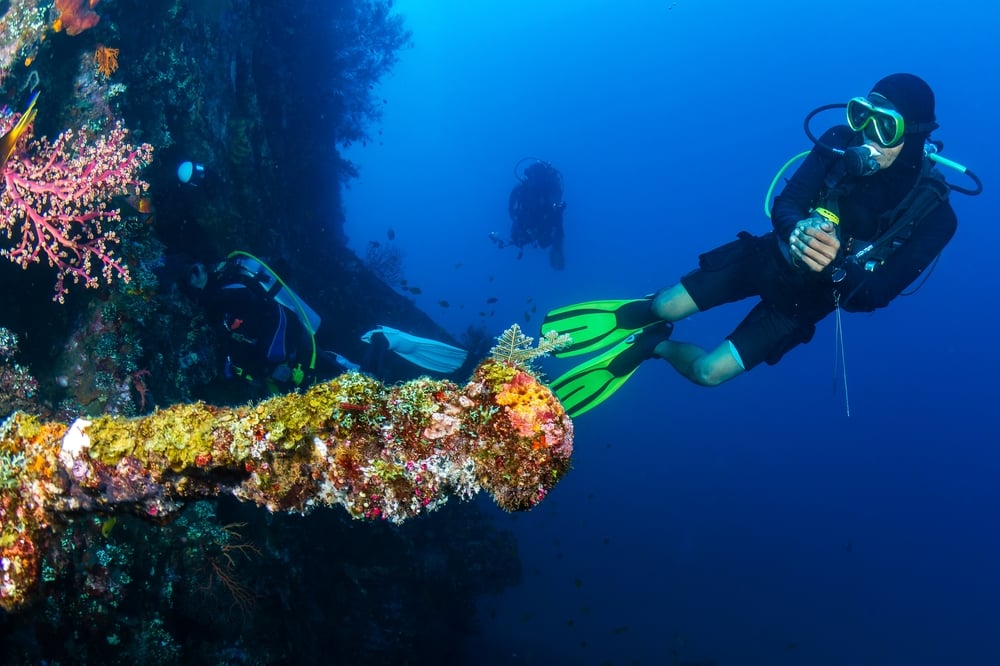
One of you wants to spend the morning underwater. The other would prefer a beach walk, a leisurely breakfast or a snorkelling trip. A Bali holiday can accommodate both, provided you plan more than the diver’s itinerary.
The important decisions are where to stay, how much time diving takes out of the day and whether shared excursions genuinely work for both travellers. Joining the same boat does not necessarily mean enjoying the same experience.
This guide compares practical bases, explains what to ask before booking a mixed diving and snorkelling trip, and covers the arrangements that help both partners enjoy their time away.
Choose a Base Around Both Travellers
Start by describing an enjoyable day for each of you. Then look for somewhere that makes those days possible without lengthy transfers or constant coordination.
A hotel near a dive centre may simplify equipment collection, but check what surrounds it. Can the non-diver walk to somewhere they actually want to spend time? Does the accommodation have a pool, comfortable shade or other facilities they would use?
When planning your travel itinerary, include the complete diving day: hotel pickup, equipment preparation, transfers, time between dives and the return journey. Do not assume everything finishes by lunchtime.
| Area | Diving arrangements | What the non-diver should check |
|---|---|---|
| Amed | Shore diving and local boat trips, depending on the site and operator. | Walking distances, accommodation facilities and separately guided snorkelling options. |
| Tulamben | Shore access to sites including the USAT Liberty wreck. | Beach-entry conditions, suitable activities and whether the property works for a day spent ashore. |
| Sanur and trips around Nusa Penida | Boat excursions with schedules determined by the sites, conditions and departure arrangements. | Whether snorkelling is specifically organised, how long the day lasts and the alternative to joining the boat. |
| Pemuteran and Menjangan | A northwest Bali base with boat access to Menjangan’s reefs and walls. | Transfer logistics, guided snorkelling and whether a longer stay suits your wider route. |

Amed: A Base for Separate Mornings
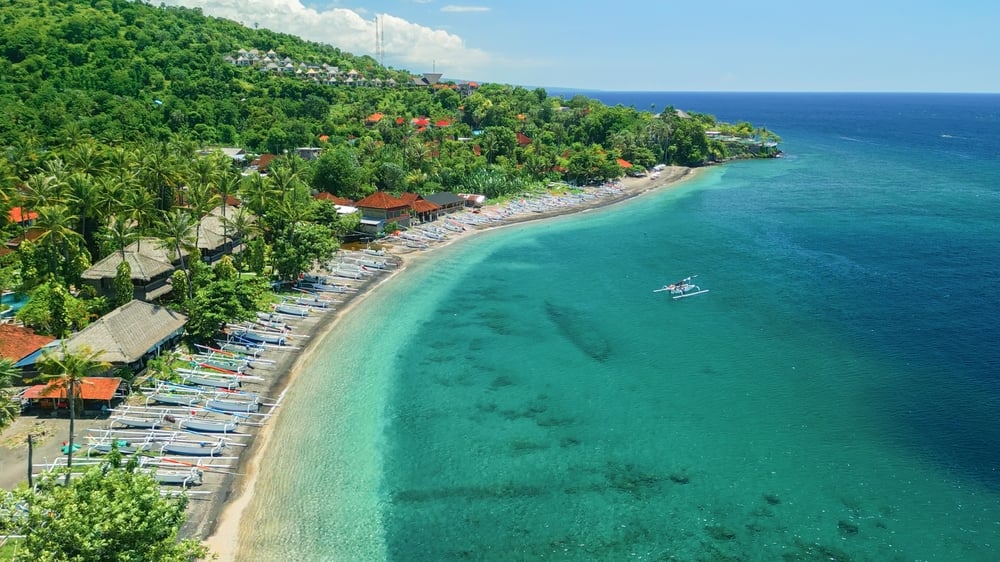
Amed, on Bali’s northeast coast, is worth considering if you want diving to be one part of the holiday. The area has shore-accessible sites as well as locations reached by boat.
That can make it easier to arrange a diving morning followed by time together, but confirm the actual schedule with your operator. Nearby sites do not automatically mean a short outing.
For the non-diver, choose accommodation around the day they want. A comfortable pool and somewhere pleasant for lunch may matter more than being beside a particular dive entry.
If snorkelling is part of the plan, arrange an appropriate site and supervision separately. Staying in the same bay does not mean a snorkeller should simply follow a scuba diver offshore.
Tulamben: Convenient Shore Diving, With Entry Conditions to Check
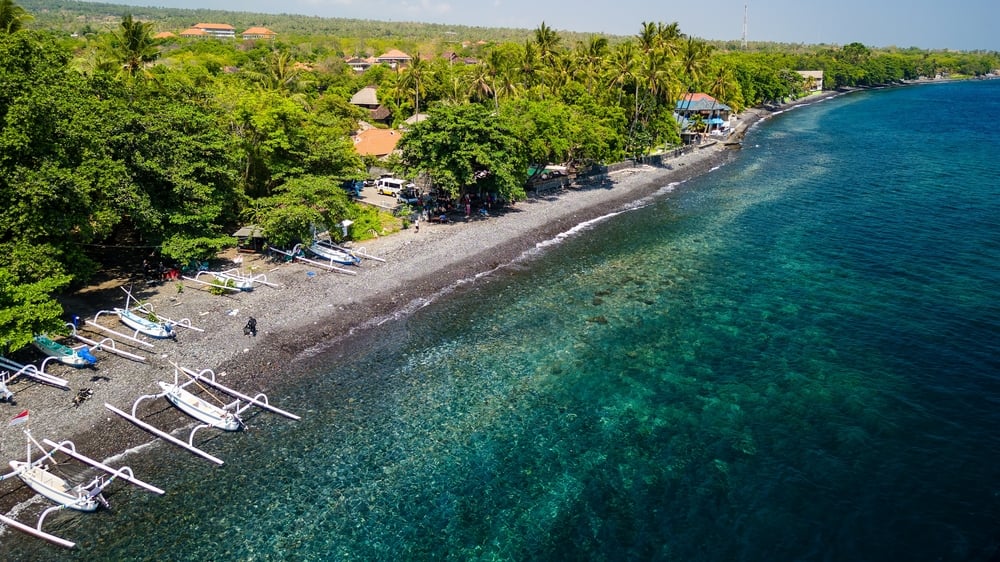
Tulamben is known for the USAT Liberty wreck, which lies close to shore. That proximity can simplify diving logistics, particularly when you stay locally.
However, the shoreline includes rounded stones, and entering or leaving the water can require care. Ask the operator about conditions, assistance and suitable footwear rather than treating shore entry as automatically easy.
The wreck’s location also does not guarantee a worthwhile snorkelling experience on your dates. Visibility, surface conditions and the route selected all matter.
Arrange the diver’s buddy or guide and the snorkeller’s supervision as separate parts of the plan. A partner watching from the surface is not a substitute for a properly organised scuba buddy team.
Sanur and Nusa Penida: Check the Whole Boat Day
Sanur is a departure point for trips around Nusa Penida, an area associated with manta rays and other marine life. Wildlife encounters are never guaranteed, and the itinerary needs to suit the conditions and participants.
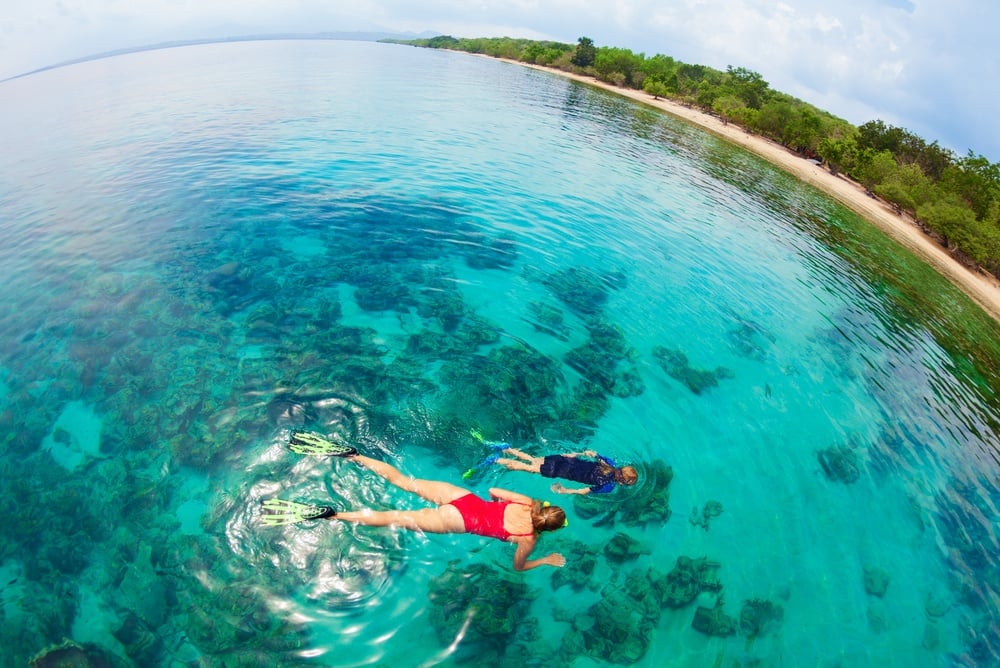
For a mixed couple, the key question is whether the operator runs a genuine snorkelling programme alongside the diving. A passenger place on a dive boat may provide transport and a seat without providing a suitable opportunity to enter the water.
Ask about crossings, expected time aboard, snorkelling supervision and the plan if conditions prevent snorkelling. Do not assume an early return or transfer to another boat will be possible.
If the non-diver would rather stay in Sanur, plan that as a positive choice. Check the hotel’s location, local walking options and facilities before booking the diving day.
Menjangan: Consider a Northwest Bali Stay
Menjangan offers reef and wall diving reached by boat, with Pemuteran providing a possible base in northwest Bali.
Its location deserves attention when planning the wider holiday. Compare staying locally with travelling from southern Bali, allowing for the complete road journey and excursion.
Some trips can accommodate divers and snorkellers, but confirm the arrangements directly. Conditions, suitable entry points and the availability of separate guides still matter.
A description such as “usually sheltered” should help you frame questions, rather than serve as a promise about a particular day.
Questions to Ask Before Sharing a Boat
Put your questions in writing before paying. Explain your swimming confidence, diving experience and any concerns about spending a full day at sea.
| Question | What you need to establish |
|---|---|
| Is there a separate snorkelling guide? | Who supervises the snorkeller while the diving team is underwater? |
| Which sites are suitable for both activities? | Whether the proposed itinerary includes appropriate snorkelling, with alternatives if conditions change. |
| How long is the complete day? | Pickup and return estimates, crossings, waiting periods and time between activities. |
| What facilities are aboard? | Shade, seating, drinking water, toilets where available and practical access back onto the boat. |
| What happens if snorkelling is cancelled? | Whether the guest remains aboard, whether another activity is possible and which refund terms apply. |
| Can someone comfortably sit out an activity? | Where they would wait and how the crew would support them. |
Clear answers help you judge whether the trip fits your needs. They do not remove the need for the crew to reassess conditions on the day.
Pack for time aboard as well as time in the water. Our beach packing checklist provides a starting point for sun protection, swimwear, reading material and everyday essentials. Adjust it to the operator’s equipment list and available storage.
Should the Non-Diver Try Scuba?
Only if they want to. A holiday together does not require both people to take up the same activity.
For someone who is curious, an introductory experience can provide a supervised way to try breathing underwater before committing to a certification course.
Neptune Scuba Diving offers a closer look at scuba diving in Bali, Indonesia, including introductory sessions and the difference between trying scuba and becoming certified. Ask which parts of the experience are included in the specific booking you are considering.
According to PADI’s Discover Scuba Diving guidance, the experience begins in a pool or water with pool-like conditions. An optional open-water dive can follow, under instructor supervision, to a maximum of 12 metres. That is a limit, rather than a depth everyone must reach.
Participants complete medical screening, and some answers require a doctor’s clearance. Request the questionnaire before travelling so there is time to address any questions. The experience does not provide a certification for independent diving.
Compare Costs and Insurance Before Paying
Ask for a written price covering the full arrangement: transfers, equipment, guides, meals, relevant entry fees and any charges for a non-diving passenger. A lower snorkelling rate is only useful if the included activity suits the person booking it.
Bali currently has a tourist levy of IDR 150,000 for foreign tourists. Check the latest payment requirements and any applicable exemptions through the official Love Bali portal, particularly when planning travel for 2027.
For insurance, check the activities each traveller intends to do. Diving cover can depend on qualifications, depth, supervision and other policy conditions. Someone taking an introductory session should confirm that the policy covers that experience.
Our guide to travel insurance and what to check explains the broader considerations. Read the policy wording for emergency treatment, evacuation and any diving-specific exclusions.
Plan Flights and Mountain Transfers Around the Last Dive
A free afternoon after diving is not automatically suitable for every excursion. Flying and travelling to higher elevations require planning.
Divers Alert Network’s travel guidance recommends a minimum preflight surface interval of 18 hours or more after multiple dives in a day or multiple days of diving. Different guidance applies to other dive profiles, including dives requiring decompression stops.
These intervals do not guarantee avoidance of decompression sickness. Follow applicable professional guidance and any longer requirements. DAN also notes that ascending to altitude by road increases decompression stress, so discuss mountain routes and inland transfers with your dive professional.
Plan shared activities around those requirements. A relaxed day near your coastal accommodation may be easier to arrange than a tightly timed excursion followed by a flight.
Give Both Partners a Holiday to Enjoy
Before confirming bookings, write down what each person will do during the diving hours. If the non-diver’s plan amounts to waiting for a message, revisit the accommodation or excursion.
You might choose separate mornings and shared afternoons, one carefully planned boat day, or a coastal diving stay followed by time elsewhere. Leave enough flexibility to change an activity when conditions or preferences change.
The useful compromise is one both travellers would choose willingly. Diving can be a highlight of your Bali holiday while leaving plenty of room for the experiences you enjoy together.
Safety note: This article is for general educational and travel-planning purposes only. It does not replace medical advice, qualified dive instruction or an assessment of local conditions. Follow your instructor’s guidance and seek appropriate medical advice about your individual fitness to dive.