
If a long drive to the Highlands, the Lake District or the Cornish coast is coming up, preparing your Nissan tyres is the quickest job on the pre-trip list and one of the most useful. National Highways found that one in five motorway breakdowns are caused by worn or incorrectly inflated tyres, yet only one in six drivers in its research checked them before a long journey.
This guide covers the tread depth you need, the right pressure for a car full of bags, how to spot damage early, what to check on your spare and how to plan for autumn and winter weather.
Quick Answer: Pre-Trip Tyre Checks at a Glance
Five checks cover the main tyre jobs before a long drive, and you can do all of them on a driveway or a petrol station forecourt.
| Check | What to look for | How to do it |
|---|---|---|
| Tread depth | At least 1.6mm by law; replacing at 2mm to 3mm is safer | 20p test or a tread depth gauge, in several places on each tyre |
| Pressure | The handbook figure for the load you are carrying | Check when the tyres are cold, before you set off |
| Sidewalls and tread | No bulges, deep cuts or embedded nails | Walk round the car and look at each tyre in turn |
| Spare or repair kit | Inflated spare, or an in-date kit you know how to use | Lift the boot floor and check before you pack |
| Season | Cold, wet or snowy roads on your route | Consider winter or all-season tyres for colder trips |

Why Your Tyres Matter on a Long Drive
A long road trip can put motorways, winding country lanes, steep hills and wet roads into a single day. Your tyres are the only part of the car touching any of them, so they decide how quickly you stop and how well the car holds a bend when the rain comes in sideways.
Worn tyres are also an expensive way to end a holiday. Drivers stopped with illegal tyres can face a £2,500 fine and three penalty points per tyre, so four bald tyres could cost more than the trip.
If the checks below show your tyres are close to the limit, replace them before you go. Give your Nissan the grip it needs for confident daily driving by choosing Nissan tyres from Elite Autocare that are suited to your car. Whichever tyres you buy, match the size, load rating and speed rating listed in your handbook.
How Much Tread Do You Need for a Road Trip?
Cars in the UK must have at least 1.6mm of tread across the central three-quarters of the tyre, all the way round. That is the legal floor, and National Highways recommends replacing tyres sooner: at 2mm in summer and 3mm in winter.
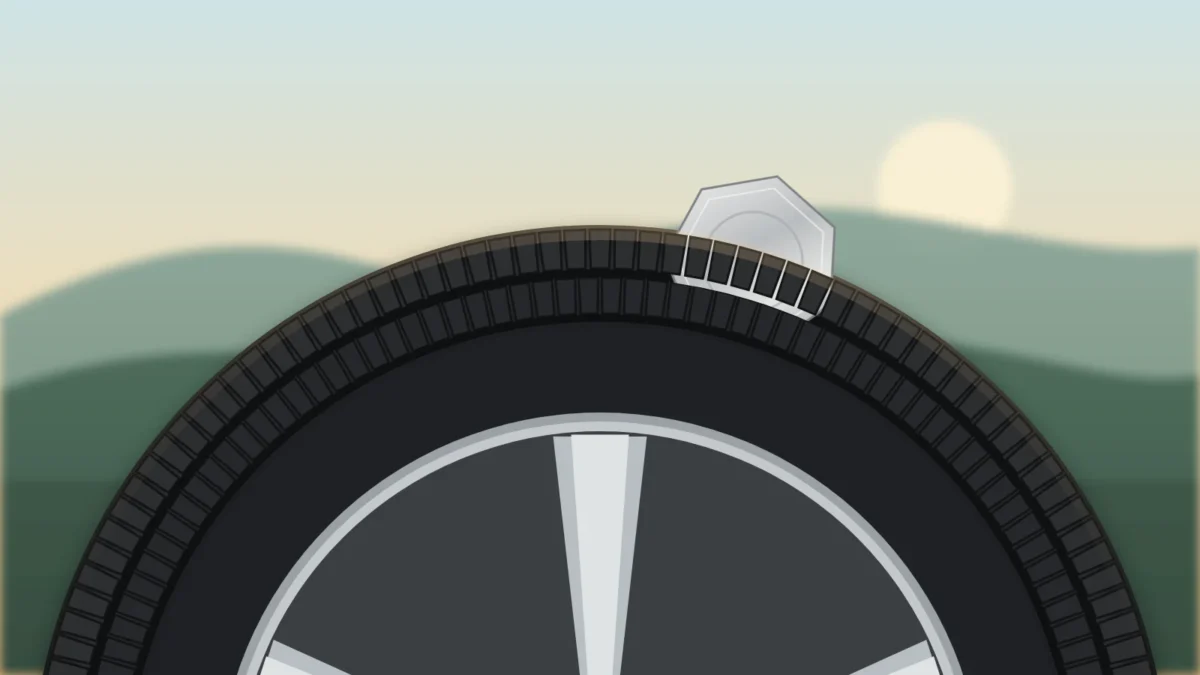
The 20p test is the quickest check. Push a 20p coin into the main grooves of the tread. If the coin’s outer rim is hidden, the AA says the tread is comfortably above the legal minimum; if you can see part of the rim, check with a proper gauge or ask a tyre fitter to look.
Try the coin in several places on each tyre. Tyres don’t always wear evenly, and a wee patch of low tread on the inside edge is easy to miss if you only check the middle.

Editorial credit: Jonathan Weiss / Shutterstock.com
What Tyre Pressure Should You Use With a Loaded Car?
Use the figure your car’s manufacturer gives for the load you are carrying. The Highway Code says tyres must be inflated to the manufacturer’s specification for the load, and many cars list a higher pressure for a full car with luggage.
- Where to find it: the owner’s handbook, a sticker on the driver’s door frame or the inside of the fuel flap.
- When to check: with the tyres cold, before you set off. Warm tyres give a misleadingly high reading.
- Where to do it: most petrol station forecourts have an air machine with a gauge.
Tyres that are too soft or too firm handle poorly, wear out sooner and use more fuel. The AA lists under-inflated and over-inflated tyres among those that count as illegal.
How to Spot Tyre Damage Before You Go
Walk slowly round the car and look at the tread and both sidewalls of each tyre. You are looking for:
- Bulges or lumps, which can mean structural damage inside the tyre. Have a professional look at these straight away.
- Cuts and cracks. The AA treats a cut longer than 25mm, or 10% of the tyre’s width, that reaches the cords as a defect.
- Nails, screws and sharp stones caught in the tread.
- Uneven wear, such as one edge more worn than the other, which usually means the wheel alignment needs adjusting.
Catching these issues early keeps your Nissan tyres in top shape and lowers the chance of a breakdown far from home. That counts for more on remote routes, and our North Coast 500 planning tips cover what else to sort before heading into the far north.
Check Your Spare Tyre or Repair Kit
The spare is easy to forget until you need it at the side of a dark, wet road. Many cars carry a space saver or a sealant kit in place of a full-size wheel, so find out which one is under your boot floor before you pack on top of it.
| What you have | What to check | Limits to know |
|---|---|---|
| Full-size spare | Pressure and tread, same as the other four | None beyond normal tyre law |
| Space saver | Pressure, plus any label on the wheel | Usually limited to 50mph; get the main tyre fixed quickly |
| Sealant and inflator kit | Expiry date on the sealant bottle | Read the instructions at home before you need them |
The AA notes that space savers are usually restricted to 50mph, may only fit one axle and change how the car handles. Check that the jack and wheel brace are in the boot too, and that you know where your locking wheel nut key lives.
How to Plan for Autumn and Winter Road Trip Weather
British weather changes quickly, especially on high roads and near the coast. In wet weather, stopping distances are at least double those on dry roads, and on ice they can be ten times greater.
For an autumn or winter trip, look at winter or all-season tyres. Michelin explains that summer tyres lose effectiveness below 7°C, and all-season tyres marked with the three-peak mountain snowflake (3PMSF) symbol can stay on the car all year.
Whatever you fit, slow down on wet roads, leave a bigger gap to the car in front and avoid harsh braking. Single-track roads with passing places need extra care when the verges are soft.
Your Road Trip Tyre Checklist Before Setting Off
A few minutes of checks pays off over a few hundred miles. Once the tread, pressure, sidewalls and spare are sorted, you can load up and go. Nissan tyres in good condition give you better grip, safer stopping and a calmer drive for everyone on board.
- Do the 20p test in several places on every tyre.
- Set the pressures cold, using the figure for a loaded car.
- Look for bulges, cuts, nails and uneven wear.
- Check the spare or repair kit, the jack and the wheel brace.
- Check the forecast for your route and drive to the conditions.
Then the fun part: our Scotland road trip planner can help you map the route, and our road trip packing list covers the snacks and the rest of the boot.
Road Trip Tyre FAQs
How Often Should You Check Your Tyres?
Check tyre pressure, tread and condition at least once a month and before any long journey. The Highway Code suggests checking pressures weekly, with the tyres cold.
Is 1.6mm of Tread Safe for a Long Drive?
Tread of 1.6mm is the legal minimum for cars in the UK, but grip on wet roads falls as tread wears. National Highways recommends replacing tyres at 2mm in summer and 3mm in winter.
How Far Can You Drive on a Space Saver Spare?
There is no set maximum distance for a space saver spare, but most are limited to 50mph and are designed for short-term use. Get the damaged tyre repaired or replaced as soon as you can.