
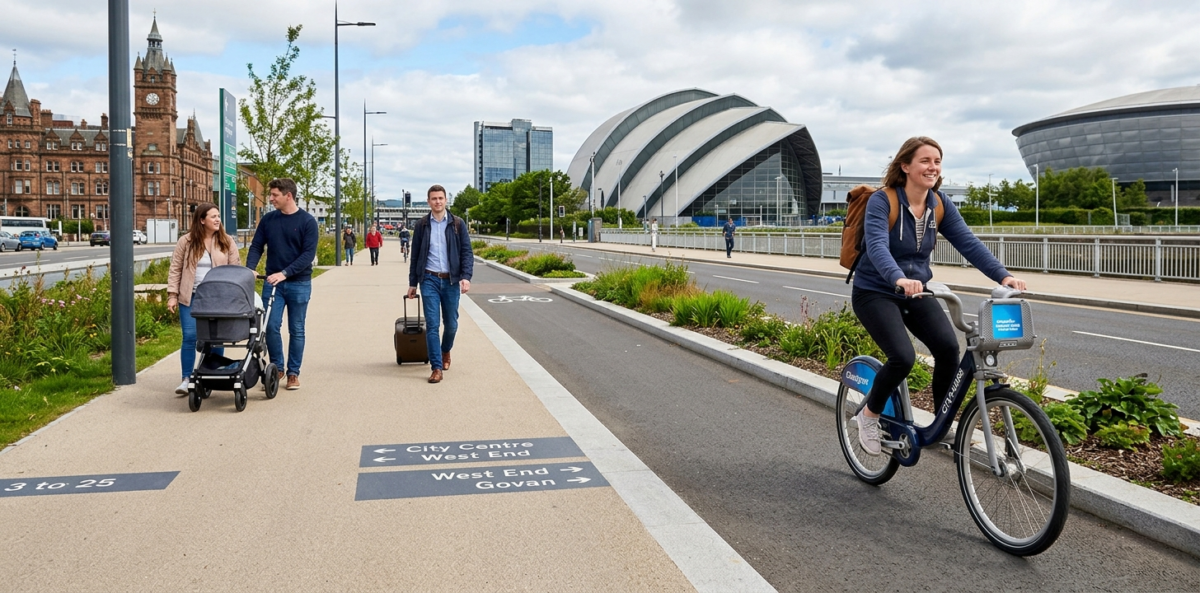
Glasgow is putting 54km of walking, wheeling and cycling routes at the top of its to-do list by 2032, and that matters if you like cities that are easier to cross without feeding parking meters or battling bus fares all day. The council says a refreshed delivery framework will speed up active travel projects and link more neighbourhoods with safer routes.
For visitors on a budget, that is the sort of upgrade that quietly saves money. Better paths and protected lanes can make it more realistic to move around on foot or by bike instead of defaulting to taxis or repeated short trips on public transport. Not glamorous, perhaps, but neither is a drained travel budget.
The new plan folds two existing programmes, the City Network and Liveable Neighbourhoods, into one streamlined approach. In plain English: fewer moving parts, more focus on getting routes built.
What the council says will be built
The headline figure is 54km of routes to be prioritised over the coming years. That sits within Glasgow’s longer-term aim of building a 270km citywide network of safe, segregated walking and cycling routes.
At the centre of the framework is a 23km inner orbital loop around the city. That loop is meant to connect areas including Dennistoun, Maryhill, Govan, Shawlands and Calton. Some key pieces already exist, including the South City Way, which means the task is not starting from zero. The council says a further 7.9km of routes are already in design or under construction, and less than 16km of new protected cycle lanes would still be needed to complete the loop, along with pavement and public-realm improvements.
From that core, another 31km of proposed spoke routes would extend the network to other destinations and neighbourhoods. The point is to link existing infrastructure with planned Liveable Neighbourhood projects, rather than leaving isolated stretches of cycle lane that go nowhere useful. A lonely lane to nowhere is about as helpful as a hostel with no mattress.
Why this matters for travellers on a budget
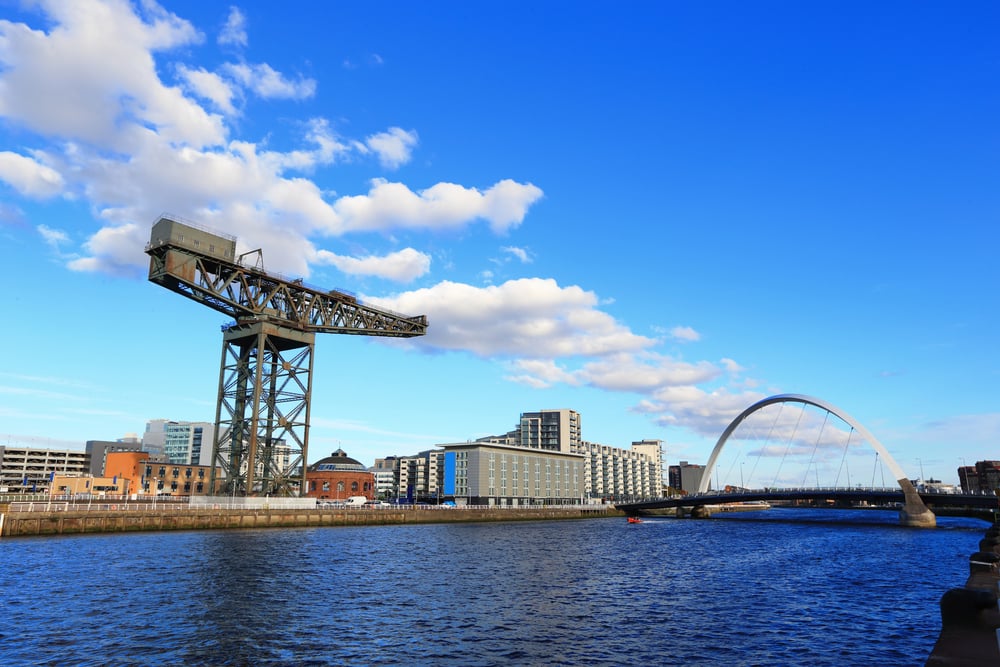
Glasgow is not a tiny city, and its appeal for travellers is spread across neighbourhoods rather than concentrated in one neat little tourist bubble. That is exactly where better active travel links can help. If routes are genuinely safe and connected, walkers and cyclists can cover more ground cheaply and with less faff.
For backpackers and city-break travellers, the practical upsides are obvious:
- Short hops between neighbourhoods become easier without paying for every ride.
- Protected routes can make bike hire a more realistic option.
- Walking routes with better public realm are more pleasant for exploring on foot.
- Safer connections can make it easier to reach cafes, museums, stations and everyday services outside the city centre.
There is also a small but meaningful comfort factor. Cities that invest in connected routes tend to feel less hostile to people hauling a backpack, wheeling luggage or simply trying to get somewhere without acting like a commuter in a hurry.
The numbers already point to growing demand
The council says cycling use in Glasgow is rising. Journeys by bike increased by 43% between 2024 and 2025. Use of the South City Way has risen by 85% since 2021. On Victoria Road, bicycles now account for more than one in six trips and have been seen outnumbering cars at peak times.
That does not mean the city is suddenly Amsterdam with a saltire, but it does suggest demand is there. The council’s argument is that infrastructure should catch up with how people are already moving around.
Glasgow’s active travel plan at a glance
| Measure | What it means | Traveller relevance |
|---|---|---|
| 54km prioritised | Walking, wheeling and cycling routes to be delivered by 2032 | More cheap, low-stress ways to cross the city |
| 23km inner loop | City-centre orbit linking key neighbourhoods | Better connections between areas visitors are likely to use |
| 7.9km already underway | Routes in design or under construction | Some improvements are already moving |
| 31km spoke routes | Links from the core to other destinations | Useful for reaching more parts of the city |
| 270km long-term ambition | Citywide safe route network | Shows the plan is meant to be bigger than one corridor |
How the new delivery framework could speed things up
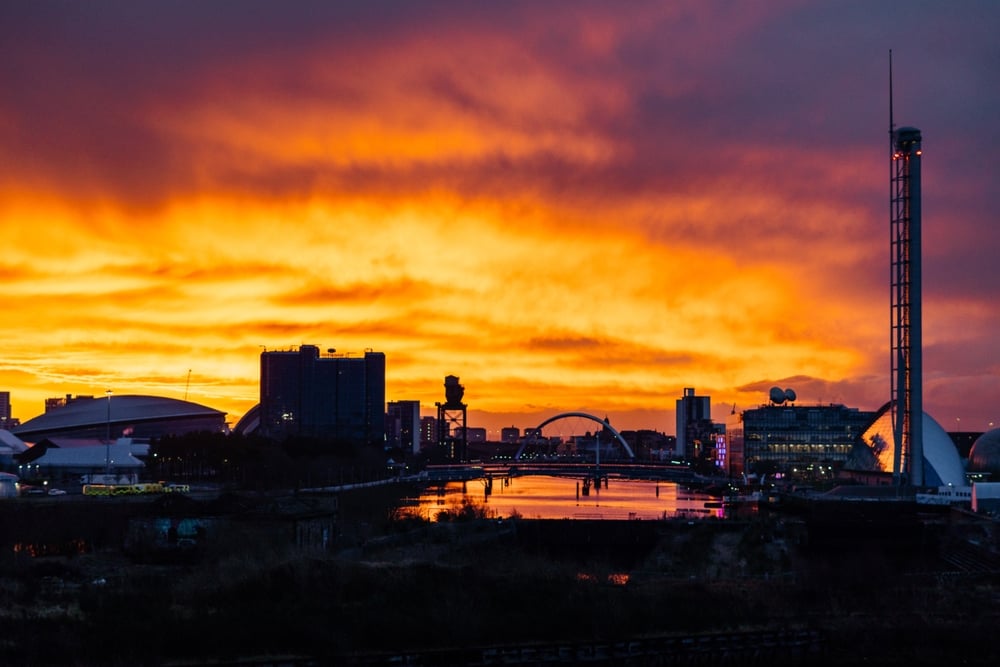
The council says the refreshed framework is partly a response to changes in national funding, which has shifted from multi-year allocations to single-year funding for active travel projects. That sort of change can slow delivery if local plans are too rigid. Glasgow says its new structure is intended to keep projects moving while matching whatever funding becomes available.
For visitors, the significance is less about municipal process and more about whether projects actually appear on the street. A framework that prioritises gaps in the network should, in theory, make it easier to connect routes that already exist rather than leaving them stranded like a half-finished rail line and a prayer.
What budget travellers should keep an eye on
If you are planning a cheap trip to Glasgow, the immediate takeaway is not that the whole city will be fully transformed tomorrow. These are phased projects stretching toward 2032. But the direction of travel is clear: more connected routes, more emphasis on safety, and more neighbourhoods tied into the city’s core.
That could influence how you plan your days. If the network keeps growing, staying in one district and exploring several others by foot or bike could become a more practical way to keep spending down.
A few things to watch as the plan rolls out:
- Which sections of the inner loop are completed first.
- How closely the spoke routes connect to stations and visitor-heavy areas.
- Whether the routes feel genuinely protected, or just painted and hopeful.
- How much the new links improve access between the city centre and outer neighbourhoods.
The bottom line
Glasgow’s 54km active travel plan is not a finished product yet, but it does point to a city that wants walking and cycling to feel less niche and more normal. For locals that means better everyday connections. For travellers on a budget, it could mean a cheaper and easier way to see more of the city without constantly paying to move between stops.
The good news is that the plan is focused on the routes people are likely to actually use. The slightly annoying news is that 2032 is still a fair way off. City planning, as ever, moves at the speed of a particularly determined file cabinet.
If you are planning a first visit, our Glasgow travel guide covers what to see and where to base yourself.
