
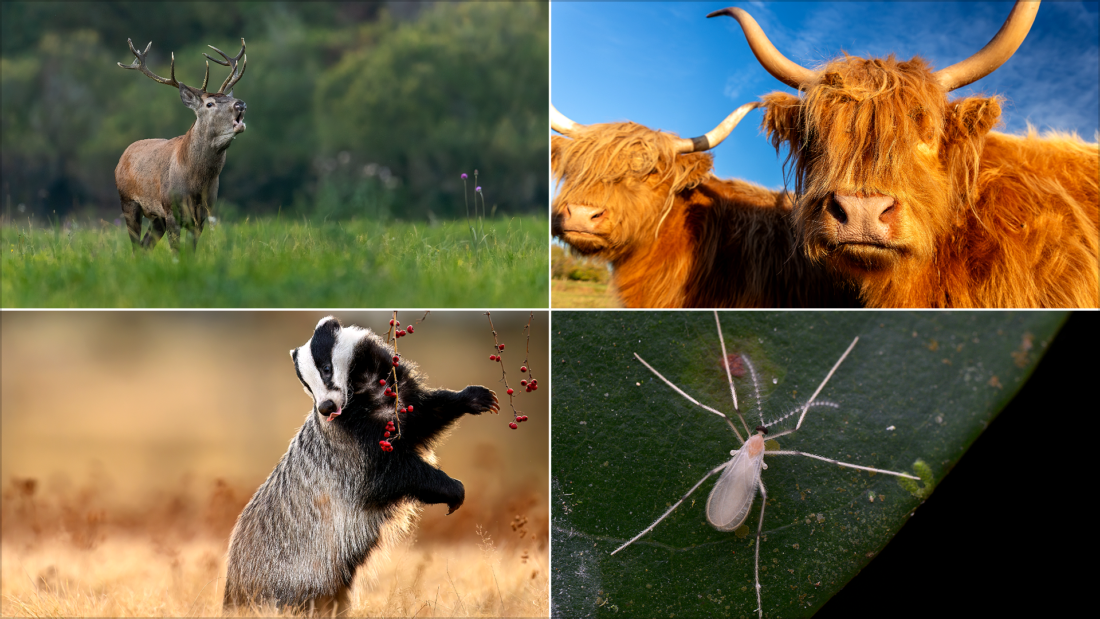
Scotland has no tigers and no large predators roaming the hills. But that does not mean the wildlife is risk-free. Cows are statistically the most dangerous animals in Scotland, responsible for more injuries and deaths than any wild species. Beyond that, a handful of animals, insects, and marine creatures deserve your attention before you head out. If you’re still pulling your trip together, our complete Scotland guide covers the bigger planning picture.
Editor’s note: This information is provided for general awareness and educational purposes. Always check official guidance and local advice before traveling or heading into the outdoors.
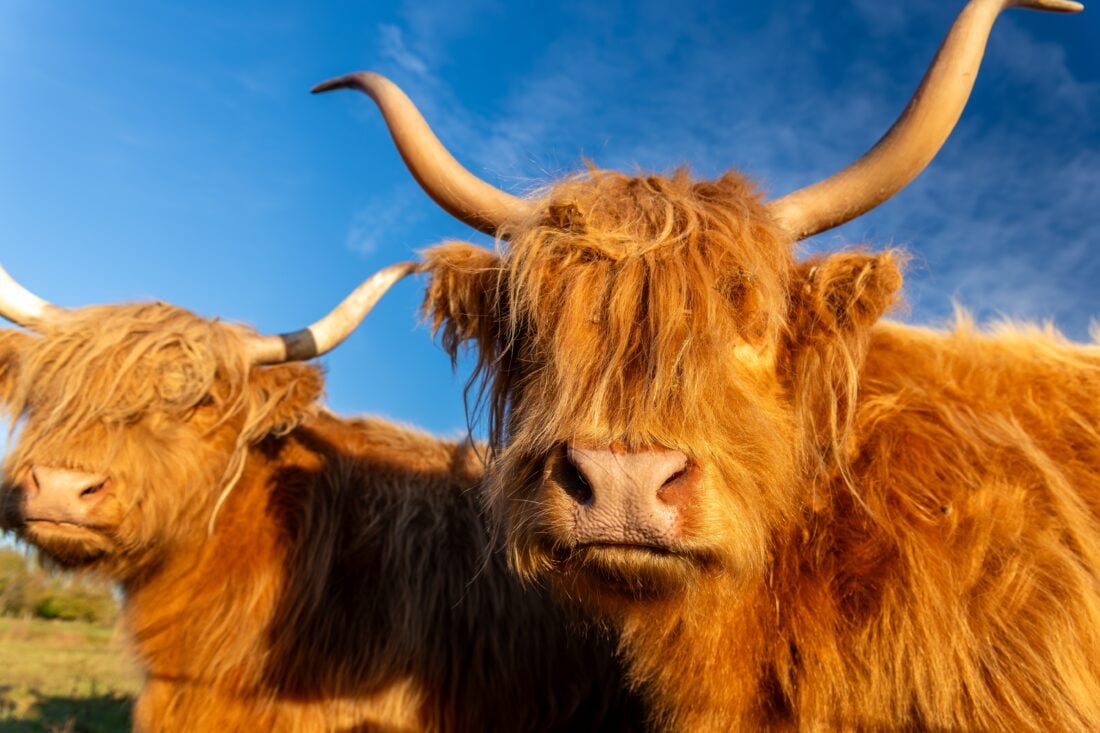
Cows: Scotland’s Most Dangerous Animal
Domestic cows cause more deaths per year in Scotland than any other animal. They can become defensive and aggressive during the breeding season, and they may charge if they perceive a threat, particularly from dogs. Cows instinctively treat dogs as predators.
The Scottish Outdoor Access Code permits walking through fields with farm animals, but you should:
- Keep a safe distance from any cattle at all times
- Consider taking an alternative route if you are walking with a dog
If a cow charges, release your dog’s lead. The cow will typically follow the dog rather than you.
The Adder: Scotland’s Only Venomous Snake
The adder is the only venomous snake native to Scotland. Bites are rare but can cause serious health issues. Adders are not aggressive by nature and will retreat if given the chance. Most bites happen when someone accidentally steps on or handles one. If you’re curious about what else is (and isn’t) slithering around, we wrote a whole piece on whether there are snakes in Scotland.
If bitten, seek medical attention immediately. Heading further south? Italy has more venomous vipers than Scotland, and we cover them in our guide to dangerous animals in Italy.
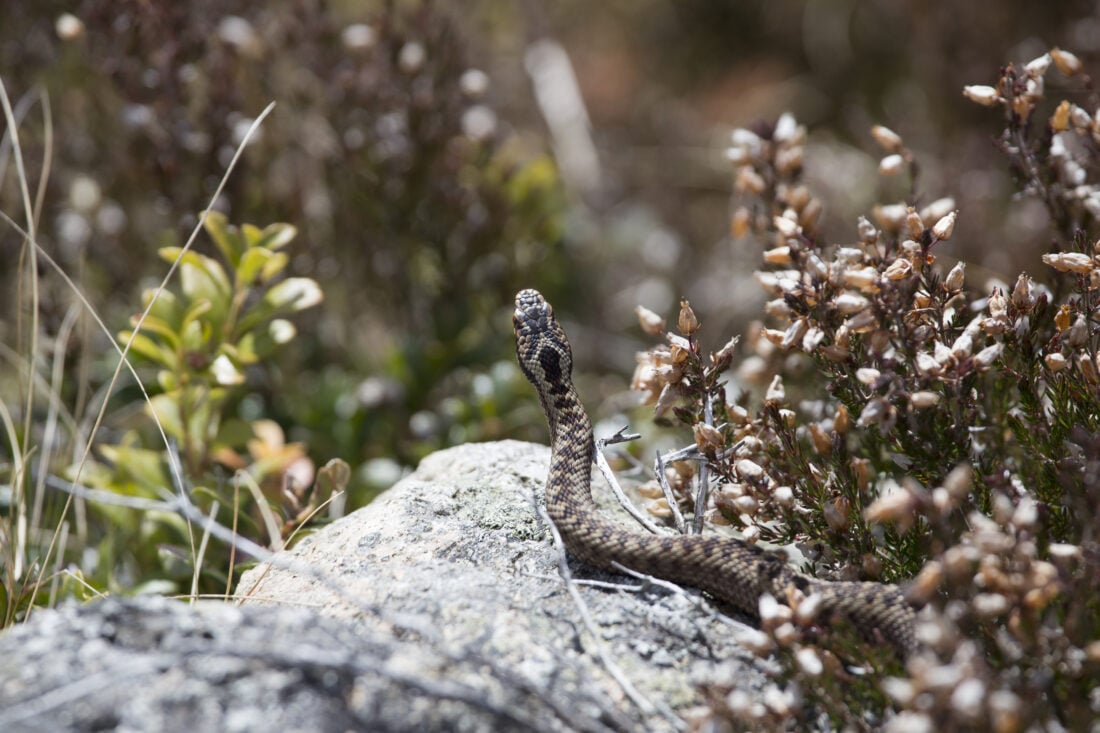
Adder, Vipera Berus
Ticks and Lyme Disease
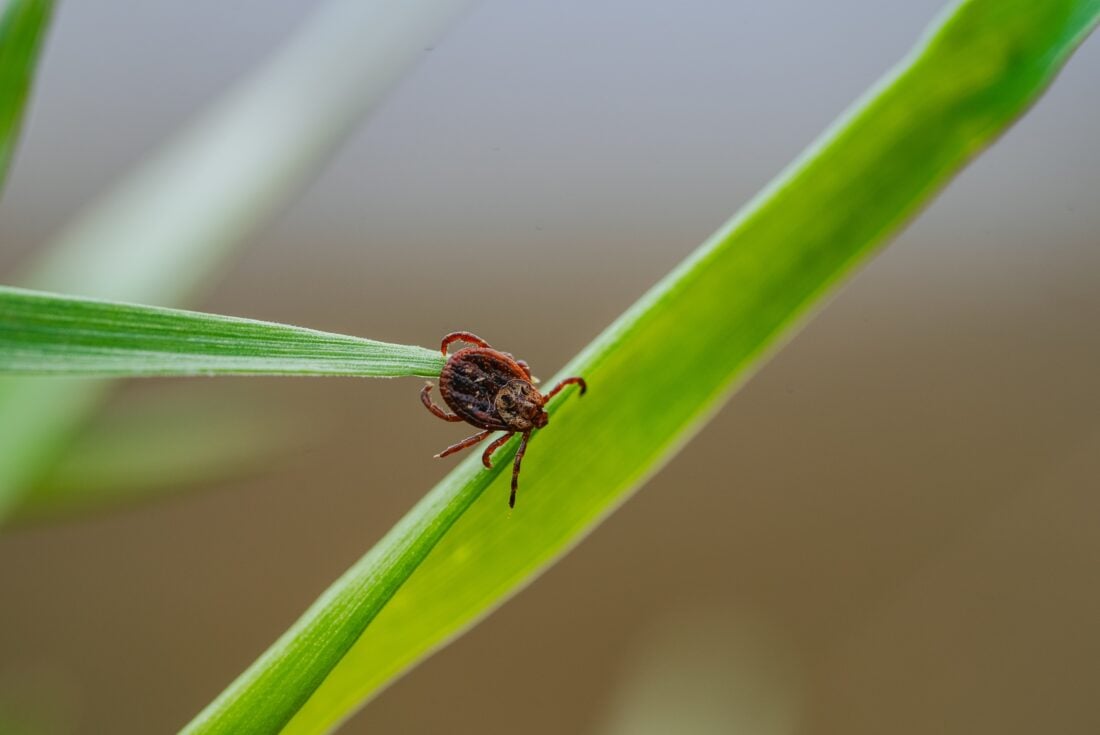
Ticks are one of the most significant health risks for walkers in Scotland. They can transmit Lyme disease, a bacterial infection that requires antibiotic treatment. Left untreated, Lyme disease can cause long-term damage. Honestly, this is the one that catches people off guard because ticks are tiny, silent, and you often won’t feel a thing until the damage is done.
Symptoms of Lyme disease include:
- A circular bullseye-shaped rash around the bite
- Fatigue and brain fog
- Fever
To reduce tick risk:
- Wear trousers in areas with long grass or bracken
- Check your skin thoroughly after any walk in tick habitat
- Remove any attached tick promptly
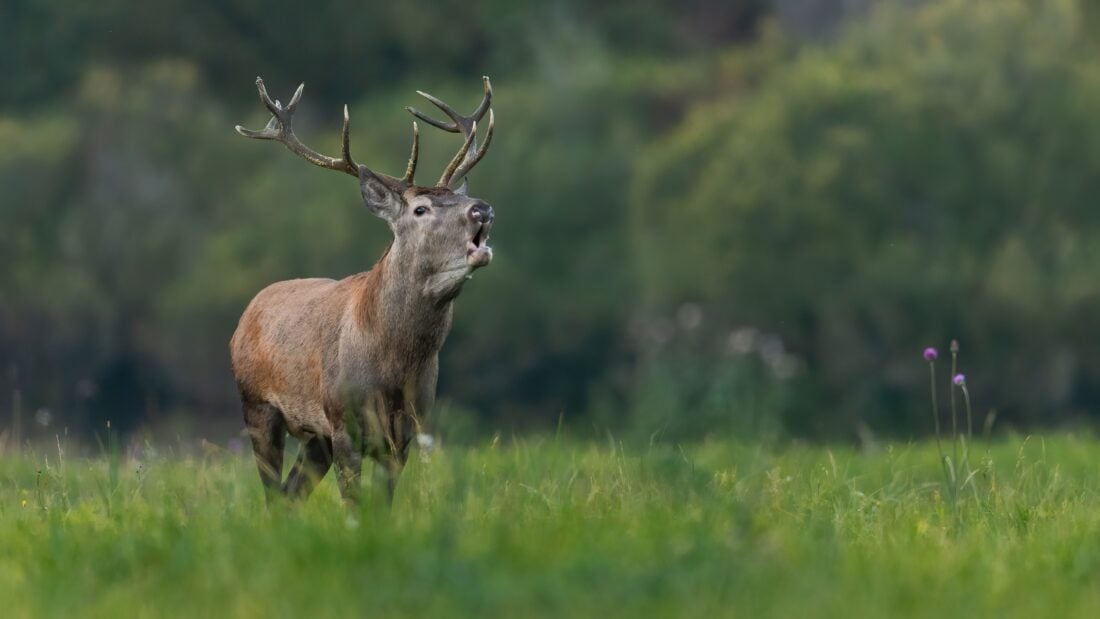
Red Deer: Dangerous on Roads and During Rut
Red deer become highly aggressive during the rutting season when testosterone levels peak in males. Keep your distance, especially in autumn.
Deer are also a serious road hazard. Deer-related road accidents account for up to 50,000 incidents annually across the UK. Drive carefully on rural Scottish roads, particularly at dawn and dusk when visibility drops and deer are most active. If you’re planning a Scotland road trip, factor in slower speeds on single-track roads where deer appear out of nowhere.
Wild Boar
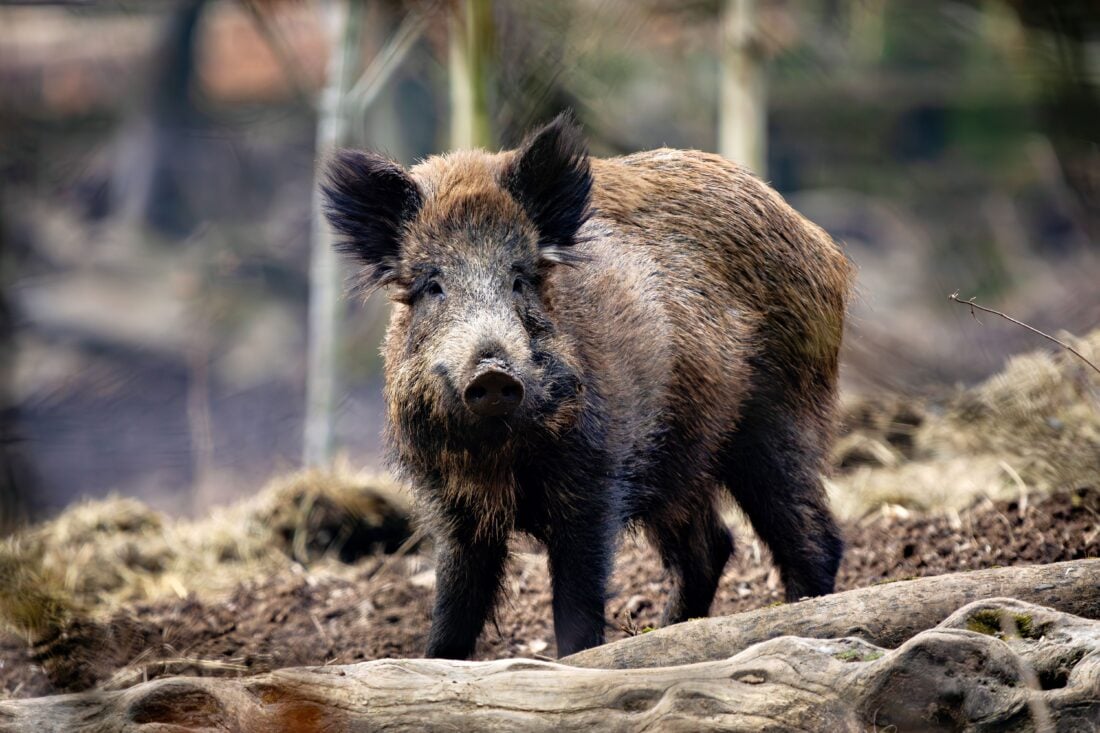
Wild boar populations have re-established themselves in parts of Scotland. They are generally elusive but can become aggressive during the breeding season. If you encounter one, do not approach it. Give it space and back away calmly.
Dogs
Breeds including Rottweilers, German Shepherds, and Staffordshire Bull Terriers are common in Scotland. Most are well-trained, but temperaments vary. Pit bull terriers are banned in Scotland, though illegal examples do exist. Exercise standard caution around unfamiliar dogs.
Badgers
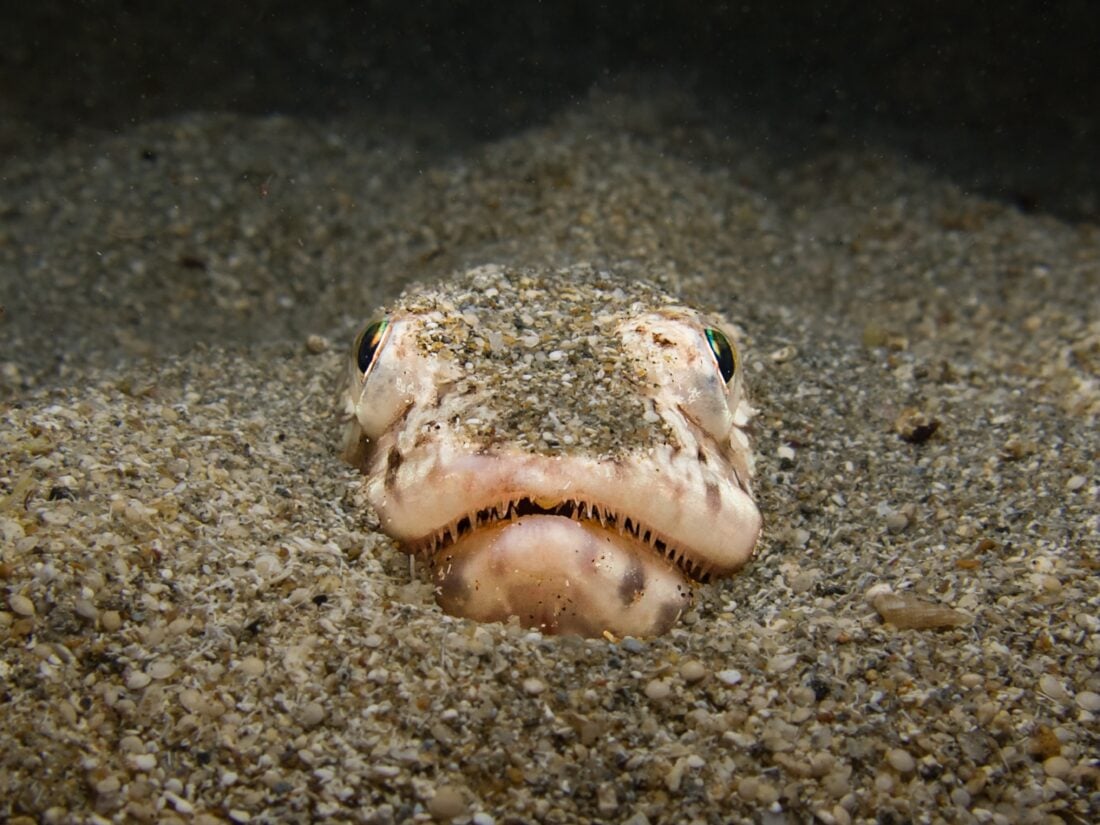
Badgers are shy and will avoid humans if possible. However, a cornered or injured badger has a powerful bite and should not be approached or handled. If you find an injured badger, contact a wildlife rescue organisation rather than attempting to handle it yourself.
Marine Hazards: Jellyfish and Weever Fish
Scottish coastal waters carry a couple of painful hazards worth knowing about.
Lion’s mane jellyfish and mauve stinger jellyfish are present in Scottish seas and can deliver painful stings. Check local beach conditions before swimming.
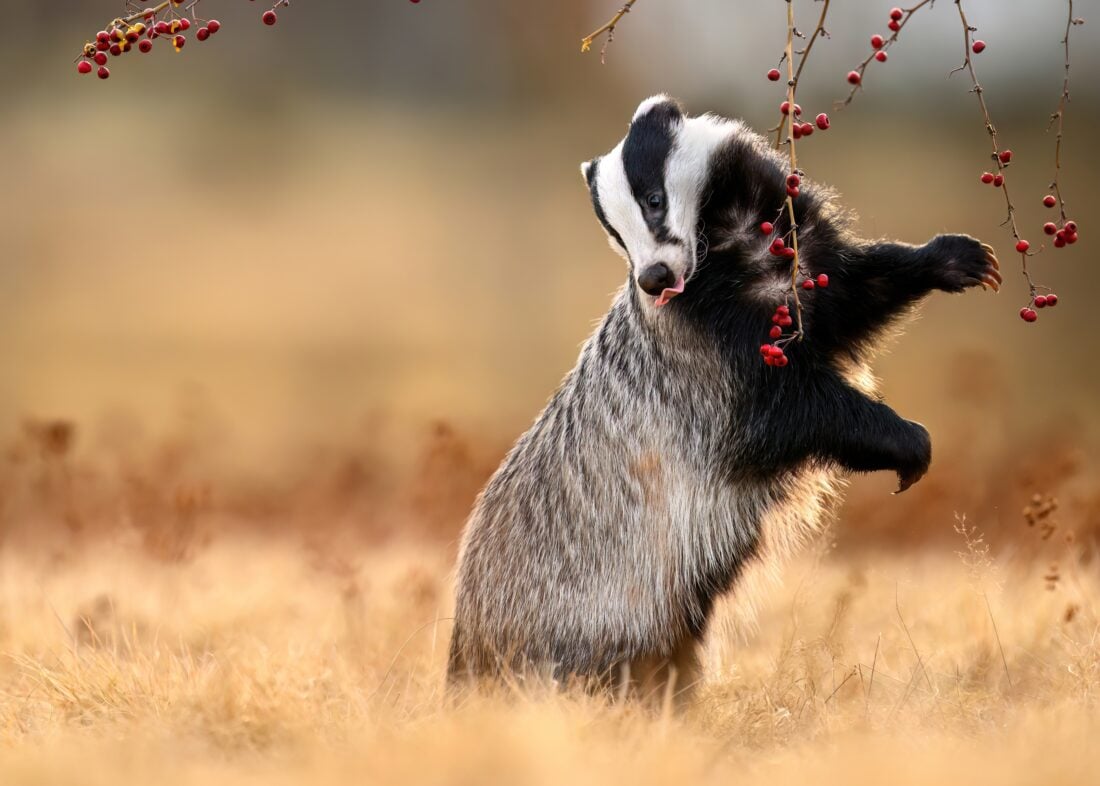
Weever fish bury themselves in shallow sandy seabeds and have venomous dorsal spines. Stepping on one is extremely painful. The recommended treatment is to immerse the affected area in hot water as quickly as possible, which helps to break down the venom.
Orcas (killer whales) are present in Scottish waters but have no documented history of threatening humans.
Highland Midge
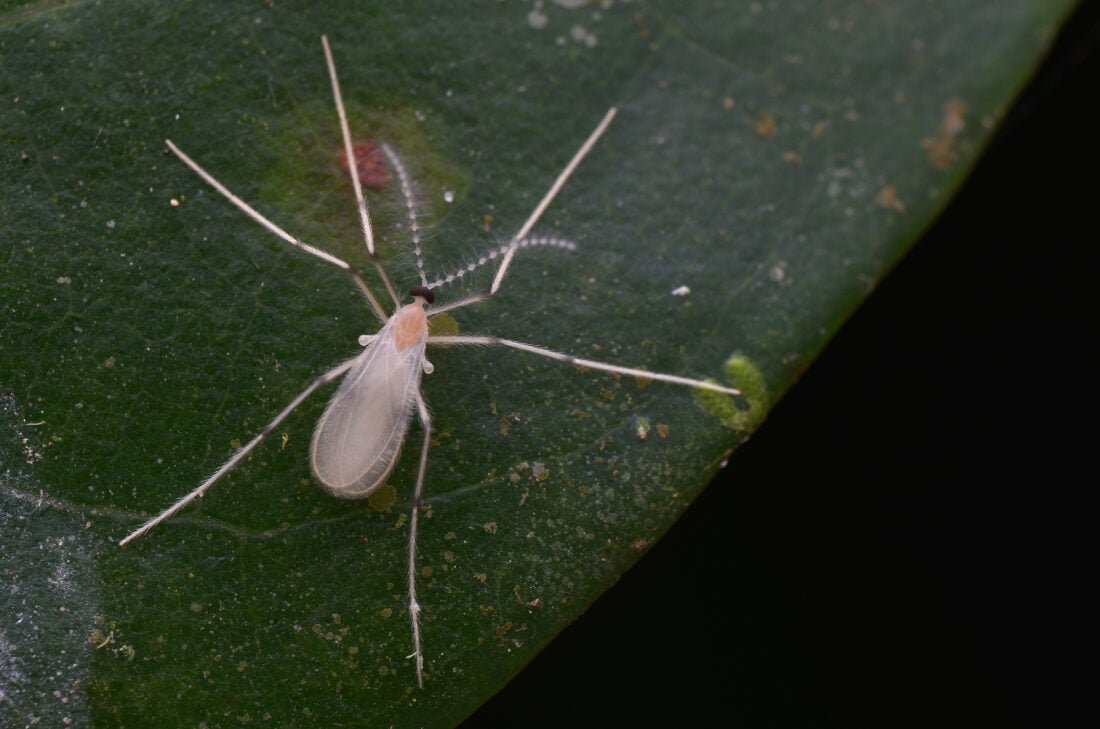
The highland midge is not dangerous in the sense of transmitting disease, but it is the most reliably annoying creature in Scotland. These tiny biting insects are most active in West Scotland during summer. Their bites cause itchy, painful welts similar to mosquito bites. Not gonna lie, midges have ruined more Scottish camping trips than bad weather ever has. We put together a guide on the worst places for midges in Scotland so you can plan around them.
Midge repellent and long-sleeved clothing are your best defences. A light breeze or direct sun keeps them away.
Bats
Scottish bats do not attack humans. However, some carry rabies. In 2002, a bat enthusiast named David McRae died from rabies after being bitten by a bat, the first rabies death since 1902. Do not handle bats, even if you find one that appears injured. Contact a wildlife rescue service instead.
Bees, Wasps, and Other Insects
Wasps are more aggressive than bees and can sting without provocation. Both can trigger severe allergic reactions in sensitive individuals.
Oak processionary moth caterpillars are found in parts of Scotland. The fine hairs on these caterpillars contain a substance called thaumetopoein, which can cause skin rashes, vomiting, dizziness, fever, and can trigger asthma attacks. Avoid touching them.
Gulls
Gulls can become aggressive when defending nests and may attempt to steal food, causing injuries. Be aware in coastal towns where gulls are habituated to humans. Turns out a seagull with a chip vendetta is surprisingly bold.
Seals
Seals are not a risk on land in normal circumstances, but they can become protective if approached when they have young nearby. Keep your distance and do not attempt to interact with them.
Dangerous Wild Animals Act 1976
Under the Dangerous Wild Animals Act 1976, keeping certain species in Scotland requires a special licence from your local authority. Licensed species include rattlesnakes, death adders, vipers, and crocodiles. Local authorities can inspect premises and set conditions on licences. Species that are also listed under the Convention on International Trade in Endangered Species (CITES) require an additional CITES licence for import, export, or commercial use.
This legislation exists because privately kept dangerous animals do occur in Scotland. In the 1980s, a couple in Auchterarder kept a 30-stone grizzly bear as a pet.
At-a-Glance: Dangerous Scottish Animals and Key Risks
| Animal | Main Risk | When to Be Most Careful |
|---|---|---|
| Domestic cow | Charge, trampling, death | Breeding season, when with dogs |
| Adder | Venomous bite | When walking in heath or moorland |
| Tick | Lyme disease transmission | Spring to autumn in long grass |
| Red deer | Charge, road accidents | Rutting season (autumn) and on rural roads |
| Wild boar | Charge | Breeding season |
| Weever fish | Venomous spine | Paddling or walking on sandy beaches |
| Lion’s mane jellyfish | Painful sting | Summer sea swimming |
| Highland midge | Painful bites | Summer, especially in West Scotland |
| Bat | Rabies (rare) | If handling an injured bat |
| Oak processionary moth | Skin and respiratory reaction | On contact with caterpillars |
Frequently Asked Questions
What is the most dangerous animal in Scotland?
Domestic cows cause the most animal-related injuries and deaths in Scotland each year. Wild species like adders and red deer pose real but less frequent risks. Scotland has no wild bears, wolves, or large carnivores.
Are there venomous snakes in Scotland?
Yes. The adder is the only venomous snake native to Scotland. Bites are rare and usually occur when someone accidentally disturbs one. Seek medical treatment immediately if bitten.
Can you get Lyme disease in Scotland?
Yes. Ticks in Scotland can carry Lyme disease. Wear long trousers in grassy or wooded areas, check your skin after walks, and remove any attached ticks promptly. Symptoms include a bullseye rash, fatigue, and fever.
Are there dangerous animals in Scottish waters?
Lion’s mane jellyfish and mauve stinger jellyfish can cause painful stings. Weever fish have venomous spines and are found on sandy seabeds in shallow water. Orcas are present in Scottish waters but pose no documented threat to humans.
