
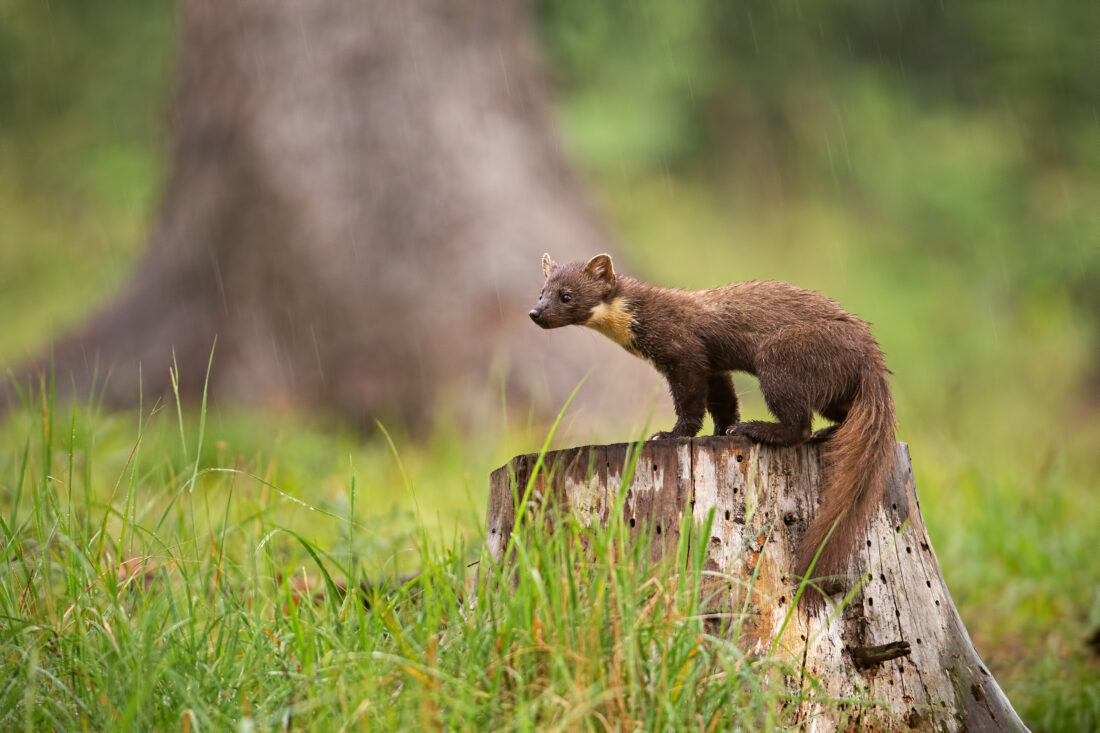
No. Pine martens are not dangerous to humans. The Mammal Society is pretty unambiguous on this. These animals are solitary, mostly nocturnal, and have zero interest in picking a fight with you. They’re predators built for hunting small mammals, not for confronting anything your size. If you see one in the wild, count yourself lucky and leave it alone.
So What Exactly Is a Pine Marten?
The pine marten (Martes martes) is a small carnivorous mammal in the Mustelidae family, which also includes weasels, otters, mink, polecats, and badgers. In the UK, they’re mostly found in the Scottish Highlands and Grampians, with some isolated populations elsewhere. If you’re planning a trip up that way, our Scottish Highlands accommodation guide covers where to base yourself for wildlife spotting and everything else. Across Europe and parts of the Middle East, their population is more stable, but in Britain they’ve had a rough few centuries.
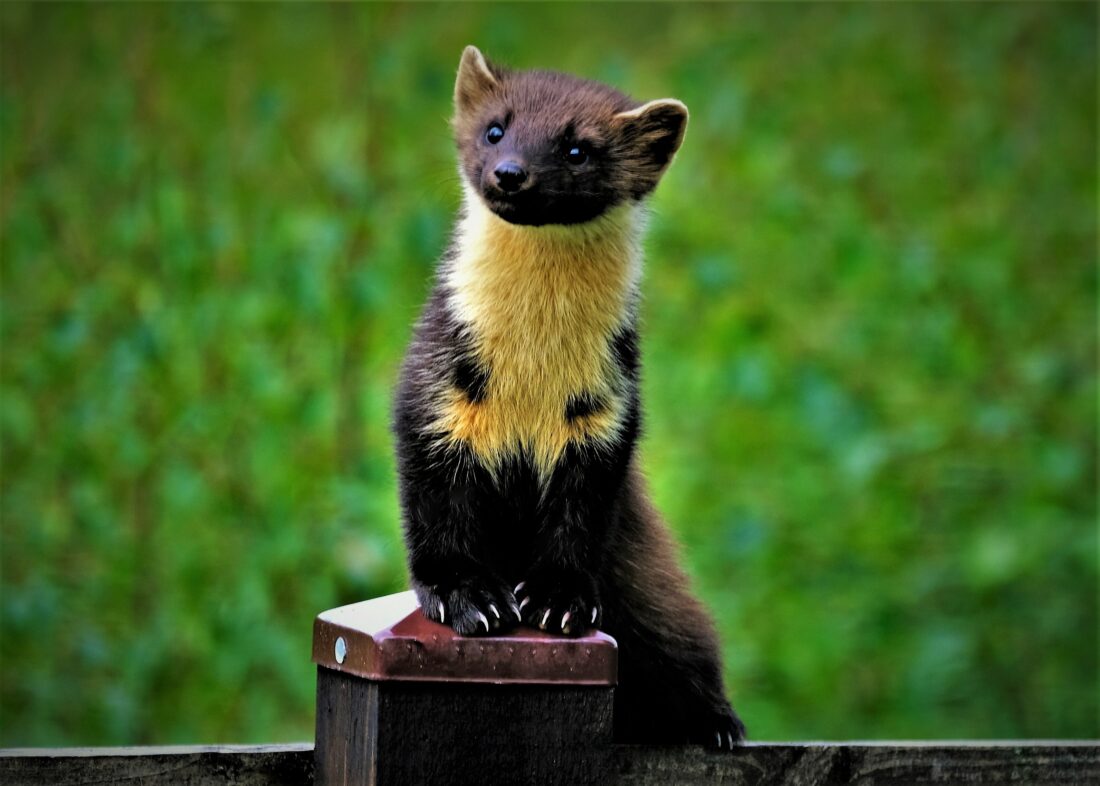
Size-wise, you’re looking at something roughly comparable to a domestic cat. Males weigh between 1.5 and 2.2 kg and measure around 51 to 54 cm, plus a tail of 26 to 27 cm. Females are a bit smaller. They’ve got dark brown fur, a distinctive yellow-white bib on the throat and chest, pale-edged ears, and a long fluffy tail. They look, frankly, adorable. Don’t let that fool you.
They have semi-retractable claws, which make them exceptional climbers. They can jump up to 13 feet between branches and drop from heights of 65 feet without issue. They spend a lot of time in trees but do most of their actual hunting on the ground.
Are Pine Martens Aggressive?
They can be, in the sense that they’re effective predators with sharp claws and the speed to use them. Their diet covers a wide range: small birds, squirrels, rodents, rabbits, beetles, berries, eggs, fungi, carrion, and hares. In summer and autumn they’ll also eat nuts and fruit. Nature Canada notes they can even take down a deer, which is a fairly alarming fact for an animal that weighs about as much as a bag of sugar.
But aggressive toward humans? No credible evidence for that. Their behaviour is driven by survival, not hostility. A wildlife observer called Nigel, who has been running trail cameras in a garden almost every night for five years, noted that across thousands of hours of footage the only real conflicts he recorded were between two male hedgehogs and the occasional scuffle with a domestic cat. Pine martens, foxes, and badgers mostly just got on with their lives.
The real drama, as he put it, happens in our minds, not the wild.
The Folklore Is Nonsense (Sorry, Scotland)
Scottish folklore has some fairly wild claims about pine martens, including that they could kill sheep and that they carry a poisonous barb. The Mammal Society has confirmed these are myths. No poisonous barb. No sheep-killing sprees. Just a small brown animal trying to find its next meal without getting eaten by a bear, a coyote, or a wolf (all of which are actual predators of pine martens, along with humans). If you’re curious about other classic Scottish phrases and their real meanings, the folklore rabbit hole goes deep, trust me.
The biggest threat to pine martens has always been people. Historically, they were trapped extensively for their pelts, known as Canadian sable, and their populations were hammered by deforestation and predator control programmes. By the late 1990s the species was close to extinction in several areas. In Newfoundland, numbers dropped below 300 mature individuals.
They’re now protected in the UK under the Wildlife and Countryside Act (1981), and in Canada under the Species at Risk Act (SARA). Despite that legal protection, poisoned baits and traps set for crows and foxes still kill pine martens in the UK every year.
Pine Marten Behaviour: What to Actually Expect
If you’re hoping to spot one in the wild, here’s what you’re working with:
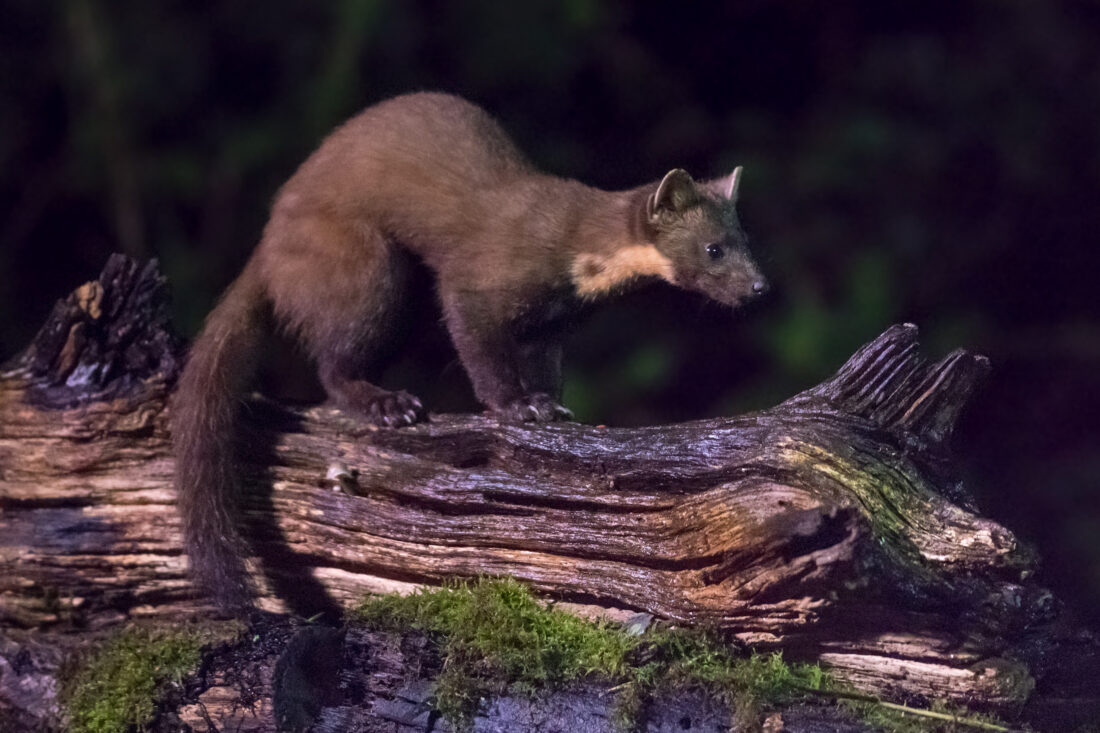
- Mostly nocturnal – you’re more likely to find evidence (scat, tracks) than see one in daylight
- Solitary – they only come together briefly to mate
- Territorial – male territories in the UK cover 10 to 25 square kilometres, females 5 to 15
- Elusive – birds actually sing alarm calls to warn other animals when a pine marten is nearby, which tells you something about their reputation among wildlife
- Not den-builders – they use hollow trees, rock crevices, old nests, and occasionally human structures
During mating season, the usually solitary pine marten produces a cat-like yowling sound. If you hear that in the Scottish Highlands at night and don’t know what it is, it’s alarming. Past-me can confirm. Weather-wise, the Highlands are currently sitting at 67°F with broken clouds and 81% humidity (as of March 2026), which is unusually mild, so evenings spent listening for wildlife are more comfortable than you’d expect for Scotland. The pinewoods around Aviemore are a good place to try your luck, and our guide to things to do around Aviemore covers the rest of the area.
Are Pine Martens Dangerous to Pets or Livestock?
This is where it gets slightly more nuanced. Pine martens are opportunistic predators, and a small enough animal left unprotected could theoretically be at risk. But the folklore claim that they routinely attack sheep is simply not supported. They’re built for small prey. A healthy adult sheep is not on the menu.
For small pets or backyard poultry, the same common-sense rules apply as with any wild predator in your area: secure your animals at night. That’s it.
Why Pine Martens Are Actually Good for Ecosystems
Far from being a menace, pine martens are doing useful work out there:
- Grey squirrel control – the increase in pine marten numbers in Northern Ireland has helped suppress the invasive grey squirrel population, which in turn has helped native red squirrels recover
- Seed dispersal – males travel territories of up to 7.8 km², spreading seeds as they go
- Prey population balance – as top predators in many woodland ecosystems, they help keep rodent and small mammal numbers in check
Conservation efforts including reintroduction programmes and habitat corridor preservation have helped populations recover, though slowly. Pine martens only breed once a year, using a process called delayed implantation where fertilised eggs don’t implant until spring, resulting in a pregnancy that stretches across roughly two-thirds of the year. Litters are between one and five kits. Recovery takes time.
Can You Keep a Pine Marten as a Pet?
No. Beyond the legal protections in both the UK and Canada, it’s genuinely not feasible. These are wild animals with sharp claws, significant speed, and territorial instincts. The fact that they’re objectively cute is not relevant information here.
Pine Marten Fast Facts
| Feature | Detail |
|---|---|
| Scientific name | Martes martes |
| Family | Mustelidae |
| Weight (male) | 1.5 to 2.2 kg |
| Weight (female) | 0.9 to 1.5 kg |
| Length (male) | 51 to 54 cm plus 26 to 27 cm tail |
| Lifespan | Up to 8 years |
| Litter size | 1 to 5 kits |
| Activity | Mostly nocturnal, solitary |
| UK habitat | Woodland, mainly Scottish Highlands |
| Legal status (UK) | Protected under Wildlife and Countryside Act 1981 |
| Legal status (Canada) | Threatened under SARA |
| Dangerous to humans? | No |
The Short Version
Pine martens are not dangerous to humans. They’re small, elusive, mostly nocturnal predators that want absolutely nothing to do with you. The myths around them, particularly in Scottish folklore, have been thoroughly debunked. They’re sharp-clawed, fast, and capable hunters of small mammals, but that’s a very different thing from being a threat to people.
If anything, they’re worth protecting. The fact that they’re quietly helping red squirrels survive by keeping grey squirrel numbers down is reason enough to root for them. And honestly, if you’re heading to the Highlands to explore the woodlands where these creatures live, staying in one of the region’s castle hotels surrounded by ancient forest makes the whole experience feel properly wild.
