
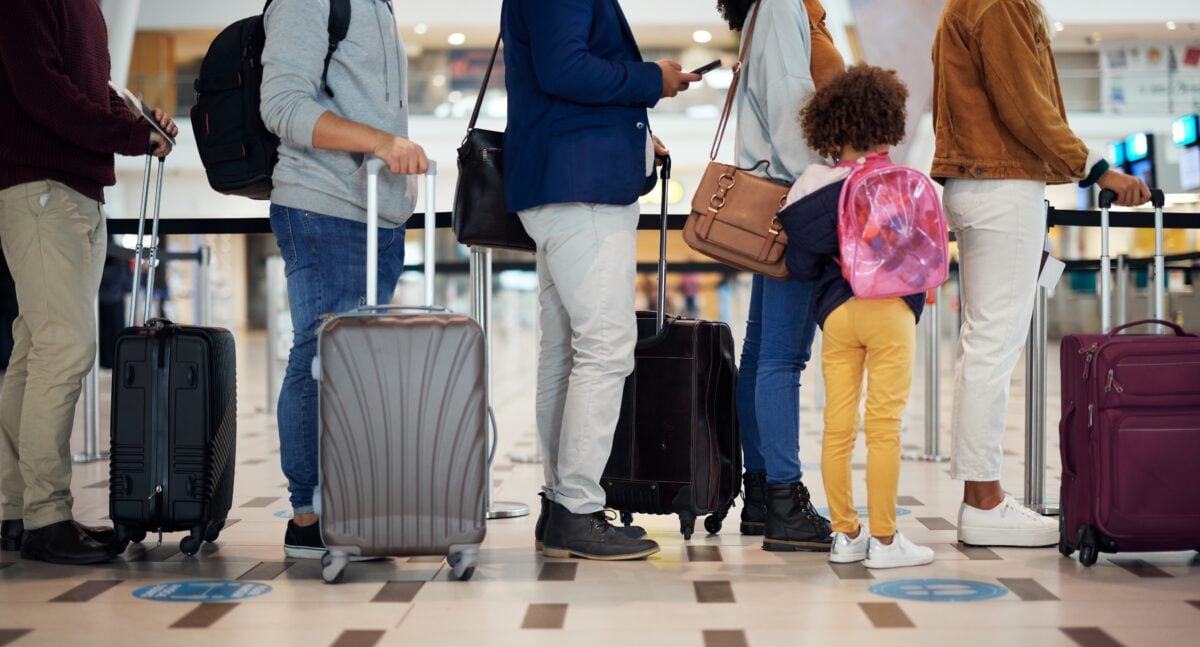
Airlines are getting less patient with out-of-turn boarders
If you have ever watched a boarding lane dissolve into mild chaos because half the gate suddenly decided it was “their turn,” the airlines have some news for you: they are taking a harder line on people who jump the queue. That matters for budget travelers because boarding fast is no longer just a social sin. It can mean getting flagged at the gate and sent back to your proper group, carry-on in hand and dignity slightly dented.
The phenomenon has a rude little nickname too: “gate lice.” Charming, no? It refers to passengers who crowd the boarding area early or slip into a group that is not theirs. Airlines have started using stricter boarding systems and tech checks to stop it, and the days of pretending nobody noticed are getting shorter.
How airlines are trying to keep boarding in line
According to the source material, airlines that once relied on the honor system are moving toward more structured boarding checks. Some are using numbered groups, while others are leaning on seat-based boarding logic or ticket scanners that reject passengers who try to board too early.
That approach is already visible in a few places:
- Qantas shifted to numbered boarding groups in Australia and splits seating into sections within the cabin.
- United Airlines uses a seat-based boarding order for economy passengers under its WILMA system, with window seats boarding before middle and aisle seats.
- JetBlue has changed its boarding process, with mixed reactions.
- American Airlines added ticket-checking technology in 2024 that can reject out-of-group boarding and beep to alert staff.
The goal is simple enough: reduce gate congestion and keep the line from becoming a free-for-all. Airlines also want to speed up boarding, which can get messy when everyone seems to believe they are one boarding group ahead of where they actually are.
Why this gets on travelers’ nerves so quickly
There is a reason boarding frustration hits a nerve. Since airlines started charging for checked bags in 2008, more passengers have taken carry-ons, and overhead bin space has become a tiny, high-stress battleground. Nobody wants to be last on board if it means playing suitcase Tetris in the aisle or gate-checking a bag they were hoping to keep with them.
For backpackers and budget travelers, that overhead-bin scramble matters. If you are trying to keep a low-cost trip running smoothly, being forced to gate-check a bag can slow you down at arrival. It is usually free, but you may have to pick up your bag at baggage claim, which is not exactly the grand finale anyone wants after a long travel day.
There is also a practical point here: when boarding gets clogged, the whole plane slows down. That can affect tight connections, which is especially annoying for travelers trying to save money by booking the cheapest route with a quick transfer.
The budget traveler angle: less chaos, but fewer shortcuts
From a traveler’s point of view, stricter boarding enforcement is a mixed bag. On one hand, a more orderly process should mean less gate crowding and fewer people hovering around the boarding line like it is a concert entry. On the other, anyone who likes to sneak on early for extra overhead bin space is going to have a harder time of it.
That may not sound dramatic, but on a crowded low-cost flight, the boarding order can affect how pleasant the whole journey feels. A strict system can also reduce the “I thought they said group 4?” confusion that seems to bloom whenever airport acoustics are terrible and gate announcements are half swallowed by background noise.
Passengers on forums have pointed out that poor communication from gate staff can add to the mess. Fair enough. If the boarding process is unclear, some people will naturally drift toward the line early just to avoid missing their chance. Still, airlines are clearly deciding that the cure for confusion is more enforcement, not more patience.
What happens if you try to board early
The result is not dramatic courtroom-style punishment. It is more of a public embarrassment followed by a polite shove back into the correct lane. The boarding pass may beep, scanners may turn red, and the passenger is told to return to the right group.
It is not exactly prison, but it is enough to make a scene. And for anyone trying to blend into the crowd like a seasoned backpacker with a too-tall coffee, that kind of instant correction is probably deterrent enough.
Practical takeaways for travelers
- Check your boarding group before you leave the waiting area.
- Do not assume everyone in the lane ahead of you is in the same group.
- Keep carry-on size and overhead-bin space in mind if you want to avoid gate-check surprises.
- If you are worried about a tight connection, board properly rather than rushing the line.
- Listen carefully to boarding announcements, especially at noisy airports where the audio is famously useless.
The bottom line
Airlines are clearly done pretending boarding chaos will fix itself. With new scanning systems and tighter group enforcement, out-of-turn boarding is getting harder to pull off, and passengers who try it are more likely to be sent back where they belong. For budget travelers, that probably means a slightly less chaotic gate and one fewer battle for overhead bin space. Small mercies.
