
Turning a Tokyo business trip into a short holiday usually means adding two or three nights and choosing a hotel that works for both halves of the trip. Tokyo came seventh in Navan’s ranking of cities for combined business and leisure accommodation bookings on its platform in 2025.
Here’s how to clear the extra days with work, why Hibiya makes a good base, what to do with one, two or three free days, and whether a subway pass is worth buying.
Quick answer. Add two nights if you want a full day in Tokyo after your final meeting and a comfortable departure the following morning. Stay in Hibiya for an easy walk to Ginza and the Imperial Palace area. With a second free day, you can head to Yokohama and come back to the same hotel. With three free days, an overnight in Osaka is possible if your flight plans leave room for it.
Clear the Extra Days Before You Book
The awkward conversations are easier before the flights are booked. Navan cites figures showing that 68% of corporate travellers extend at least one trip a year, by 2.3 nights on average. Settle these four things before you commit to the extra days.
- Who pays for which nights. Ask the hotel to put work nights and holiday nights on separate bills. If you’re staying in the same room, ask the hotel to link the reservations and confirm whether you need to stop at reception when the second booking starts.
- Whether the flight can move. A later return can cost more than the extra hotel night, and company policy may say who covers the difference. Ask your travel team to price both return dates on the same day and confirm who handles changes if the conference moves.
- Insurance for the leisure days. Corporate travel cover doesn’t always extend to personal days. Check the exact dates covered, including the later flight home, and ask the insurer how cover works if the trip includes both work and holiday.
- Any work you’ll do on holiday. If you plan to log in from Tokyo, check your employer’s remote-work rules. Agree which days you’ll be on leave, whether anyone expects you to be reachable, and who can handle anything urgent while you’re out.
In IWG’s 2026 work-from-anywhere research, 48% of workers surveyed said they planned to extend a holiday or short break by working remotely.
Count usable days before you count hotel nights. If your final meeting ends at 5pm on Thursday and you fly out on Saturday morning, Friday is your only full sightseeing day. A late Saturday flight can give you a second morning in town if the hotel can store your luggage after checkout. Use the time you need to leave for the airport when deciding what fits that morning.

Why Hibiya Works as a Base for Work and Holiday
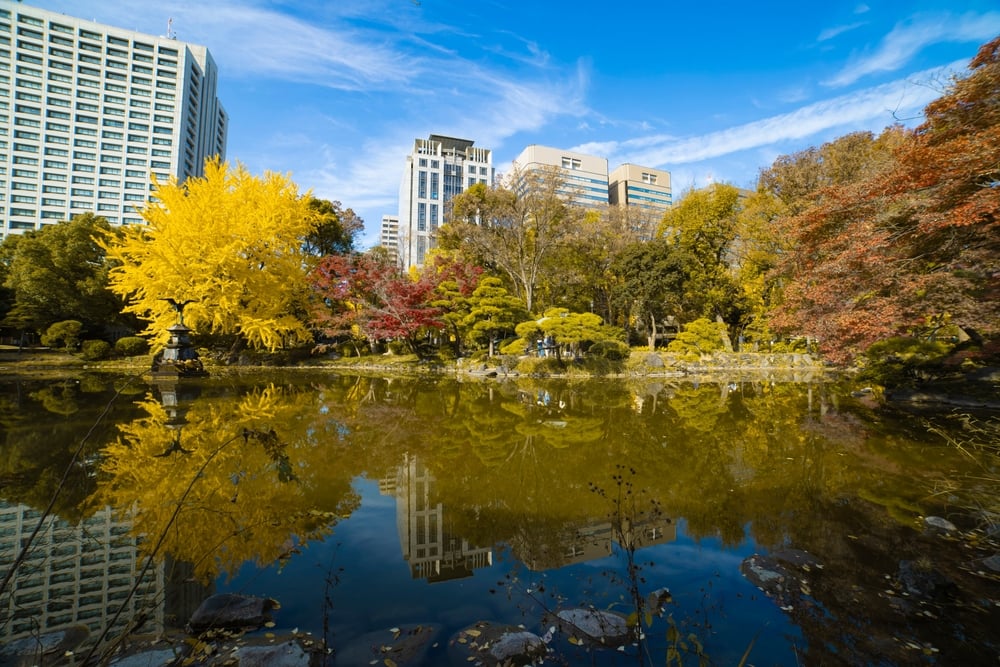
Hibiya sits between the Marunouchi office district, Ginza’s shops and the Imperial Palace, so the same hotel works for a Tuesday meeting and a Saturday wander. It’s also a theatre district, with the Tokyo Takarazuka Theater and a large Toho cinema close by.
For a mid-range base on the Shimbashi side of the area, Mercure Tokyo Hibiya is a 4 star hotel in Tokyo worth comparing. It opened in December 2023 with theatre-inspired Art Deco interiors and an executive lounge. The hotel lists M Lounge access for Privilege King, Privilege Twin and Executive Suite bookings. See Time Out’s Mercure Tokyo Hibiya listing and check the hotel’s room and suite details.
Accor puts the hotel about three minutes’ walk from the Hibiya Exit at JR Shimbashi Station and Exit A5 at Uchisaiwaicho Station. Use the named exit when you save the route, especially if you’re arriving with a suitcase or heading back after dark. See the hotel’s directions.
These are the easiest places to reach on foot once the laptop’s closed.
| Nearby | What it is | Good for |
|---|---|---|
| Hibiya Park | Japan’s first Western-style park, opened in 1903 | A morning walk or a break between calls |
| Tokyo Midtown Hibiya | Shops, restaurants and a cinema, opened in March 2018 | Rainy evenings, dinner or a film |
| Hibiya Okuroji | Around 300 metres of shops and bars under brick railway arches from 1910 | A casual dinner and regional sake by the glass |
| Ginza | Department stores, flagship shops and restaurants | Shopping on your first free afternoon |
The arches at Hibiya Okuroji were part of Japan’s first elevated railway, and trains still run overhead. The covered stretch is handy if you finish a meeting in the rain and want to find dinner on the way back to the hotel. See GO TOKYO’s Hibiya Okuroji guide.
Before picking a hotel, map your busiest workday and your airport departure. If you have an early meeting in Marunouchi, compare the walk to the office entrance as well as the distance to the nearest station. For the holiday portion, Hibiya is easy to explore without moving hotels. Leaving your suitcase in the room buys back the time you’d spend checking out and waiting to check in somewhere else.
How to Spend 1, 2 or 3 Extra Days in Tokyo
Build the plan around the number of full days you have. With one extra day, stay close to Hibiya. Two days give you room to see a different city and sleep in the same hotel. With three, you can consider an overnight farther away.
| Extra days | Plan | Why it works |
|---|---|---|
| 1 | Hibiya Park in the morning, Ginza in the afternoon, Okuroji for dinner | Everything is walkable, so you can leave the trains for another day |
| 2 | Day one as above, then a day trip to Yokohama | A change of scene without changing hotels |
| 3 | Two Tokyo days, then the Shinkansen to Osaka for a night | A second city on the same trip, about two and a half hours away by Nozomi |
One Extra Day. Walk From Hibiya Park to Ginza
Start with a slow breakfast and a loop through Hibiya Park. If you want more time outside, continue towards the Imperial Palace East Gardens. Check the opening calendar before setting out, since the gardens have regular closing days and exceptions around public holidays. If you’d rather keep the morning short, head straight from the park towards Ginza. See the Imperial Household Agency’s East Gardens visitor information.
In Ginza, start with a department-store food hall for lunch and give yourself time to browse a few blocks on foot. Head back towards Yurakucho and Hibiya Okuroji for dinner. If it’s raining, you can swap the park for a longer lunch and spend part of the afternoon at Tokyo Midtown Hibiya. It’s an easy day to shorten if your final work call runs over.
Two Extra Days. Take the Train to Yokohama
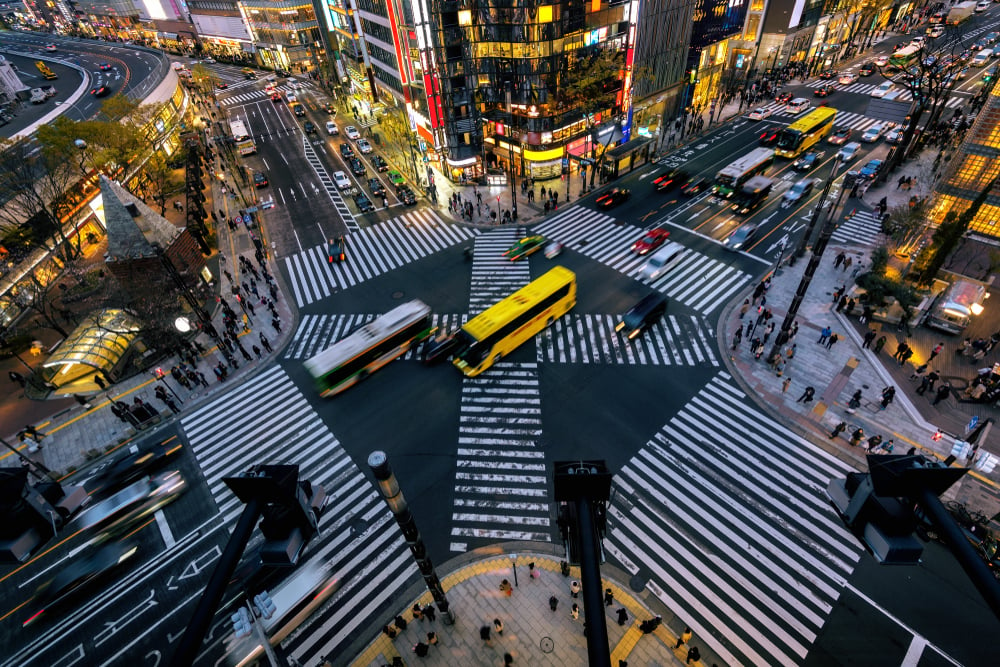
Keep the first day around Hibiya and Ginza. The next morning, take JR from Tokyo Station to Yokohama Station, a ride of about 25 minutes before any local connection. For a waterfront day, start around Minato Mirai, then walk towards the Red Brick Warehouse. Continue to Yamashita Park and finish with a meal in Chinatown if you still have time. If it’s raining, pick lunch in Chinatown and one indoor stop. See Yokohama’s official rail access guide.
Keep your Tokyo room and take a day bag. The train to Yokohama is a separate fare from the Tokyo Subway Ticket, so leave it out when you count the subway rides that might justify the pass. Our list of things to do in Yokohama covers the food, nightlife and culture worth the trip.
Three Extra Days. Decide Whether Osaka Fits Your Flight
Spend two days in Tokyo and take an early Nozomi from Tokyo or Shinagawa on the third day if you want a night in Osaka. You’ll arrive at Shin-Osaka, so allow time for the onward journey to your hotel before making lunch or dinner plans. Pick one area for the evening, such as Namba for food, and keep the rest of the day flexible. Our Osaka bleisure trip guide covers where to stay and how to pace the visit. See JR Central’s Tokaido Shinkansen overview.
Price a return from Kansai International Airport if your work booking allows it. If you’re flying home from Tokyo, account for the train back from Osaka and the separate airport transfer. For an early departure from Tokyo, spend the final night back in the city or near the airport. You can also use your third free day for a Tokyo neighbourhood such as Asakusa and keep the same hotel throughout.
If your dates line up with a Tokyo sumo tournament, held in January, May and September, you can build one of your free afternoons around it. Our guide to planning a sumo wrestling visit in Japan explains tickets and seating. Check the Japan Sumo Association’s tournament calendar for your dates.
If your flight home leaves early, check which terminal it departs from before booking the final night. Our pick of capsule hotels near Haneda Airport covers options for a night close to the terminal.
Is the Tokyo Subway Ticket Worth It for a Few Extra Days?
Since a price change on 14 March 2026, the Tokyo Subway Ticket costs ¥1,000 for 24 hours, ¥1,500 for 48 hours and ¥2,000 for 72 hours for adults. It covers Tokyo Metro and Toei Subway lines, and overseas short-term visitors can buy it. JR lines are outside the pass. Single rides on Tokyo Metro run from ¥178 to ¥324 on an IC card, depending on distance. Check Tokyo Metro’s pass prices and coverage.
Count the subway rides you’ll actually take. Six short Tokyo Metro rides at ¥178 come to ¥1,068, so the 24-hour ticket saves ¥68. Four of those same rides come to ¥712, which makes pay-as-you-go cheaper by ¥288. A day spent walking around Hibiya and Ginza may barely use the subway, and your JR trip to Yokohama stays a separate fare either way.
The clock starts at first use. If you tap in at 2pm on Friday, a 24-hour ticket can cover eligible journeys until 2pm on Saturday. Look at the timing of your first and last rides before picking a pass, especially if your holiday begins after a morning meeting or ends with a late flight.
Two Scots Abroad · Travel data
Is the Tokyo Subway Ticket worth it for your extra days?
Pick how many holiday days you’ll spend riding the subway, how many rides a day you expect and how far a typical ride goes. We compare the pass with paying by IC card (Suica or PASMO) at Tokyo Metro’s published adult fares.
Days on the subway
Rides per day
Typical ride
Your options, cheapest first
| Option | Total |
|---|
The pass covers Tokyo Metro and Toei Subway. JR lines such as the Yamanote require a separate fare. The pass is available to overseas short-term visitors and runs for 24, 48 or 72 hours from first use. The estimate uses Tokyo Metro fares. A trip that combines Tokyo Metro and Toei can cost more, even with the discount on eligible transfers. Check Tokyo Metro’s transfer fares.
Figures from Tokyo Metro’s Tokyo Subway Ticket prices and Tokyo Metro’s adult fare table · As of November 2026 · twoscotsabroad.com
Hibiya is well placed for either option. Hibiya Station serves the Tokyo Metro Hibiya and Chiyoda lines and the Toei Mita line. JR Yurakucho and Shimbashi stations are within walking distance for the Yamanote line, which needs a separate fare. If you buy the subway pass, you can still use Suica or PASMO for JR and other journeys outside its coverage.
Want to Keep Working From Japan for Longer?
For a few extra days of sightseeing, check the rules for your passport and the dates and activities permitted by your entry status. Many travellers can include sightseeing in a short visit for business meetings. If you plan to work remotely during the extension, ask the Japanese embassy or consulate that serves you which rules apply to your situation. Your employer’s approval is a separate step. See the Japanese Embassy’s short-term visit guidance.
For people planning to work remotely from Japan for months, the digital nomad visa allows a stay of up to six months with no extension. It’s limited to eligible nationalities and requires annual income of at least 10 million yen and insurance with at least 10 million yen of medical cover. The ministry also lists the documents you can use as evidence, including employment or client contracts that show the terms and payment. See the Ministry of Foreign Affairs digital nomad visa page.
Tokyo Business Trip Extension FAQs
Can I extend a business trip in Tokyo for a holiday?
Usually, yes, if your employer agrees and your entry status allows your plans. Clear who pays for the extra nights and any flight change before you book. Ask the hotel to split the bill between work and holiday nights, and check that your travel insurance covers the leisure days as well as the working ones.
How many nights should I add to a Tokyo business trip?
Two extra nights are a good starting point if you want one full day off and a departure the following morning. Three nights give you two full days for Tokyo and a day trip, assuming your last meeting finishes the evening before. Count full days between the end of work and the airport transfer, especially if your flight leaves early.
Is Hibiya a good area to stay in Tokyo?
It suits a split trip well. Hibiya is close to the Marunouchi offices, Ginza, Hibiya Park and the Imperial Palace, with three subway lines at Hibiya Station and JR stations at Yurakucho and Shimbashi. It’s quieter at night than Shinjuku or Shibuya, which can suit you if you’ve got early meetings.
How much is the Tokyo Subway Ticket?
Adult prices are ¥1,000 for 24 hours, ¥1,500 for 48 hours and ¥2,000 for 72 hours, following a price change on 14 March 2026. Children aged 6 to 11 pay half. The ticket covers Tokyo Metro and Toei Subway lines, so JR journeys such as the Yamanote line are extra.
Do I need a JR Pass for a short Tokyo holiday?
For a holiday within Tokyo, pay as you go with an IC card such as Suica or PASMO on JR, Tokyo Metro and Toei. If you’re adding long-distance trips such as the Shinkansen to Osaka and back, compare the fares for your exact trains against the price and coverage of any rail pass you’re considering.