
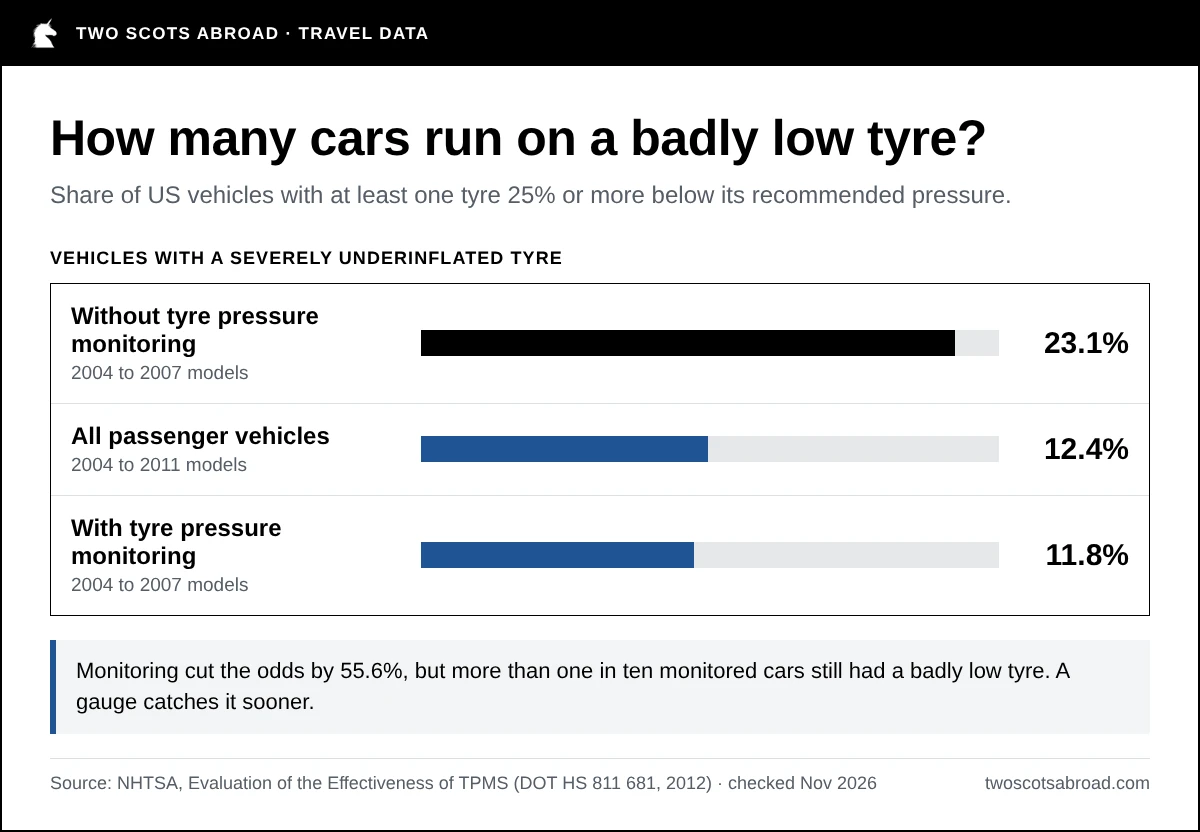
Taking a high-end car on a long drive means more prep than throwing a bag in the boot. A luxury car road trip goes wrong in small ways first: a tyre a few PSI low, the wrong oil, a key fob left by the front door. An NHTSA study found tyre pressure monitoring systems cut the chance of a severely underinflated tyre by 55.6%, yet plenty of cars still had one.
Below: the service checks to do before you go, tyres and brakes, setting up the cabin and driver aids, and how to keep the car secure on the road.

What Should You Check Before a Long Drive in a Luxury Car?
Start with the oil, because it’s the easiest thing to get wrong. Many European performance engines need oil that meets a specific manufacturer approval code as well as the right viscosity. Your owner’s manual lists all three things to match: the viscosity grade (such as 0W-30 or 5W-40), the ACEA category and the approval code. The wrong oil can affect emissions parts and, in some cases, warranty cover.
If a service is due before the trip, book it a week or two ahead so any surprises get fixed in time. Some companies come to you: a mobile oil change for luxury cars can be done on your driveway or at the office, so check whether one covers your area. Wherever it’s done, keep the invoice, and make sure it lists the oil specification, the filter and the mileage.
Some turbocharged engines use a bit of oil between services, so check the level every couple of fuel stops on a long trip and carry a litre of the approved oil for top-ups. Service indicators on many cars also factor in driving conditions, so heavy loads and stop-start traffic can bring the next service forward.
| Check | When | What to look for |
|---|---|---|
| Engine oil | Before you leave, then every couple of fuel stops | Level, plus the approval code on the bottle |
| Coolant and brake fluid | Before you leave | Levels, and whether a change is due on your service schedule |
| Tyre pressures | Cold, before the first drive of the day | The full-load figure on the door placard if you’re packed up |
| Air suspension | The night before | Any corner sitting lower in the morning |
| Software updates | A few days ahead | Install at home, never the night before |
Why Your Tyre Pressure Warning Isn’t Enough
Luxury cars tend to be heavy and sit on wide, low-profile tyres. Short sidewalls pass more of each pothole to the wheel, and kerbed or cracked rims are a common result on rough roads. Set pressures to the door jamb placard with the tyres cold, and use the full-load figure if you’re carrying passengers and luggage.
Don’t rely on the dashboard light alone. In NHTSA’s survey, 12.4% of passenger vehicles had at least one severely underinflated tyre, meaning 25% or more below the recommended pressure. A monitoring system typically warns you around that point, so a cheap pressure gauge catches the slow losses first:
Many performance cars run different tyre sizes front and rear, so they can’t be rotated in the usual way; check wear patterns instead. After any tyre work, make sure the wheel bolts were torqued to spec. If you’re heading for the Highlands, our checklist for tyre and alloy wheel checks before a Highlands drive covers single-track roads and passing places.
Check brake pads and discs too, and look at when the brake fluid was last changed, as it absorbs moisture over time. If your car has air suspension, cycle through every height setting before you go. A car that sags overnight needs a look from a garage before a long trip.
How to Set Up the Cabin for Long Hours
Comfort is half the reason to own the car, so set it up properly before the first mile:
- Seat height and lumbar support, with your knees slightly bent
- Steering wheel reach, so your shoulders stay relaxed
- Mirrors and memory presets saved for each driver
- Phone paired and navigation loaded before you pull away
- Cabin air filter replaced if the airflow feels weak
Soft bags fit shaped boots far better than hard cases. Keep heavy items low and forward to protect the handling, and stop every couple of hours to stretch your legs. The best seat in the world won’t stop fatigue.
Getting the Most From Driver Assistance Systems
Adaptive cruise control takes a lot of strain out of motorway miles, so learn the following-distance settings at home. Lane keeping can misread faded or patchy markings, so treat it as an aid and keep your hands where they should be. Rain, mud and road salt can block the radar and cameras, which is worth a wipe at every fuel stop on a dreich (grey, drizzly) day.
Match the drive mode to the road: comfort for rough surfaces, eco for long motorway stretches, and sport when you actually want it, since it uses more fuel. Take a photo of the dashboard and odometer before you leave, so you’ve got a baseline if a warning light appears.
How to Keep a Luxury Car Secure on the Road
Keyless entry is the weak spot. In a relay attack, thieves pick up your fob’s signal from inside a house or hotel room and relay it to unlock and start the car. The Associated Press guide to keyless car theft recommends a signal-blocking pouch, tested by walking up to the car with the fob inside to check the doors stay locked.
| Habit | Why it helps |
|---|---|
| Fobs in a tested signal-blocking pouch overnight | Blocks relay attacks on keyless entry |
| Steering wheel lock | Makes the car look like a slower, harder target |
| Park in lit, attended areas | Fewer quiet corners for thieves to work in |
| Valet mode when handing over keys | Limits access to stored items and settings |
| Photos before any valet or garage visit | A record of the car’s condition if there’s a dispute |
Check that your breakdown cover includes your model, and keep printed copies of your insurance and breakdown numbers, because rural areas lose signal fast. Our guide to staying connected on a Scotland road trip shows where coverage drops out.
If you do break down, ask for a flatbed. Volvo’s towing advice for its cars, for example, recommends flatbed equipment and sets strict speed and distance limits for towing all-wheel-drive models with wheels on the ground. Low front ends also scrape on standard ramps, so mention it when you call.
Luxury Car Road Trip FAQs
How Often Should I Check Tyre Pressures on a Road Trip?
Check them cold before the first drive of the day, especially when the car is fully loaded or the temperature has dropped overnight. Use a gauge rather than waiting for the warning light, and switch to the full-load pressures on the door placard when you’ve got passengers and luggage on board.
Do I Need to Service My Car Before a Long Trip?
Only if one is due or close to due, but it’s worth checking the service indicator and the last invoice. If a service would fall mid-trip, book it beforehand so you aren’t hunting for a specialist garage far from home with the right oil and parts in stock.
Do Signal-Blocking Key Pouches Actually Work?
Good ones do, but quality varies and they can wear out. Test yours: put the fob inside, walk up to the car and try the door. If it unlocks, the pouch isn’t blocking the signal. Some cars also let you switch off keyless entry in the settings menu.
Before you set off, it’s worth a look at the road trip mistakes that can derail a holiday, from overpacked itineraries to skipped breaks.