
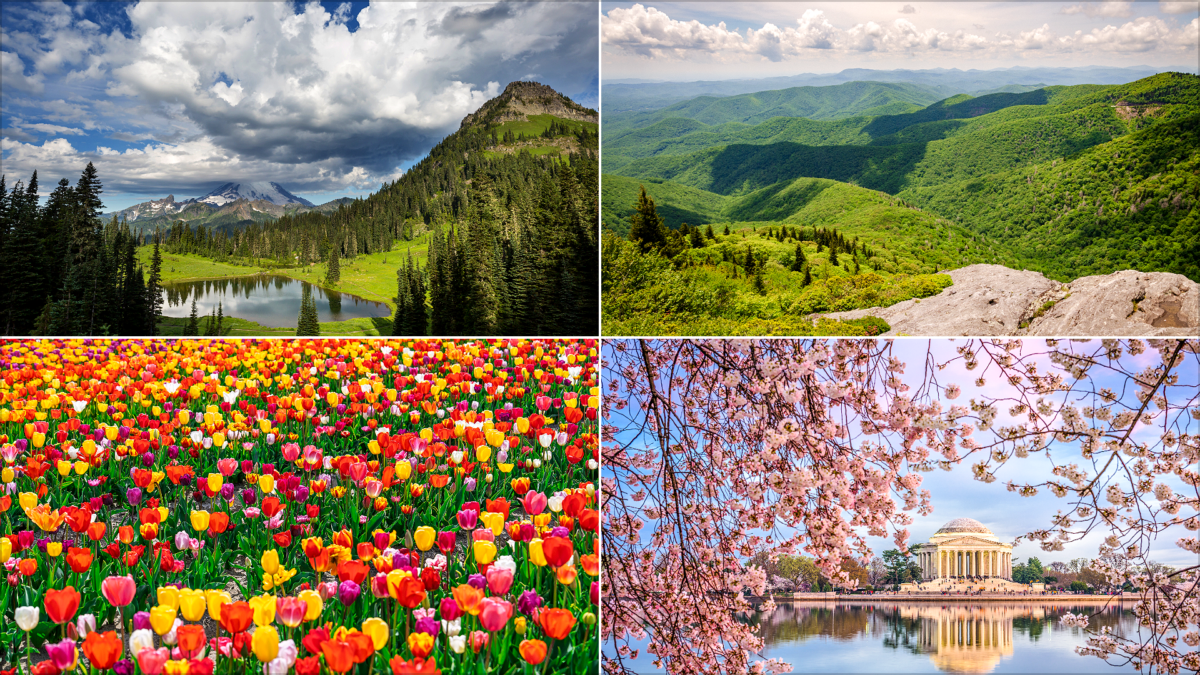
If your ideal trip includes scenic drives, easy walks, and at least one moment of saying, “pull over, I need a photo,” flower season is a very good excuse to travel.
Knowing where to see gorgeous flower blooms in the U.S. is mostly about timing. Desert parks can start blooming in late winter. Southern roadside wildflowers usually peak in spring. High-elevation parks often save the show for summer, because snow likes to linger and generally refuses to hurry.
Below are some of the best-known bloom destinations across the country, with practical notes on what you’ll see, when to go, and how to make the trip smoother.
Quick bloom planner
| Destination | Best known for | Typical bloom window | Helpful planning note |
|---|---|---|---|
| Antelope Valley California Poppy Reserve | California poppies | Mid-February through spring, often strongest from March into early May | Poppies are weather-dependent, so bloom intensity can vary a lot |
| Anza-Borrego Desert State Park | Desert wildflowers | February to March | Different canyons can bloom differently, so check conditions before driving out |
| Washington, D.C. | Cherry blossoms around the Tidal Basin | March to early April | Festival crowds are big, so go early in the day if possible |
| Skagit Valley | Tulip fields | April | Field conditions change through the month, so flexible dates help |
| Texas Hill Country and Ennis | Bluebonnets | March to April | Roadside displays vary by rainfall and drought conditions |
| Blue Ridge Parkway | Appalachian wildflowers and rhododendrons | April through August | Elevation changes mean bloom timing shifts along the route |
| Shenandoah National Park | Spring and summer woodland wildflowers | Mid-March through summer | Skyline Drive is the easiest first stop for casual visitors |
| Mount Rainier National Park | Subalpine summer wildflowers | Early summer into mid-summer | Snowpack can delay the season, especially at higher elevations |
Antelope Valley California Poppy Reserve, California
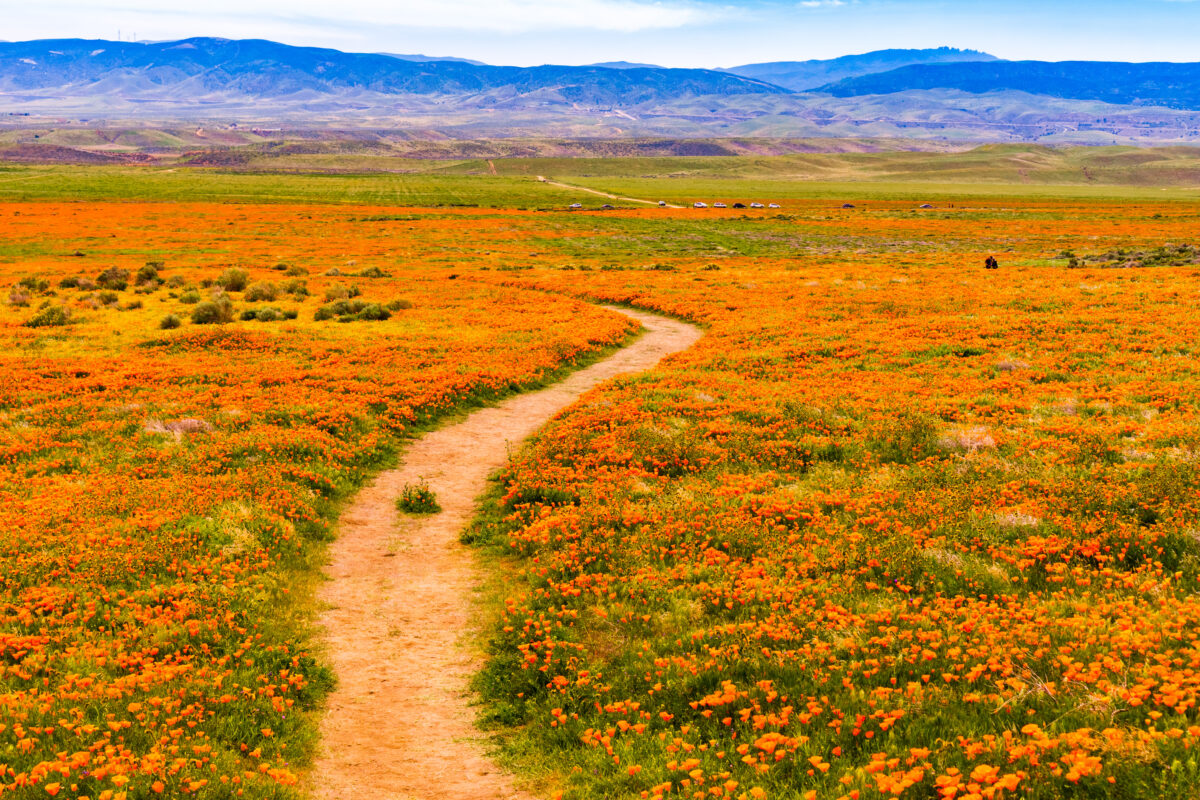
If your mental image of a flower trip is rolling orange hills, this is probably the place you were imagining. The Antelope Valley California Poppy Reserve near Lancaster sits on the western edge of the Mojave Desert and is one of the best-known places in the country to see California poppies.
The reserve covers 1,780 acres, and research points to a bloom season that can begin in mid-February and run through spring. Some guides highlight March to early May as the more reliable planning window. Both are useful ways to think about it: early season is possible, but the exact show depends heavily on weather.
An eight-mile trail system gives visitors room to spread out and see the hills from different angles. The reserve is at 15101 Lancaster Road, Lancaster, CA 93536, and the visitor center is typically open daily in bloom season, often 9 a.m. to 5 p.m. when staffing allows. Parking is usually straightforward, but weekends can fill quickly.
- Why go: The big draw is scale. When conditions line up, the reserve looks almost unreal.
- Best time: Aim for March or April if you want the best odds.
- Travel tip: Stay on marked trails. Poppy fields are fragile, and trampling them for one photo is not the heroic act some people seem to think it is.
- Nearby base: Lancaster is the obvious launching point for a day trip.
Anza-Borrego Desert State Park, California
For a very different kind of bloom trip, head to Anza-Borrego Desert State Park in Southern California. This is where desert flowers prove that dry landscapes are perfectly capable of showing off.
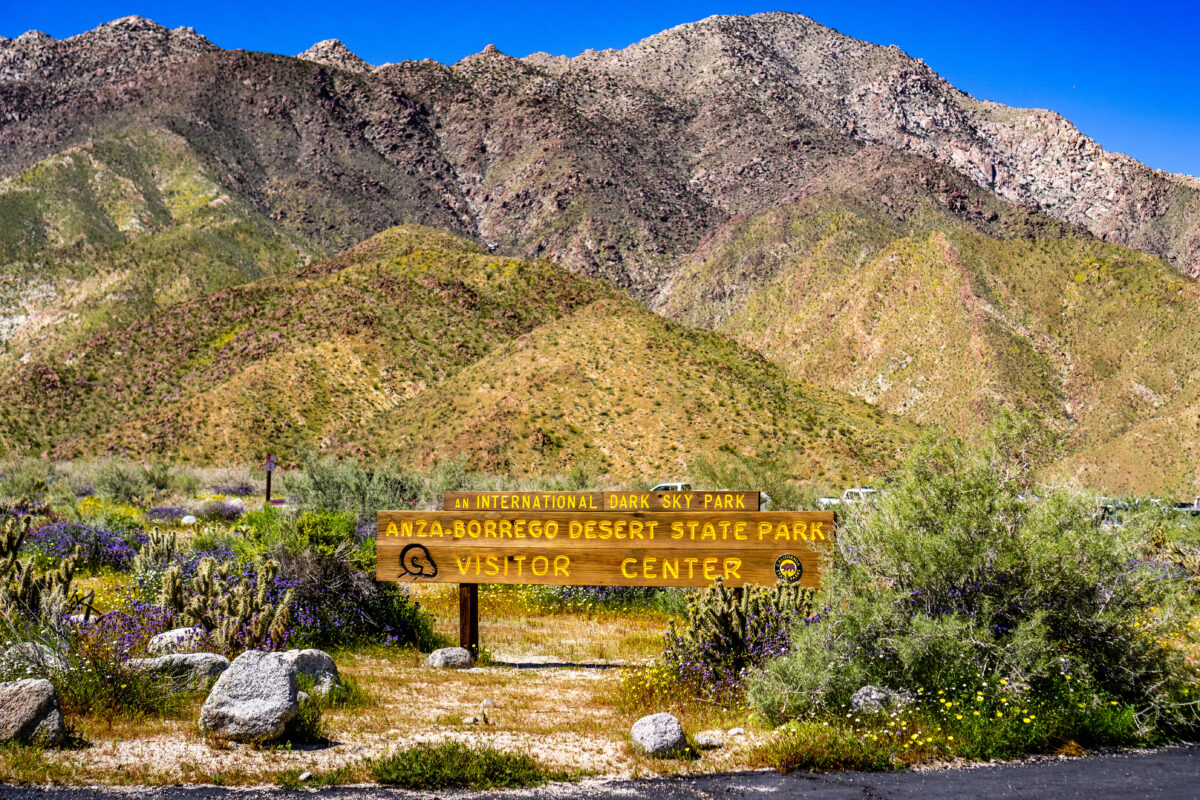
Bloom windows here usually fall in February and March. In stronger years, visitors may spot desert gold poppies, phacelia, and small desert wildflowers across different areas of the park. Research specifically points travelers toward Borrego Palm Canyon, Henderson Canyon Road, and Coyote Canyon, since each area can offer different varieties and conditions.
The main visitor hub is the Anza-Borrego Desert State Park Visitor Center, 200 Palm Canyon Drive, Borrego Springs, CA 92004. It is a useful first stop for current bloom maps, road updates, and trail suggestions, and it is typically open daily with daytime hours that can vary by season.
- Why go: Desert blooms feel surprising, which is part of the fun.
- What makes it unique: The scenery is not just flowers. You also get wide-open desert views and a completely different color palette from mountain or forest bloom spots.
- Best time: Late winter to early spring.
- Travel tip: Check bloom updates before you leave. Superblooms get headlines, but they are not guaranteed every season.
Washington, D.C. cherry blossoms
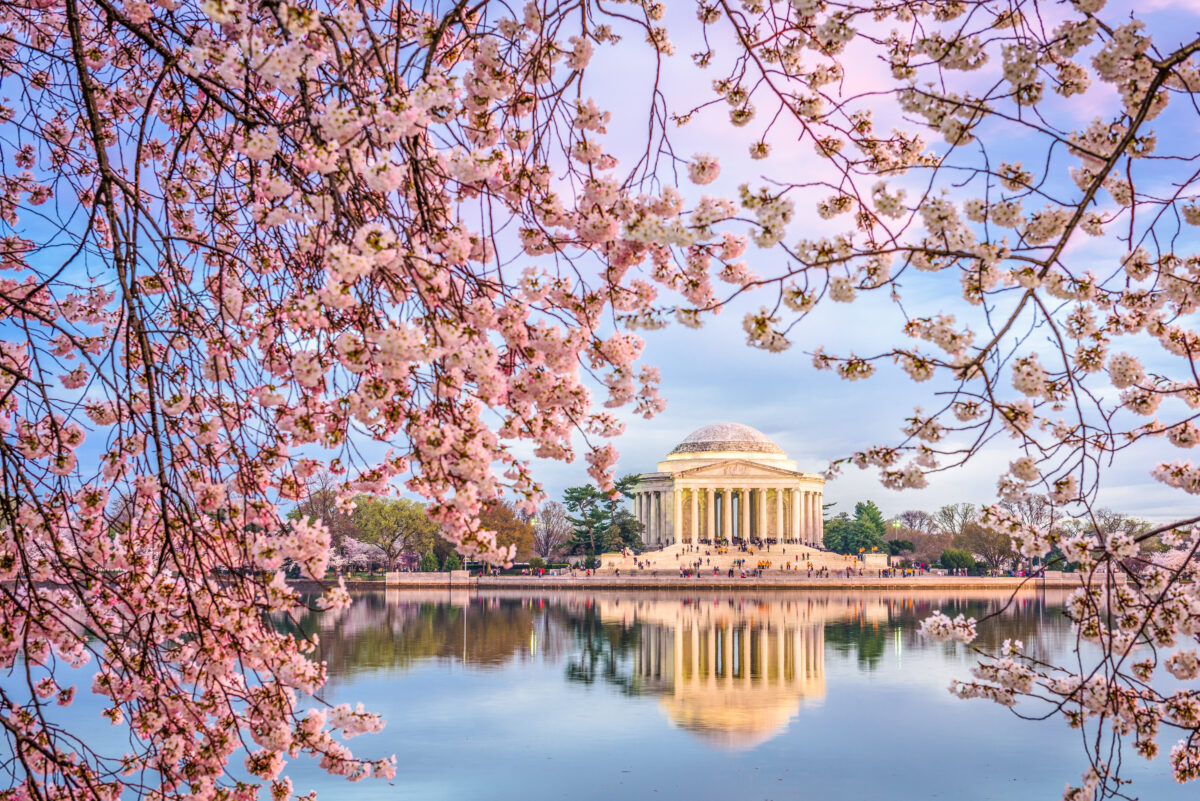
Not every flower trip needs hiking boots. If you want a classic urban bloom experience, Washington, D.C. delivers with the cherry trees around the Tidal Basin.
The National Cherry Blossom Festival is tied to the famous trees gifted by Tokyo in 1912. Peak bloom is generally associated with March and early April, and the festival season has typically started around March 20. The National Park Service also publishes blossom-related event information through its cherry blossom pages.
Research notes that roughly 1.5 million visitors come to see the blossoms around the Tidal Basin during the festival period, so this is not the place for solitude. It is the place for iconic views and a lot of fellow admirers. The Tidal Basin sits beside the National Mall, with the most popular blossom walks near West Basin Drive SW, Washington, DC 20024. Expect limited parking, heavy pedestrian traffic, and the occasional slow shuffle rather than a graceful spring stroll.
- Why go: It is one of the country’s signature spring scenes.
- Best time: Go on weekday mornings if your schedule allows.
- Travel tip: Expect crowds near the Tidal Basin. Build in extra time and patience.
- Nearby attractions: The National Mall and Smithsonian museums are easy add-ons for the same day.
Skagit Valley, Washington
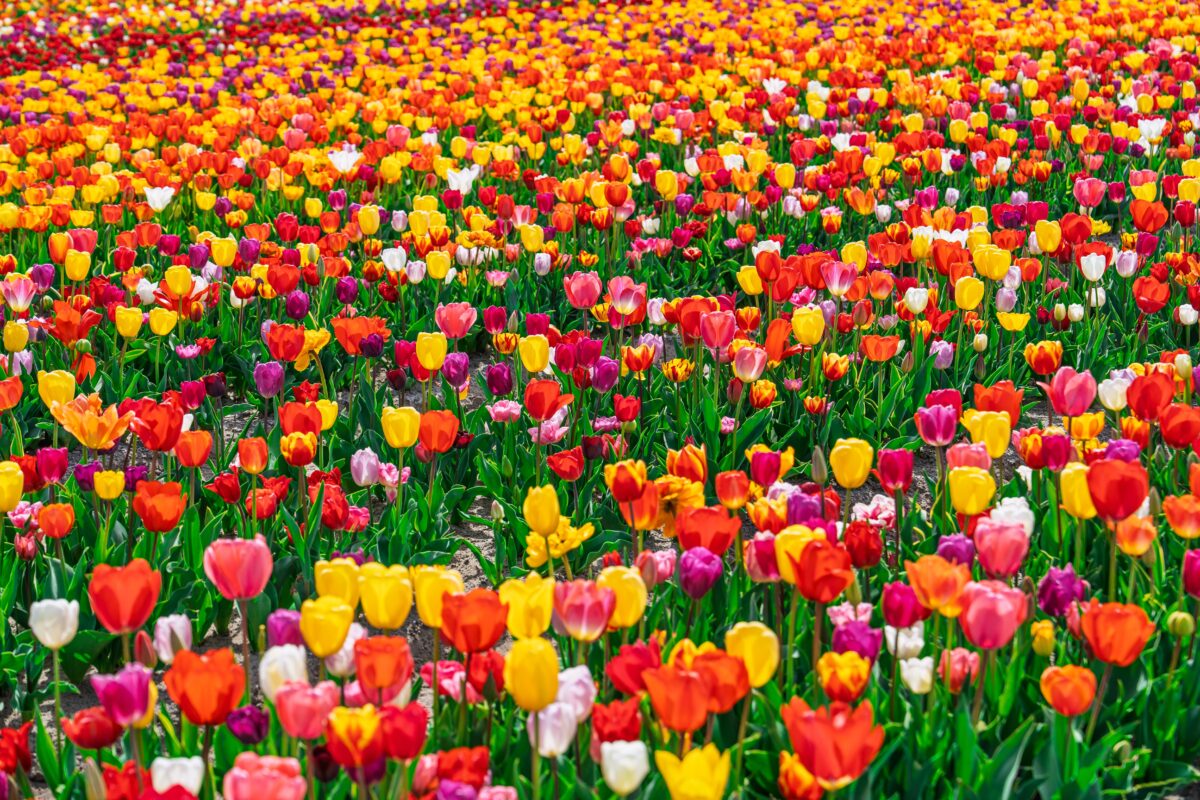
Tulip fields have a talent for making people suddenly care very deeply about rows. In Skagit Valley, about halfway between Seattle and Vancouver, tens of millions of tulip bulbs bloom in April.
This region is best known for the Skagit Valley Tulip Festival and its broad agricultural landscapes filled with orderly bands of color. It is a different look from wildflower meadows, but no less dramatic. Most visitors base themselves around Mount Vernon and use the festival map to hop between gardens and fields, so this is one of the easier flower trips to turn into a relaxed weekend.
- Why go: If you love neat, highly visual flower displays, this is one of the strongest spring trips in the U.S.
- What makes it unique: The combination of farm fields, mountain backdrops, and dense blocks of color.
- Best time: April is the key month.
- Travel tip: Weather, field conditions, and bloom timing can shift quickly, so a flexible itinerary is your friend.
Texas bluebonnets in Hill Country and Ennis
Bluebonnet season is practically a state event in Texas. The best-known viewing windows are usually March and April, though exactly where the strongest displays show up can change with rainfall patterns.
Research highlights two especially useful planning angles. In the Texas Hill Country, travelers can find sweeping roadside displays and scenic drives. Near Ennis, south of Dallas, bluebonnets can be found along roughly 40 miles of scenic roads, making it easier to build a day trip without guessing where to turn.
If you are building a spring road trip around Hill Country, towns like Fredericksburg make handy overnight bases, and if you continue south, this pairs surprisingly well with a food stop using our guide on where to eat in Austin. In Ennis, the mapped driving route is the practical advantage, especially for visitors who want flowers without a lot of off-the-cuff navigation.
- Why go: Bluebonnets create one of the most recognizable spring landscapes in the country.
- What makes it unique: This is less about one park and more about a regional road-trip experience.
- Best time: March into April.
- Travel tip: Expect bloom quality to differ from region to region, especially in drought-prone areas.
Blue Ridge Parkway, Virginia and North Carolina
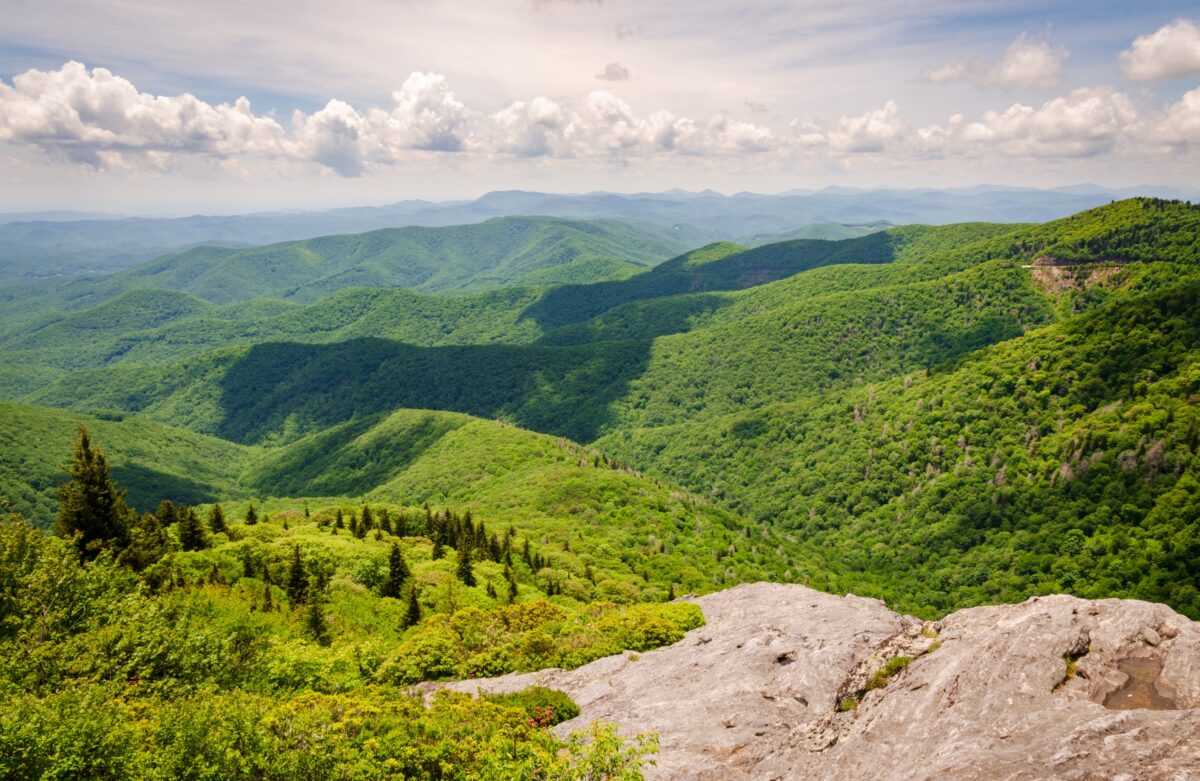
The Blue Ridge Parkway is a flower trip for people who like their blooms with long drives and mountain overlooks. The route runs 469 miles between Shenandoah National Park in Virginia and Great Smoky Mountains National Park in North Carolina.
Research points to roughly 1,400 plant species preserved along the parkway. Wildflowers can appear from April through August, which makes this one of the longest bloom windows on the list. You may see azaleas, hydrangeas, laurels, and rhododendrons, with the catawba rhododendron often highlighted in June around Peaks of Otter in Virginia and Craggy Gardens in North Carolina.
It is also a good fit for travelers who enjoy slow outdoor trips with scenic pull-offs, picnic spots, and gentle trails, not unlike the mindset behind forest bathing, just with more switchbacks and significantly more windshield time.
- Why go: Long season, easy scenic access, and lots of viewpoints.
- What makes it unique: Elevation changes mean the bloom season unfolds gradually across the route.
- Best time: Late spring through summer, depending on what flowers you want to catch.
- Travel tip: Do not treat it as one quick stop. Pick a section and explore it well.
Shenandoah National Park, Virginia
Shenandoah National Park is ideal if you want a mix of wildflowers, trails, waterfalls, and an easy scenic drive. Research places its bloom window from mid-March through summer, with more than 850 flowers in the park and a National Park Service wildflower calendar covering around 60 species.
Travelers cruising Skyline Drive can get a quick introduction to the landscape before heading onto the park’s roughly 500 miles of trails. Flowers called out in research include bloodroot, trillium, violets, geraniums, and pink lady slippers. If you are planning a longer mountain break after this, the pacing feels similar to a good Scottish Highlands road trip, minus the midges and with more black bears.
- Why go: It combines easy access with real hiking depth.
- What makes it unique: You can do a casual overlook-based visit or turn it into a trail-heavy weekend.
- Best time: Spring for early woodland blooms, then into summer for a longer season.
- Travel tip: Skyline Drive is the simplest place to start if you are not sure where to focus.
Mount Rainier National Park, Washington
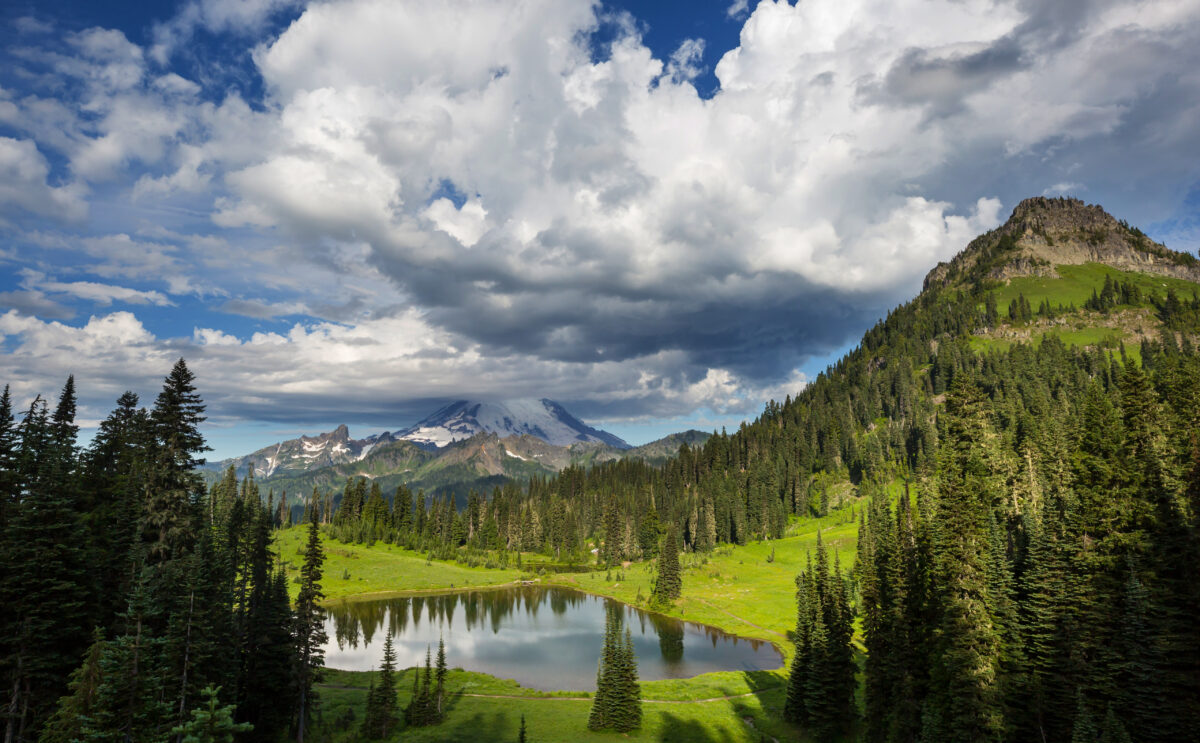
Some flower seasons reward patience. Mount Rainier National Park is one of them. Because snow can hang on well into early summer, the park’s high-elevation wildflower display arrives later than many other bloom destinations.
Research highlights the park’s forests and subalpine areas and notes that flowers bloom quickly and heavily once conditions allow. That short alpine growing season is exactly why the displays can feel so concentrated. Paradise is the best-known flower area for first-time visitors, with the Henry M. Jackson Memorial Visitor Center, Paradise Inn Road, Ashford, WA 98304, serving as a practical anchor for trail updates, ranger advice, and restrooms. Summer parking can be tight, so arriving early is not just a good idea, it is self-defense.
- Why go: Summer wildflowers in a dramatic mountain setting are hard to beat.
- What makes it unique: The compressed season can produce fast, vivid displays after snowmelt.
- Best time: Early summer into mid-summer, depending on snowfall and elevation.
- Travel tip: Check trail and road conditions before going. In mountain parks, calendars are suggestions, snow is the final boss.
How to time a flower trip without losing your mind
The hardest part of planning where to see gorgeous flower blooms in the U.S. is accepting that nature does not care about your long weekend.
- Look at region first. Desert blooms can start in February. Southern and low-elevation blooms often peak in spring. High mountains may not hit their stride until summer.
- Build flexibility into your trip. Even one or two days can make a difference for poppies, tulips, or cherry blossoms.
- Use official park or festival updates. Bloom trackers and park condition pages are often more helpful than a random social post.
- Go early in the day. You will usually get better light, lighter traffic, and fewer elbows in your photos.
- Follow trail rules. Flower fields are not props. Staying on paths protects the next visitor’s experience too.

Osprey
Osprey Sportlite 15L Lightweight Hiking Backpack, Tan OS | daypack, travel daypack, camping pack,…
We earn a commission if you buy through this link, at no extra cost to you.
Which flower destination is best for you?
- For iconic spring city views: Washington, D.C.
- For vivid orange hillsides: Antelope Valley California Poppy Reserve
- For a desert surprise: Anza-Borrego Desert State Park
- For farm-field color bands: Skagit Valley
- For a scenic road trip: Texas bluebonnet country or the Blue Ridge Parkway
- For hikers: Shenandoah National Park or Mount Rainier National Park
The best choice really comes down to what kind of trip you want. If you love festivals and famous views, go for cherry blossoms or tulips. If you want a drive with frequent roadside stops, Texas and the Blue Ridge Parkway make more sense. If your ideal bloom trip ends with muddy boots, Shenandoah and Mount Rainier are better bets.
Either way, a little planning goes a long way. Flower seasons are fleeting, but when you catch them right, they are the kind of trips people keep talking about long after the petals are gone.
