
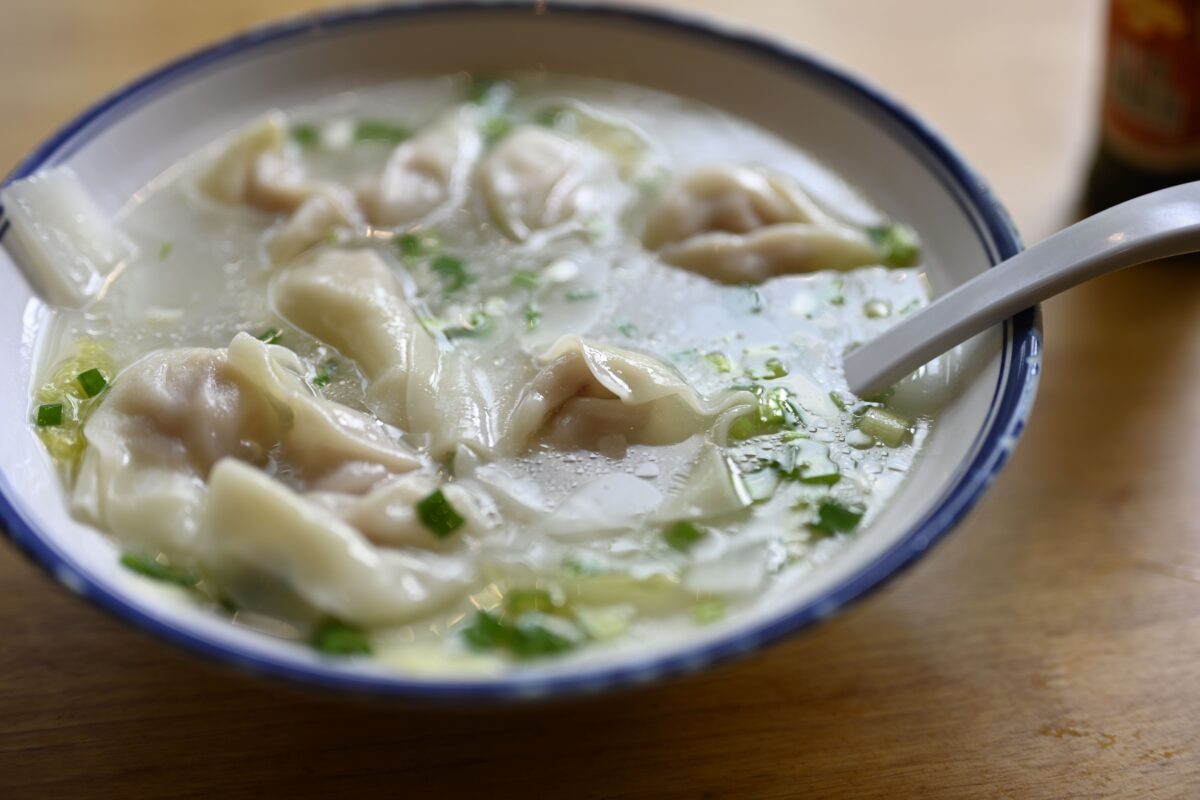
A wonton can be small enough to disappear in a single bite. The work behind it is more generous: vegetables blanched and squeezed dry, pork ground twice, wrappers folded by hand and family members gathered around the same table.
At Waldorf Astoria Shanghai Qiantan in Shanghai, Hilton President and CEO Chris Nassetta prepared wontons with Mandela Zhu, the hotel’s director of food and beverage. Their kitchen conversation connected a familiar dish with three generations of one family and a broader Chinese tradition of cooking as an act of togetherness.
The recipes shared from the episode offer two versions of the dish: a warming winter wonton served in pork stock and a summer preparation finished with sesame paste and chili oil.
Why wontons carry more than filling
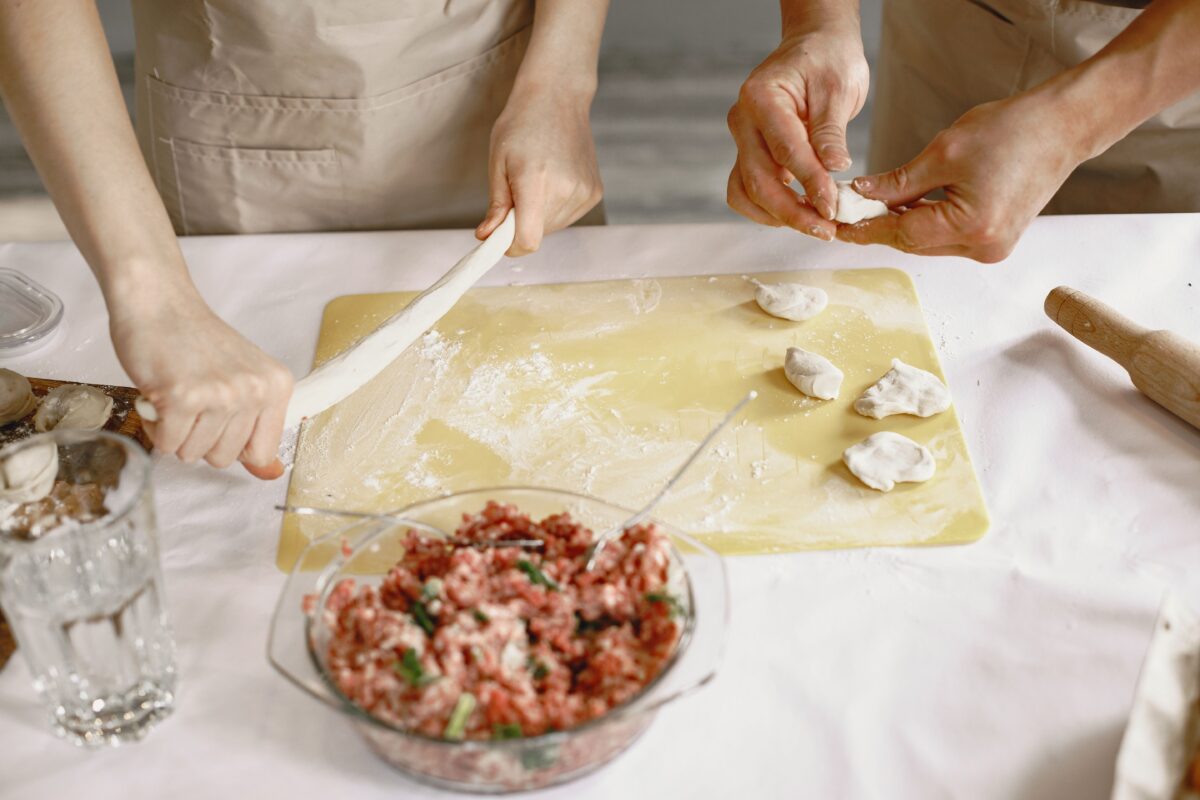
The meaning here sits in the process. Families have long prepared wontons together, turning a meal into a shared task rather than a performance by one person in the kitchen. Someone mixes the filling, someone handles the wrappers, and someone inevitably develops strong opinions about the correct fold. This is how many family recipes survive: through repetition, conversation and a reason to meet again.
Zhu describes his mother’s recipe as something she never completely revealed to him. Her reason was practical and affectionate. Keeping part of the method to herself gave them an excuse to continue cooking together.
He also sees the wonton wrapper as a symbol of protection. It encloses the filling in the same way that families surround one another with care. That interpretation is personal, but it explains why the dish works so well as a story about home. The food is humble. The gestures around it are not.
A hospitality family in Shanghai
Zhu’s family story adds another layer. His father joined the original Shanghai Hilton in 1995. As a child, Zhu accompanied him to the hotel, and those visits helped shape his own decision to build a career with Hilton.
His daughter has since developed an interest in culinary arts and hopes to become a chef. If that path continues, hospitality will span three generations of the family. The setting at Waldorf Astoria Shanghai Qiantan gives the story a polished hotel backdrop, but its emotional center is much more ordinary: a parent bringing a child into the place where work, food and memory meet.
A hotel kitchen can produce elaborate dishes, but the wonton is useful precisely because it belongs in a home kitchen too. It needs attention and a little patience, not theatrical equipment.
Winter wontons with pork stock
The winter recipe uses Chinese greens, identified in the recipe as qing cai, along with shepherd’s purse, pork back fat and pork leg meat. The greens are blanched for 20 seconds, cooled in ice water and squeezed until dry. That last step deserves respect. Wet greens can loosen the filling and make the wrapper harder to manage.
The pork is minced twice for a fine texture. The filling then combines dark soy sauce, light soy sauce, oyster sauce, hot rendered pork lard, egg, salt and white pepper. The ingredients are stirred clockwise until combined, followed by the hot lard. The mixture rests in the refrigerator for six hours before wrapping.
That chilling period is the recipe’s quiet demand. It means wontons are better planned than improvised, so this is not the dish to begin when guests are already taking off their coats. Prepare the filling earlier, then fold and cook when the table is ready.
Winter recipe at a glance
- Chinese greens: 1.8 ounces, or about one-third cup packed after squeezing dry
- Shepherd’s purse: 1.8 ounces, or about one-third cup packed after squeezing dry
- Pork back fat: 1.8 ounces, about one-quarter cup minced
- Pork leg meat: 3.9 ounces, about one-half cup minced
- Seasonings: dark soy sauce, light soy sauce, oyster sauce, hot rendered pork lard, egg, salt and white pepper
- Soup base: pork stock, light soy sauce, sesame oil, salt, white pepper and lard
- Garnish: dried shrimp, seaweed, spring onion and slices of egg omelette
To fold the wontons, place filling in the center of a wrapper, fold the wrapper in half, then overlap the opposite corners to create a gold ingot shape. The recipe calls for boiling water and a water-to-wonton ratio of 9:1, intended to help preserve the wrappers’ tender texture.
After the water returns to a boil, add a small amount of cold water and wait for it to boil again. Repeat that process three times before removing the wontons. Place them in a bowl with the soup base, then finish with the garnishes.
Summer wontons with sesame and chili
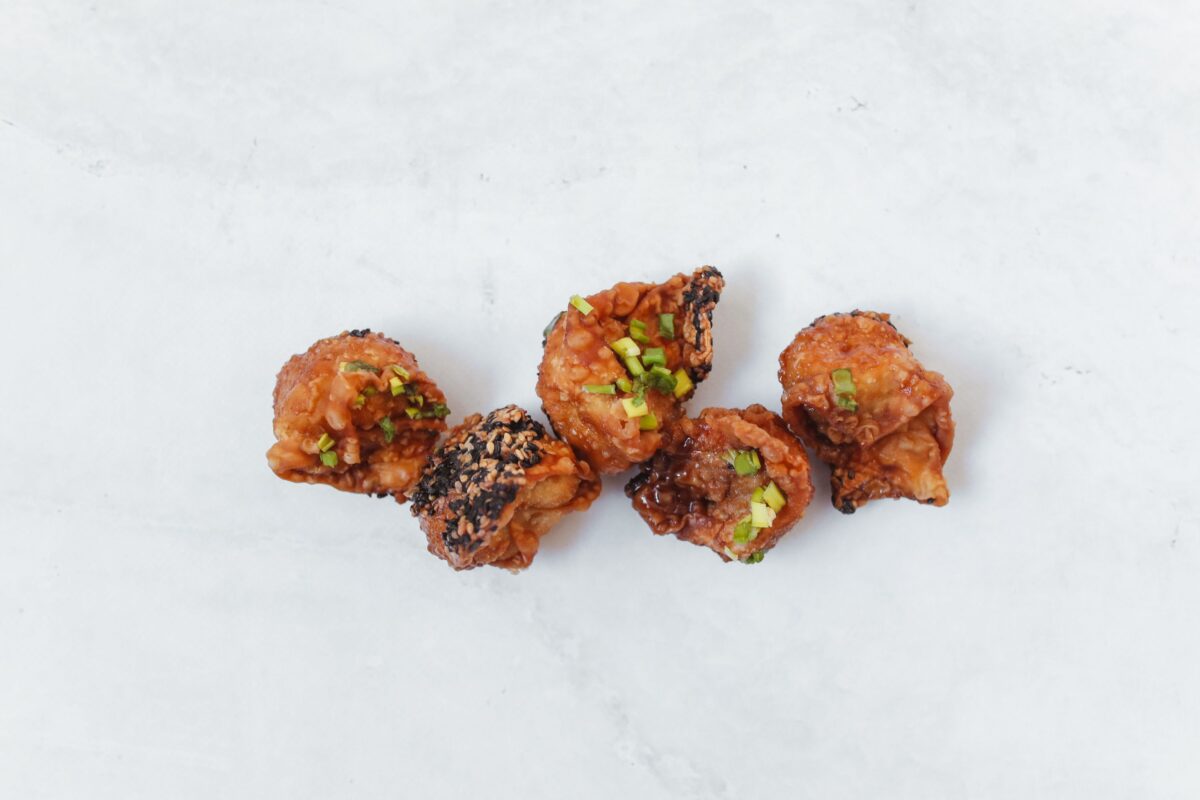
The summer version begins with the same filling, including the greens, shepherd’s purse, pork, sauces, lard, egg, salt and white pepper. The change comes after cooking. Instead of pork stock, the wontons are covered with a dressing made from sesame paste, light soy sauce, vinegar, oyster sauce, sugar and still water.
The water is added slowly to the sesame paste while stirring clockwise. Once the mixture is even, the remaining ingredients are incorporated and the dressing is refrigerated. The finished wontons are topped with the sesame mixture, chili oil and chopped spring onion.
This version has a different temperament. The winter bowl is built around warmth and broth. The summer bowl keeps the same folded parcel but lets sesame, vinegar and chili oil carry the flavor. A single family recipe can therefore move with the season without losing its identity.
Summer recipe at a glance
- Use the same wonton filling and wrapper quantities as the winter recipe
- Dressing: 3 tablespoons sesame paste, 2 teaspoons light soy sauce, 2 teaspoons vinegar, 1 teaspoon oyster sauce, 1 teaspoon sugar and about one-third cup plus 1 teaspoon still water
- Garnish: chopped spring onion and chili oil to taste
The cooking method remains the same: blanch and cool the greens, squeeze them dry, mince the pork twice, mix the filling, add hot lard, chill for six hours, fold the wontons and boil them using the repeated cold-water method.
What this recipe teaches about family food
The useful lesson is not that every cook must reproduce a hotel kitchen exactly. It is that a recipe can be a framework for time spent together. Zhu’s mother kept part of her method private because the unfinished knowledge brought them back to the same table. That may be a better definition of a family recipe than a perfectly measured card.
There is also a practical rhythm to the dish. The filling can be prepared in advance, the wrappers can be folded as a group, and the garnishes can be arranged while the water heats. The cooking becomes communal without requiring a grand occasion.
Shanghai gives the story its setting, but the bowl does not depend on a trip to the city. The ingredients and steps shared here are an invitation to recreate the ritual at home, with enough room for each family to develop its own fold, its own seasoning habits and, eventually, its own secrets.